By: Uraiba Zafar — INFO 671: Sustainable Interaction Design

01 — Overview
SeedSense is a mobile app concept that helps beginner growers successfully cultivate food plants using AI recognition, stage-specific guidance, and sustainability micro-lessons. The project responds to a growing desire—especially in urban contexts—to grow herbs and vegetables at home but without accessible, trustworthy guidance on how to do it sustainably.
My role: UX Research · Concept Development · Interaction Design · Visual Design · Prototyping
Problem:
People want to grow their own food but feel overwhelmed by conflicting information, uncertainty about plant care, and confusion about sustainable practices. Beginners often waste water, materials, and seeds due to trial-and-error.
Success Looks Like:
Users confidently growing plants from seed to harvest with reduced waste, improved understanding of sustainable care, and higher success rates.
Primary Users:
Urban and suburban beginner gardeners with limited knowledge and varying space constraints.
Sustainability Connection:
SeedSense embeds ecological literacy into everyday actions—helping users conserve water, build healthy soil, reduce food waste, and value seeds as renewable, cultural resources.
02 — Defining the Problem
From initial research, four key challenges emerged:
- Uncertainty:
Users don’t know how much water, light, or soil nutrients their plant needs at each stage. - Overwhelm:
Existing apps offer generic tips, confusing advice, or focus mostly on decorative houseplants. - Lack of Sustainability Context:
Beginners want to grow sustainably but lack clear, practical guidance. - Low Confidence:
Users give up quickly after mistakes, especially in small urban growing environments.
These challenges highlighted the need for a tool that is personalized, visual, and sustainability-centered.
03 — Research Process
Competitor Scan
I analyzed top plant-care apps such as PlantIn, Blossom, Planta, and Seed to Spoon.
Across all apps, three gaps were clear:
- Breadth over depth: Many plant profiles, little context-specific guidance.
- Food-growing blind spot: Few focus on edible plants or nutrient cycles.
- No sustainability integration: Minimal mention of composting, water-saving, or eco-friendly care.
This created an opportunity to design a tool where ecology meets interaction design.
User Interviews
I conducted two semi-structured interviews:
- Participant A (Brooklyn) — small backyard planter, wants simple direction.
- Participant B (Ohio) — experienced with houseplants, new to crops, wants learning support.
Key insights:
| Insight | What Users Said | Opportunity |
|---|---|---|
| Uncertainty | “I forget how much water my plants need.” | AI scanning + stage-specific care |
| Overwhelm | “Guides online are too generic.” | Bite-sized, visual instruction |
| Sustainability curiosity | “I want to be sustainable but don’t know how.” | Contextual micro-lessons |
| Motivation | “Seeing progress keeps me going.” | Growth tracking + milestones |
Research Question
How might digital technology empower individuals to grow food sustainably by providing personalized, data-driven guidance throughout a plant’s growth journey?
04 — Design Goals
- Reduce uncertainty with AI-based seed/plant recognition.
- Simplify learning through stage-specific, visual guidance.
- Promote sustainable behaviors through integrated micro-lessons.
- Support all environments — balconies, windowsills, backyards.
- Motivate users via progress logs, growth milestones, and eco-action tracking.
05 — Core Features
AI Seed & Plant Scanner
Users scan a seed or plant to instantly identify its species and growth stage.
→ Reduces trial-and-error + enables personalized care.
Plant Profiles
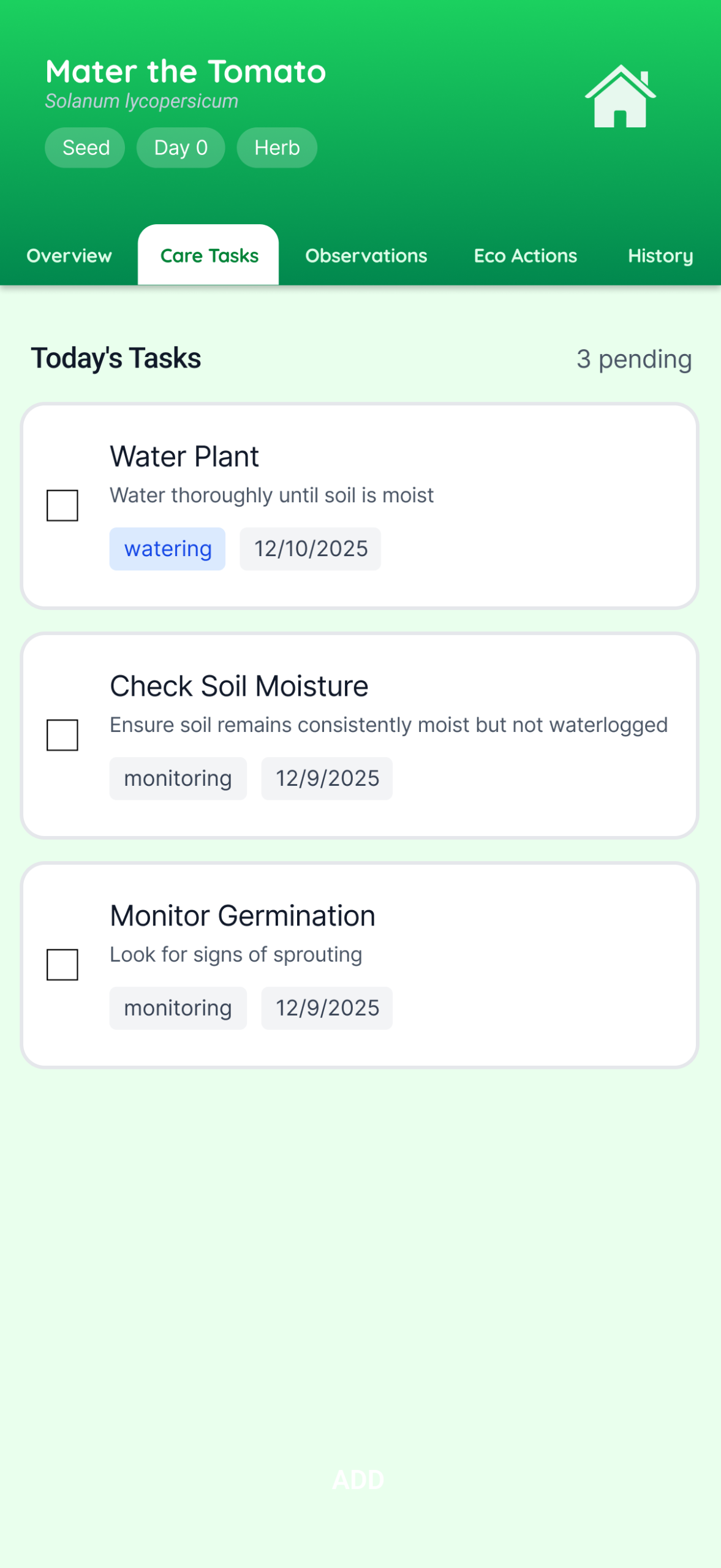
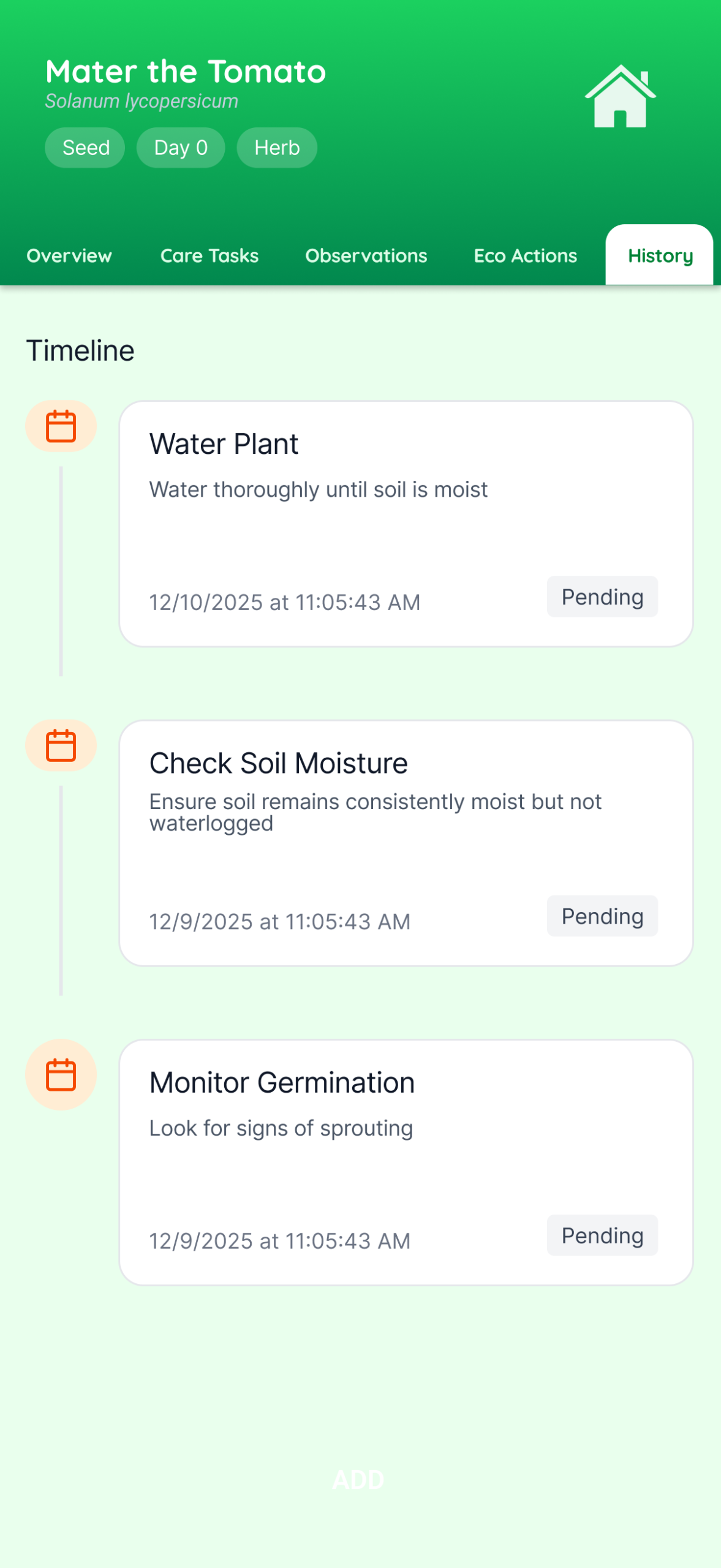
Each plant gets its own profile with care tasks, growth stage, milestones, and historical logs.
Stage-Specific Guidance
Clear instructions for each growth stage: seedling → vegetative → flowering → harvest.
→ Prevents overwhelm; supports new growers.
Sustainability Micro-Lessons
Short, contextual tips on composting, water conservation, soil health, and regenerative care.
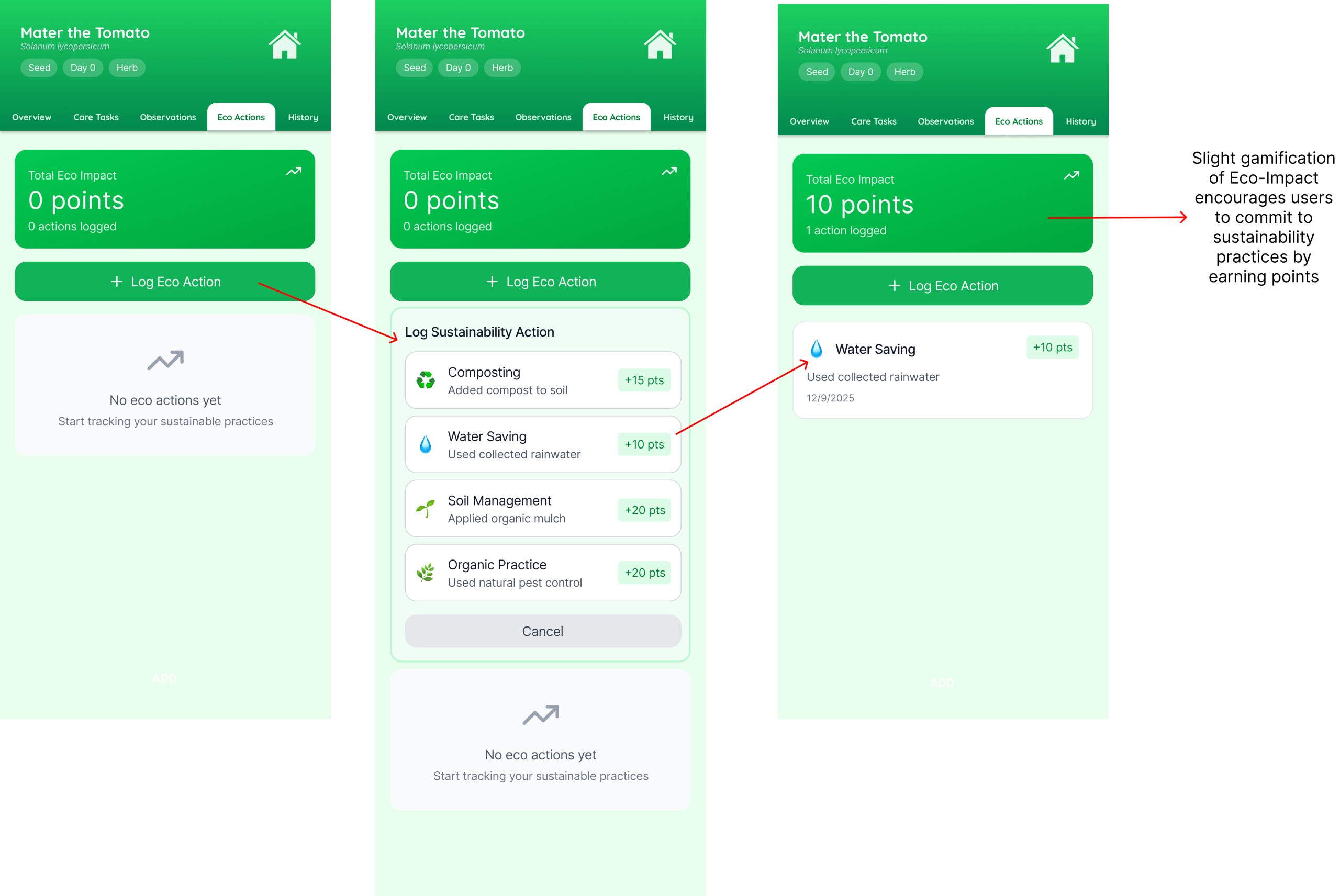
Growth Tracking & Eco-Actions
Users track plant progress and log sustainable practices to grow their eco-literacy.
06 — Key Screens & Design Rationale
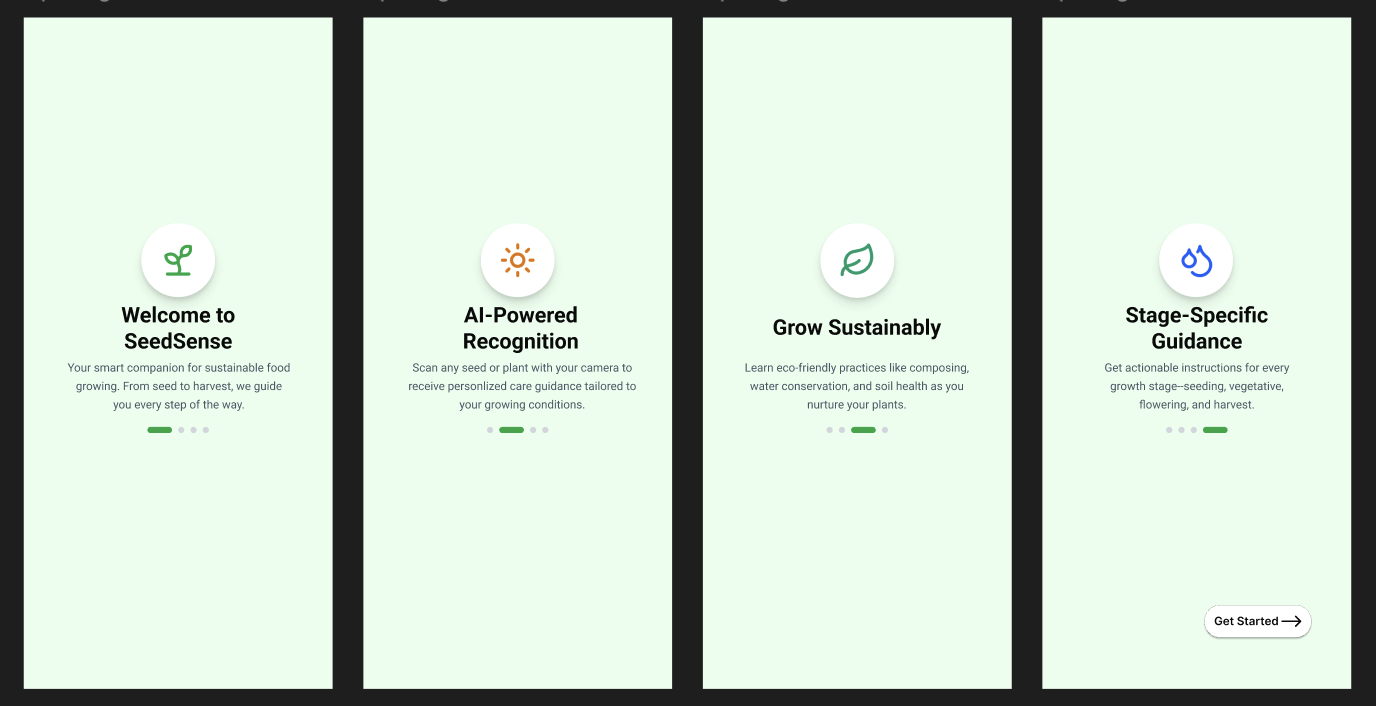
Opening Screens
Position the app as supportive, ecological, and beginner-friendly.
- Introduces AI scanning
- Explains sustainable focus
- Sets expectations for guided learning
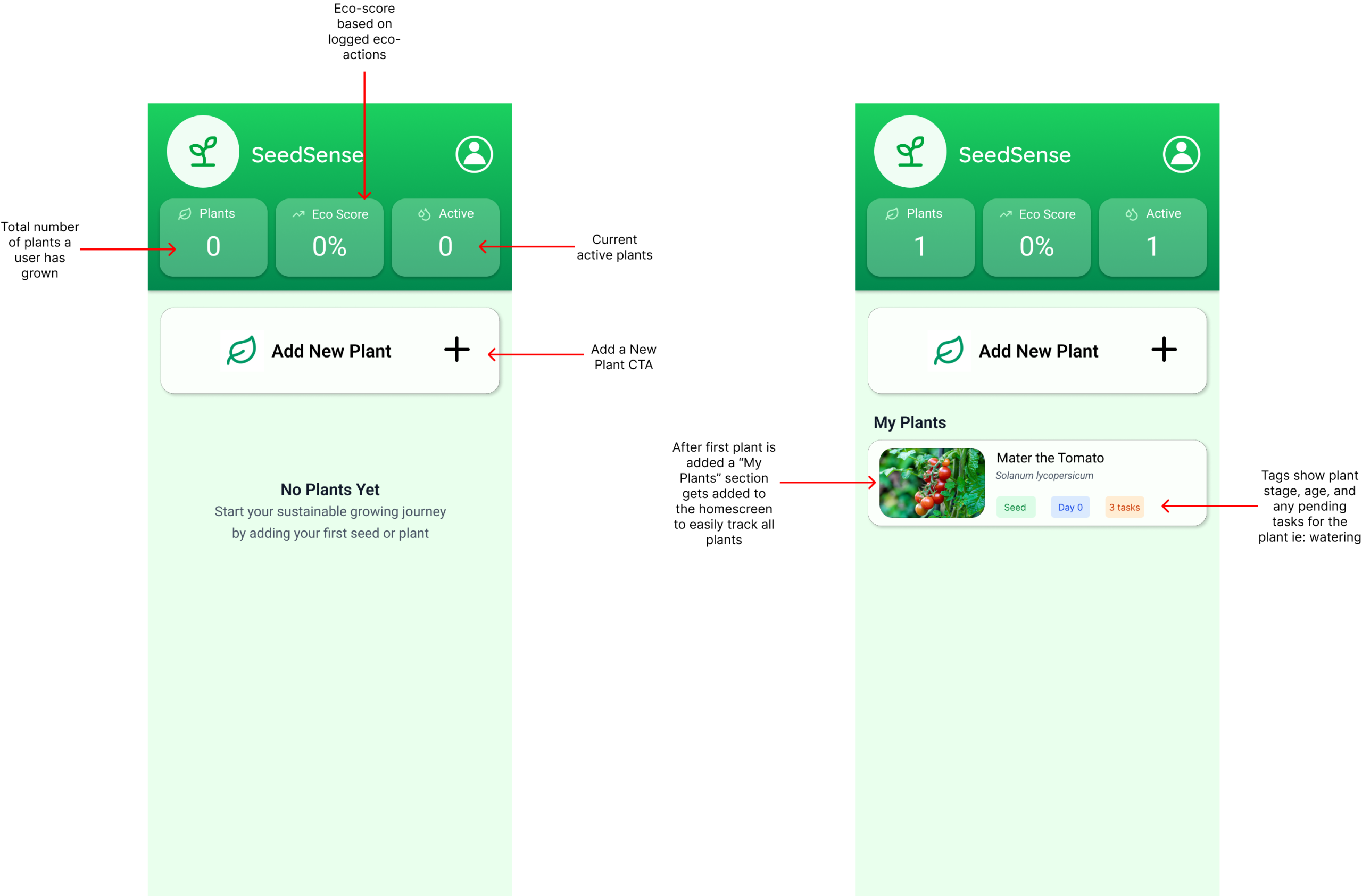
Home Screen
A calm dashboard showing active plants, eco-score, and the main action: “Add New Plant.”
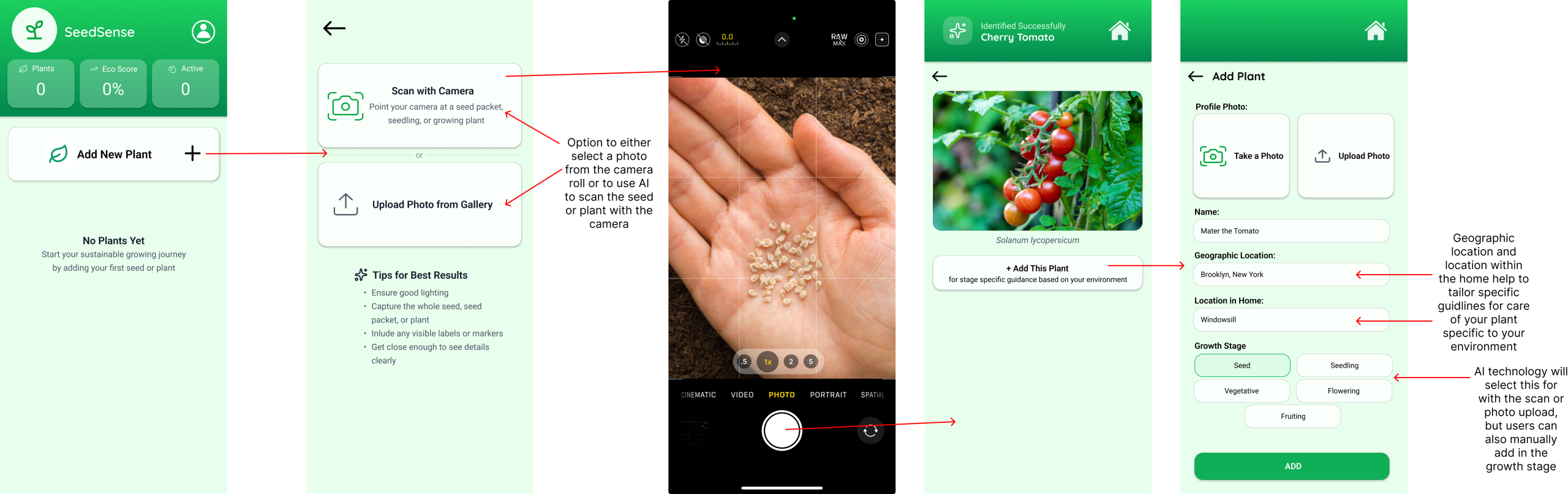
Add a Plant Flow
Users scan or upload a photo → AI identifies species + growth stage → personalized care begins
This flow directly addresses users’ uncertainty and desire for clarity.
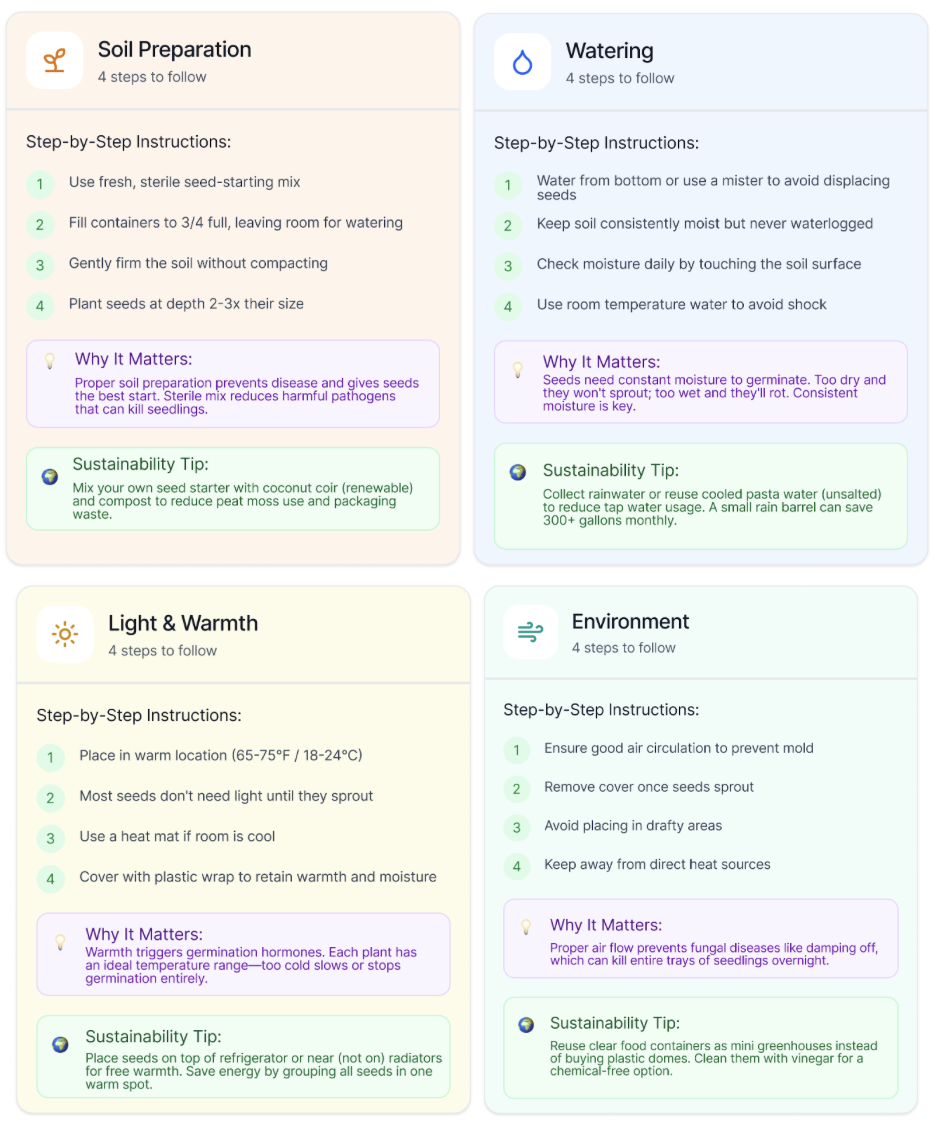
Plant Profile
The heart of the app:
- Stage-specific guidance cards
- Care tasks
- Sustainability actions
- Growth history
Designed to make users feel capable, supported, and environmentally informed.
07 — Testing Plan
Although full testing wasn’t completed due to time constraints, I defined measures for evaluating sustainable impact:
| Method | Measures |
|---|---|
| Pre/Post Surveys | Growth literacy, sustainability awareness |
| Usability Testing (future) | Task success with AI scanning + care steps |
| Growth Tracking | Healthy plant growth rates, reduced plant mortality |
| Harvest Logs | Integration of homegrown food into daily meals |
| Eco-Literacy Index | Learning progression through eco-score |
Success = thriving plants and increased ecological understanding.
08 — Future Opportunities
Recipe Integration
Turn harvested plants into meals with simple, seasonal suggestions.
Harvest-to-Table Guidance
Help users harvest at the right moment and reduce food waste.
Meal Planning Based on What You Grow
Weekly plans that reflect what’s ready to eat.
Community Sharing
Recipes, gardening wins, and peer-to-peer learning.