Introduction
This semester-long project focused on Digital Analytics and Search Engine Optimization (SEO) aimed at optimizing the digital ecosystem for the Amon Carter Museum of American Art. Within a team of three, including Gloria Yang, James Huang, and myself (Kevin Zhang), we conducted a comprehensive audit – ranging from technical SEO analysis to social media engagement metrics – to identify barriers preventing the museum from expanding its audience reach. Based on our findings, we delivered a strategic roadmap to resolve technical performance issues, cleanse corrupted data, and convert passive social engagement into active website traffic.
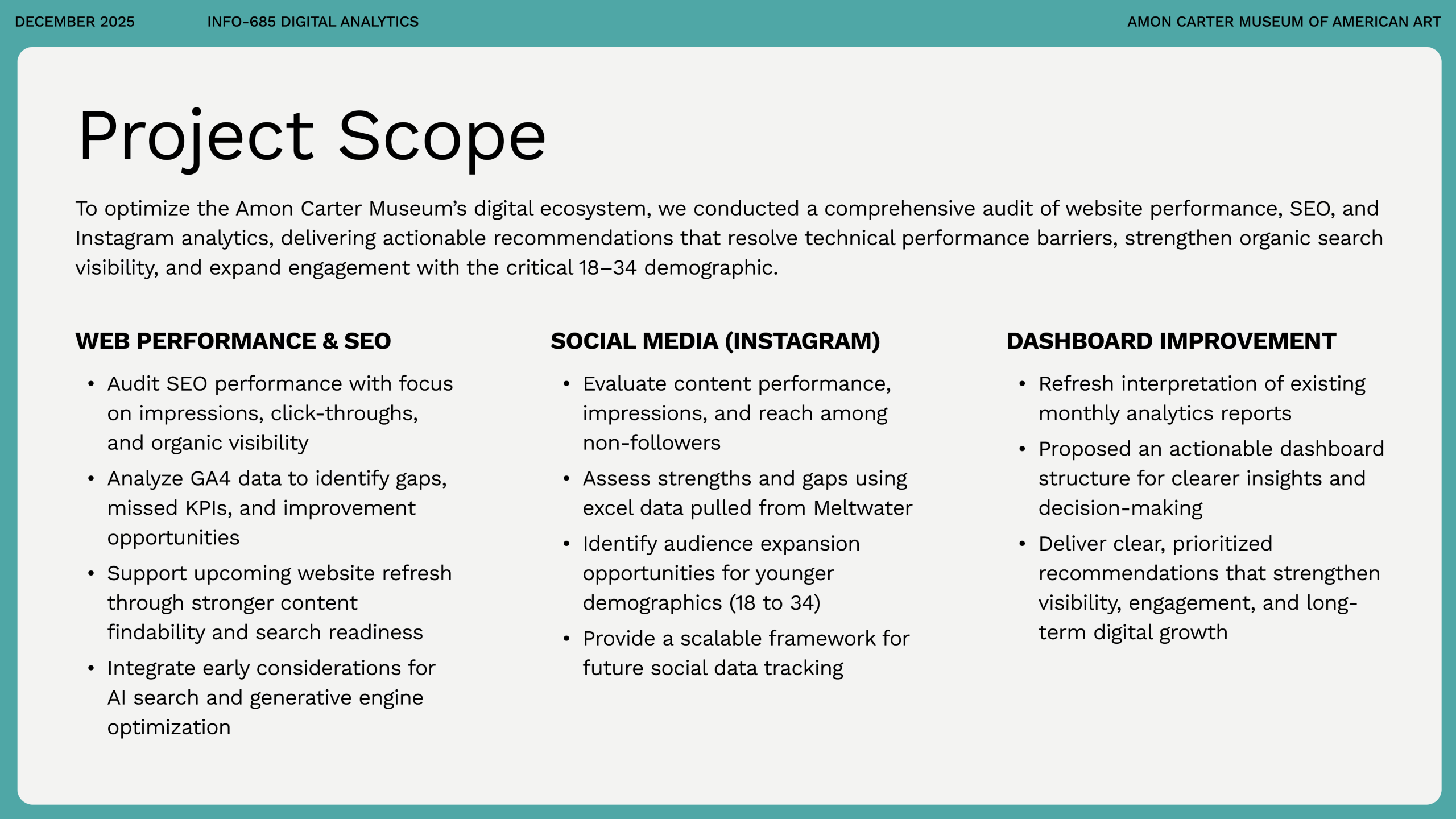
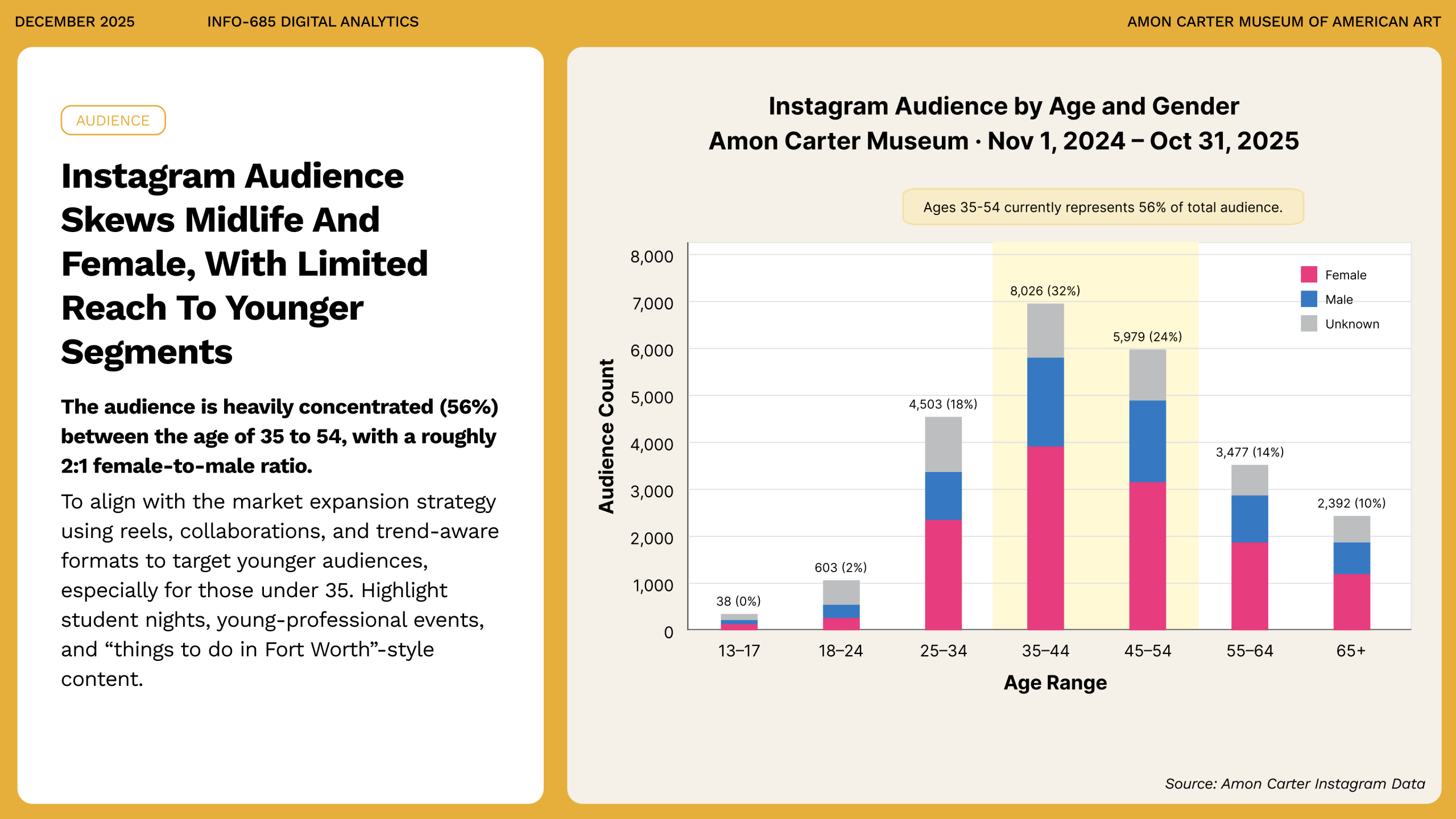
We began by meeting with the client team, Michelle and Collections Manager Clara, to secure analytics access and align on KPIs. The initiative aims to modernize the museum’s digital strategy with a 50/50 split focus on website SEO optimization and social media performance, specifically prioritizing Instagram while dropping Facebook due to data quality issues. A critical strategic imperative identified is the expansion of the museum’s audience into the 18-34 demographic to build a future donor pipeline, as the traditional core audience (60+) is aging out.
The project scope includes auditing Google Analytics, SEOptimizer, and Meltwater data to assess the organic search visibility since the Spring 2025 website refresh and identifying tracking gaps, particularly regarding conversion metrics which are limited by the museum’s free admission model. Immediate next steps involve securing access to historical data and analytics platforms to begin the initial analysis for a follow-up presentation.
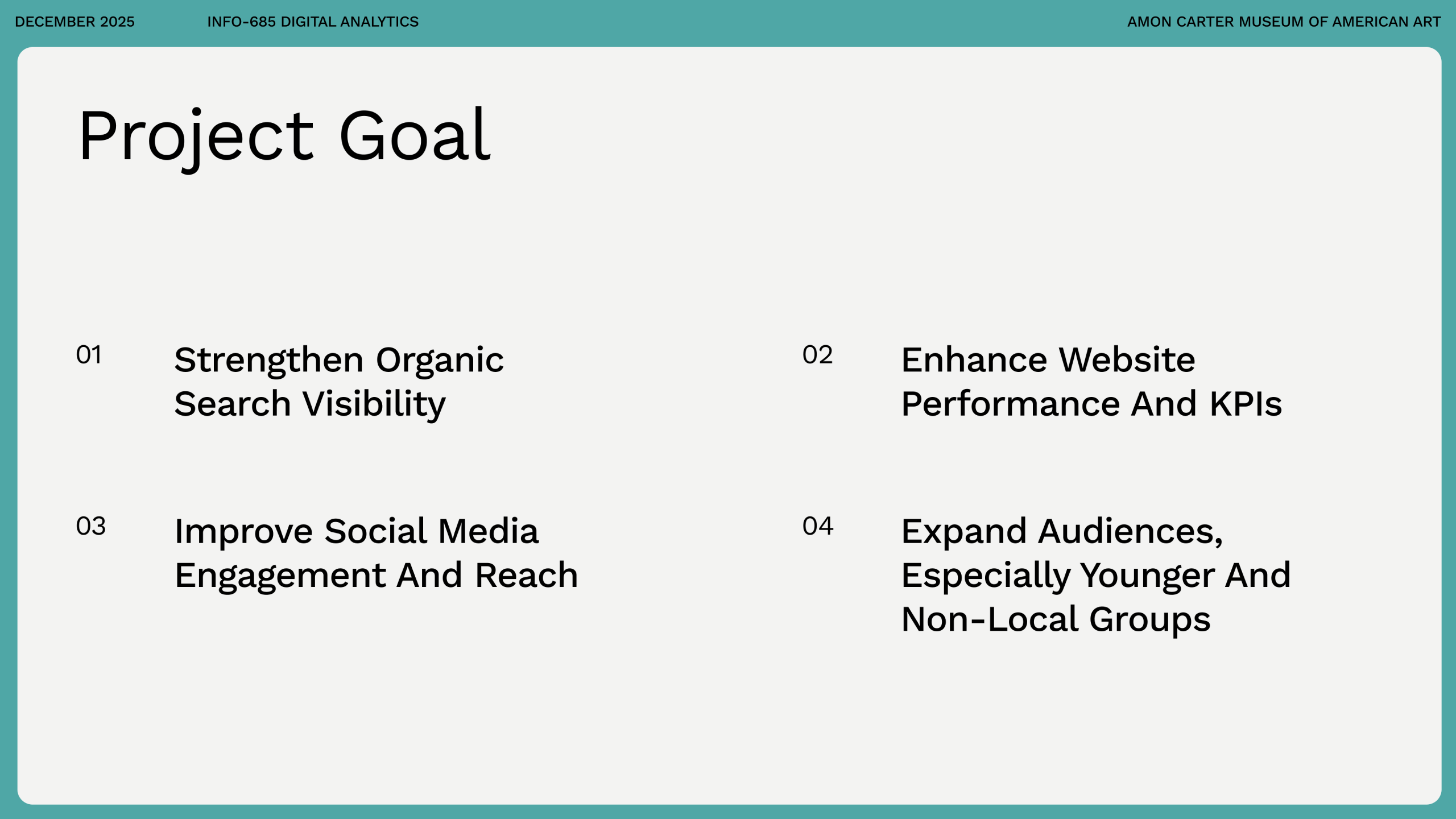
After reviewing all the data, we wanted to deliver a consolidated digital strategy that identified the root causes behind falling organic discovery, misattributed traffic, and low conversion on event pages, as well as a roadmap for engaging younger, regional audiences through social media. Ultimately, the project aimed to strengthen the Carter’s full digital ecosystem so that visitors, educators, and art enthusiasts could find the museum more easily and engage more meaningfully.
Personal Journey
With a background in digital analytics and data integrity, I sought to provide a sustainable, future-proof strategy for the stakeholders at the Amon Carter Museum of American Art. This project offered a valuable opportunity to refine my ability to diagnose complex data discrepancies and translate technical insights into clear business value.
In our collaborative effort to assess the museum’s multi-faceted digital ecosystem, I took a lead role in facilitating stakeholder communication and establishing the analytical framework for the audit. My primary focus was on data analysis, where I identified significant traffic anomalies and attribution gaps that were skewing performance metrics. In addition, I also took it upon myself to create data visualizations for our insights. Beyond the technical audit, I contributed to the social media analysis to evaluate engagement patterns and identify audience growth opportunities. Finally, I was responsible for structuring the framework of our final project presentation, synthesizing our diverse technical findings into a cohesive narrative for the client.
SEO Analysis – An Identity Crisis.
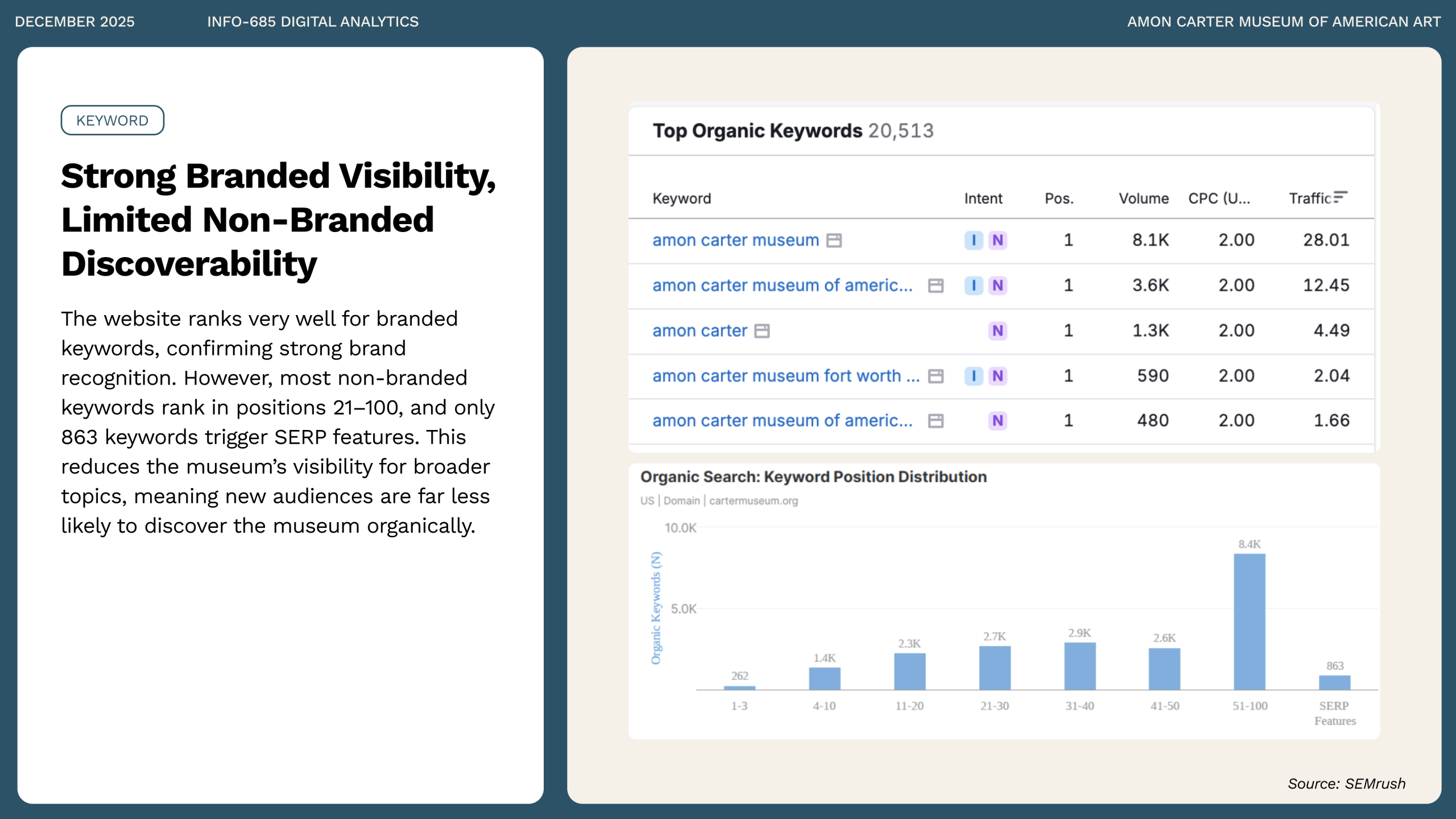
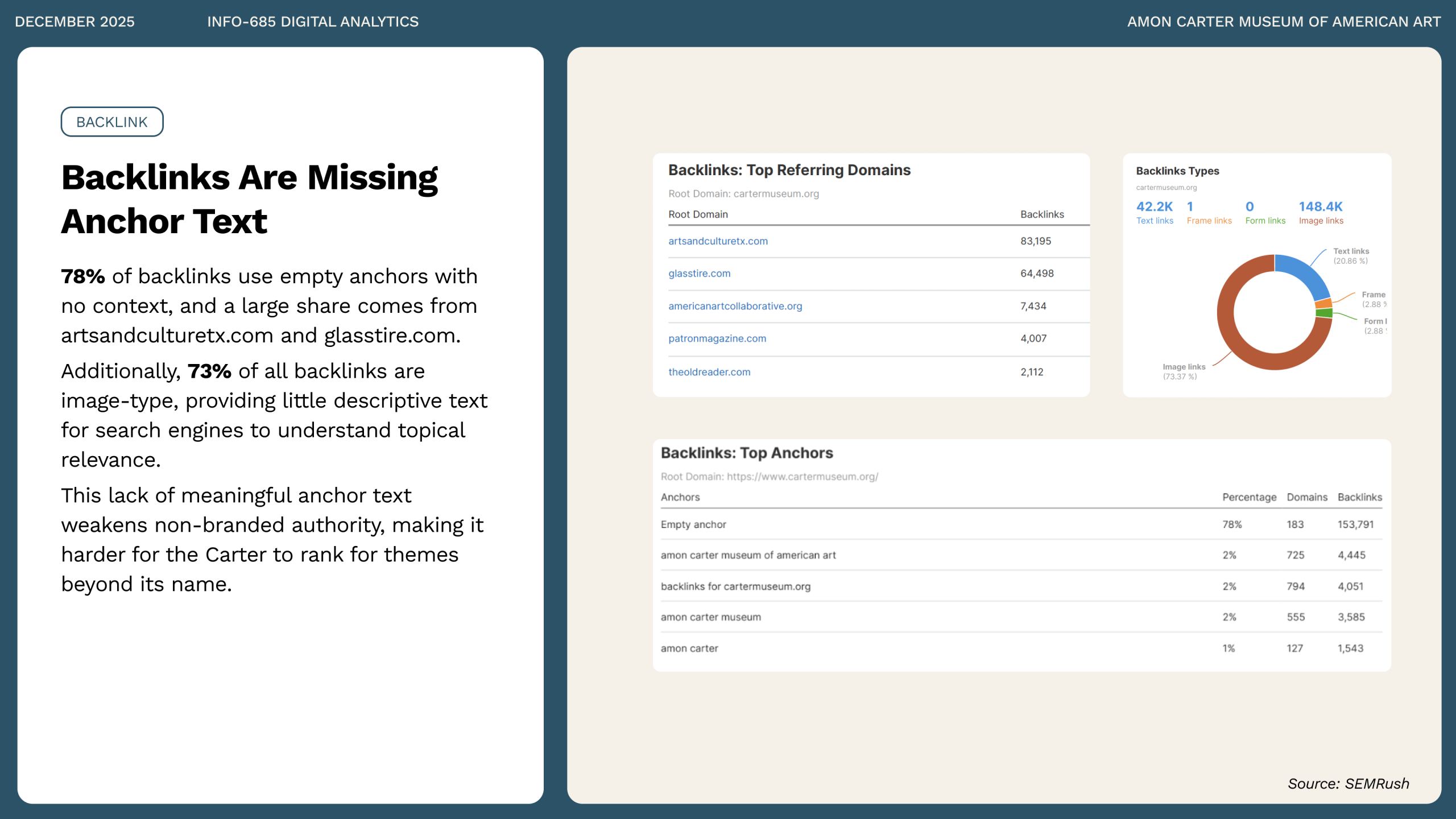
Our investigation started with a fundamental question: “Who does Google think you are?” The answer was, unfortunately, four different people. The museum was unknowingly splitting its own authority by allowing Google to index four different versions of their domain (http/https, www/non-www). This effectively quartered their ranking power, making them invisible for non-branded searches . Furthermore, 78% of their backlinks used “empty” or image-based anchor text, providing zero context to search engines about what the museum actually offers .
- Consolidation: We proposed an immediate consolidation of all domain variants into a single canonical version to centralize traffic authority and clarify the museum’s digital identity.
- Descriptive Tagging: We recommended a campaign to replace empty backlinks with descriptive text to finally tell search engines what the Amon Carter is really about (ex. “American Art,” “Fort Worth Exhibitions”) .
Brownie Points (AI-Proofing)
Beyond traditional rankings, we identified a critical vulnerability in the age of Generative Engine Optimization (GEO). AI models like ChatGPT and Google Gemini rely on clear “entity” signals to generate accurate answers. The museum’s fragmented domain authority and lack of descriptive backlink text created an “identity crisis,” making it difficult for these models to confidently cite the museum as a primary source for American art queries. By consolidating domains and implementing structured data (Schema markup), we aren’t just fixing SEO. As our strategy kills two birds with one stone, we are training AI agents to recognize, understand, and recommend the Amon Carter to digital travelers.

Web Performance: The Mirage of Traffic
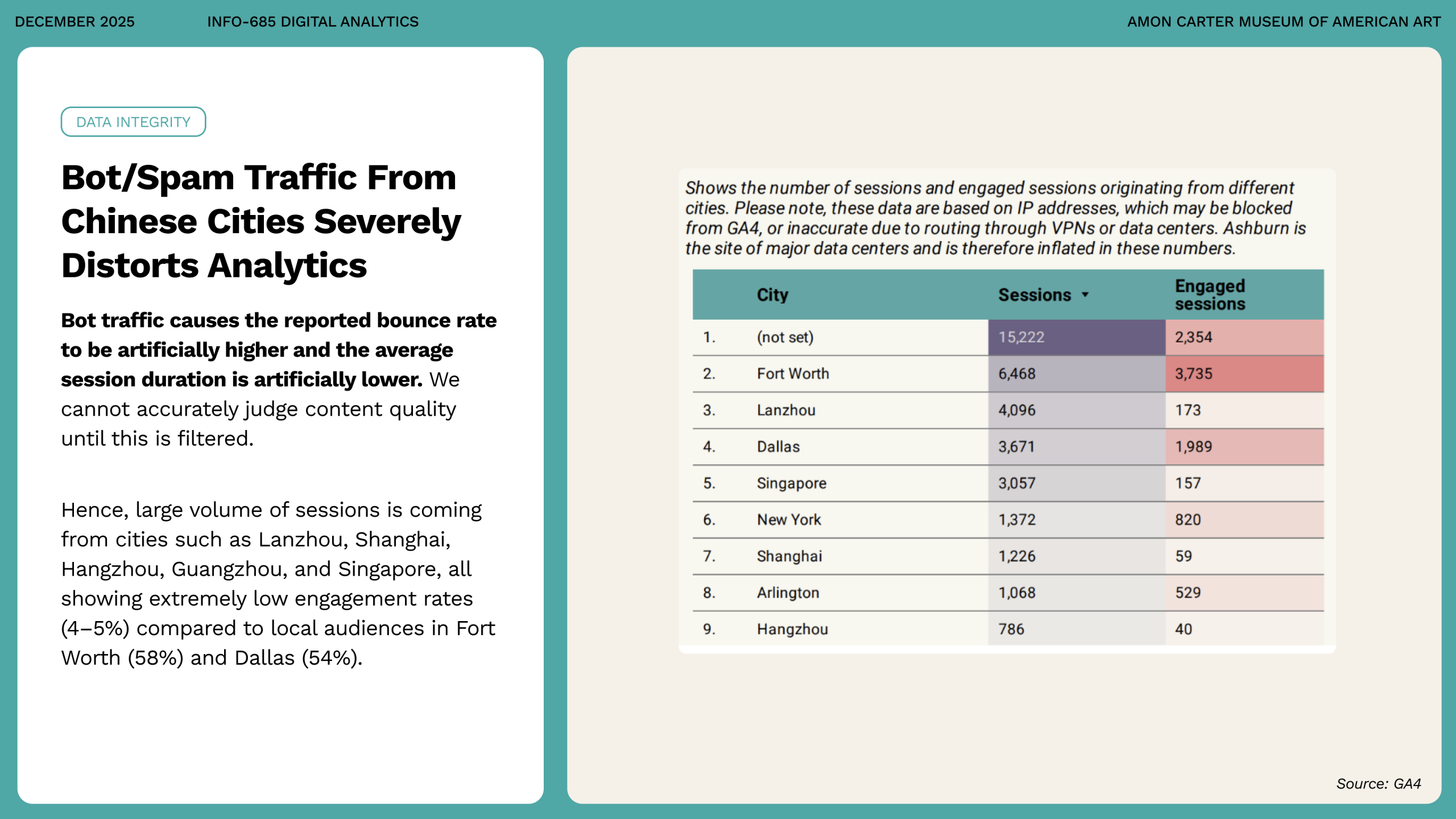
When we looked at the website data, the numbers didn’t add up. We saw traffic, but we didn’t see people.
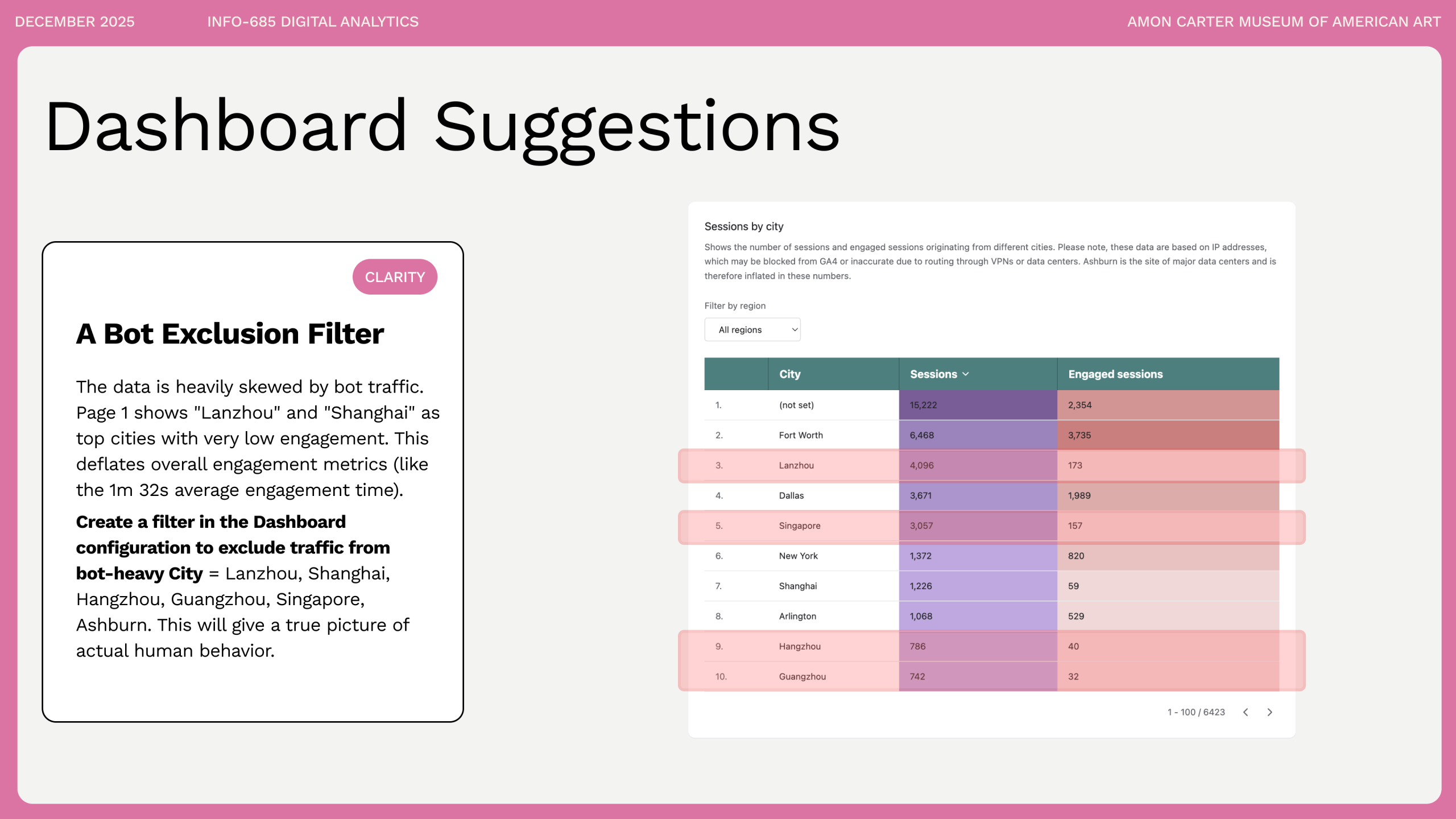
- The Bot Invasion: We traced massive, sudden traffic spikes to cities like Lanzhou and Shanghai. These weren’t art lovers; they were bots with a nearly non-existent engagement rate (4%), artificially inflating session metrics and hiding the true story of user behavior .
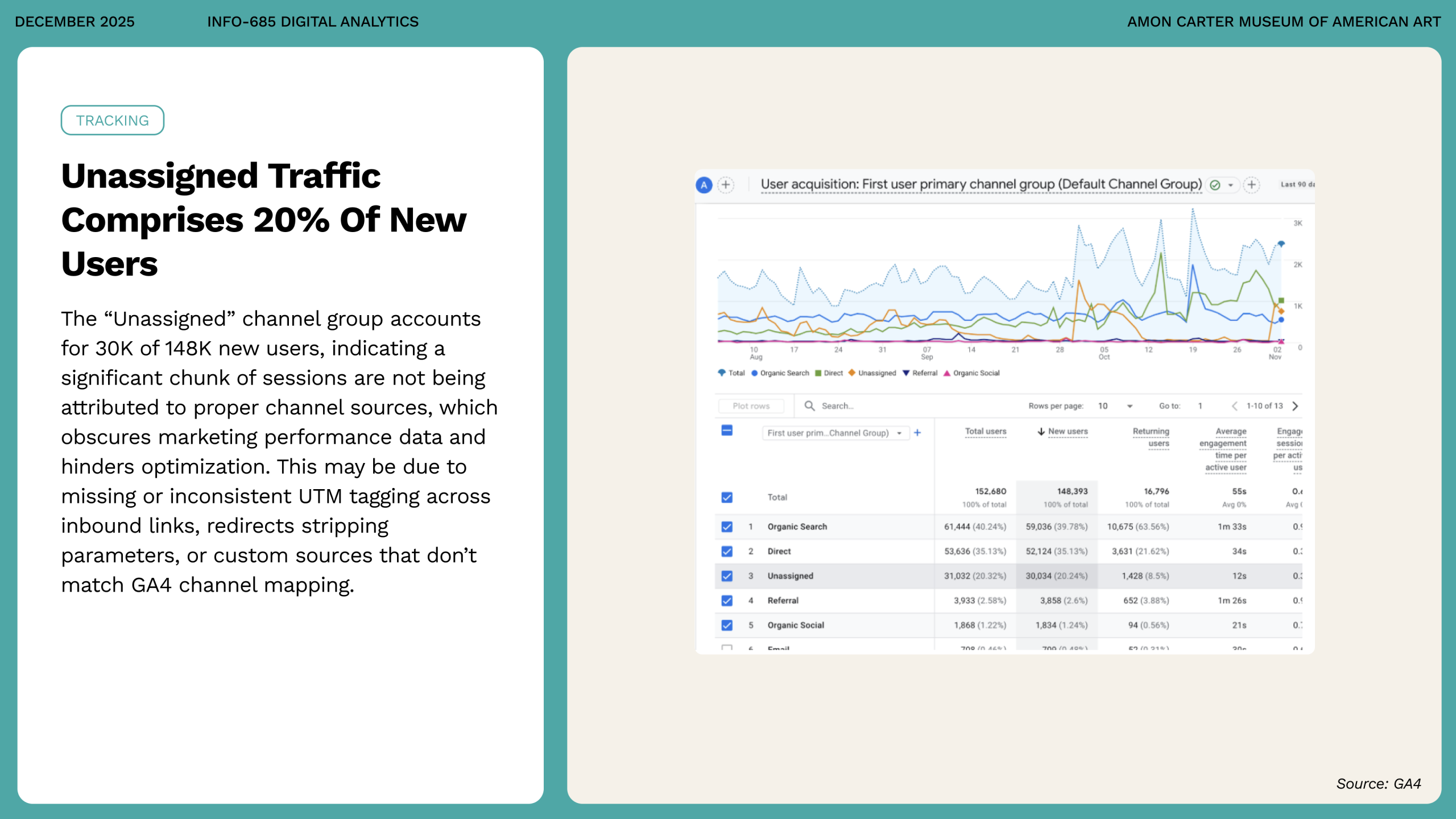
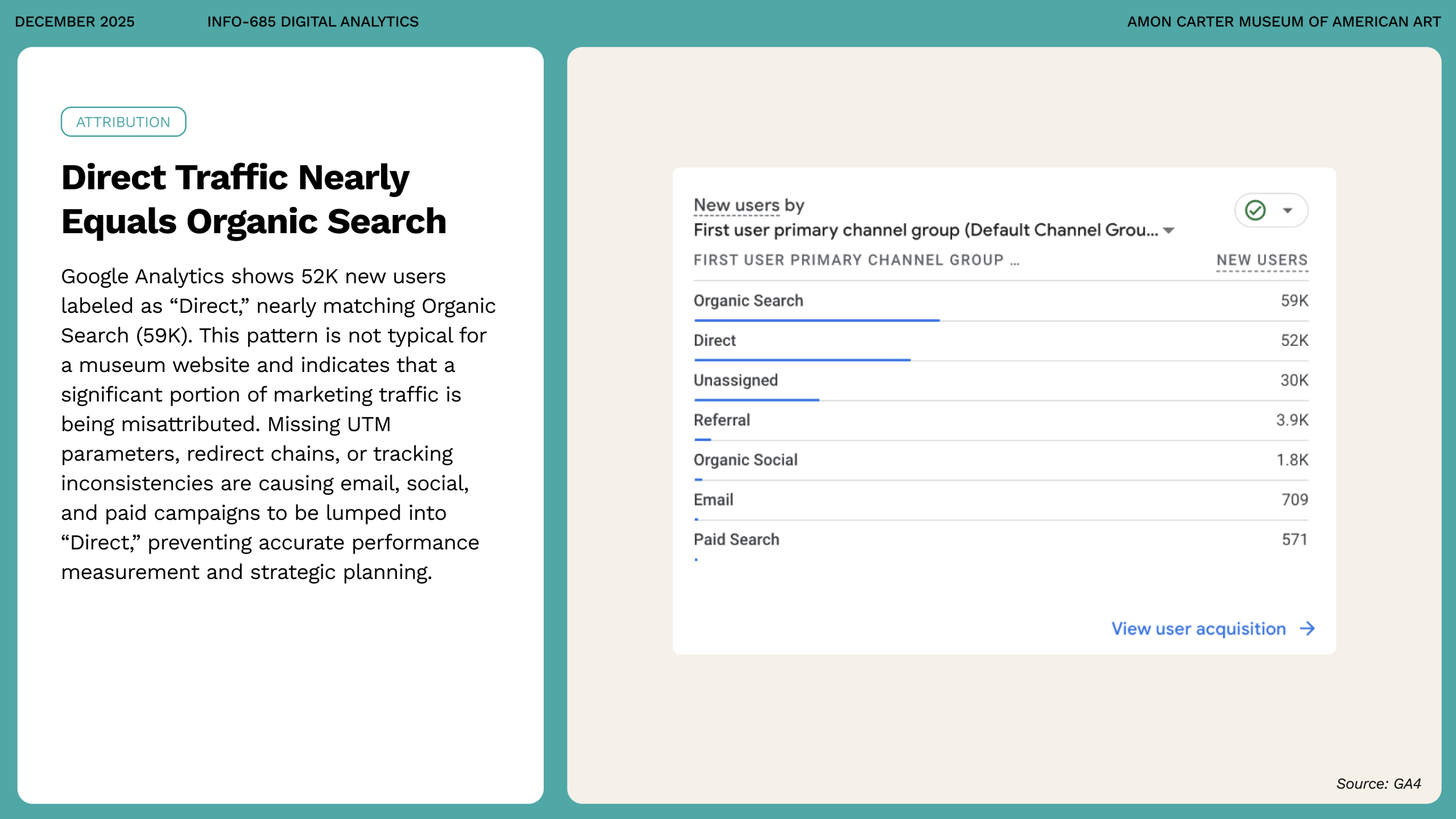
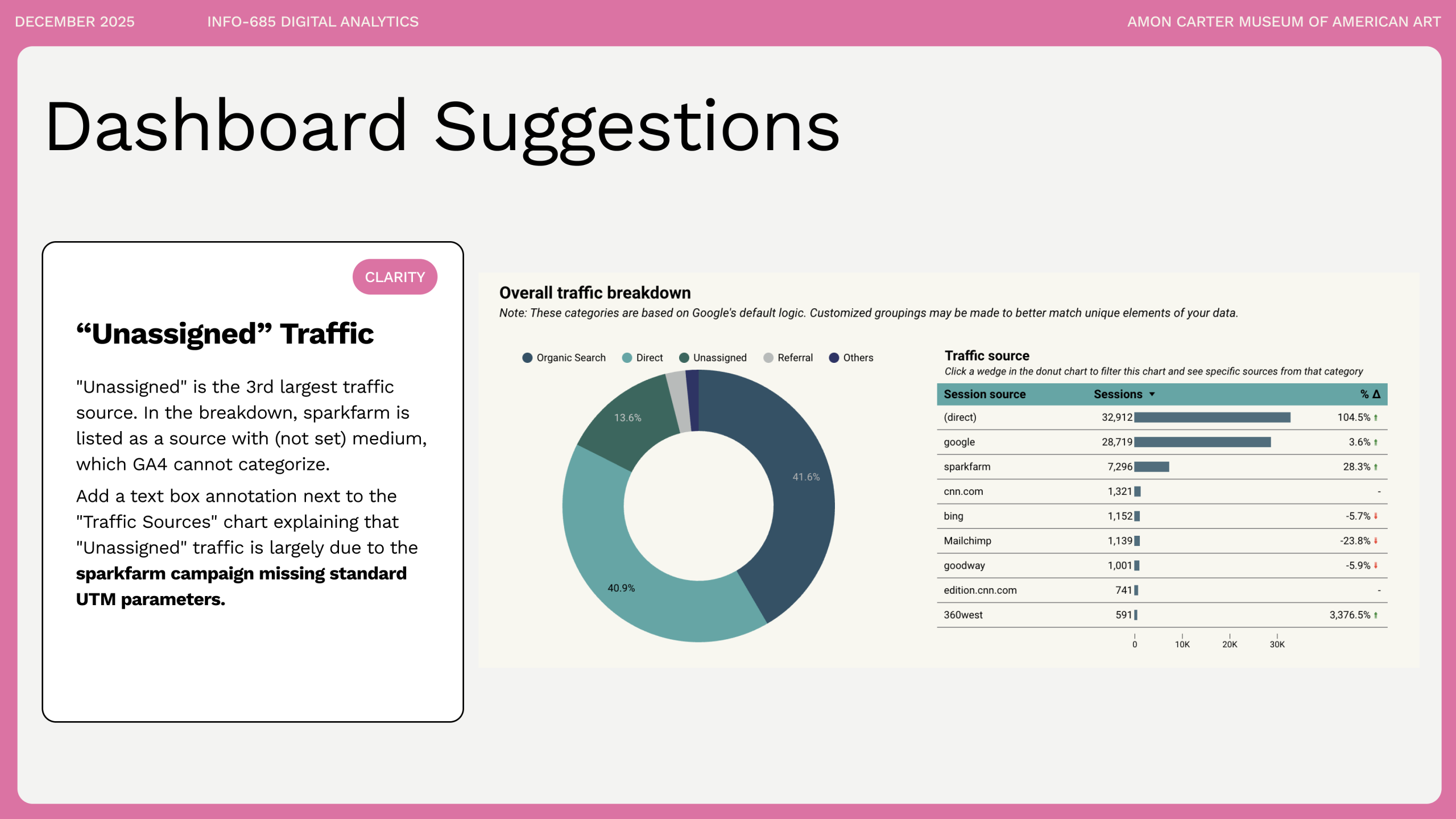
- The Attribution Black Hole: Marketing efforts were vanishing. We found that 52,000 users were listed as “Direct” traffic, nearly matching Organic Search, because email and social campaigns lacked proper tracking tags (UTMs) . The museum was flying blind on campaign performance.
- The Conversion Cliff: The most painful discovery was on the Event pages. Despite getting over 20,000 views, only 5% of users ever clicked “Register”. Why? The “RSVP” button was buried at the bottom of the page – a graveyard for user intent.
We delivered a technical protocol to implement GA4 bot filtering and geographic exclusions to clean the data . To solve the conversion crisis, we designed a “Sticky CTA” that pins the “Get Tickets” button above the fold, ensuring it’s always visible regardless of how far a user scrolls .
Social Analysis: The Engagement Trap
On social media, the museum’s social performance looked stellar, but the business impact was being challenged by the MeltWater Data.
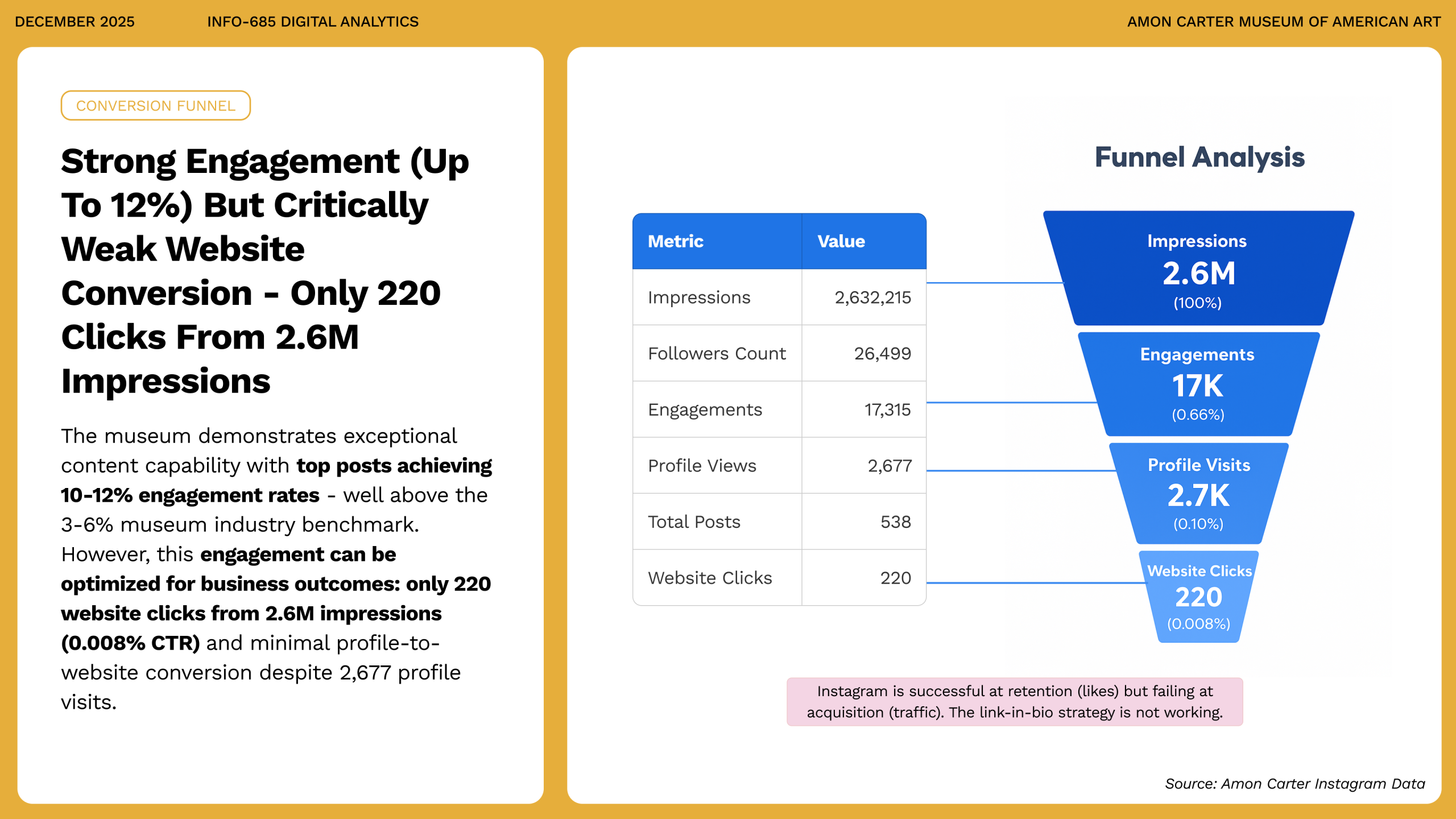
- The “Flyer” Effect: The museum was treating Instagram like a digital bulletin board, posting static images of event flyers. The best posts garnered high engagement rates (10-12%), the click-through rate to the website was a negligible 0.008% . Users were liking, but they weren’t leaving the app to buy tickets.
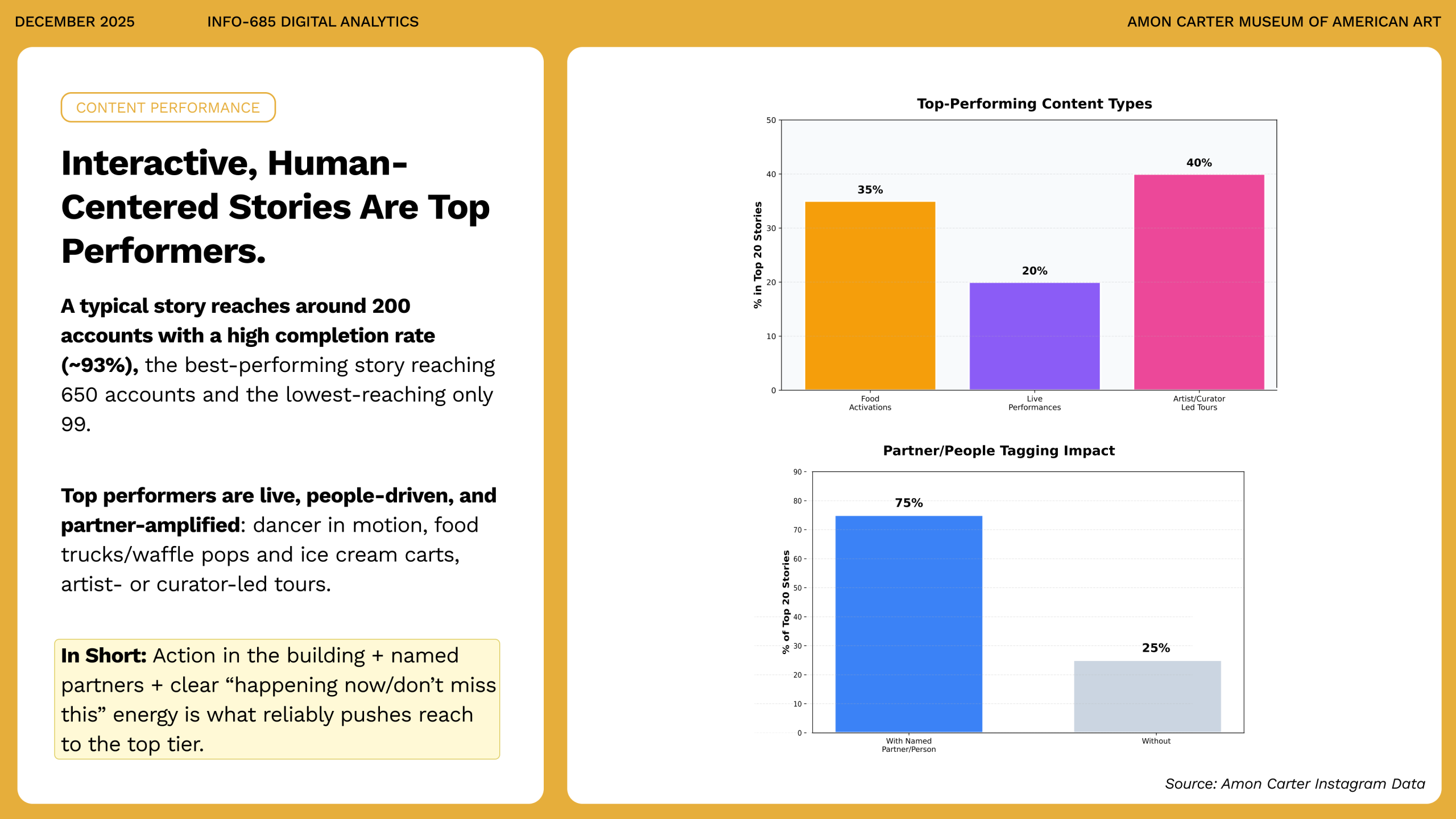
- The Competitor Contrast: Our analysis of neighbors like The Modern Art Museum of Fort Worth revealed a stark reality: personality drives performance. While the Carter posts static graphic while competitors would include reels that featured curators discussing exhibitions, content that consistently topped engagement charts with over 10k views. Data backs that that audiences convert on human connection rather than just information.
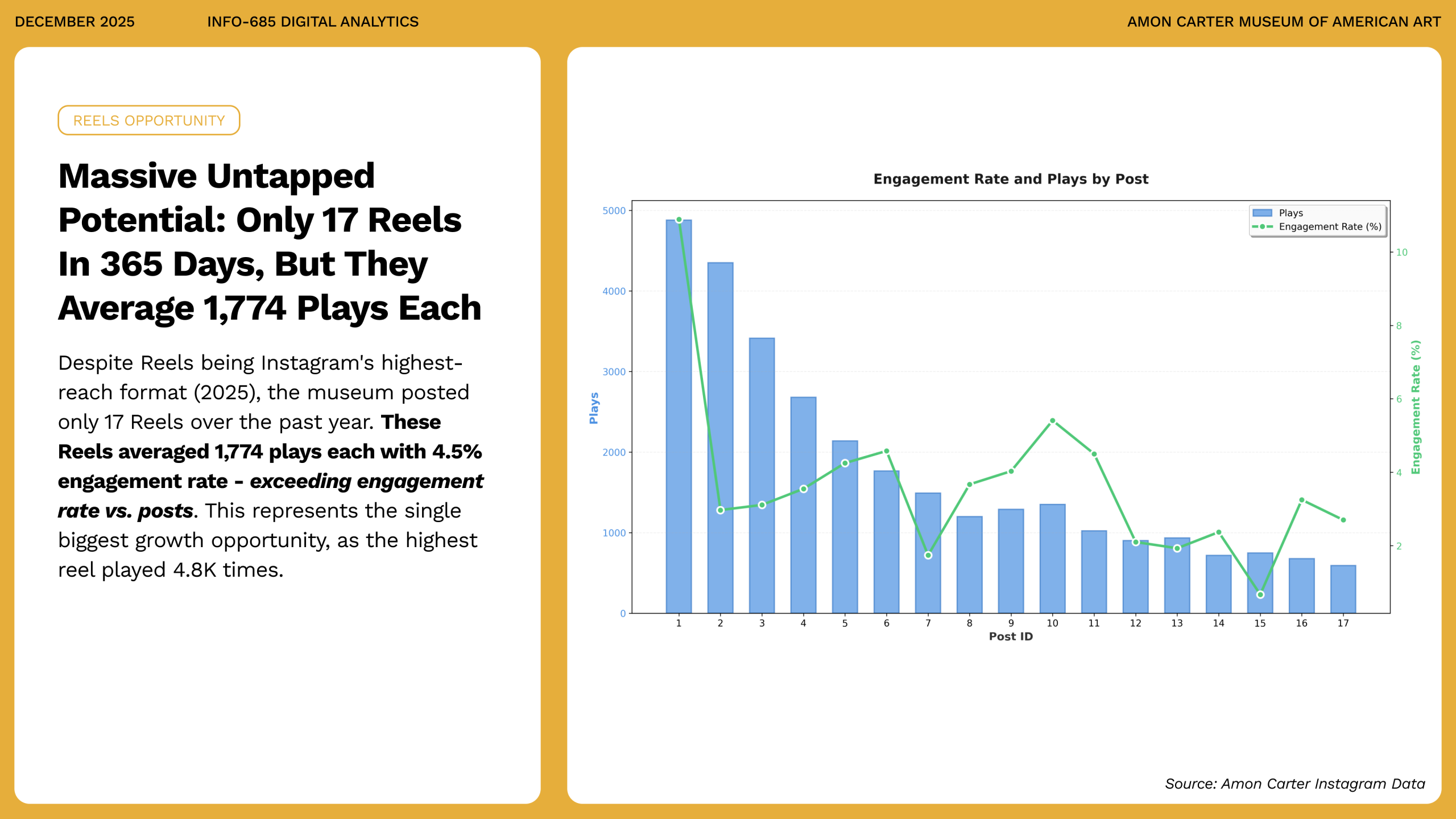
- The Missed Opportunity: Despite Reels being the highest-reach format, the museum had posted only 17 in a year . They were leaving their biggest megaphone in the closet.
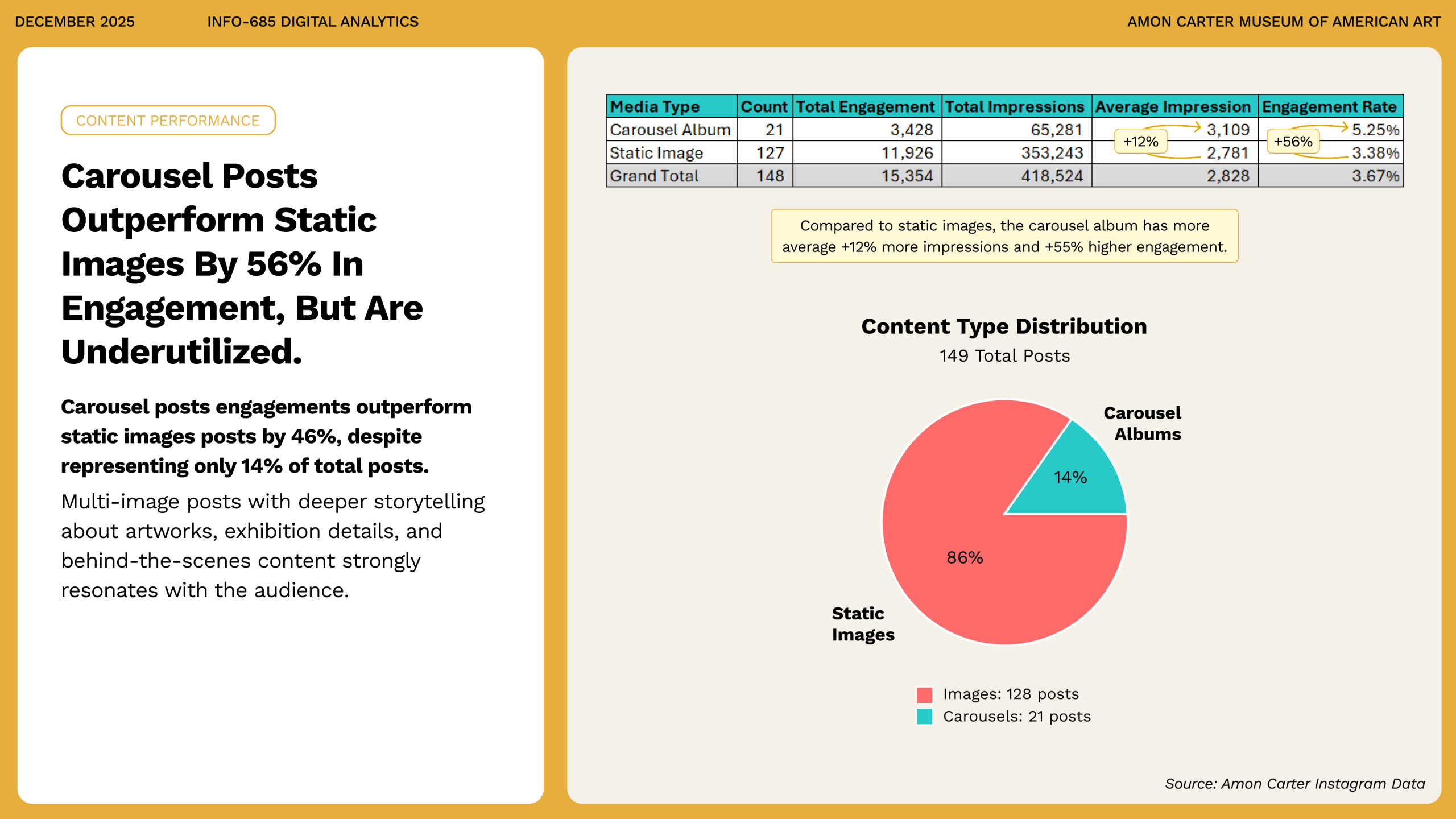
We challenged their entire content strategy. We advocated for a pivot from static images to “scroll-stopping” storytelling via carousels posts and reels. By using multi-slide narratives and behind-the-scenes video content, we aimed to transform passive likes into active curiosity and website traffic.
Suggestion Recap
We delivered a prioritized roadmap distinguishing between immediate fixes and long-term strategy.
- Restoring Data Integrity: We recommended implementing GA4 bot filtering and a standardized UTM naming system to ensure traffic is attributed correctly.
- Designing for Conversion: To fix the low RSVP rate, we proposed a UI redesign that places a sticky “Get Tickets” button above the fold, removing friction for users.
- Pivoting Social Strategy: We advocated shifting from static images to rich storytelling (Carousels and Reels) to transform passive likes into active website traffic .
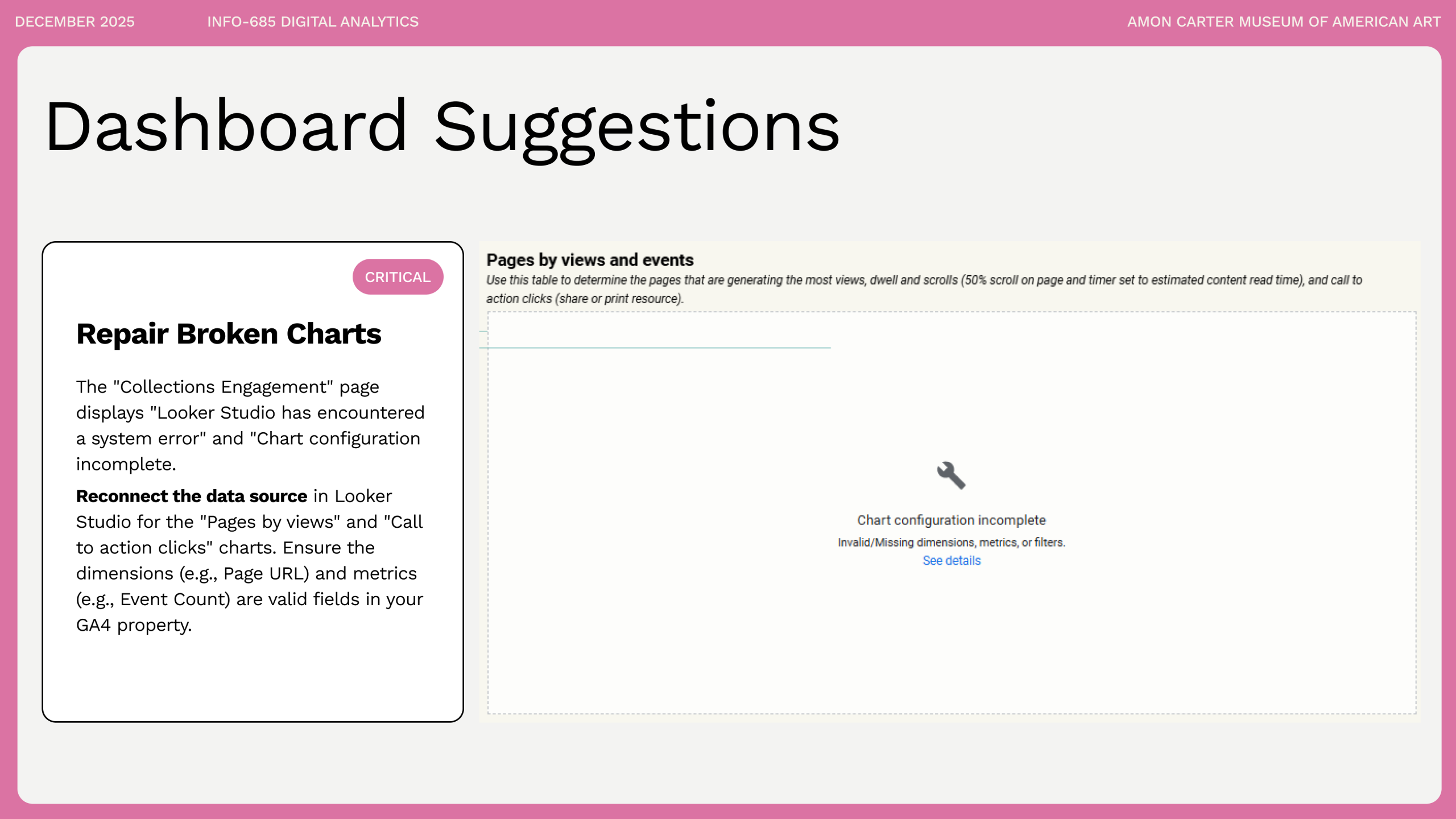
- Dashboard Optimization: We advised repairing broken data connectors to restore visibility on collection engagement , adding explanatory annotations for “Unassigned” traffic sources to clarify reporting for stakeholders , and applying bot-exclusion filters (based on geography) directly to dashboard views to ensure ongoing reports reflect genuine human behavior.
Conclusion
Ultimately, this project was less about “fixing charts” and more about restoring confidence. When we started, we uncovered that the Amon Carter team was reliant on data that fundamentally didn’t reflect their reality. The most critical challenge wasn’t finding the technical errors – it was translating them into a language that empowered our stakeholders, Michelle and Clara, to act . We were dealing with complex range of issues: canonicalization errors, regex-based bot filtering, and broken redirect chains. However, presenting a spreadsheet of technical debt would have only added to their overwhelm.
The most profound takeaway for me was uncovering that digital analytics is an act of listening. Beyond fixing a broken RSVP button or properly tagging a social campaign, it could also be removing the friction that stands between a curious online visitor and their experience with the museum. Through this experience, I reframed these technical fixes as business solutions – turning “fix redirects” into “ensure every click counts” – we moved the conversation from defensive troubleshooting to proactive strategy.