Darija Vasileva, and Team Daeto
───────
Part I: The Time and Convenience Problem
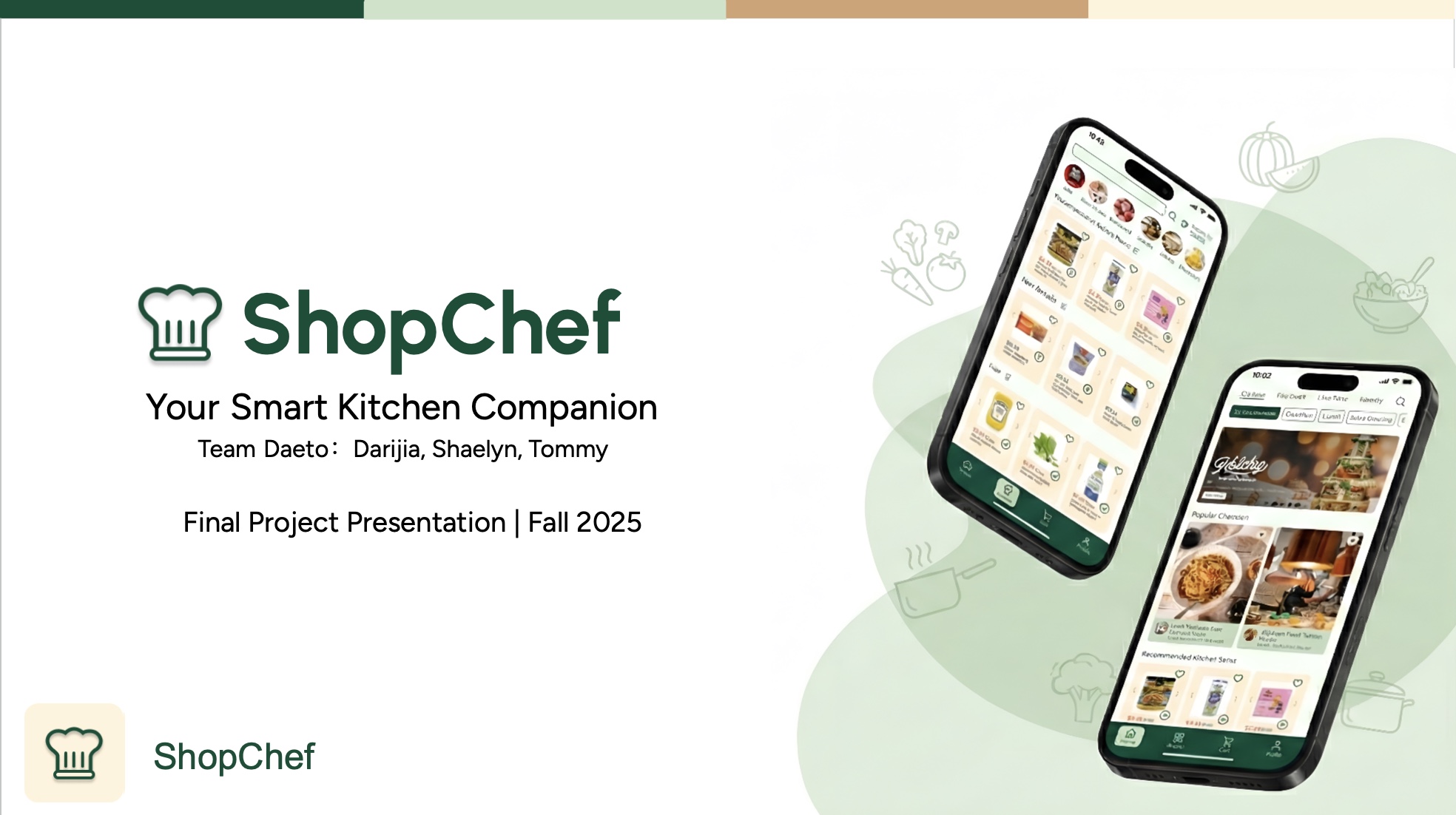
ShopChef is a livestream shopping platform that connects users directly with professional chefs, allowing them to buy food and ingredients both from an online marketplace and in real time through interactive cooking videos. Our team developed ShopChef after reflecting on what we share as young students and early-career professionals: a desire to cook better meals, paired with real barriers that often get in the way. Limited time, tight budgets, and the need for convenience make cooking feel inaccessible, while the lack of credibility and transparency among many food influencers makes it hard to trust what we see online. ShopChef responds to these challenges by combining trusted culinary expertise with an efficient, honest, and engaging shopping experience designed for our generation.
In this project, my individual role was to shape the concept around recipe-focused content. I identified that beyond time, budget, and convenience, skill barriers are a major challenge for young people who want to cook but don’t feel confident in the kitchen. By emphasizing clear, accessibly recipes and demos led by professional chefs, I helped position ShopChef not just as a shopping platform, but as a learning tool that builds cooking skills and lowers the intimidation of cooking at home.
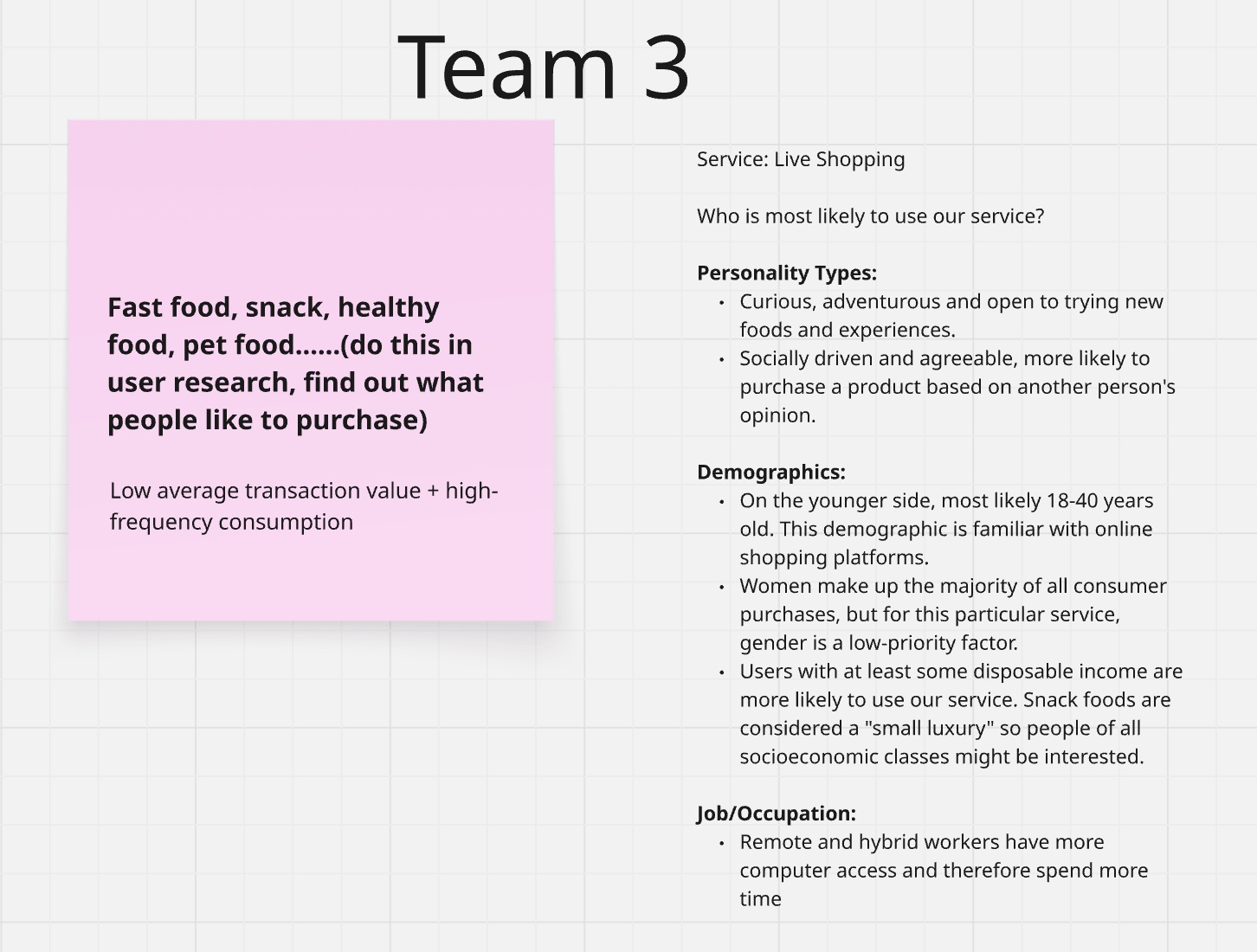
Below is a screenshot of our first ever Miro board where we merged our ideas together.
───────
Part II: Cooking Up the Product
Our research process was central to getting the idea off the ground. We began by closely examining participants’ shopping habits, food preferences, and household situations, using one-on-one user interviews to understand how people in our demographic currently navigate cooking and food purchasing. These interviews helped us identify the core components our app would need to be useful and relevant. We then tested users’ familiarity with our perceived ideal app through card sorting, but found that many participants struggled to understand the exercise and had difficulty visualizing the app itself. This insight prompted us to step back and refocus on our most important user flows. Moving forward, the defining concept became balancing the app’s features: ensuring that education, entertainment, and shopping convenience worked together seamlessly rather than competing with one another.
Linked here is our proposed IA (information architecture). The legend in the bottom right corner informs how to read the visualization.
After coming to this conclusion, we created a tree test to clearly define the user flows that would be featured in the final prototype. The test focused on key tasks such as interacting with chefs during livestreams (including tipping), shopping within the marketplace, and engaging with profile items. This approach proved far more successful than earlier methods, as users were able to navigate the structure more intuitively. The results helped solidify our information hierarchy and gave us confidence in the core flows that ultimately shaped the app’s final design direction.
───────
Part III: ShopChef in Color
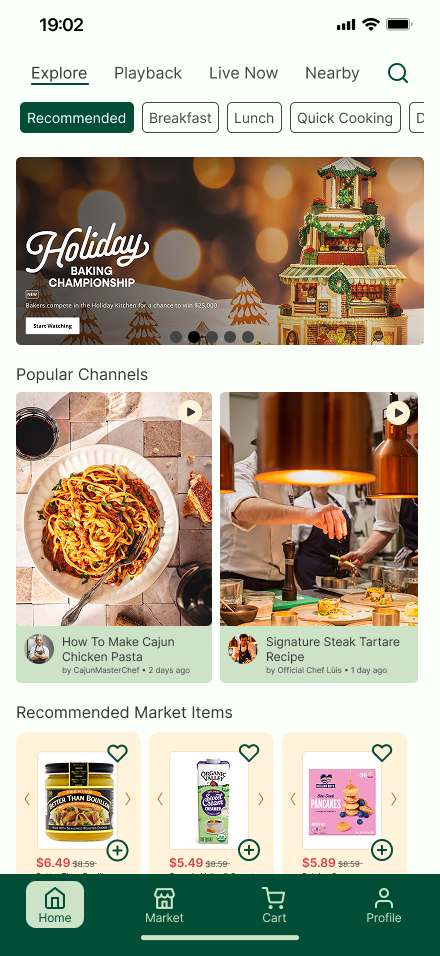
After solidifying the information architecture and user flows, we moved into defining the visual identity of the app. We chose a color scheme of greens and soft beiges to convey friendliness while emphasizing fresh, high-quality food. We then built an interactive prototype in Figma, establishing our visual components and a consistent layout system. All spacing and measurements were set in multiples of four pixels to maintain visual rhythm and scalability. The home page became our most important screen, as it is where all content types coexist; our challenge was to present this information clearly without cognitively overloading users. Carousel scrolling proved especially effective, allowing us to condense and organize a large amount of content in a way that feels intuitive and well-suited for a mobile experience.
───────
Part IV: Conclusion
In conclusion, ShopChef represents a thoughtful, research-driven response to the challenges our generation faces around cooking, time, and trust in digital food content. This project allowed our team to move through the full UX process, from early ideation and user research to testing, information architecture, and high-fidelity prototyping, while constantly iterating based on user feedback. For me, this work was especially valuable in strengthening my ability to identify underlying user needs, translate research insights into concrete design decisions, and balance multiple product goals within a single interface.
Looking ahead, I plan to continue refining the design by polishing smaller interaction details, improving visual consistency, and building out additional screens to better reflect a real, end-to-end product experience. As I pursue a future career in UX, this project serves as a strong foundation for developing more complex, scalable designs and deepening my skills in usability testing, interaction design, and systems thinking. Ultimately, ShopChef has reinforced my interest in creating intuitive, trustworthy digital experiences that meaningfully support users in their everyday lives.