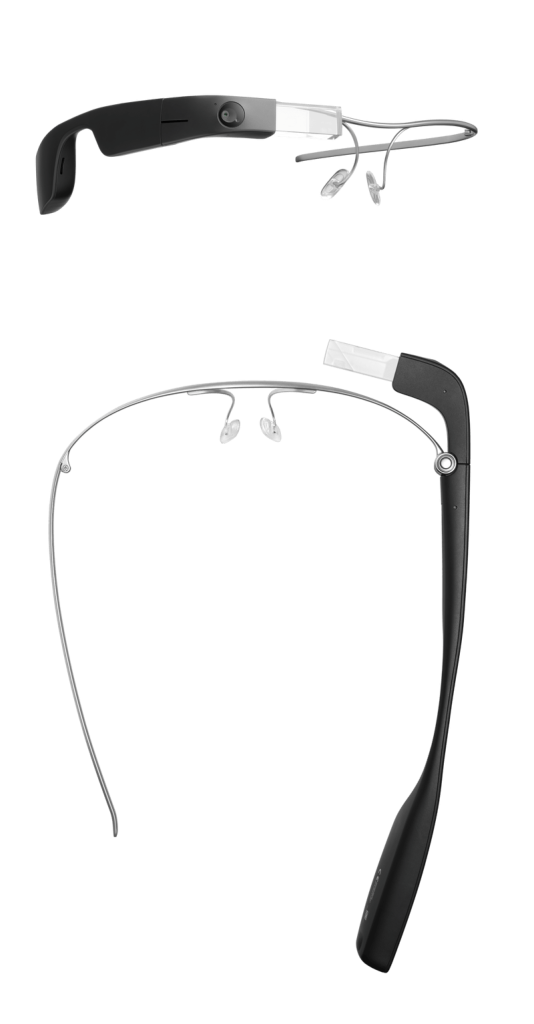
Envision Glasses are AI-powered smart glasses designed for individuals who are blind or have low vision. With an integrated camera and built-in speakers, they articulate everyday visual information into speech by “speaking out” the visual world to wearers. The lightweight wearable offers an array of features designed for accessibility including real-time text and object recognition, voice controls, and video calling with external interpreters to support independence and engagement with one’s surroundings.
Feature 1: Real-Time Text and Object Recognition (Instant Text, Describe Scene)

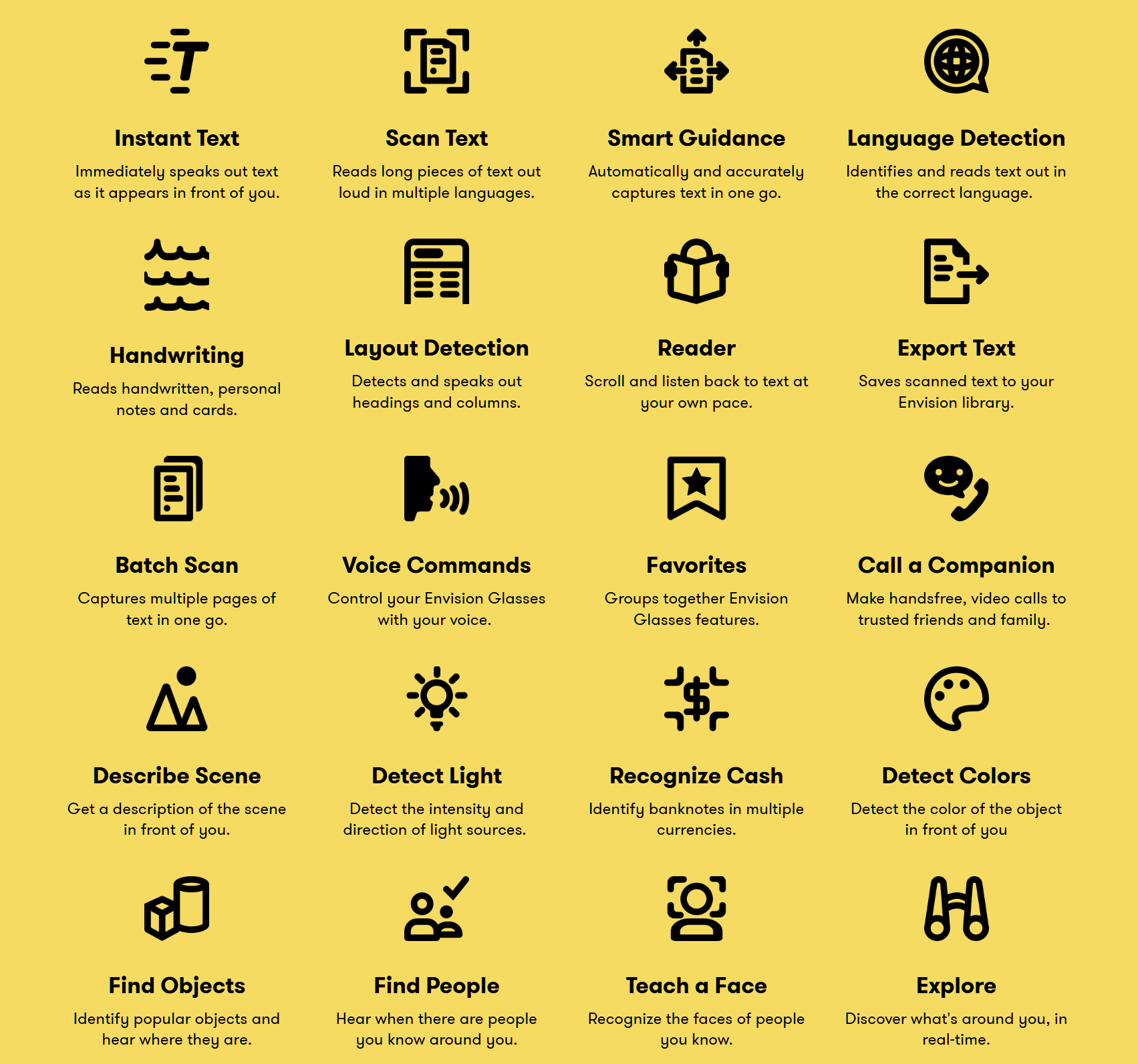
The Envision Glasses’ list of features is extensive, ranging from environmental interpretation to external sharing and communication of information. A key feature in the former category is real-time text and object recognition, with tools like Instant Text and Describe Scene. Instant Text captures text in front of the user (e.g. signage, printed documents, or handwritten notes) via the camera and speaks it aloud through integrated speakers; similarly, Describe Scene takes in the user’s surroundings and provides audio descriptions, such as the color of an object or if people are nearby. Envision Glasses enhance this interpretation with AI (powered by GPT-5 from OpenAI) with features such as recognition of people familiar to the user.
These features showcase the social model of disability and the functional solutions model in practice, the former of which defines disability as the result of societal, environmental, and attitudinal barriers that restrict people with impairments, rather than the impairments themselves; and the latter describing how these environmental barriers can be removed through technology and practical solutions. In the instances described above, users face an obstacle due to a non-inclusive environment (e.g., a written sign that is unaccompanied by verbal readout or cue). Tools like Instant Text and Describe Scene reduce the barriers of a non-inclusive environment by filling in the gap with verbal descriptions. In doing so, Envision Glasses reshape users’ interaction with the environment to support fuller participation and overcome its inaccessible design.
Feature 2: Call a Companion


Call a Companion allows Envision Glasses users to initiate a live video call with a trusted person (the “companion”) who receives access to the camera’s video feed. The companion can them verbally guide the wearer via the glasses’ speakers (e.g., providing input when trying on clothes, as pictured above).
Within the framing of the social model, Call a Companion addresses the lack of accessible visual information within everyday environments, e.g., poorly labeled packaging or visually complex spaces, and provides a functional solution in the form of real-time access to a human interpreter. Similar to the previous feature, Call a Companion positions the environment’s design as a barrier, rather than something intrinsic to the user (i.e., blindness), and bridges the gap through a technological solution.
When reflecting at surface level, Call a Companion risks echoing aspects of the charity/tragedy model, which describes the pity and saviorism often applied by non-disabled people toward those with disabilities. In moments where a user must ask for help interpreting their surroundings, the interaction driven by outsiders might be framed as someone “rescuing” a blind user from difficulty – perpetuating a narrative of the “tragedy” of blindness. However, Envision Glasses counteract this framing by ensuring assistance is initiated and controlled by the user. The video calls through Call a Companion are a form of self-directed support in which users have independence to use the tool as they see fit. Thus, assistance preserves dignity and agency, which ultimately aligns with Envision Glasses’ mission to promote independence for the user.
Additional Thoughts: Cost and Limitations
In exploring user sentiment toward Envision Glasses online, reviews often mention cost as a barrier to use. The most basic model has a price tag of nearly $2,000, which many online posters who are blind or have low vision consider far too expensive. While Envision Glasses do successfully promote accessibility with their robust feature offering, they seem to be cost-prohibitive to many individuals, and therefore inaccessible from a financial standpoint. These perspectives highlight the importance of considering other aspects of accessibility in assistive technology (such as price point) and also raise ethical concerns of exploitation of marginalized populations, i.e., companies extracting financial value from accessibility needs for profit.