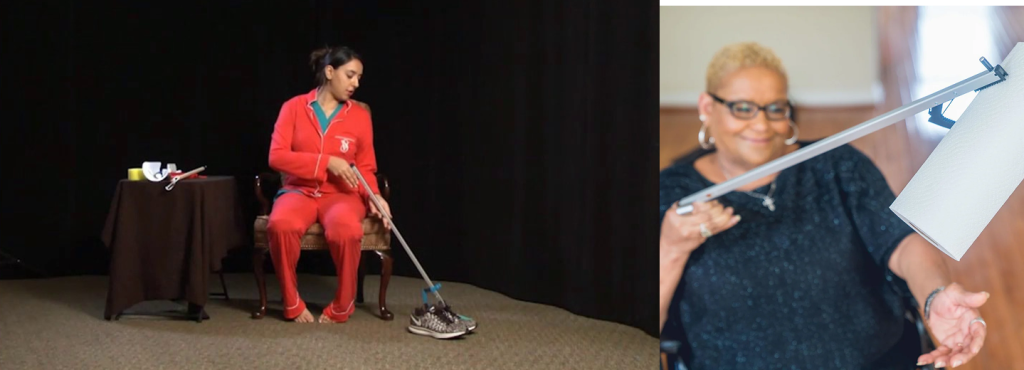
I first saw this tool through a Reel, where a pregnant woman demonstrated how it had “changed her life.” In the video, she used the device to pick items up from the floor without bending, reach objects on higher shelves, and overall, reduce physical strain during daily tasks. However, it made me curious as to the origins of this tool. Was it simply a pregnancy aid tool, as the video was framing it? Its form and function resembled assistive technology rather than a product designed solely for temporary convenience. This prompted me to look further into the device and its origins.
I learned that this is a grabber tool, also known as a reacher or reach extender. It is a widely used assistive technology designed to support people with limited mobility, reduced grip strength, chronic pain, or balance impairments.
About this tool
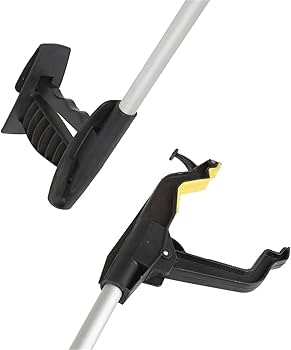
The grabber tool has a long shaft with a trigger-style handle and a claw mechanism that allows users to pick up or reach objects without bending or overextending their bodies. Another important feature is the trigger-style handle, which typically requires less grip strength than grasping objects directly. Both these features ensure the products’ utility and usability. It is also overall inexpensive due to using simple materials and mass production.
Although it is marketed to older adults or people with disabilities, the same design features that make the grabber accessible in these contexts also benefit a much wider group of users, including pregnant people, individuals recovering from surgery, and people experiencing temporary injuries. This example illustrates the well-known design principle that when we design for disability, we often end up designing for everyone.
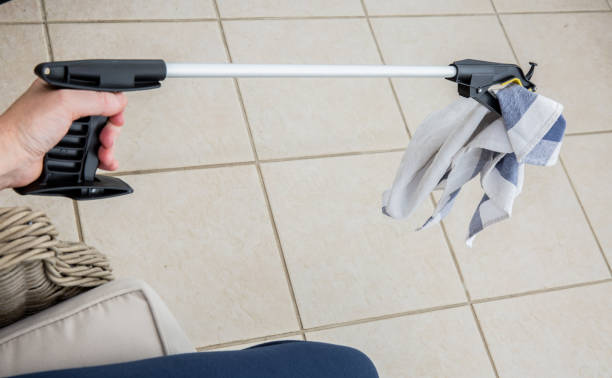
Feature 1: Extended Reach Shaft
The long shaft allows users to pick up objects from the floor or reach high shelves without bending, stretching, or risking loss of balance.
Models that succeed
- Medical model:
Succeeds by helping with physical limitations such as reduced mobility, joint pain, or balance challenges. - Functional solutions model:
Succeeds by solving a specific task-based problem: reaching objects safely and independently.
Models that fall short
- Social model:
Fails because the tool responds to inaccessible environments rather than raising the question of why homes are not designed to accommodate people with mobility disabilities in the first place. - Charity/tragedy model:
May present the need for extended reach as a sign of bodily decline, which may lead outsiders to pity people who rely on the tool.
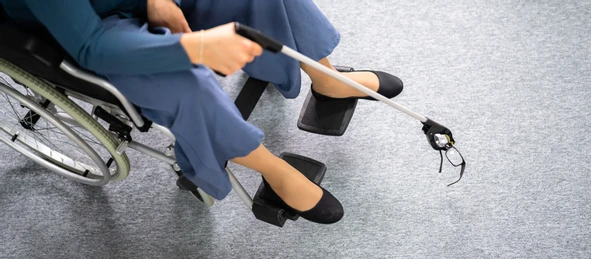
Feature 2: Trigger-Style Handle (Low Grip Requirement)
The handle mechanism allows users to grasp and lift objects with minimal hand strength or fine motor control.
Models that succeed
- Medical model:
Succeeds by assisting with impairments such as arthritis, hand injuries, or neurological conditions. - Functional solutions model:
Strongly succeeds by prioritising task completion over bodily “correction.”
Models that fall short
- Social model:
Does not fully address why everyday objects require strong grip strength in the first place or why such items are out of reach for the users
Final Thoughts
While it is definitely an assistive technology, the grabber tool helps users beyond its target demographic with everyday tasks. By addressing real physical constraints through thoughtful, low-tech design, the grabber tool shows us that designing for disability is not limited but opens a pathway to a more inclusive and humane design for all.