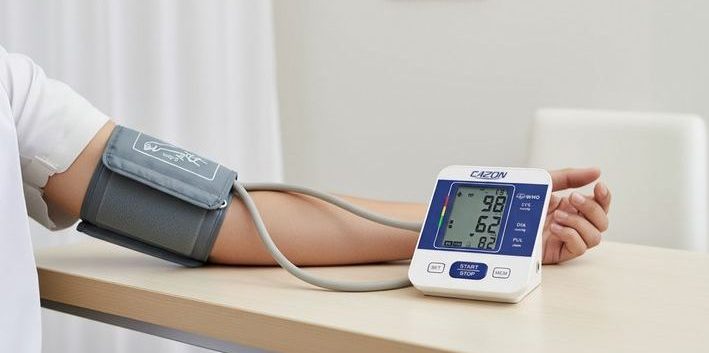
Assistive Technology: Home Blood Pressure Monitors
Nowadays, HBPM(house blood pressure monitor) has become a common part of everyday households, especially those with older adults or people managing hypertension. By enabling blood pressure measurement outside clinical settings, this kind of AT(assistive technology) devices support routine health monitoring and allow users to manage their well-being more independently at home.
Accessibility Needs in Home Blood Pressure Monitoring
As HBPM continues to move into home spaces, accessibility becomes a key factor in determining whether users can benefit from these devices. When used without professional guidance, age-related, disability-related, and situational barriers can significantly affect their usability in real world context.
Feature Analysis Through Disability Models
Feature 1: Tactile and simplified control buttons
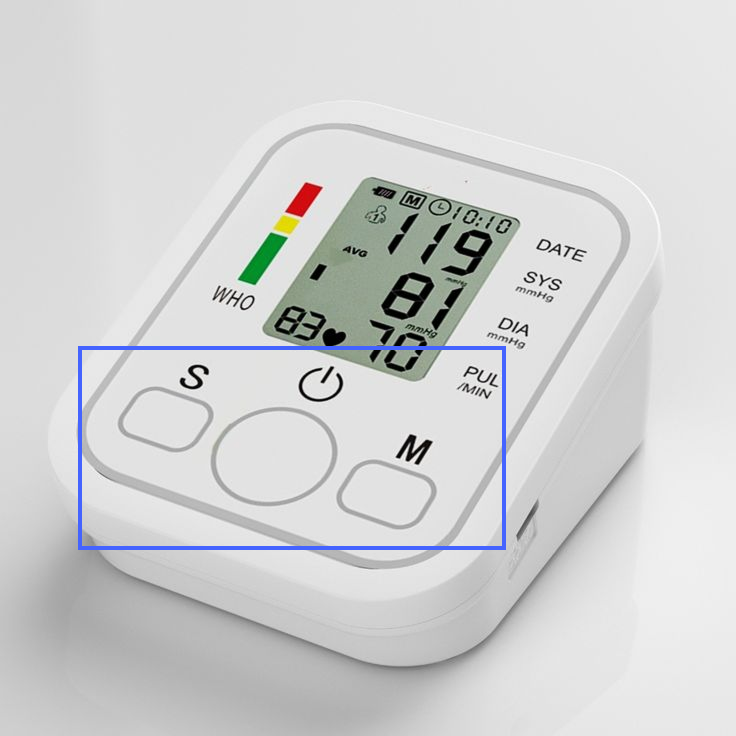
Figure 1
Most HBPM include specific buttons, such as start, power, or memory controls(Figure 1). These buttons are typically slightly raised and easy to locate through touch. For users who are blind or visually impaired, such controls don’t present an accessibility barrier, because the interaction doesn’t rely on visual precision.
This feature demonstrates accessibility at the sensory level by allowing users to operate the device independently through touch. It also reflects a social awareness of domestic medical devices, which controls must be usable by a wide population in everyday environments, not only by users with full vision.
Feature 2: The cuff as a core functional component
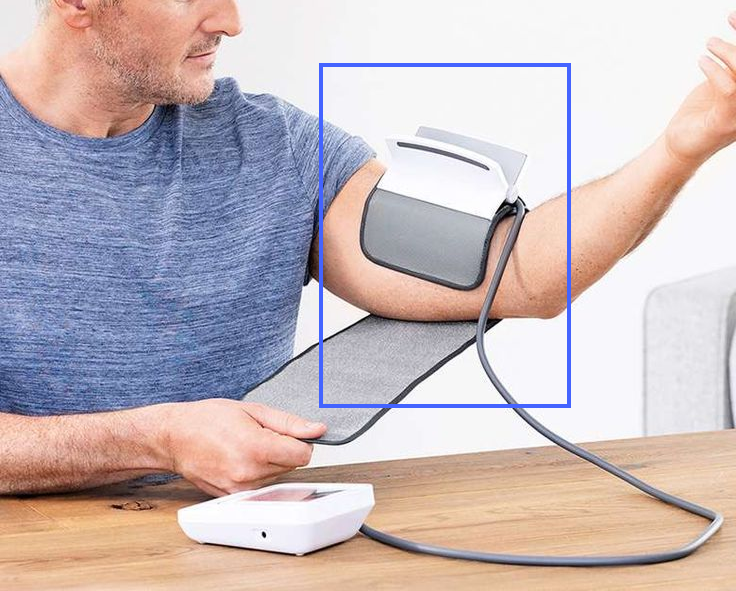
Figure 2
The cuff is a core functional component of HBPM (Figure 2), which serves as the physical connection between the user’s body and the device, making it central to both measurement accuracy and accessibility.
In practice, correct cuff placement can be challenging, especially for inexperienced users or those with limited mobility or cognitive challenges. If the cuff is wrapped incorrectly, blood pressure readings may become incorrect. This actually reflects a limitation of the medical model, in which accuracy depends heavily on users following accurate procedures.
Recent designs solve this challenge by introducing cuffs with expanded inflatable areas that wrap more fully around the arm. These new cuffs reduce user error, lessen the physical and cognitive burden of correct use, and improve both the utility and accessibility of HBPM.
Feature 3: Simplified visual display
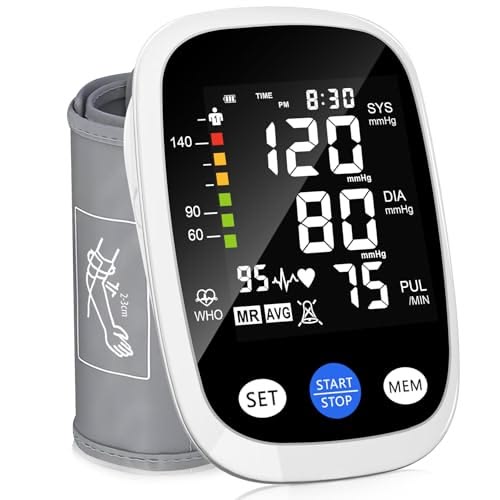
The visual display is a main way most users interpret blood pressure readings, so its design directly affects whether results can be understood quickly and correctly (Figure 3). During the use of HBPM, small fonts, low contrast, glare, or bad layouts can become obstacles, especially for users with varied sensory and cognitive needs.
To solve this problem, many HBPM use simplified displays with large text, high contrast, and minimal essential information. From a functional solutions perspective, this design targets a practical pain point by lowering perceptual and cognitive load.
Feature 4: Voice output
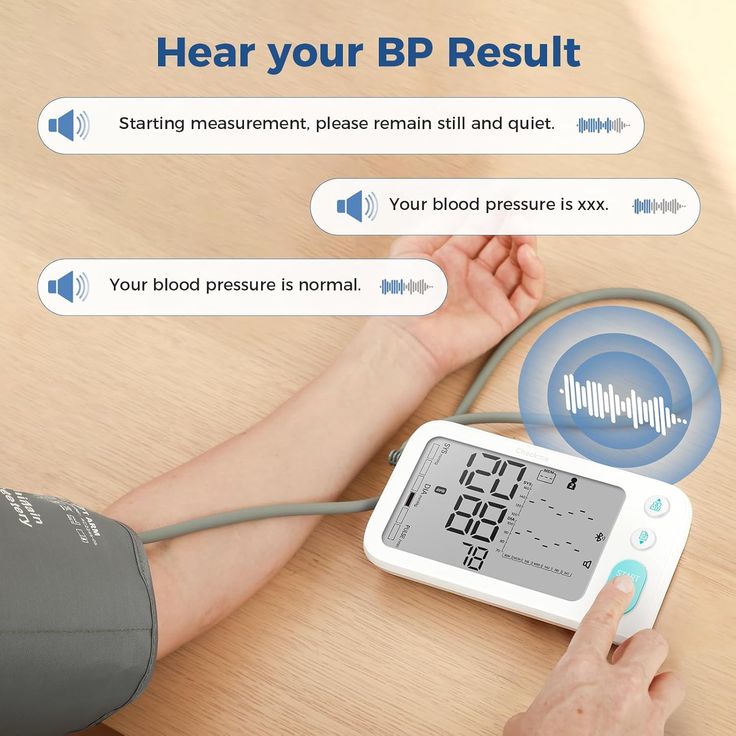
Figure 4
Audio or voice output is also a key accessibility feature in some HBPM because it provides a non-visual way to receive results (Figure 4). Without spoken feedback, users who are blind or visually impaired may not be able to interpret readings independently, reducing independence and undermining the purpose of HBPM.
By allowing users to hear and confirm their readings, voice output reduces reliance on visual interfaces. This supports independent use and makes blood pressure monitoring more practical for repeated, everyday use at home.
Conclusion
Through the feature analysis, different models are reflected in how HBPM are designed and used. The medical model appears in the emphasis on accuracy and correct use, while the functional solutions model is obvious in features that reduce physical, sensory, and cognitive barriers for everyday monitoring.
Beyond design, the widespread and low-cost adoption of HBPM, particularly in East Asian countries, highlights a social model of disability, where government support and public health initiatives enable access at scale. This approach benefits not only individuals with hypertension, but also their families and healthcare systems by easing pressure on limited medical resources.
Reference
George, J., & MacDonald, T. (2015). Home Blood Pressure Monitoring. European cardiology, 10(2), 95–101. https://doi.org/10.15420/ecr.2015.10.2.95
Byfield, R. L., Choi, E., Cohen, J. B., Kronish, I. M., Rakotz, M., & Shimbo, D. (2025). Home Blood Pressure Monitoring Among Adolescents and Young Adults, NHANES 2009-2014. American journal of hypertension, 38(10), 754–758. https://doi.org/10.1093/ajh/hpaf069
Uslan, M. M., Burton, D. M., Wilson, T. E., Taylor, S., Chertow, B. S., & Terry, J. E. (2007). Accessibility of home blood pressure monitors for blind and visually impaired people. Journal of diabetes science and technology, 1(2), 218–227.
Blubaugh, M. V., & Uslan, M. M. (2012). Accessibility attributes of blood glucose meter and home blood pressure monitor displays for visually impaired persons. Journal of diabetes science and technology, 6(2), 246–251. https://doi.org/10.1177/193229681200600206