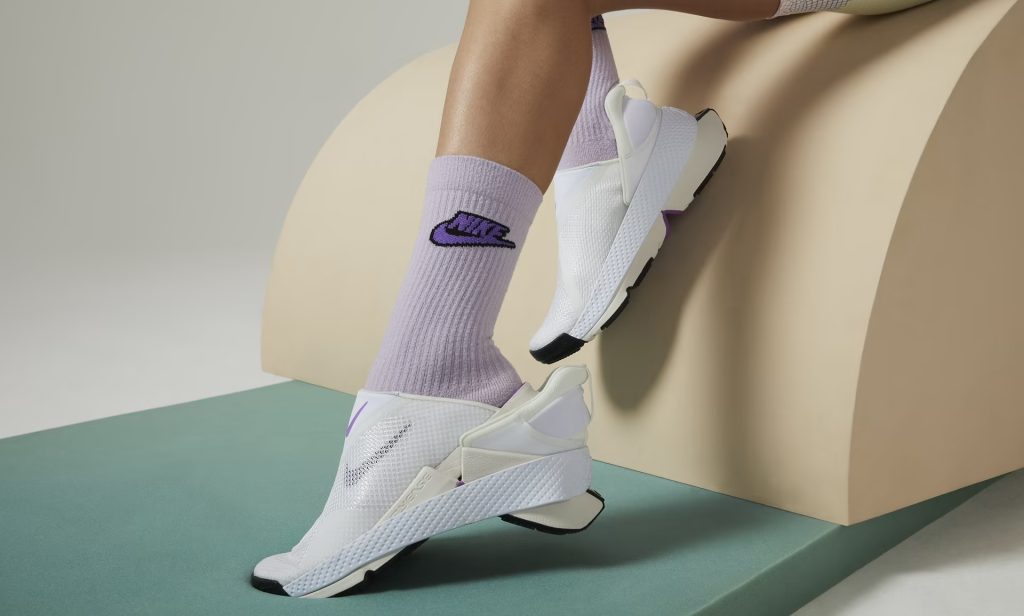
The Nike Go FlyEase is a sneaker designed to be put on and taken off hands-free. Features including a hinged sole, tension band, and kickstand heel affords putting on and removing the shoe without the user bending over or using their hands The sneaker was created to address a need for fashion/athletic sneakers that are accessible to people with disabilities affecting their mobility. However, while the sneaker was designed with and for disabled people, its initial marketing campaign failed to make the product fully accessible and inclusive.
Functional Features: Hinged Sole, Tension Band, and Kickstand Heel
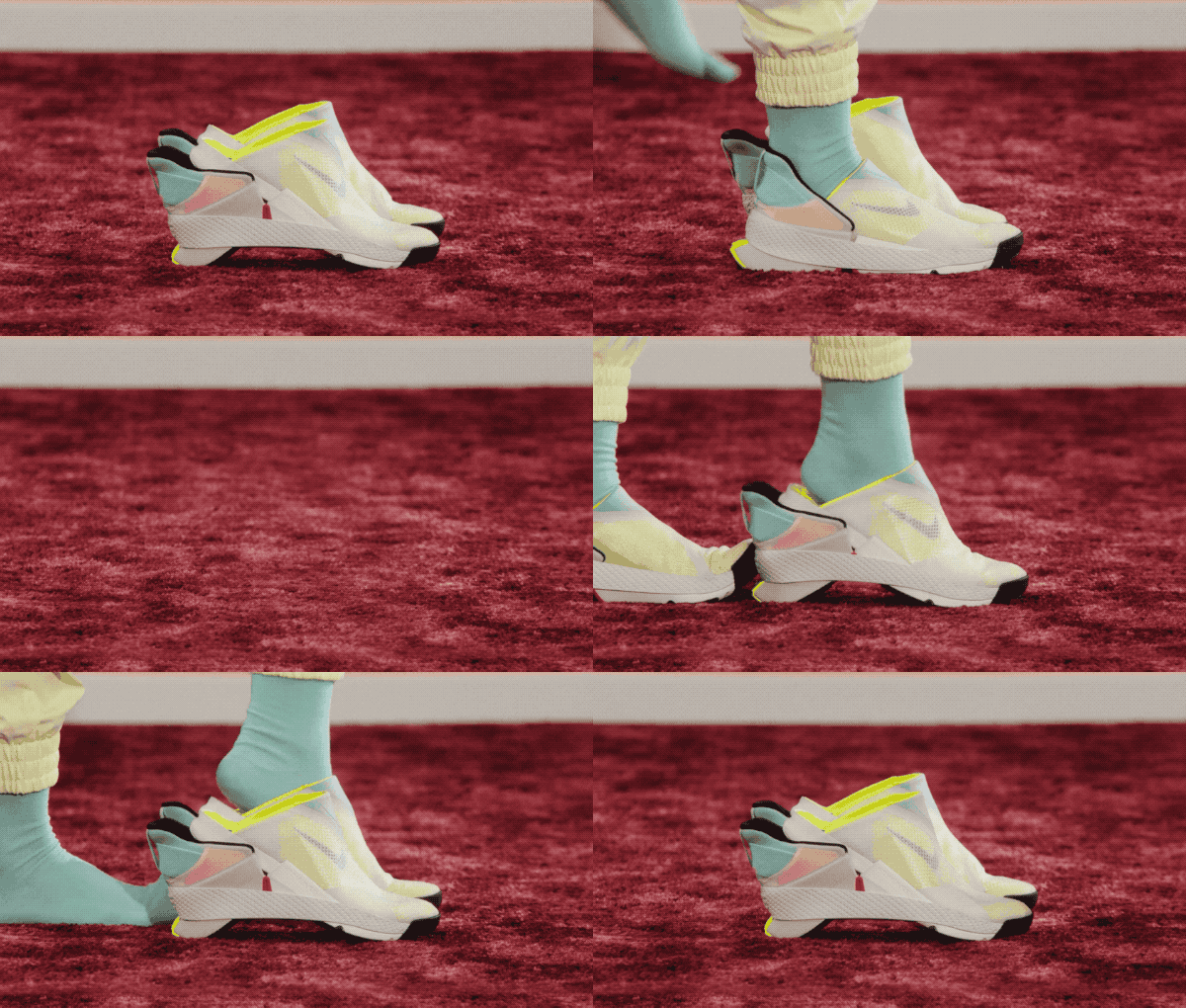
The Nike Go FlyEase includes three main features that work together to allow the sneaker to be worn completely hands-free. The hinged outer sole and tension band keep the entry point of the shoe open until the user steps in and pushes down with their heel to close it. Once on, the hinged sole keeps the sneaker securely on the foot without the need to tighten laces or straps. Users can then remove the shoe by stepping on the kickstand heel with their opposite foot to open the hinge and step out.
From the perspective of the functional solutions model, the Go FlyEase uses these innovative technical features to make sneakers accessible for people with disabilities that affect their ability to bend over or use their hands. However, It goes further than simply addressing limitations (like a shoe horn might help a user remove their shoes without bending over); it’s a redesign of the sneaker itself to be usable and accessible to disabled people, aligning with the social model of disability in which barriers come from design failures in the environment, not the person.
Aesthetic Features & Marketing
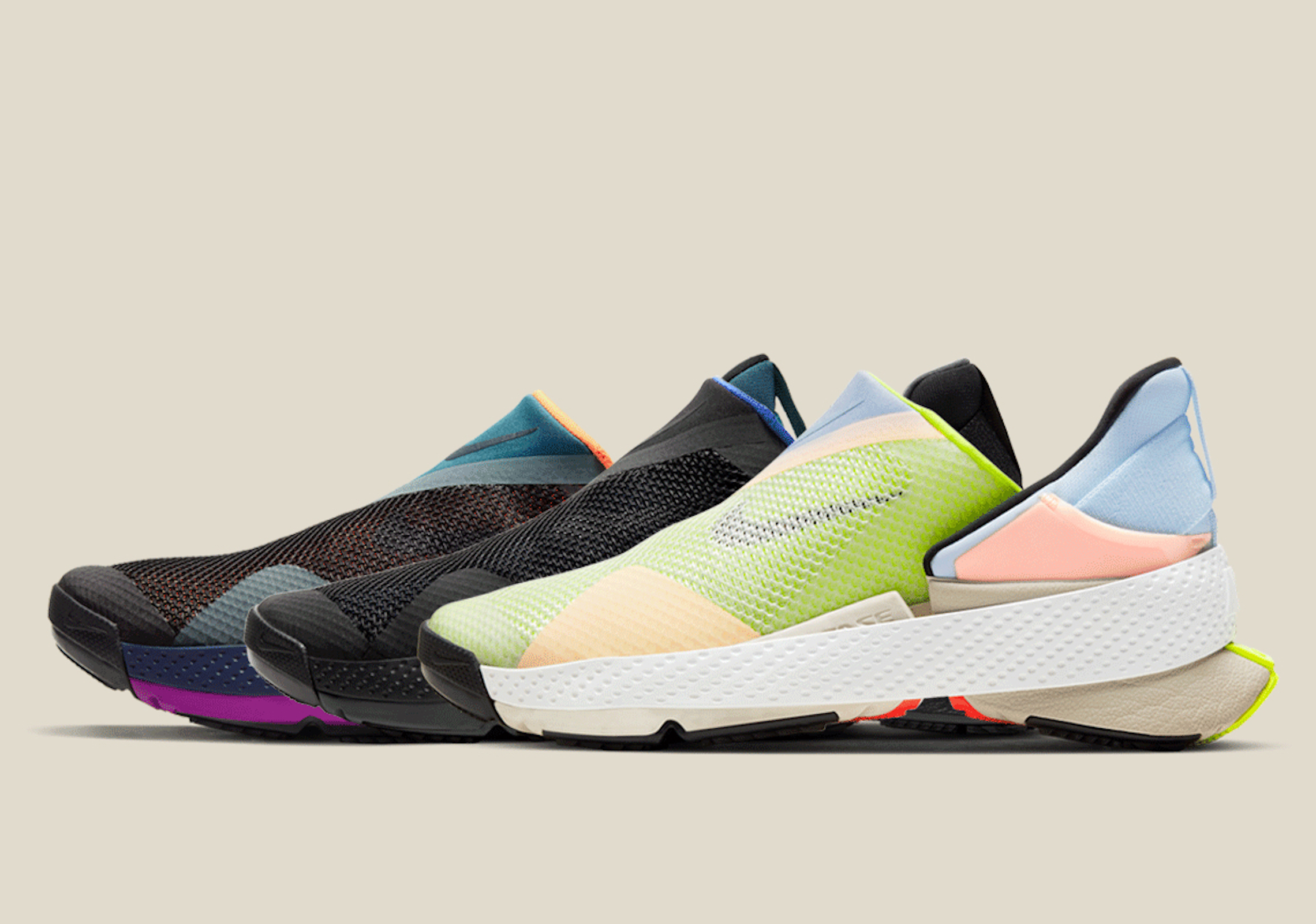
The FlyEase’s aesthetic and overall positioning within the footwear market supports its desirability. Traditionally, shoes designed for people with disabilities haven’t been designed with fashion trends in mind, come in limited, neutral colorways, and are often even perceived as having a “clinical” look. The FlyEase looks like other popular crossover fashion/athletic sneakers and comes in a variety of colorways. In this way, the it aligns with the social model because it allows for disabled people to participate in this particular trend and express themselves through their choice in colorway. Another aspect of the social model conceptualizes disability as a normal part of life, and the FlyEase supports this by integrating the hinge, tension band, and kickstand heel into the aesthetic rather than trying to camouflage them. Additionally, other hands-free sneakers designed for disabled people tend to come from brands that suggest a medical model of disability through names such as Dr. Comfort or Orthofeet. The FlyEase avoids this since it’s produced by Nike, a mainstream athletic/fashion brand, and doesn’t use medical language.
Unfortunately, Nike faced some criticism from disabled people and disability advocates for how they approached the sneaker’s launch, failing in most aspects of the social model. While some images and videos included people with visible mobility impairments (such as people using a wheelchair or prosthetics), most focused on people who don’t appear to be disabled. Nike also largely avoided using the word “disability” at all. In They missed the opportunity both to increase inclusivity of people with visible disabilities, and to recognize less visible forms of disability (such as chronic pain or fine motor impairments) that often go ignored.
Nike’s marketing campaign also caused a major accessibility issue: consistent with the strategy for other sneaker launches, Nike produced limited quantities in order to drive hype and desirability. The sneaker sold out quickly (largely to people without disabilities), and was put on the resale market for exorbitant prices – making the shoe neither viable nor affordable for many disabled people.
Conclusion
The Nike Go FlyEase is an example of assistive technology that successfully rejects the medical model of disability. Its features – from the technical features that make it usable to the aesthetic features that improve desirability and help reduce stigma – go beyond the functional solutions model. The sneaker design promotes the social model by treating disability as a normal part of life and addressing design flaws that make traditional sneakers inaccessible. However, this example also illustrates that the need for inclusivity and accessibility doesn’t end with the design stage; if the technology isn’t marketed and distributed with accessibility in mind, it can have negative consequences for the very people it is meant to serve.