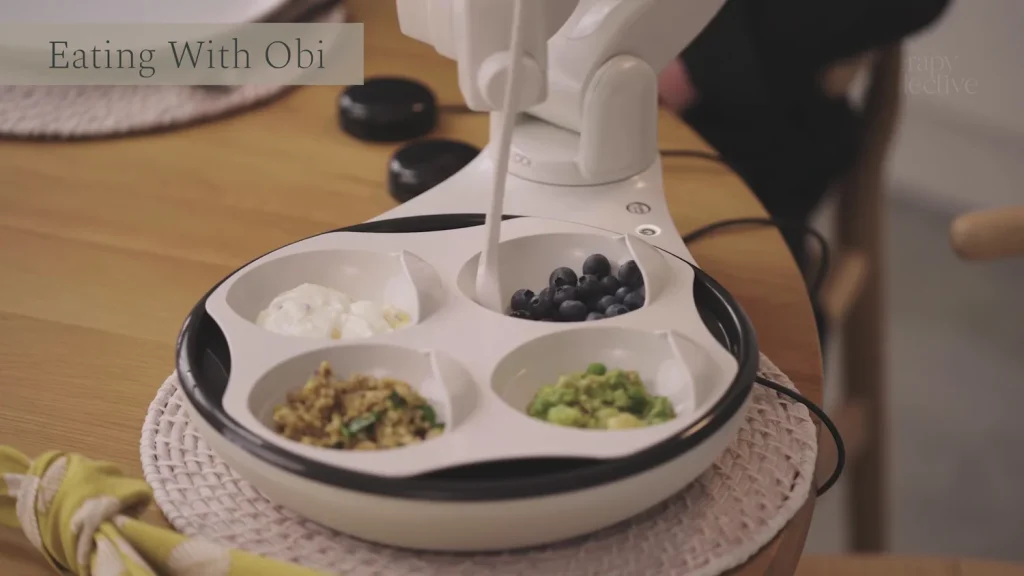
Eating is one of the most basic daily activities, but for many people with disabilities that affect upper body mobility, it can become difficult or impossible without assistance. People living with conditions such as ALS, cerebral palsy, Parkinson’s disease, spinal cord injuries, or muscular dystrophy may experience limited arm and hand movement, making self-feeding a major challenge.
The Obi Adaptive Eating Device is an assistive technology designed to support people with upper extremity disabilities by allowing them to eat independently. Obi is a robotic eating aid that delivers food from a plate to the user’s mouth through customizable controls. By reducing reliance on caregivers during meals, Obi promotes autonomy, comfort, and social participation.
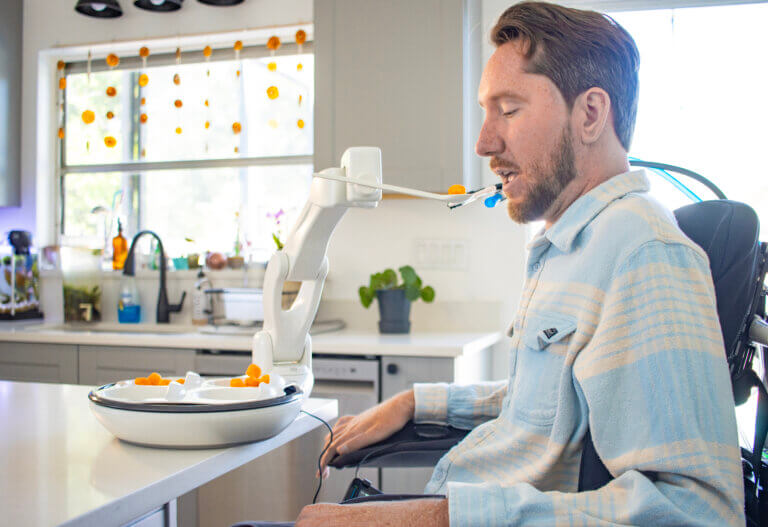
Feature 1: Independent Self-Feeding Through Robotic Assistance
The core function of Obi is its robotic feeding arm. The device is placed in front of the user with a divided plate underneath. Once activated, Obi rotates between different food compartments, scoops a bite, and lifts it toward the user’s mouth at a steady pace. This allows people with limited arm or hand function to eat without physically holding utensils.
From the perspective of the medical model of disability, Obi can be understood as a tool that compensates for physical impairments. For example, a person living with ALS may not have the muscle strength to lift a fork, and someone with Parkinson’s disease may experience tremors that make eating difficult. Obi addresses these functional limitations by providing mechanical assistance.
Feature 2: Customizable Switch Controls for Different Bodies
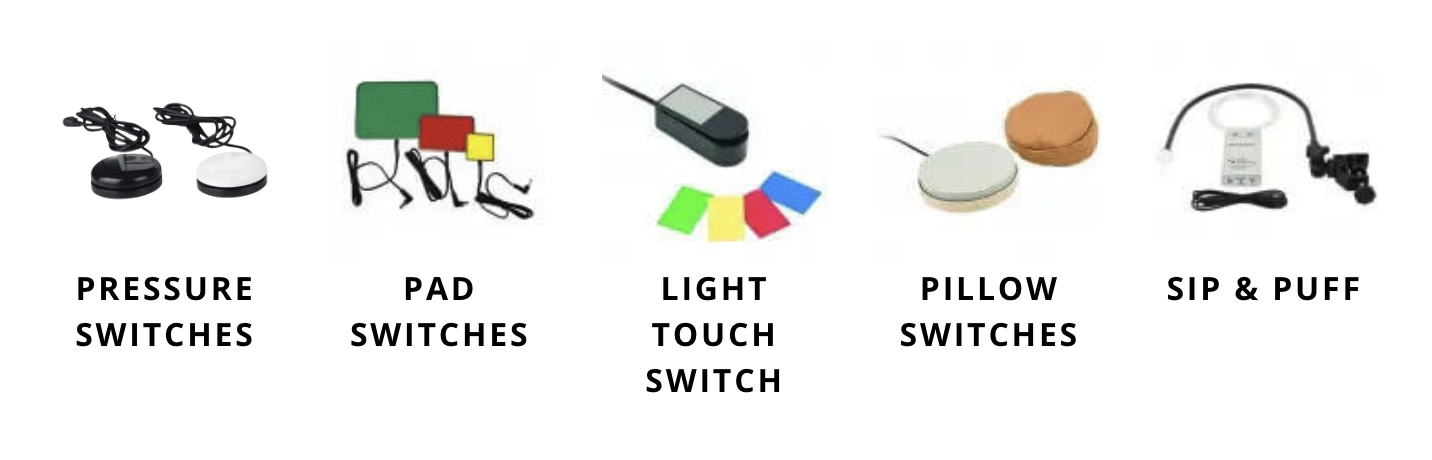
Another key feature of Obi is its flexible control system. Instead of relying on standard buttons that require fine hand movements, Obi can be operated through a variety of accessibility switches. These include pressure switches, light-touch pads, pillow switches, or sip-and-puff systems. Users can activate the device using whichever body movement works best for them, such as pressing with the head, elbow, foot, or even using breath control.
This feature connects to the social model of disability, which emphasizes that disability is created by barriers in the environment rather than by a person’s body alone. Many everyday products assume that all users can hold utensils or lift their arms, which excludes people with motor disabilities. Obi challenges that assumption by offering flexible interaction methods that adapt to different bodies.
Feature 3: Supporting Social Inclusion and Emotional Well-Being
Obi also improves the experience of mealtime. The device allows people with disabilities to participate in meals with family or friends without needing someone else to feed them directly.
This aligns with the biopsychosocial model of disability, which recognizes that disability involves physical, psychological, and social factors. Obi supports emotional well-being by reducing frustration, increasing personal control, and allowing users to feel more comfortable in social settings.
For many people with disabilities, needing constant feeding assistance can create feelings of dependence or embarrassment. Obi helps shift mealtime from a medicalized caregiving task into a more typical and enjoyable social activity.
Conclusion
The Obi Adaptive Eating Device is a powerful example of assistive technology that promotes accessibility across multiple dimensions. Through robotic self-feeding, customizable controls, and support for independence during meals, Obi demonstrates how disability can be understood through different models.