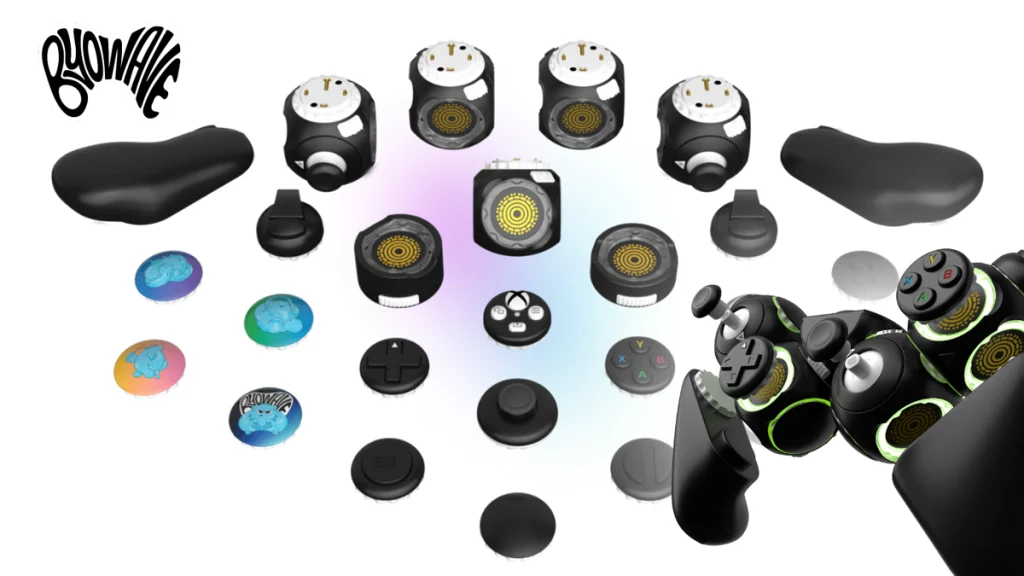
When we hear the word controller, most of us picture a standard device designed for two hands, with small buttons demanding precise motor skills. But not everyone interacts with games in the same way. The Proteus Controller by Byowave rethinks this “default” through modular design and customization, supporting more accessible play.
Feature 1: Modular, Reconfigurable Design
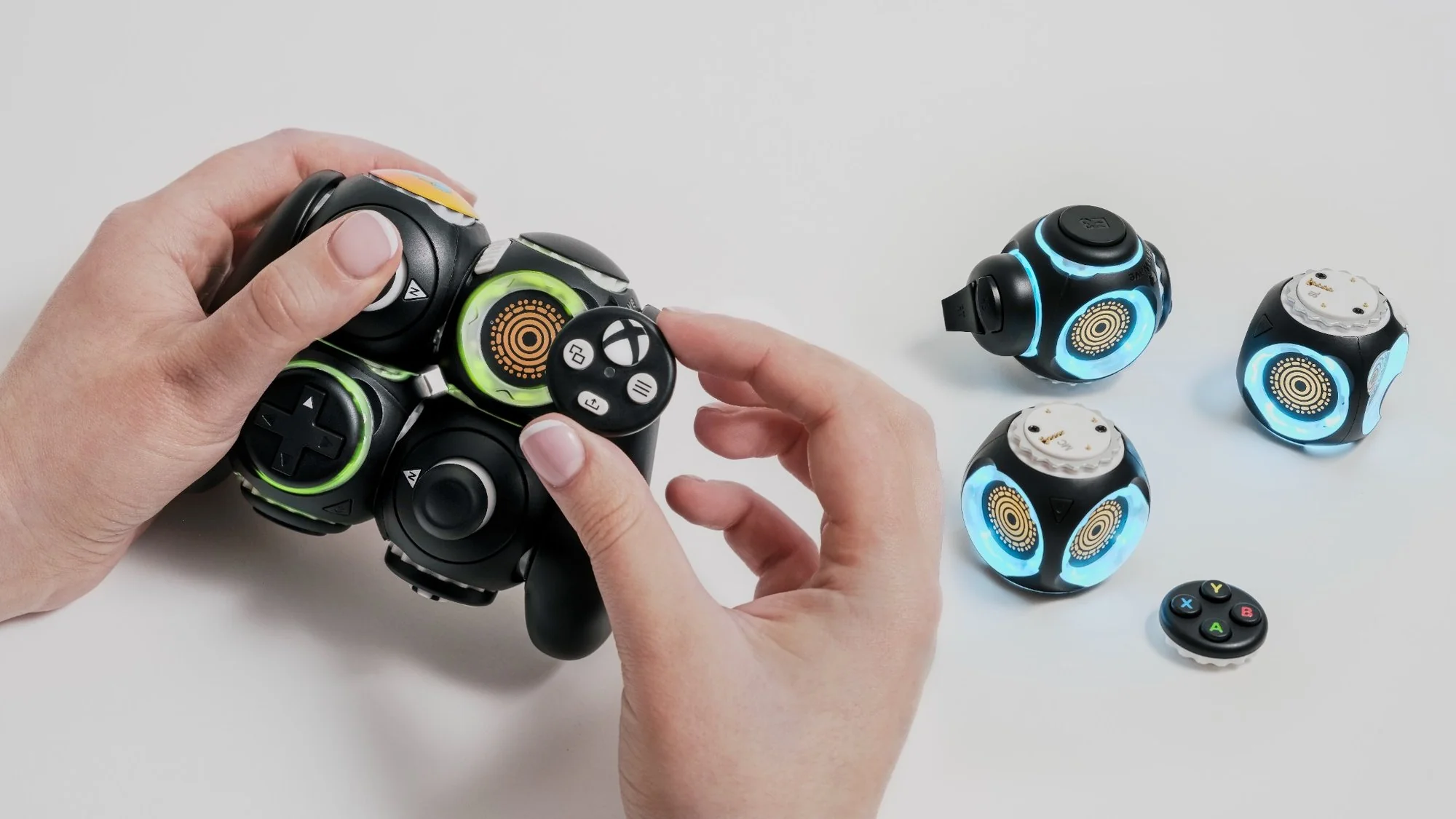
The defining feature of the Proteus controller is its modular structure. Instead of a fixed layout, it is built from separate components that can be arranged like building blocks. Players can choose where buttons go, whether clustered closely or spaced farther apart.
This connects strongly to the social model of disability, which emphasizes that disability often arises from environments designed around narrow assumptions. Traditional controllers can become disabling because they assume the same grip, reach, and coordination for every player. Proteus shifts that expectation by adapting the controller to the player rather than forcing the player to adapt.
It also reflects the functional solutions model, since it removes interaction barriers through flexible design. Rather than treating access as an exception, it provides multiple ways to perform the same gaming actions.
Feature 2: Software Customization and Button Mapping
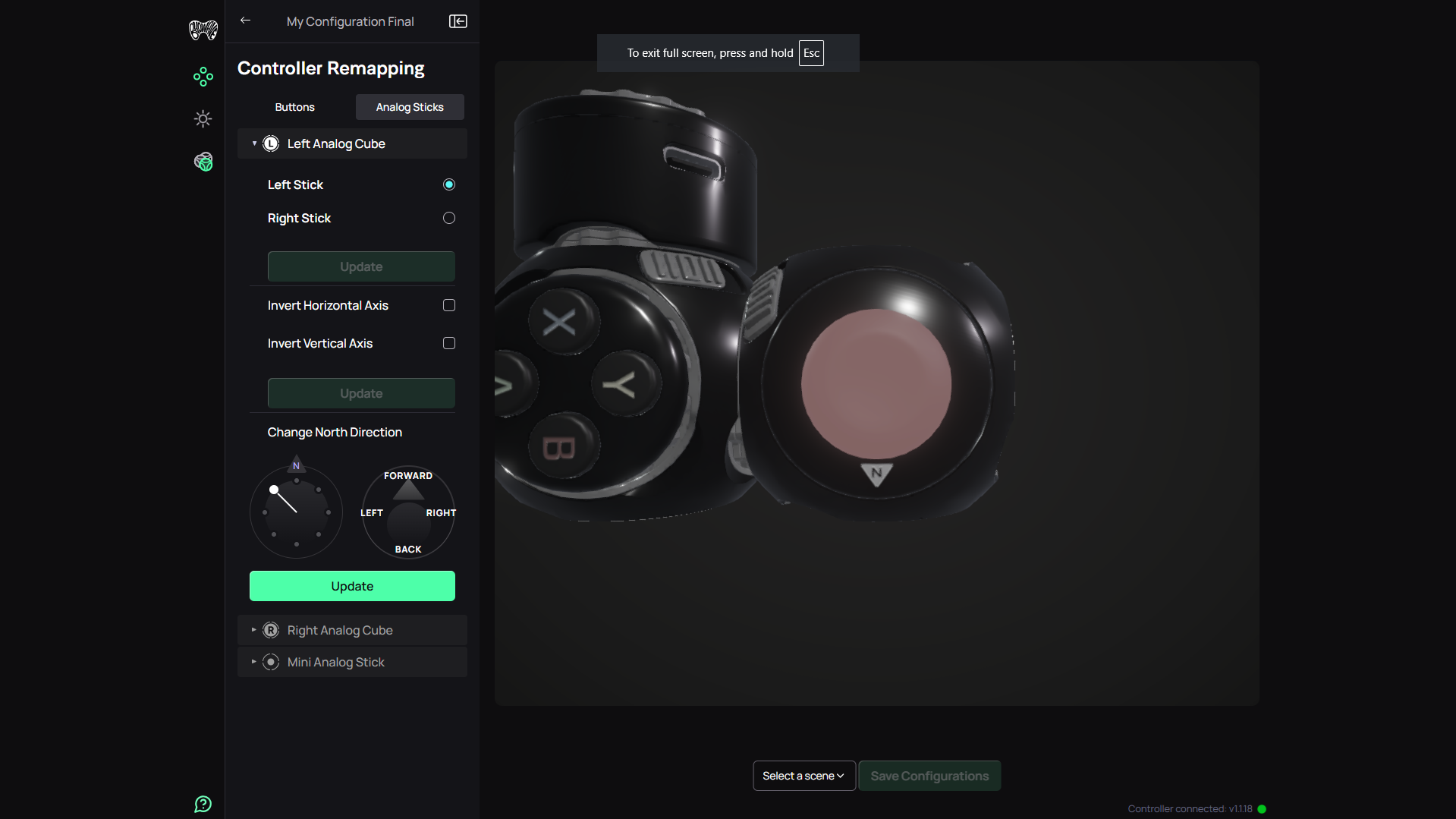
Proteus accessibility is not only physical, but also digital. Through the Byowave software, users can remap buttons, adjust outputs, and create macros, allowing multiple commands to be assigned to a single press.
This feature aligns with both the social and functional models. Standard control schemes often assume one “normal” way of interacting, including rapid finger movement across small buttons and complex combinations. Button remapping challenges those defaults by letting players decide what works best for their own movement patterns. From a functional perspective, this software flexibility can reduce strain and make difficult inputs more manageable. The combination of modular hardware and deep digital customization is what makes Proteus especially compelling as an inclusive design approach.
Feature 3: Larger, Easier-to-Press Buttons
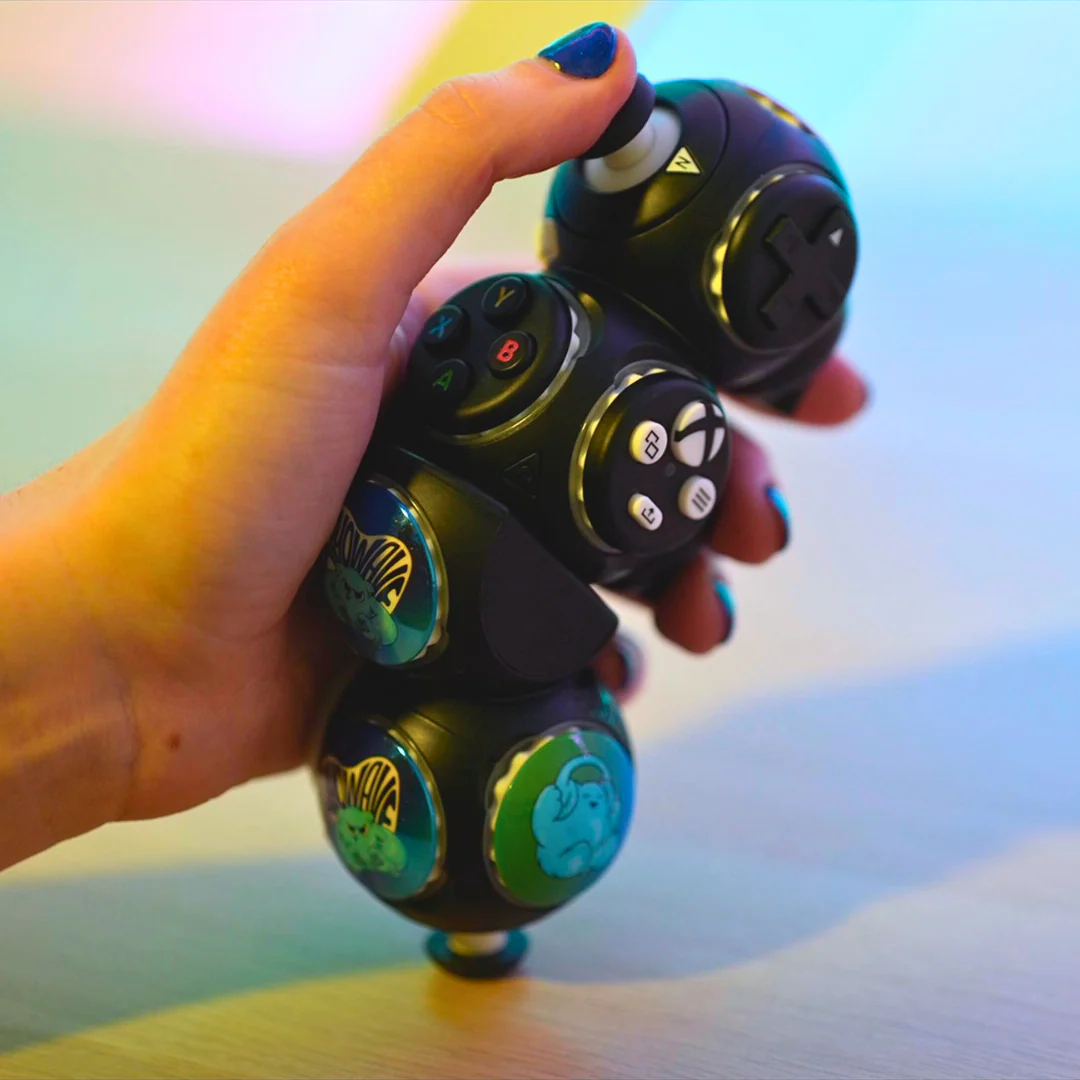
Another accessibility strength of the Proteus controller is that it features larger, easier-to-press buttons than standard gamepads. Traditional controllers rely on small, tightly spaced inputs that demand precise thumb movements and consistent fine motor control. Proteus reduces that precision requirement by offering more accessible input surfaces that feel less physically demanding.
This aligns with the functional solutions model because it lowers the effort needed to perform in-game actions. It also reflects the social model of disability, since many barriers come from mainstream controllers being built around a narrow assumption of “typical” dexterity rather than supporting a wider range of interaction styles.
Limitations: Cost and Availability
One limitation that cannot be ignored is cost. The Proteus controller is priced around $360, and expanded setups, such as using two units together, may require additional accessories. This raises an important access question: even when inclusive technology exists, who is actually able to afford it?
Some users also note that assembling and configuring the controller can be challenging, sometimes requiring assistance. This is an important reminder that accessibility includes not only gameplay, but also the ability to independently set up and use the device. Accessibility should not become a luxury. Design matters, but so do the economic and structural barriers that shape participation.
Conclusion
The Proteus controller shows how gaming hardware can move beyond the “default” controller design. Through modular construction, software remapping, and easier-to-press inputs, it aligns strongly with the social and functional models of disability while supporting varied access needs. Ultimately, accessibility changes across people and contexts, and Proteus demonstrates what becomes possible when design begins with flexibility and inclusion.