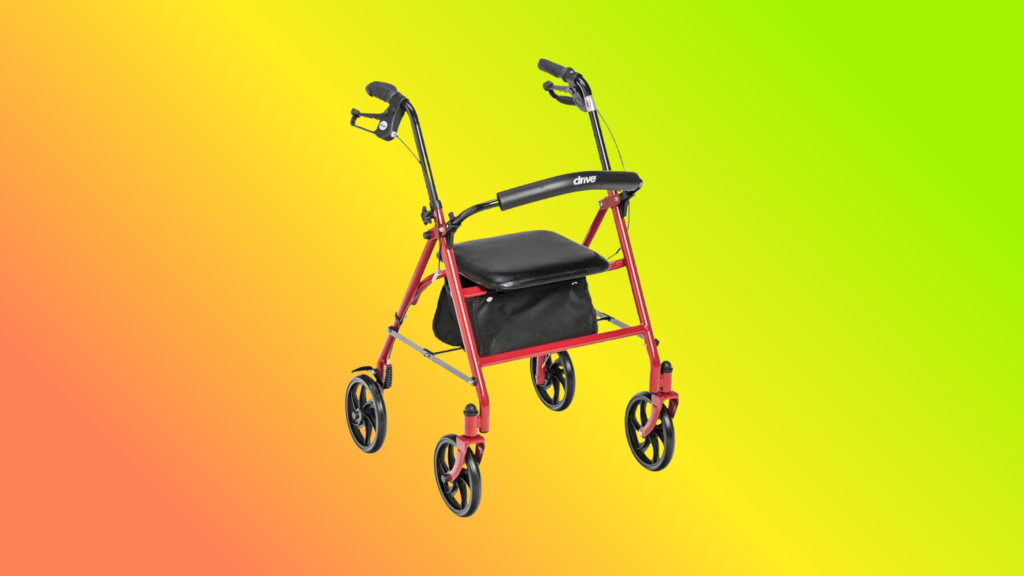
The rollator was created by Aina Wifalk in 1978 as a response to fatigue using walking sticks and walkers. With features such as large swivel wheels, a seat, and handlebars with brakes, the rollator is an assistive technology that helps people with physical disabilities move through spaces safely, efficiently, and independently.
Note: While there are three-wheeled rollators, this post will focus on the features of the four-wheeled rollator across different models of disability (medical, social, functional solutions).
Feature 1: Four-Wheeled Frame
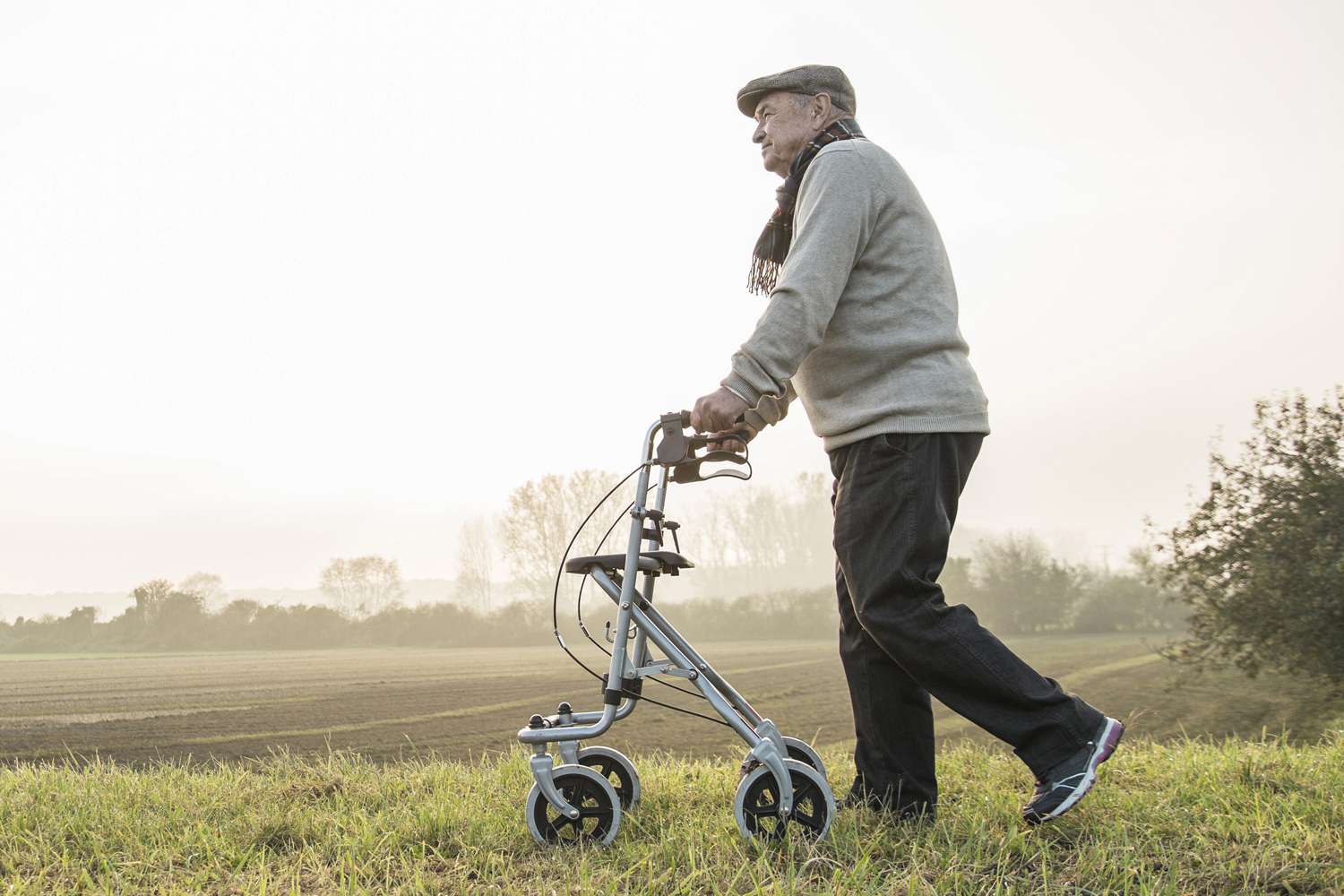
Image From: https://www.verywellhealth.com/rollator-or-walker-2318324
The rollator has four large wheels, with the front two being swivel wheels that allow users to turn in the direction they want to go. From the medical model of disability perspective, the frame compensates for a lack of balance and/or lower body strength, which can make walking difficult. This feature helps people with physical disabilities walk safely and reduce the risk of falling.
From a social model of disability perspective, many built environments, such as parks, malls, and grocery stores, may have uneven ground, a lack of structural support (i.e., handrails), and require long walking distances. The rollator provides balance and stability that are often lacking in these spaces and makes participation more accessible for people with physical disabilities. However, it can’t be used on stairs and requires a ramp, and the frame may still be too wide to fit in certain spaces.
Traditional walkers require users to pick up and move the frame slowly, which can be physically demanding. Through the lens of the functional solutions model of disability, the wheels allow for more efficient movement without heavy lifting, and the swivel makes turning easier. With minimal effort, people with physical disabilities can move more independently. However, the wheels may not be as stable for some individuals, requiring more coordination than the non-wheeled walker.
Feature 2: Seat (and Basket)
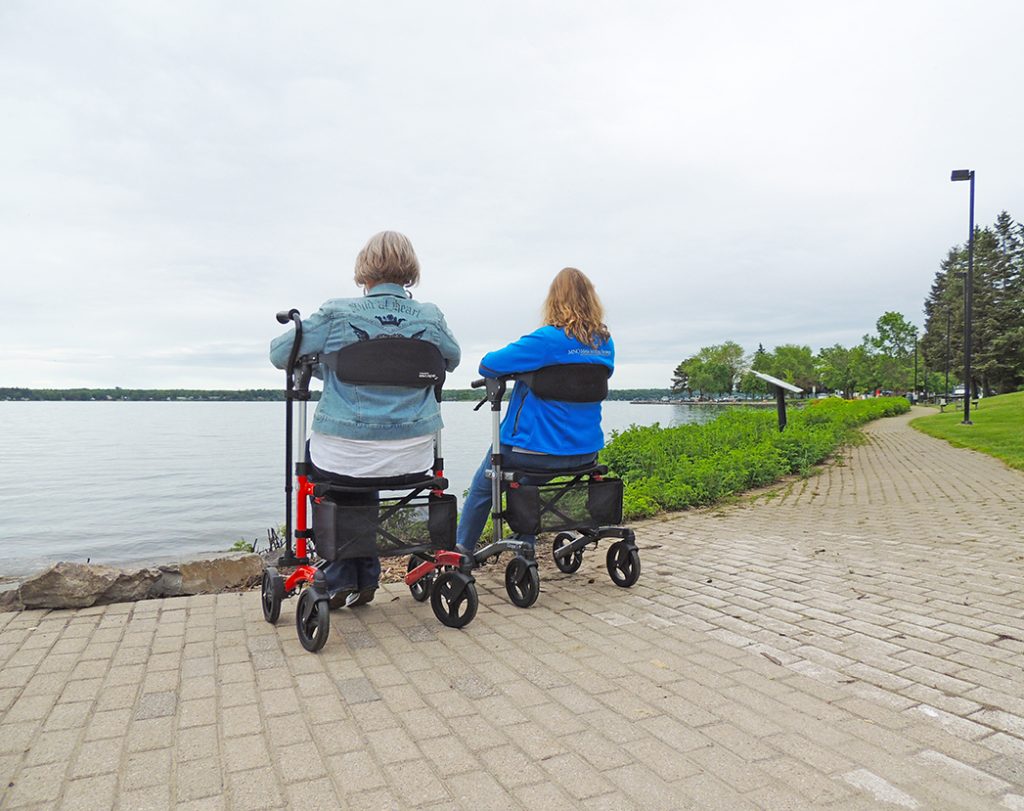
Image from: https://triumphmobility.com/5-tips-for-walking-with-a-rollator-walker/
Another feature of the rollator is the seat in the middle of the frame, along with the padded front bar that doubles as a backrest for extra support. Underneath the seat, there is sometimes a storage compartment. Public spaces may lack places for people with physical disabilities to stop, rest, or regain their balance. Under the social model and functional solutions model of disability, the seat feature provides people with physical disabilities the opportunity to rest anywhere they would like at any time. Additionally, under the functional solutions model of disability, having a seat would help relieve shoulder pain or fatigue that people with physical disabilities may experience while using a walker.
The surface of the seat and the storage basket can also be seen as accessible under the functional solutions model of disability because they allow people with physical disabilities to move around while carrying objects. Items can simply be placed in front of the user while they continue walking. They don’t need to worry about carrying items around while both hands are on the rollator.
Feature 3: Handlebars with Brakes
Video from Cancer Assistance Program on YouTube
The rollator has handlebars with brakes that serve two functions. To stop the rollator temporarily, the user must pull or squeeze the brake lever up. To lock the rollator in place, the user must push the lever down. From a medical model of disability perspective, having the brakes will not only prevent falls for people with physical disabilities but also allow them to stand by providing stable support.
Within the functional solutions model of disability, the handlebars and brakes give people with physical disabilities the ability to steer their walking direction, slow down, stop, make sharp turns (by braking one wheel), and rest securely (using the seat). However, one limitation is the strength required to stop the rollator in place. Not all people with physical disabilities may have the hand or upper body strength to engage and disengage the brakes effectively.
Concluding Thought
Overall, with these three highlighted features, the rollator is an assistive technology option for people with physical disabilities that can provide safety and independence.