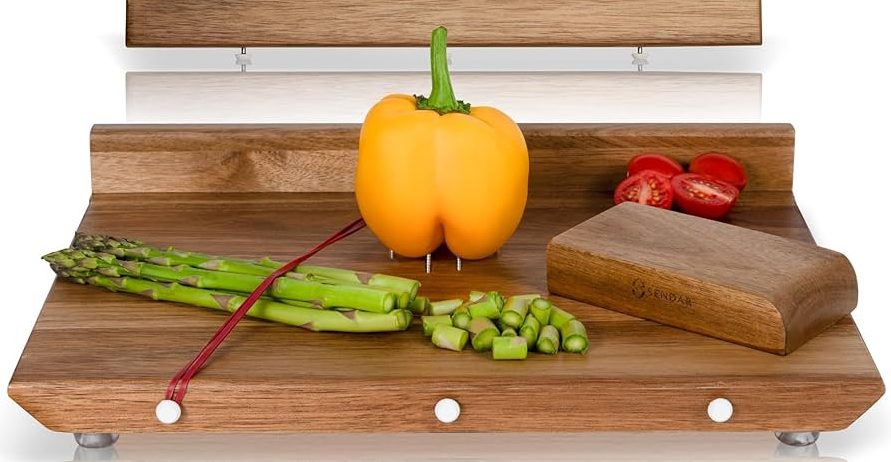
The SENDAR One-Handed Cutting Board is an adaptive tool designed for individuals with limited hand mobility. This includes stroke survivors, people with limb differences, older adults, and others with physical disabilities. The preparation of food generally requires the use of two hands; however, most of the cutting boards are not designed to be used one-handed. Tasks like slicing and peeling require one hand to stabilize the food, which presents a significant barrier for users with one-handed mobility limitations. The purpose of the SENDAR board is to empower these individuals to prepare food independently and safely.
Feature 1: Stainless Steel Spikes
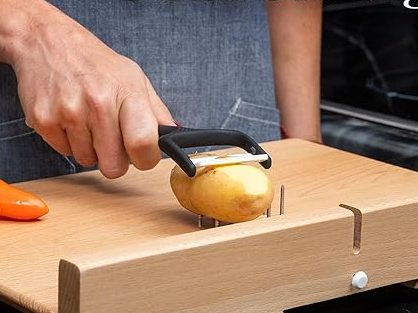
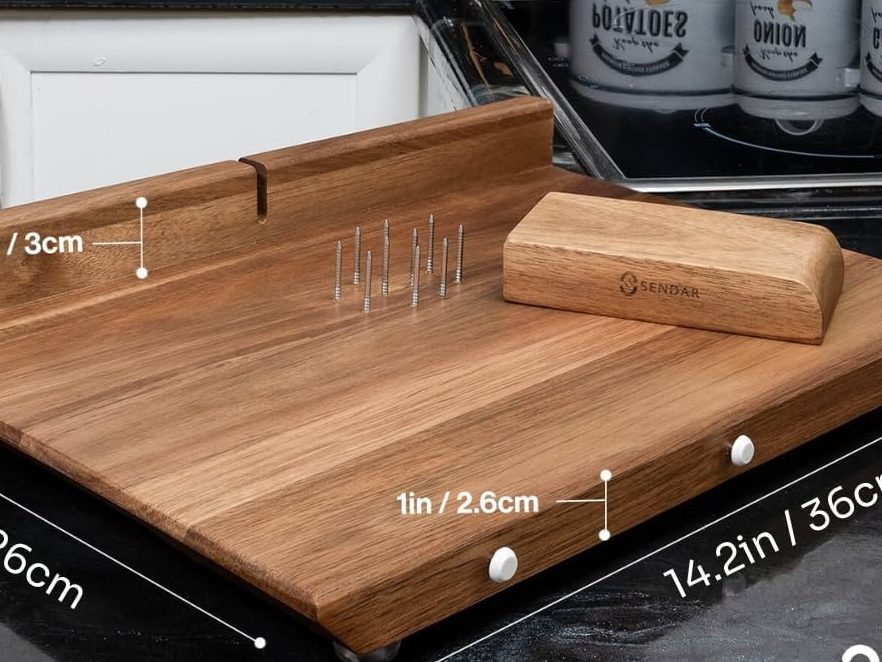
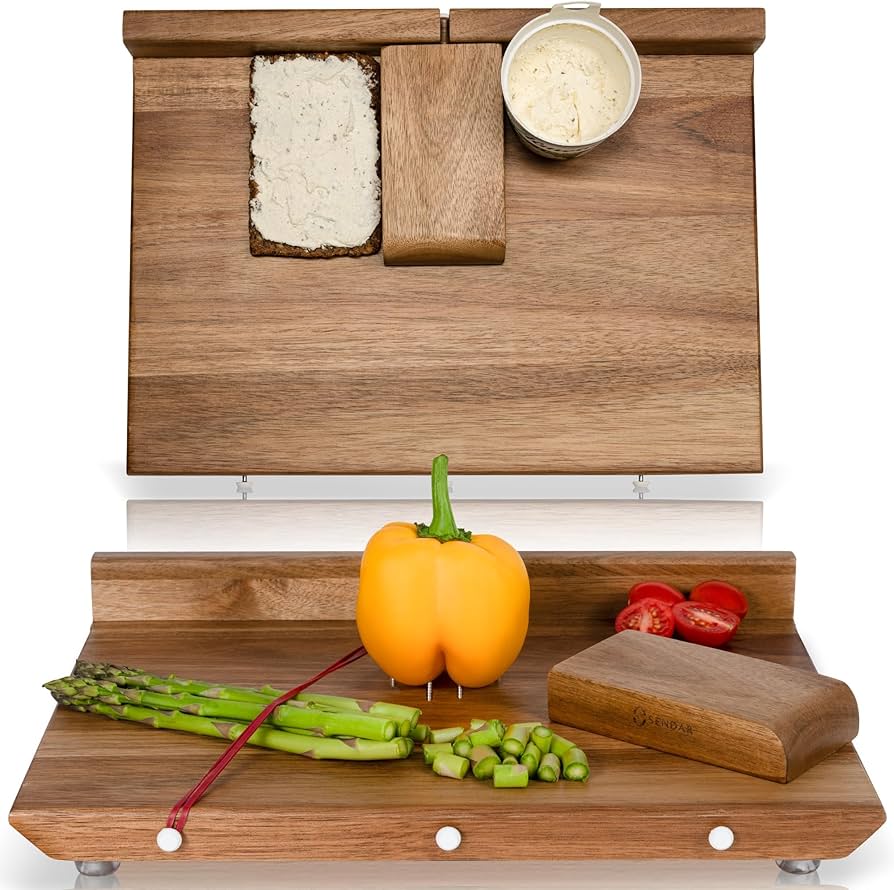
Ten stainless steel spikes are located in the center of the board. The spikes are designed to hold ingredients in place, especially whole foods like potatoes or apples. This stabilization makes it easier to peel or chop food without slipping.
In the Social Model perspective, being unable to cook due to physical limitations is not the result of physical conditions, but rather of an environment (the traditional flat cutting board) that does not accommodate diverse bodies. SENDAR’s spikes remove this environmental barrier, shifting the focus from the user’s limitations to the tool’s accommodation. Instead of placing all responsibility on an individual, the design reduces environmental barriers by redesigning the interface to meet the reality of the user.
Feature 2: Undercut Finger Recesses
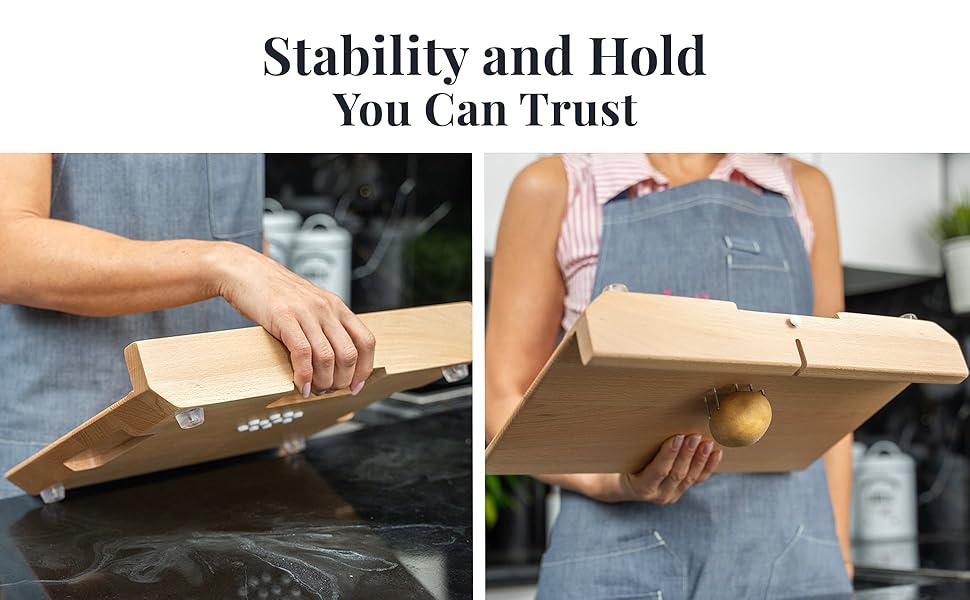
Under the board, there are finger recesses designed to make it easier to grip. By hooking their fingers under the grooves, users can lift and move the board around the kitchen using only one hand.
This feature also aligns more closely with the social model of disability. Standard kitchen tools are often designed with assumptions about general hand strength and dexterity, which may unintentionally exclude some users. In this case, it can be difficult for people with limited use of one hand to lift a standard flat cutting board from a smooth countertop without assistance. The design incorporates recessed grips which directly address this barrier by making the board easier to grasp from a surface. This improves the user’s functional ability to handle the board independently.
Feature 3: L-Shaped Corner Buffer
There is a raised L-shaped corner buffer on the board, also known as a guard rail, which provides a physical stop for ingredients. In this way, the user can push food into the corner to ensure stability while spreading butter or jam.
In terms of the functional solution model of disability, this feature emphasizes enabling completion of the task rather than addressing the cause. The design addresses the challenge of stabilizing food during preparation, such as spreading condiments or preventing sliced ingredients from sliding off the board. By providing a fixed boundary, the guard rail supports users in completing the task easier and independently. This illustrates how this design reduces functional barriers.
Design Limitations
While the SENDAR one-handed cutting board shows thoughtful accessibility, it also has some limitations. In terms of safety and usability, stainless steel spikes may raise safety concerns for users with reduced hand control. This feature may require extra caution, particularly for users with limited dexterity. This illustrates the paradox behind this assistive design: solving one functional barrier (stabilization) can inadvertently lead to another (maintenance safety).
Conclusion
This SENDAR One-Handed Cutting Board demonstrates that “disability” can often be shaped by rigid design as much as by physical limitations. Whether through removing environmental barriers, compensating for physical impairments, or simplifying functional tasks, this board proves that inclusive design is not about “fixing” people. It is about fixing the tools we provide for them to ensure dignity and independence for everyone.