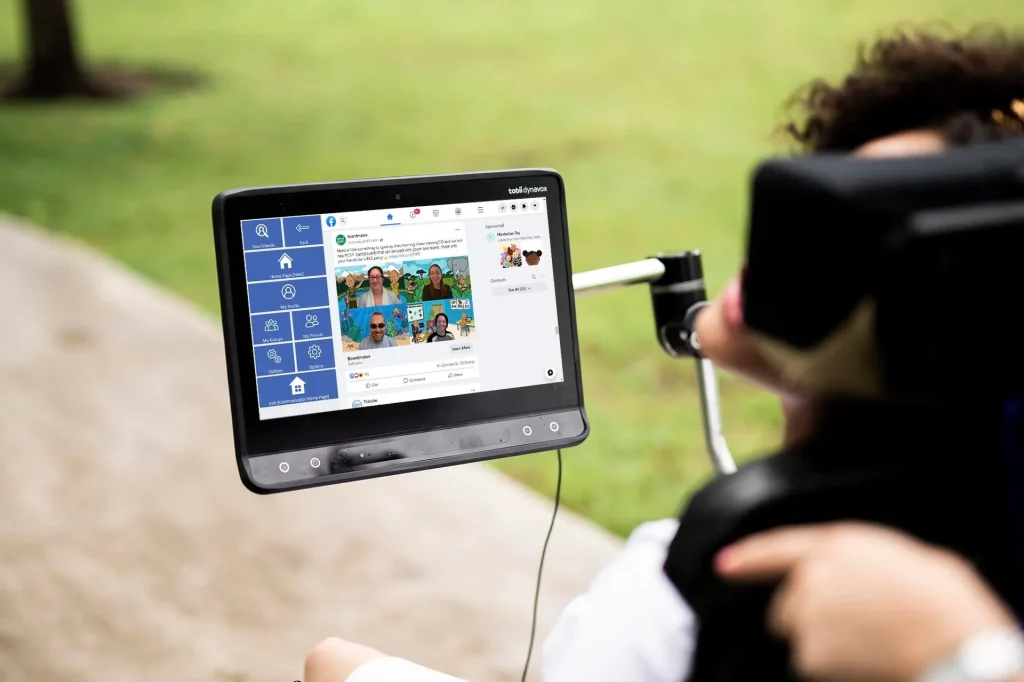
If you’ve spent any time looking into assistive tech, you’ve probably heard of Tobii Dynavox. It’s widely known as the gold standard for helping paralyzed people communicate and stay connected in a digital world. There’s often some confusion about the brand: people tend to think “Tobii” (the eye-tracking tech) and “Tobii Dynavox” (the actual devices) are from different companies. In reality, they are part of the same ecosystem, working together to turn simple eye movements into a powerful, synthetic voice.
Who is This For?
While anyone can use it, paralyzed people between the ages of 40 and 70 are the most frequent users, often managing progressive conditions like ALS or locked-in syndrome. You also see many younger disabled users, typically in their 20s, using it to navigate congenital conditions like CP. For all of them, the tech is a game-changer; by using only their eyes, they can take full control of a computer, speak through a synthetic voice, and handle everything from social media to smart home devices.
Putting the Tech to the Test
- Utility: For paralyzed users who can only move their eyes, this tech is a lifeline for core needs like synthetic speech and messaging. It doesn’t just provide a voice, it gives back control over computers, social media, and even smart home devices, which massively boosts independence and social connection.
- Usability: Thanks to software like TD Snap and an intuitive eye-gaze interface that uses blinks or gestures, most people find it pretty easy to learn. Once it’s calibrated, daily use feels seamless and reliable.
- Accessibility: It’s specifically designed for severely disabled people, meaning the eye-tracking even works outdoors or in tricky lighting. This helps reduce the constant need for a caregiver and works well even as conditions progress.
- Desirebility: It’s more than just a tool; paralyzed people often describe it as life-changing. For those with ALS or locked-in syndrome, restoring their voice and relationships is emotionally huge-some even say it gives them a reason to keep going.
- Affordability: With a high upfront cost often between $10,000 and $20,000, it’s definitely not universally affordable. While things like insurance or grants can help in the U.S., the cost remains a major barrier for many who need it.
- Viability: There’s strong evidence that people keep using these devices for years because they are reliable and get regular software and hardware updates. This makes it a dependable choice for those managing progressive diseases.
- Compatibility: It’s highly compatible with almost everything from wheelchairs and mounting systems to Windows and iOS ecosystems. It even supports secondary access like switches if a paralyzed person has some limited finger movement.
How We Define the Experience of Paralyzed People?
We can look at two specific features (and their disability models) that make Tobii Dynavox so effective for paralyzed people.
Precision Eye-Gaze Tracking
This is the core hardware feature that allows users to control their entire computer using only their eyes.
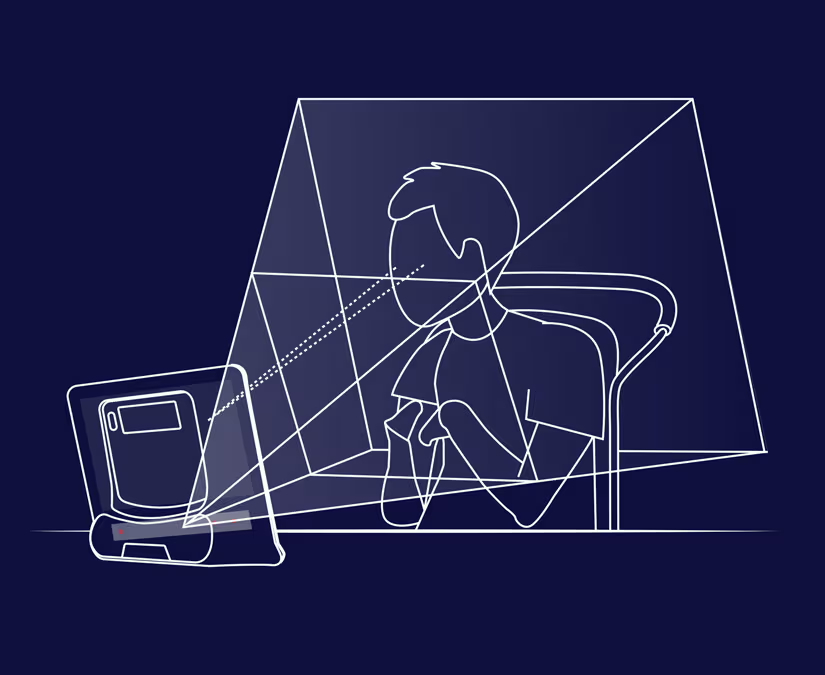
- Medical Model: This feature is a textbook medical intervention. It’s designed to “fix” the barrier of physical paralysis by giving the body a new way to interact with the world. It’s accessible because it accounts for the biological reality of motor deficits.
- Social Model: The eye-tracker as a tool removes the environmental barrier of the standard mouse and keyboard. By making the interface eye-controllable, the digital world is no longer “off-limits” to a paralyzed person, allowing them to participate in society just like anyone else.
TD Snap
TD Snap is the software that provides the buttons and “voice” for the user.
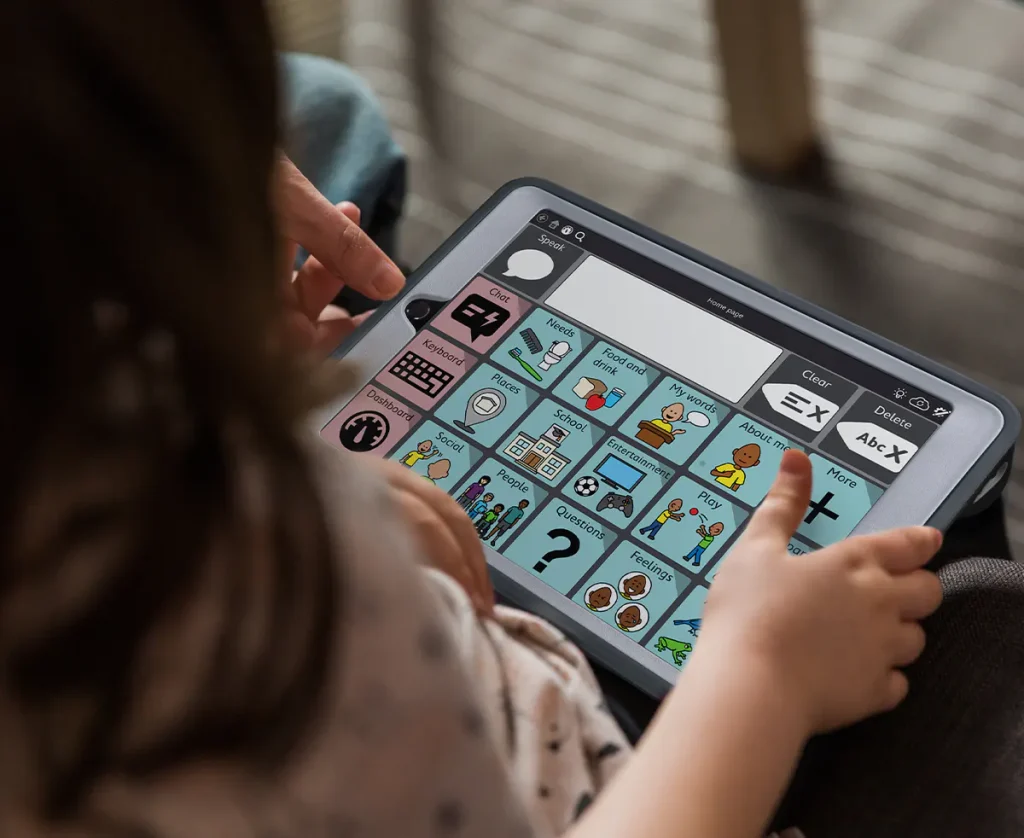
- Medical Model: It’s accessible because it provides an “approximate” function for speech. It’s a direct response to a neurological or physical impairment, allowing for expressive communication that might otherwise be impossible.
- Social Model: This software is all about inclusion. It’s accessible because it allows disabled people to hold jobs, go to school, and manage their own lives without relying on a caregiver to speak for them. It addresses the social barrier of being “voiceless” in a world that mostly communicates through speech and text.
Conclusion
Tobii Dynavox is much more than just a high-tech eye-tracker for many paralyzed people, it’s the bridge back to their social lives and personal independence. While the technology is incredible at restoring a voice and providing digital control, its success still heavily depends on breaking down external barriers like high costs and inaccessible public spaces.