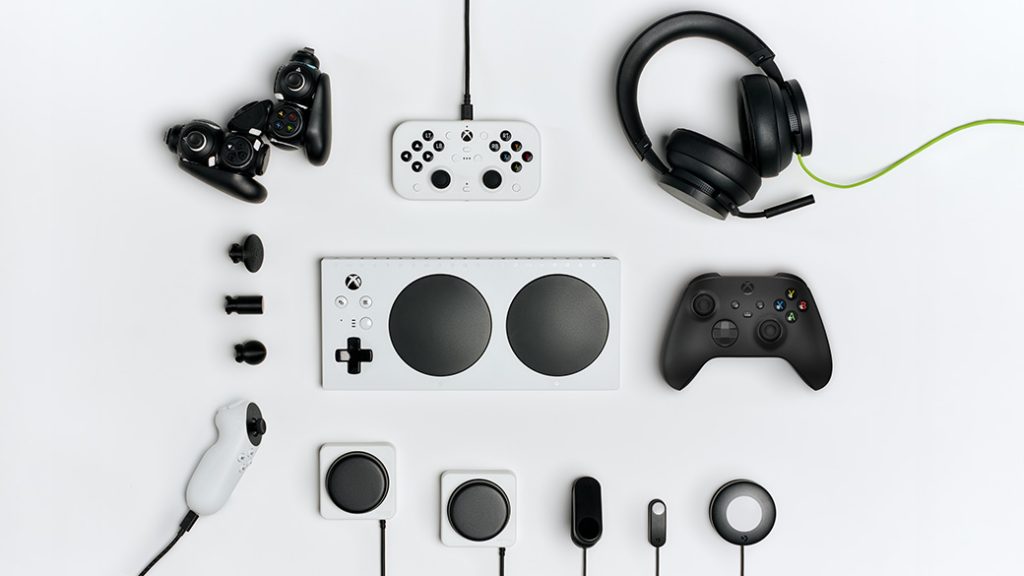
The Xbox Adaptive Controller is a customizable gaming controller designed to make video games more accessible to players with disabilities. It functions as a central hub that connects to external buttons, switches, and joysticks, allowing players to create control setups that align with their physical abilities, preferences, and ways of interacting with games.
Most mainstream game controllers are designed with a very specific type of user in mind, someone who can hold a controller with two hands, use fine motor control, and apply consistent pressure to small buttons. For many gamers with disabilities, these assumptions make gaming difficult or inaccessible. Created by Microsoft, the Xbox Adaptive Controller pushes back against that norm by prioritizing flexibility over a fixed form. Rather than asking players to adapt to the controller, it allows the controller to adapt to them.
Feature 1: Modular Input Ports
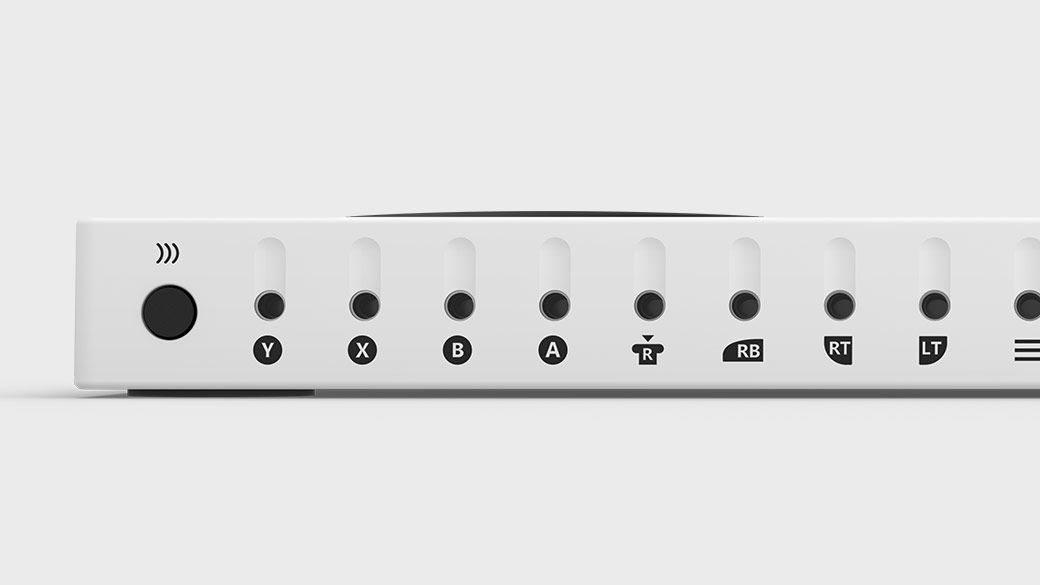
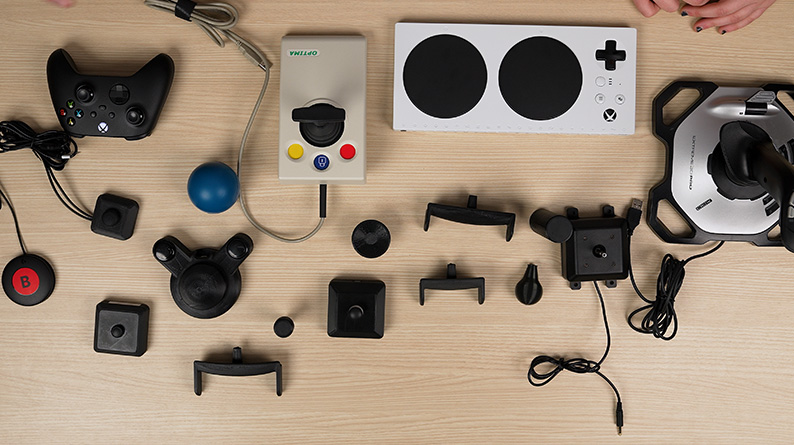
One of the most important features of the Xbox Adaptive Controller is its modular input ports. These ports let players connect a wide range of external devices, such as large buttons, foot pedals, or joysticks, depending on how they interact with technology.
Looking at this feature through the social model of disability, it becomes clear that many barriers to gaming are created by design choices rather than by people’s bodies. Standard controllers assume one “correct” way to play. The Adaptive Controller challenges that assumption by making multiple ways of playing possible. Instead of treating gamers with disabilities as exceptions, the design removes the barrier altogether by expanding what a controller can be.
This flexibility also increases the controller’s overall utility, since it can support many different play styles and access needs
Feature 2: Custom Button Mapping
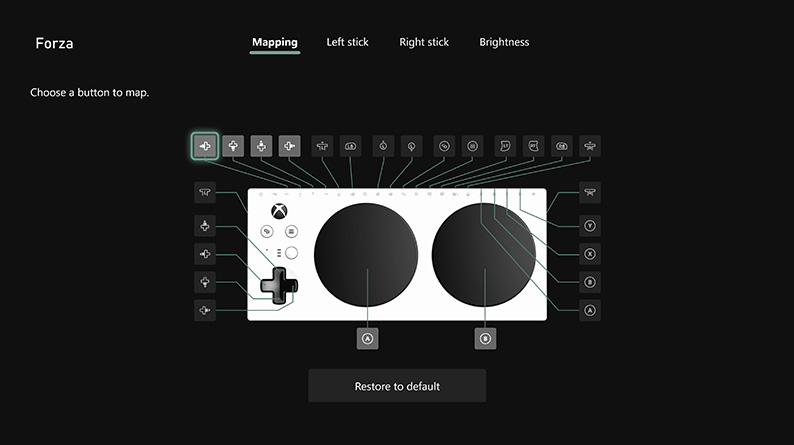
Another key feature is the ability to fully customize button mapping through Xbox’s software. Players can assign actions based on what feels most comfortable or manageable, and they can change those mappings as their needs shift.
This feature aligns closely with the functional model of disability, which focuses on whether someone can complete specific tasks within a system. Instead of assuming that everyone should perform actions the same way, custom mapping allows players to reorganize gameplay around what works best for them. This is especially important because accessibility is not fixed. Factors like fatigue, pain, or range of motion can change from day to day. By allowing ongoing adjustment, the controller supports access over time rather than offering a single solution
Feature 3: Large, Low-Force Buttons
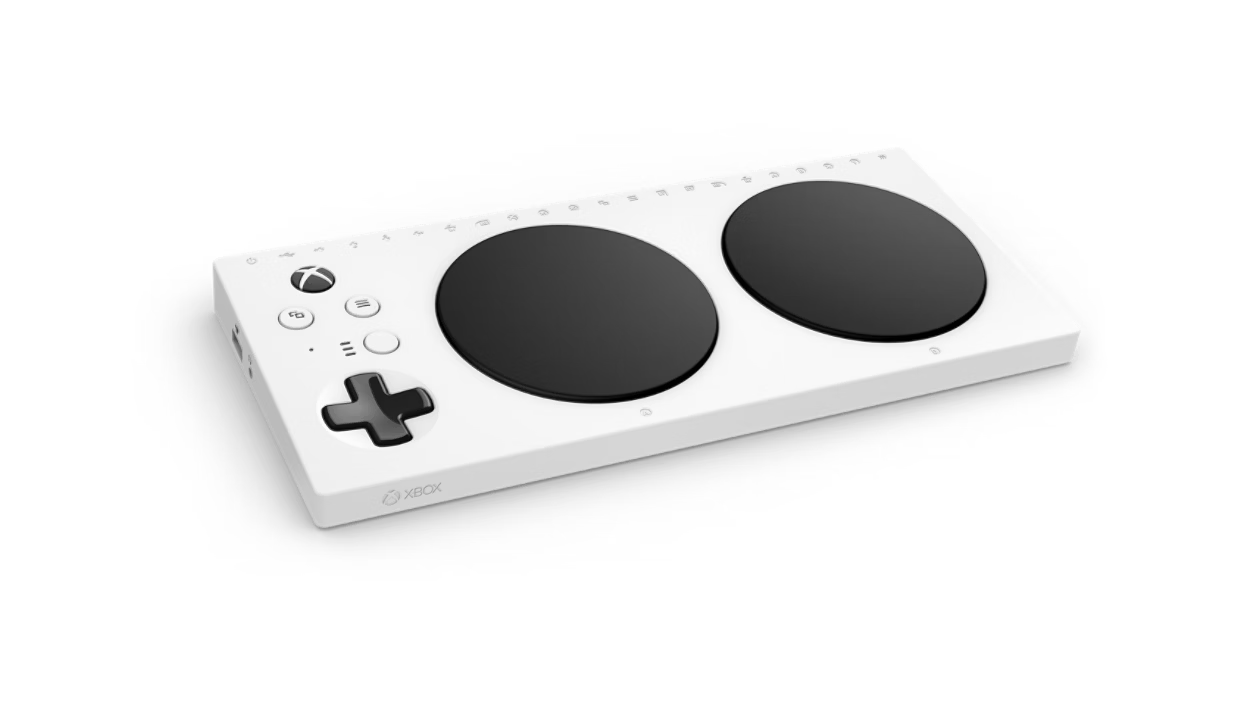
Physically, the controller includes two large buttons that require very little force to press. Compared to the small, tightly spaced buttons on standard controllers, these are much easier to activate.
From a medical model perspective, this design accommodates players with limited strength or fine motor control by reducing physical strain. It acknowledges specific physical impairments while still allowing players to engage fully with gameplay. Although the medical model centers disability within the body, this feature shows how relatively simple design decisions can have a meaningful impact on access.
Limitations and Critique
While the Xbox Adaptive Controller makes important strides toward accessibility, it also highlights ongoing challenges related to affordability and setup. Standard Xbox controllers are typically less expensive, and the Adaptive Controller often requires additional external accessories to support individual needs. From a social model perspective, pricing the Adaptive Controller significantly higher than standard controllers risks reinforcing existing disparities by limiting who can access accessible play. This highlights how accessibility is shaped not only by design flexibility, but also by economic access.
Conclusion
The Xbox Adaptive Controller shows how assistive technology can be about more than accommodation. It can also be about participation, enjoyment, and agency. Through modular inputs, customizable controls, and accessible physical design, it challenges narrow assumptions about who games are for. At the same time, its limitations remind us that accessibility also depends on affordability and infrastructure. Overall, the controller reframes accessibility as an essential part of inclusive design rather than a niche feature.