Client Overview
DiasporaDNA is a mobile cultural center dedicated to archiving, celebrating, and activating Philadelphia’s diaspora communities. They see festivals as powerful forms of storytelling — spaces where culture, history, food, music, and community come together in public life.
As Philadelphia approaches its 250th anniversary in 2026, DiasporaDNA is expanding its work through the Philly Festivals Network, including initiatives such as cultural tours, community archiving, media storytelling, and producer toolkits. These programs aim to highlight the city’s cultural diversity while supporting the people who organize and sustain festivals across neighborhoods.
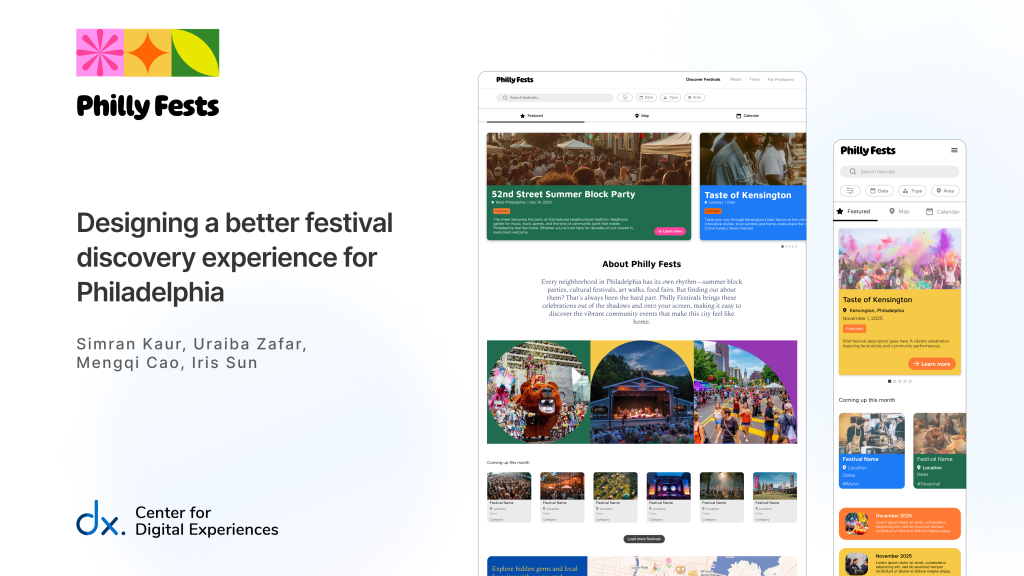
As part of this growth, DiasporaDNA sought a redesign of the Philly Festivals website — transforming it from a static listing into a more engaging, informative, and community-centered platform that reflects the cultural depth and ambition of the network.
What were the problems?
- The current website presents festival information mostly as long lists of links, making discovery and exploration difficult—especially for new users and visitors.
- The homepage lacks clear context about the platform’s purpose, value, and how it supports festival-goers and organizers.
- Cultural storytelling, accessibility details, and DiasporaDNA’s broader vision for festivals as community infrastructure are not clearly surfaced.
Our Team
Our Process
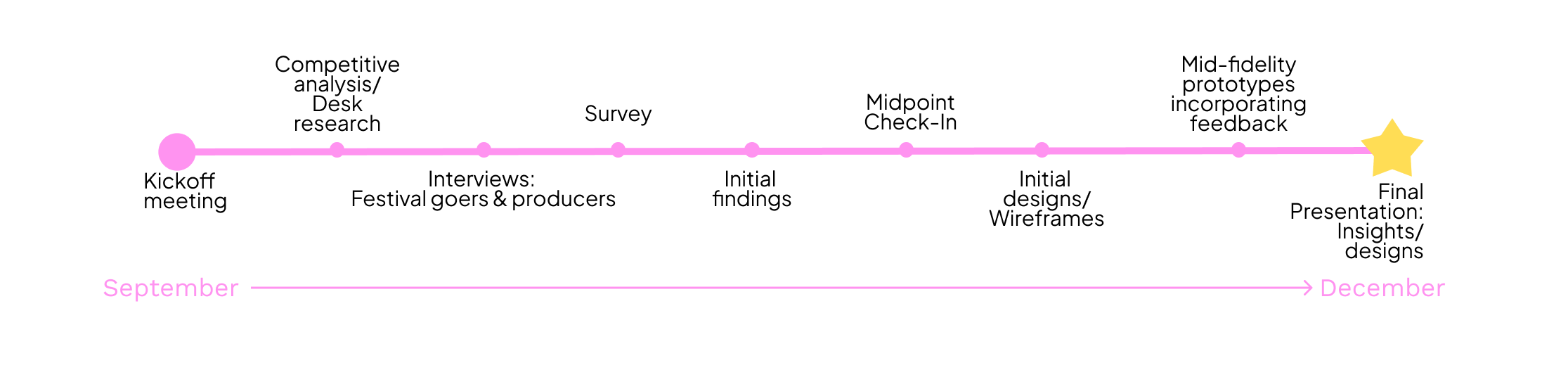
From September to December, we followed a design thinking process that included research, interviews, and iterative prototyping. This work led to a redesigned website concept that better supports festival discovery, cultural storytelling, and the needs of festival producers.
Project Goal
The goal of this project was to redesign the Philly Festivals website into a central hub that makes it easier for people to discover festivals, decide which ones to attend, and share the joy of these cultural experiences with others. Beyond discovery, we aimed to highlight the cultural significance of Philadelphia’s festivals while creating more meaningful support for the producers behind them.
“A shared community that brings festival-goers and organizers together.”
Research
Our research focused on understanding how people discover, plan, and experience festivals in Philadelphia, as well as the challenges festival producers face when organizing and promoting these events. We aimed to identify gaps in existing platforms and uncover opportunities to better support both sides of the festival ecosystem.
Methods
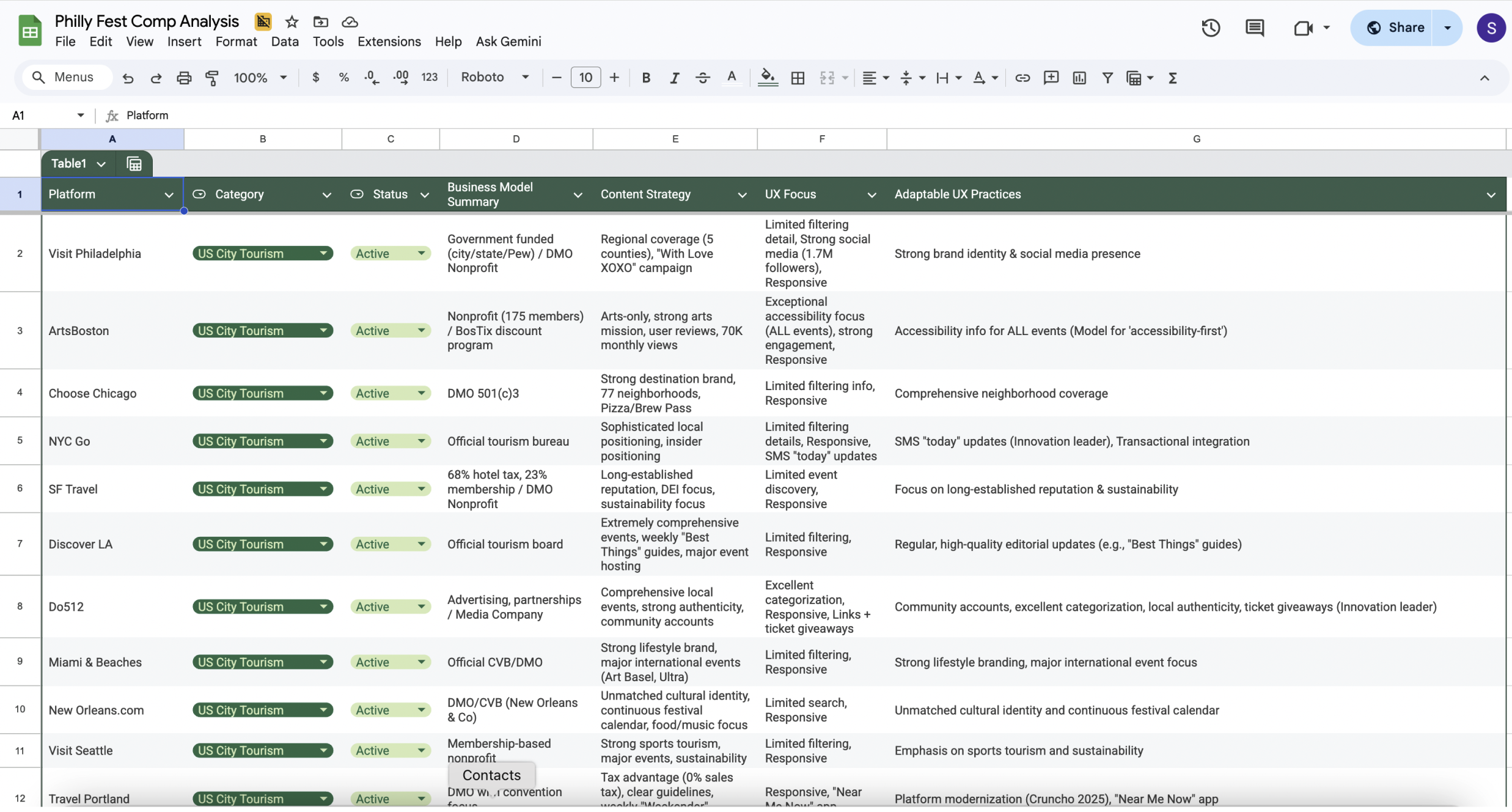
- Competitive analysis of 50+ festival and event platforms.
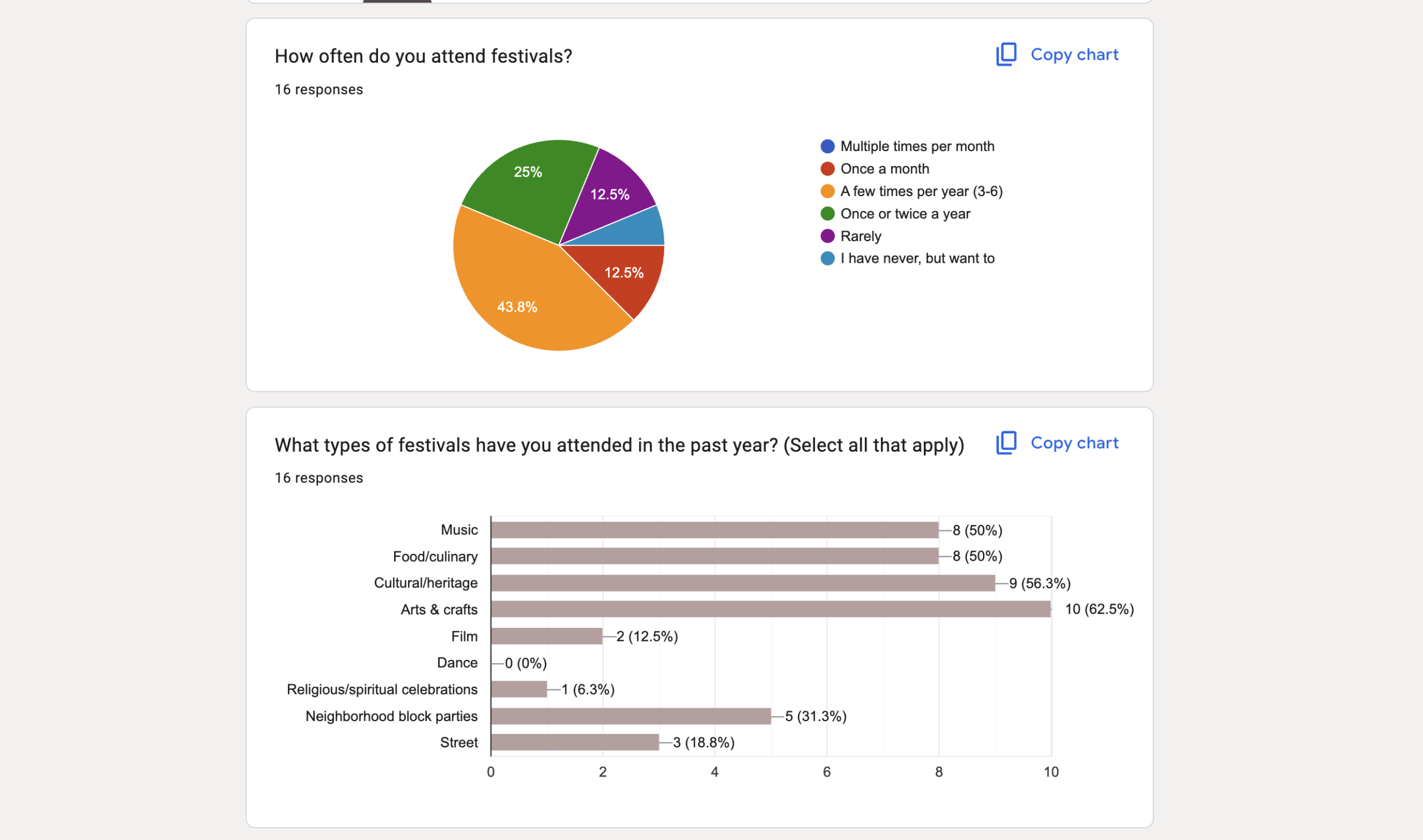
- Survey for festival-goers
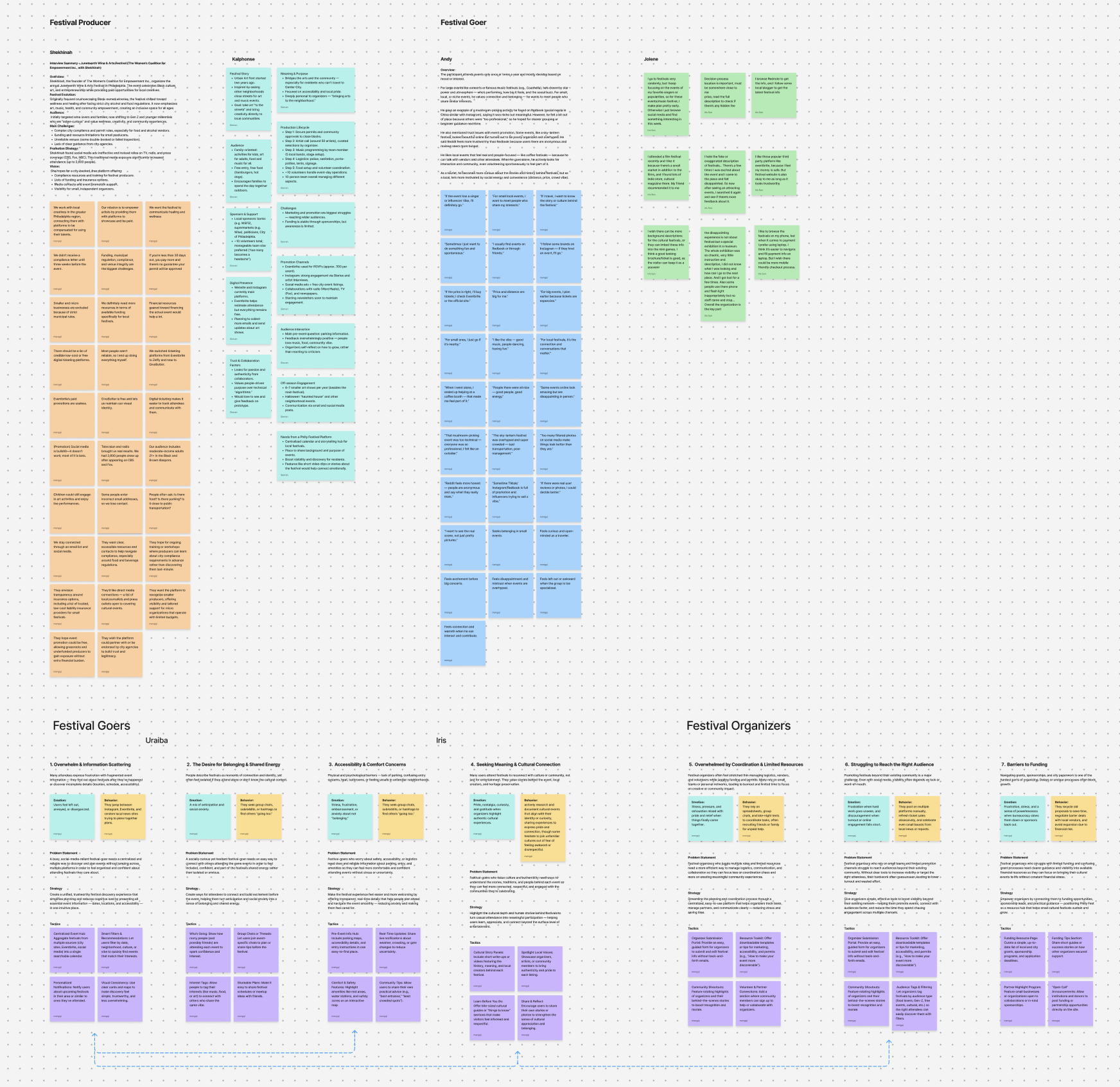
- Festival-goer interviews.
- Festival producer interviews.
- RICE prioritization of pain points across goers + producers.
- Content audit of existing PhillyFest site and DiasporaDNA Story Center.
Competitive Analysis Highlights
We analyzed festival platforms globally and locally:
Direct Competitors:
- Visit Philadelphia – Comprehensive but favors major events, lacks cultural depth
- Eventbrite – Transactional, no storytelling, high fees for producers
- Do215 (Philadelphia) – Good local coverage but cluttered, no cultural framing
Indirect Competitors:
- Fever (NYC) – Great UX but tourist-focused, high markups
- Time Out – Editorial quality but limited local festivals
- Resident Advisor – Music-focused, strong filters, no cultural context
Key gaps we found:
- No platform centers cultural heritage and community impact
- Accessibility info is inconsistent or absent
- Producer support is transactional (submit event, pay fee, done)
- Social coordination features are weak or nonexistent
Our Competitive Advantage:
- Cultural storytelling at the core
- Producer support built-in (not just event listing)
- Accessibility-first design
- Dual audience: locals + tourists, with tailored experiences
User Interviews
We used mixed-method qualitative + quantitative research to understand needs from multiple sides of the ecosystem.
Participants
- 4 internal stakeholders
- 3 festival producers
- 4 festival-goers
- Survey sample (16 responses)
What did we learn from users?
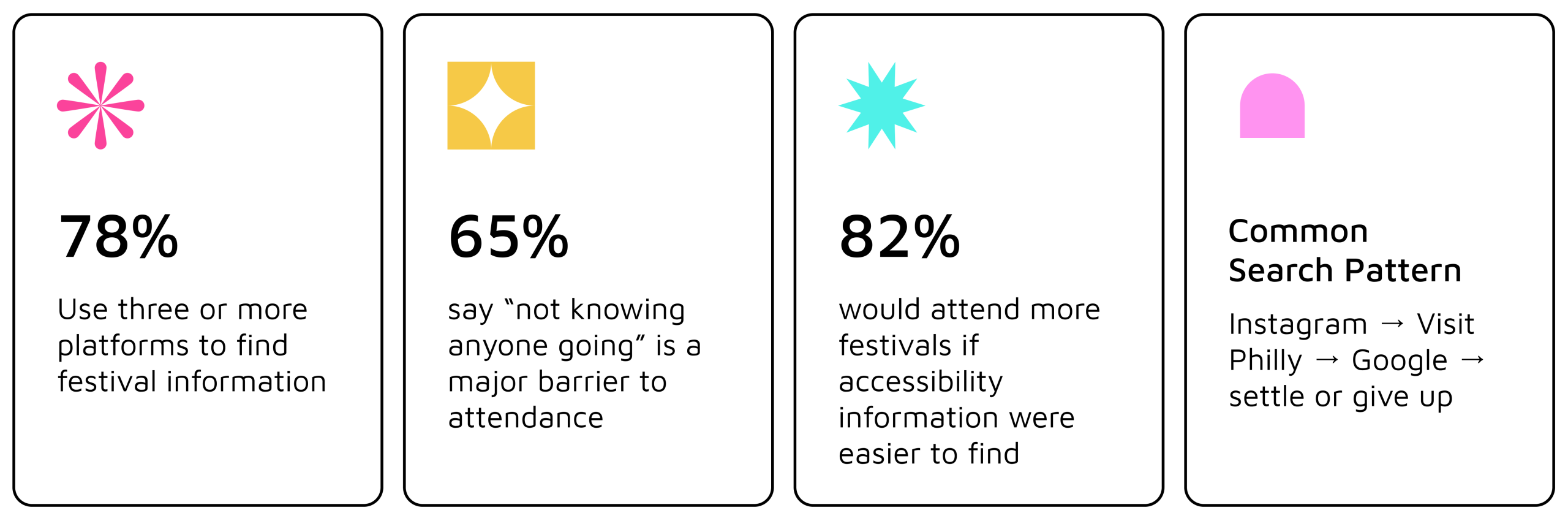
Festival goers rely on multiple platforms to decide whether attending a festival feels worthwhile, often lacking the clarity, social reassurance, and cultural context they need.
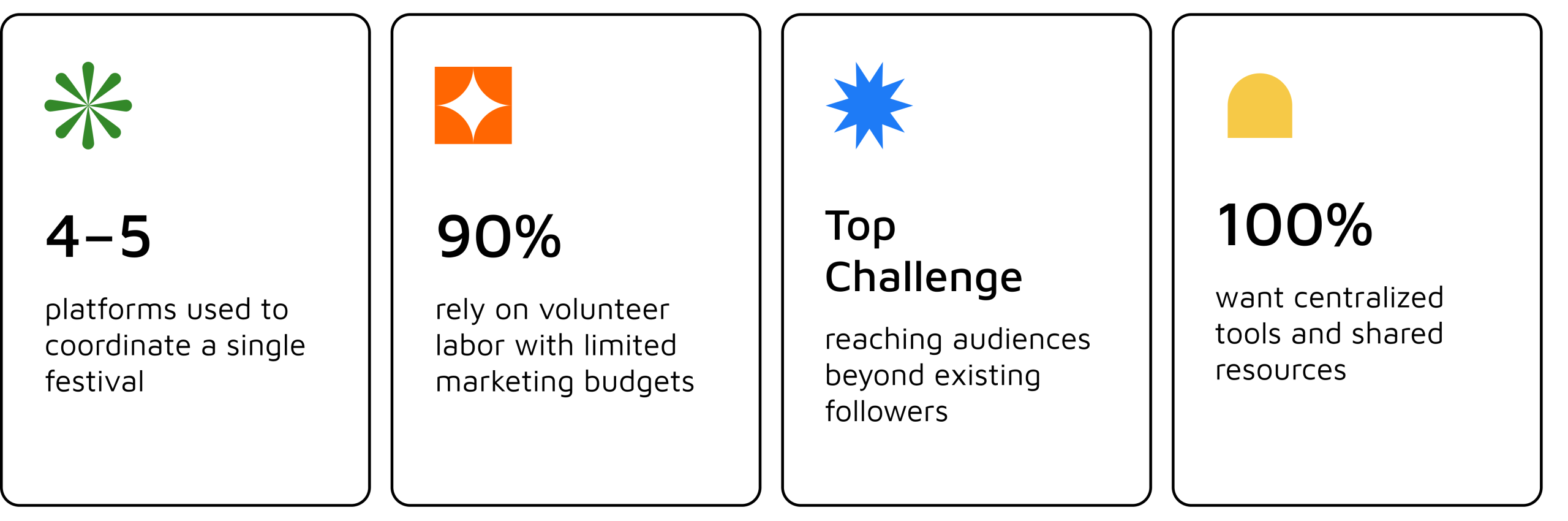
Festival producers juggle fragmented tools, limited resources, and unpredictable promotion channels, making it difficult to reach audiences and tell their stories.
Problem Statement
How might we create a centralized cultural hub that supports local festival goers, producers, and tourists by providing trustworthy information, cultural depth, and inclusive accessibility?
Brainstorming
Based on the research insights and data patterns, we began brainstorming solutions that could address the core needs of both festival-goers and festival producers.
Festival Goers
- Discovery & Planning: A single, trustworthy hub with smart filters, maps, and clear expectations around vibe, food, and family-friendliness.
- Accessibility & Safety: Clear, reliable information that helps people feel prepared and confident attending.
- Social Coordination: Tools that reduce the “no one to go with” barrier through easy sharing and group planning.
- Cultural Connection: Storytelling that highlights history, traditions, and community context.
Festival Producers
- Coordination & Workflow Support: A centralized place to organize key planning information, reducing reliance on scattered emails, texts, and spreadsheets.
- Audience Reach & Visibility: More reliable ways to reach the right audiences beyond volatile social media algorithms, with space to tell the story behind each festival.
- Resource & Capacity Support: Lightweight tools, templates, and guidance designed for volunteer-led teams with limited time and resources.
- Funding & Advocacy: Clear access to grants, sponsorships, and resources that help producers secure funding and communicate their cultural and economic impact.
Using RICE scoring (Reach × Impact × Confidence / Effort), we prioritized features:
High Priority (MVP):
- Smart Discovery & Filters (RICE: 8.5) – Universal need, high impact
- Festival Detail Pages (RICE: 8.2) – Foundation for trust
- Schedule Builder (RICE: 7.8) – Unique differentiator from competitors
Medium Priority (Phase 2):
- Producer Portal (RICE: 6.5) – High impact but smaller user base
- Social Coordination (RICE: 6.2) – Addresses #1 barrier but requires community
- User-Generated Content (RICE: 5.8) – High engagement but moderation-heavy
Deferred:
- Ticketing Integration (RICE: 4.2) – Complex, low confidence
- Marketplace (RICE: 3.5) – Out of scope for cultural mission
This clarified that Philly Festivals should first invest in discovery and information quality, not user accounts or heavy social features.
Strategic Direction
To make these priorities actionable, we translated them into a flywheel model that shows how the platform can grow sustainably over time.
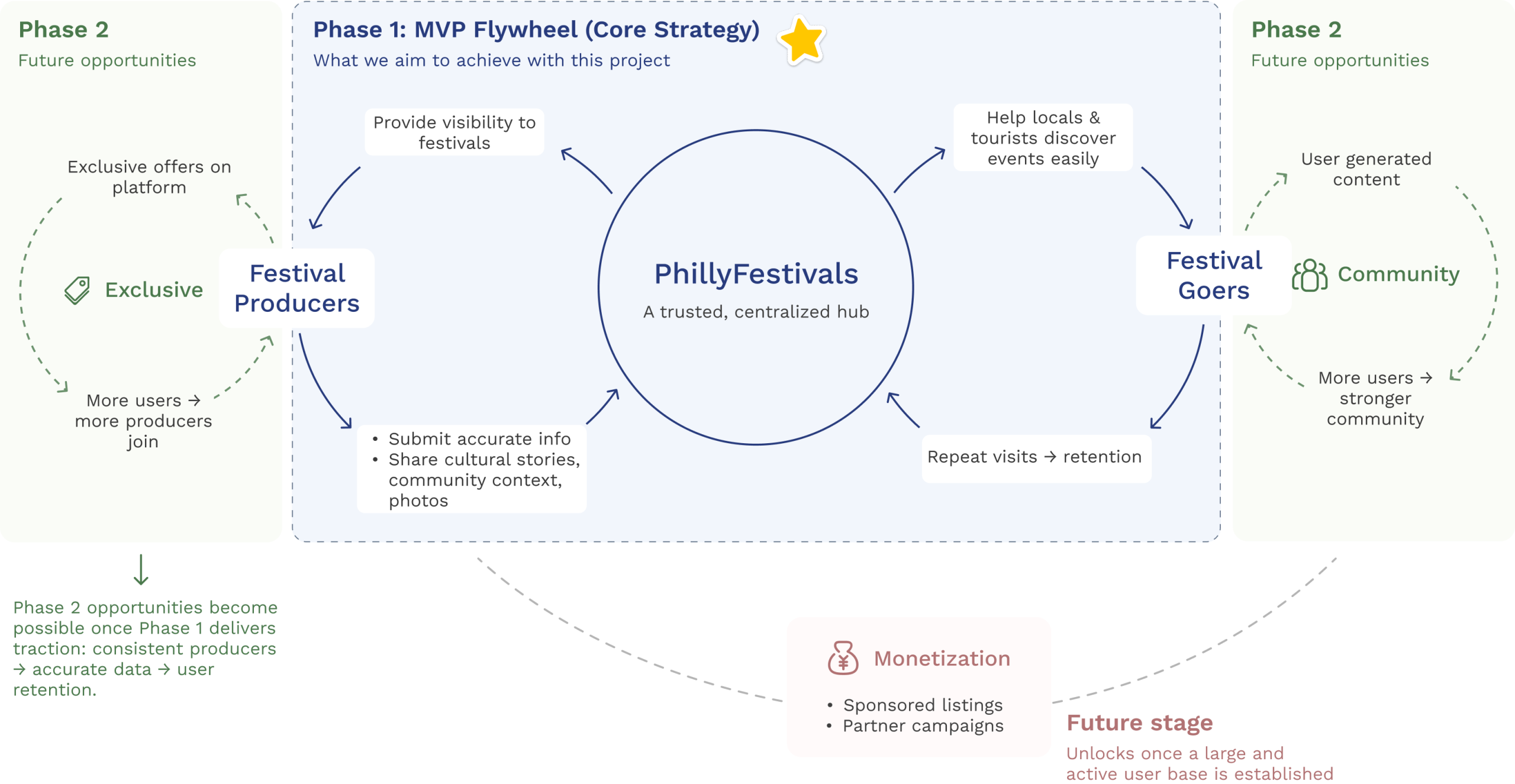
Phase 1: MVP Flywheel (Core Strategy)
At this stage, Philly Festivals does not yet have the resources to support user profiles, social features, or large-scale moderation. Instead, we focused on a flywheel that builds trust and repeat usage without requiring sign-ins.
Phase 2: Future Opportunities
Once Phase 1 establishes consistent data, producer participation, and user traffic, more advanced features become feasible:
- User-generated content
- Community coordination tools
- Exclusive offers or partnerships
Phase 3: Monetization & Sustainability (Future Stage)
Only after a large and active user base is established does monetization make sense. Examples include:
- Sponsored festival listings
- Partner campaigns
- Exclusive offers
Information Architecture
We restructured the information architecture to make festival discovery the core experience, redesigning the homepage as a discovery hub with featured, map, and calendar views. New About, Tours, and Producer pages support Philly Festivals’ cultural mission, future tour plans, and producer needs, while keeping the MVP lightweight and easy to maintain.
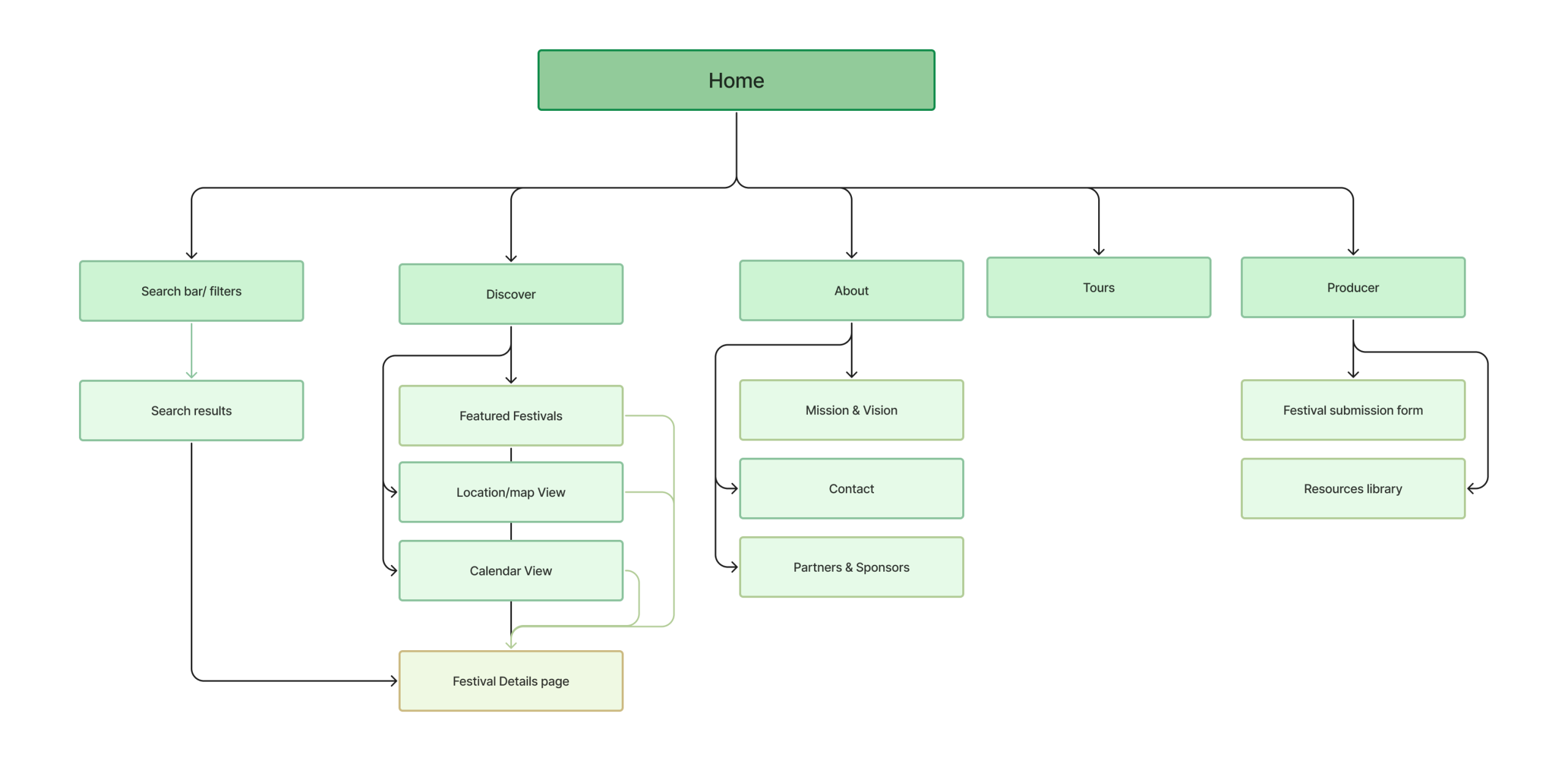
This aligns with our Phase 1 flywheel goal: making it easy for locals and tourists to discover festivals and build trust through clear, well-structured information.
Final Design
With the information architecture defined, we moved into the final design phase. The designs below reflect how we structured festival discovery and key pages to support the MVP strategy.
Here are some of the page highlights:
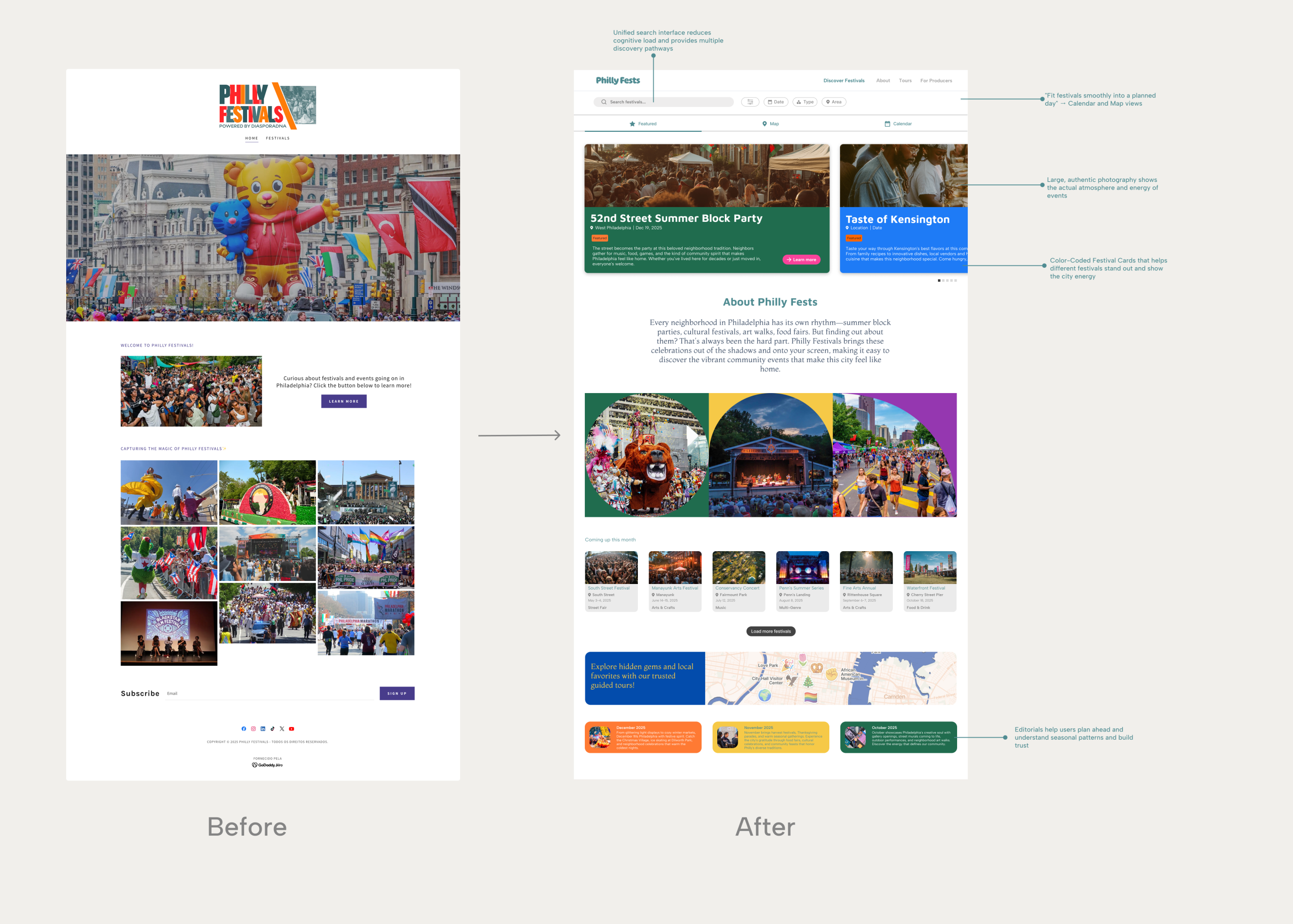
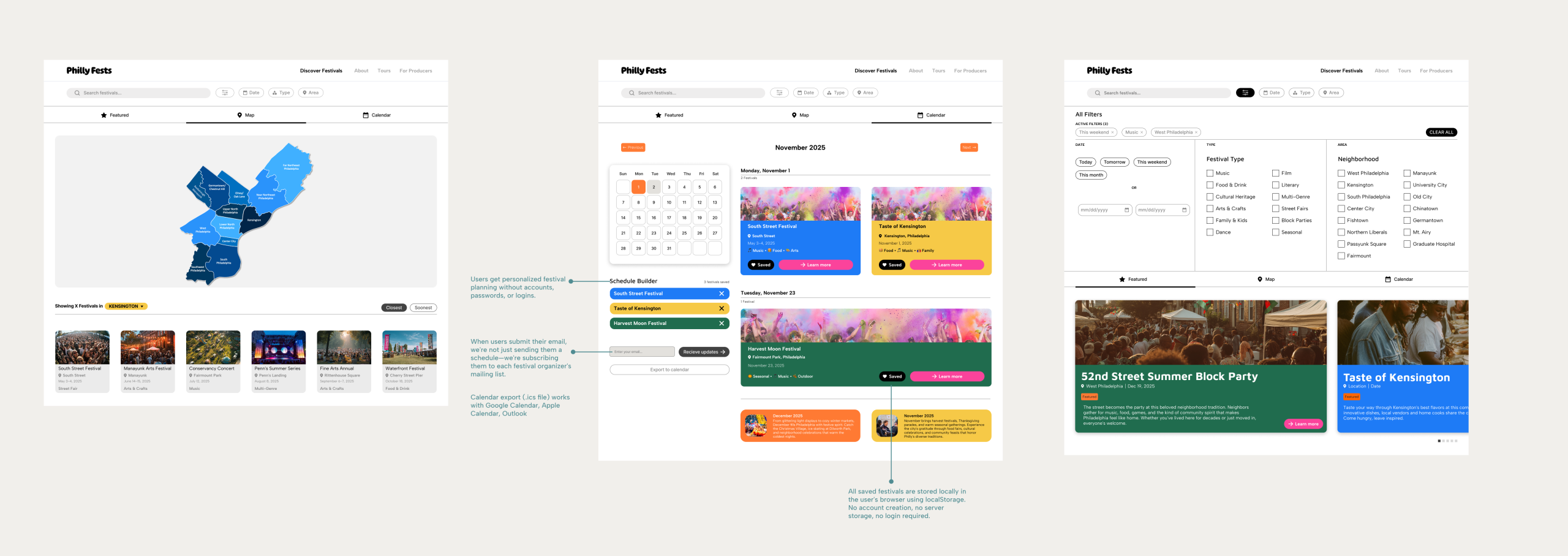
1. Festival discovery (Homepage)
- Smart filters that can filter date, neighborhood, cultural community, and accessibility
- Featured colorful festival cards
- Tour & Editorial banner
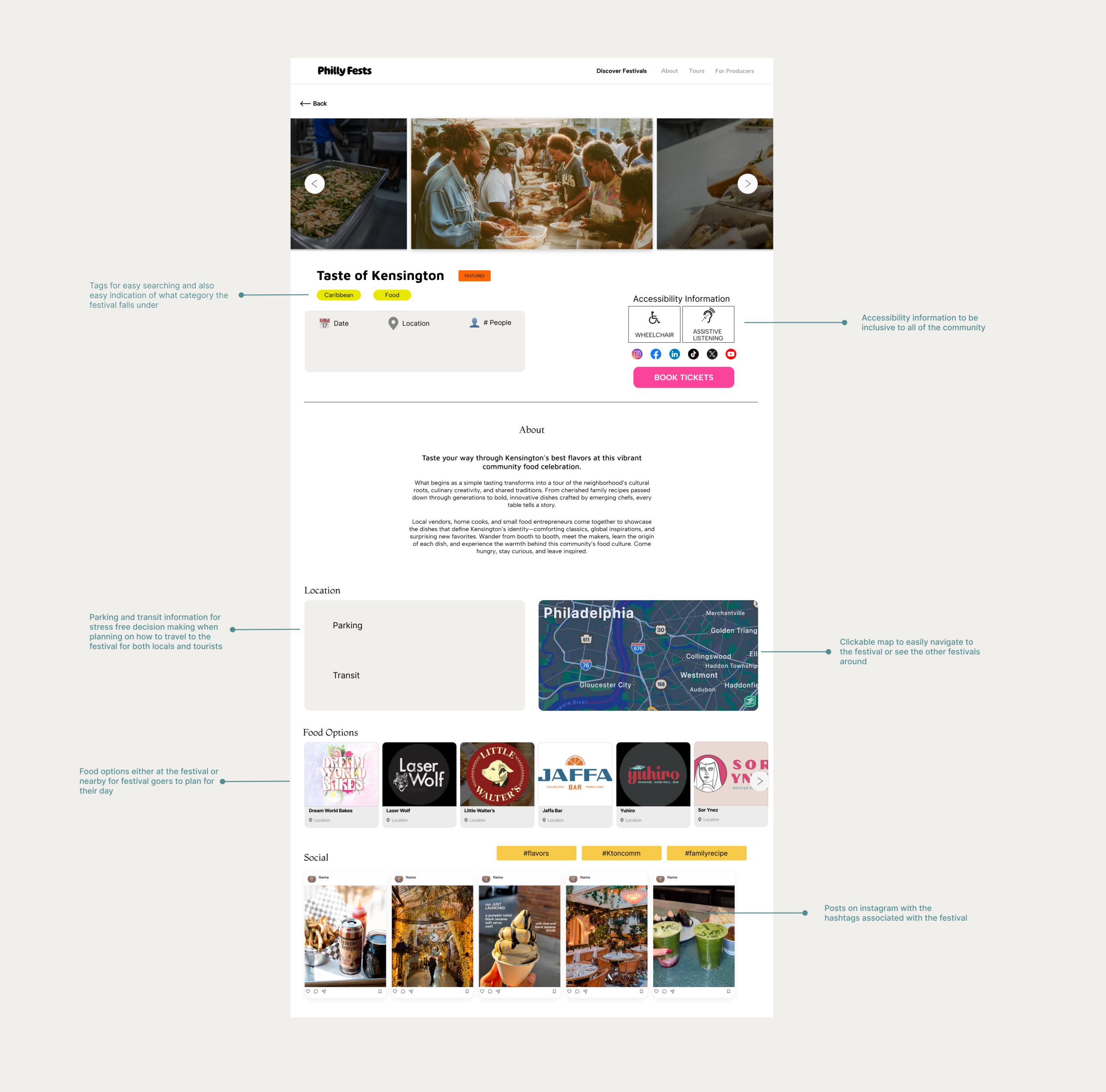
2. Festival detail page
- Culturally respectful festival overviews (what to expect, time & location, attendance)
- Accessibility symbols (bathrooms, seating, stroller access, parking)
- Book tickets CTA button
- Detailed location info with a map plugin and transportation guidance (parking & transit)
3. Festival lineup experience
- Map: A map filter & recommendation within the selected neighborhood
- Calendar: A calendar filter & Schedule builder that can save festivals to the local storage. Also a subscribe CTA allowing users get updates from saved organizers
- Smart filter: Genre, day, stage, and “similar to” recommendations
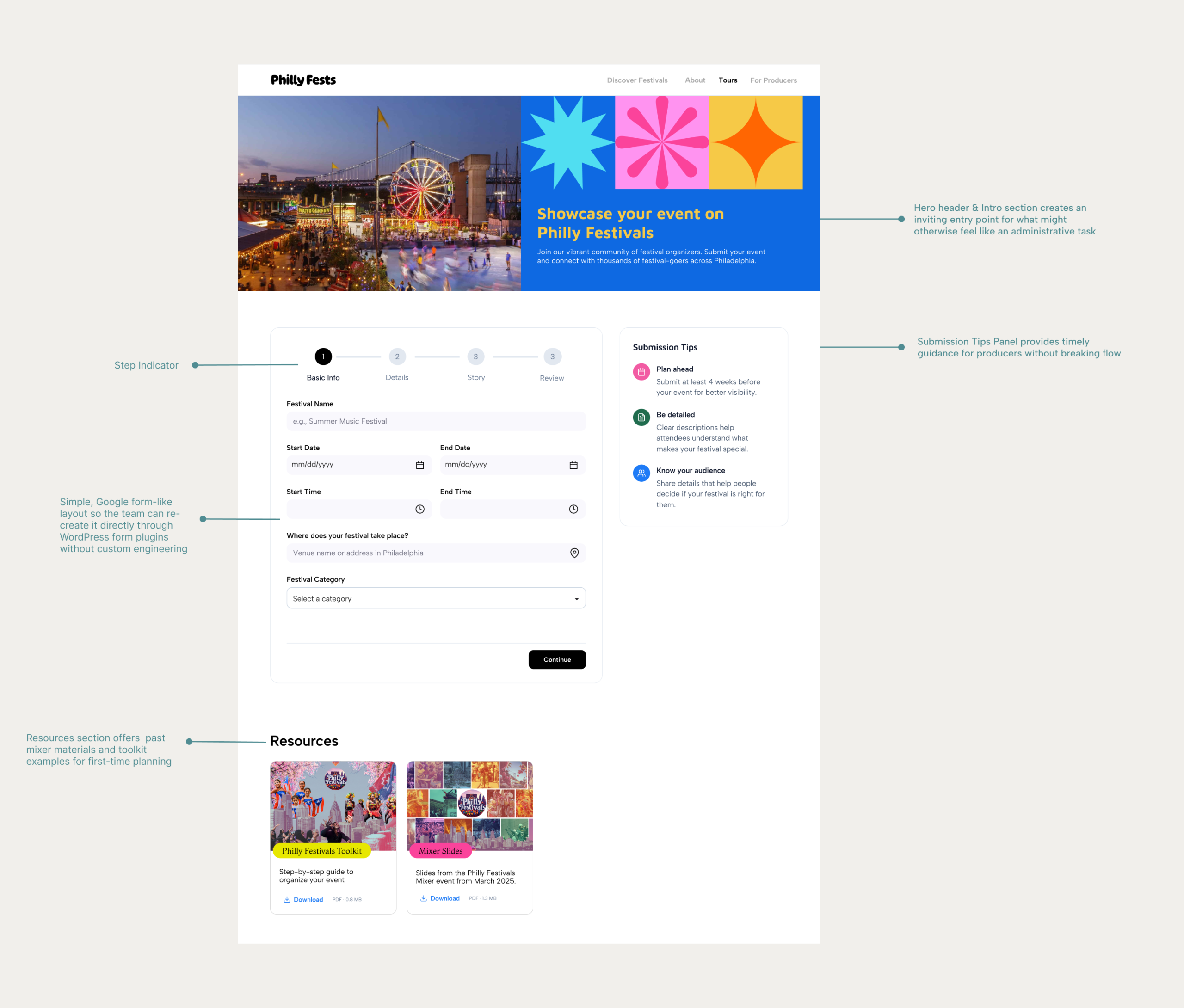
4. Producer (Festival submission)
- A guided, simple event submission flow
- Submission tips panel that provide relevant guidance
- Resources section that offers past mixer materials and toolkit
Design system for consistency
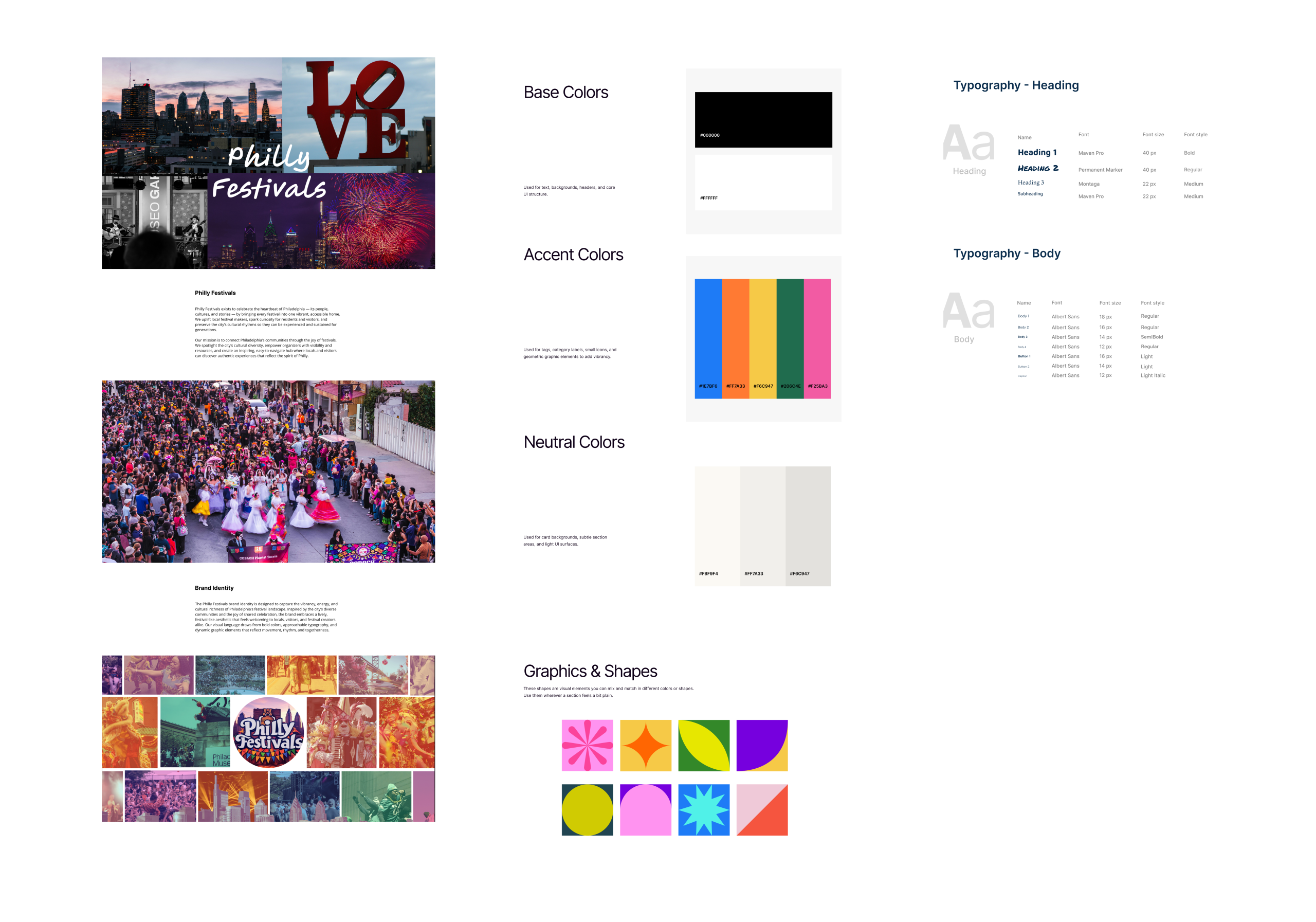
During the design process, we created a design system, including color, typography, graphic, image, and components, for design consistency and future efficiency.
In terms of color, we use black and white as the base colors, and chose five vibrant colors as accent colors (referring to Philadelphia’s official colors, and three neutral colors for subtle areas.
The eight graphics were created to mix and match in different colors or shapes, adding the vibe to the pages.
We set up typography hierarchy with the font style, size and weight can make the webpages look consistent.
We also defined image guidelines to include lively, festival-like aesthetic photos that feel welcoming to locals, visitors, and festival creators.
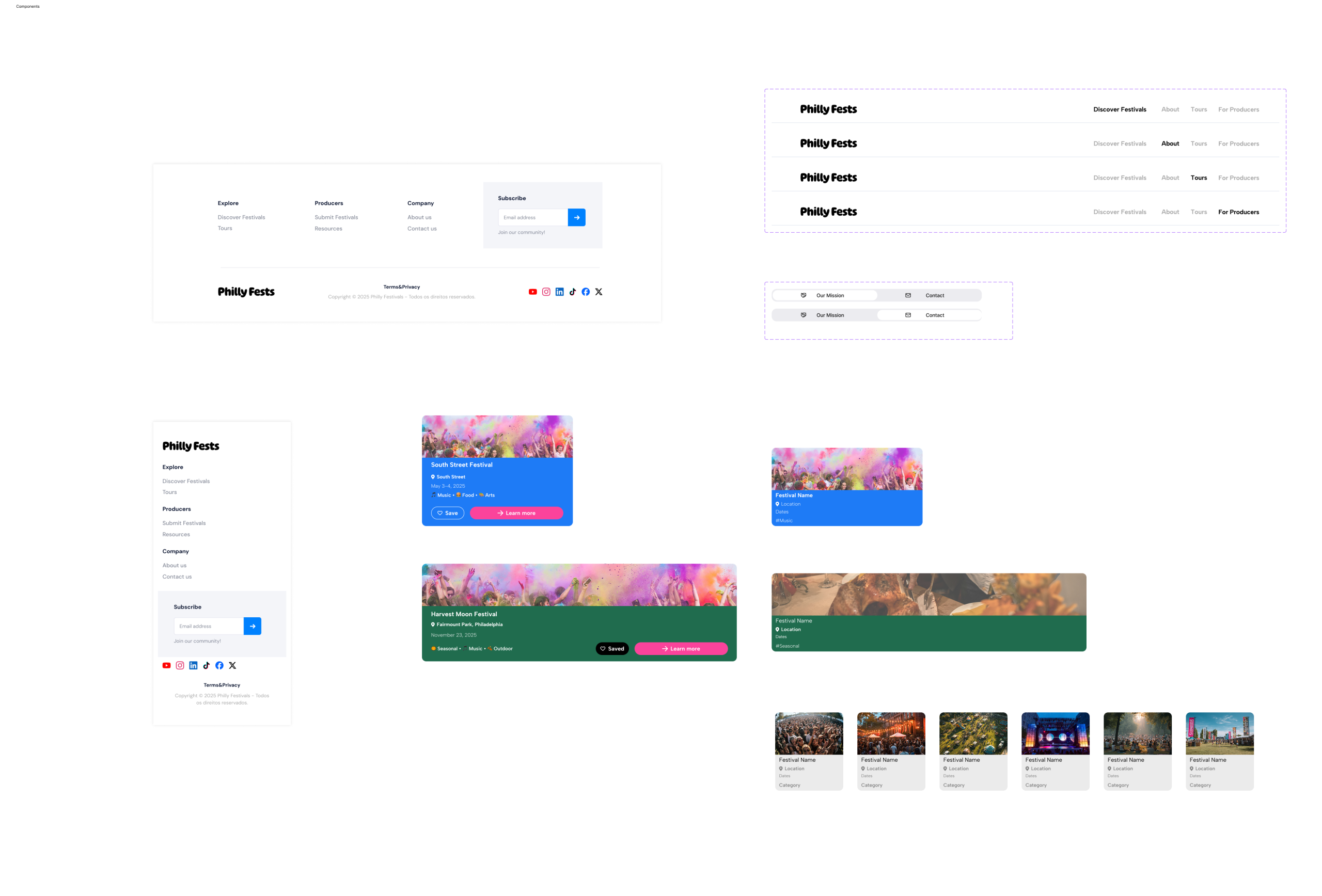
In the component library, we added common design components such as header, footer, and navigation bar so the team can use them without designing them. When updating the master component, all components are automatically updated, which greatly improves efficiency.
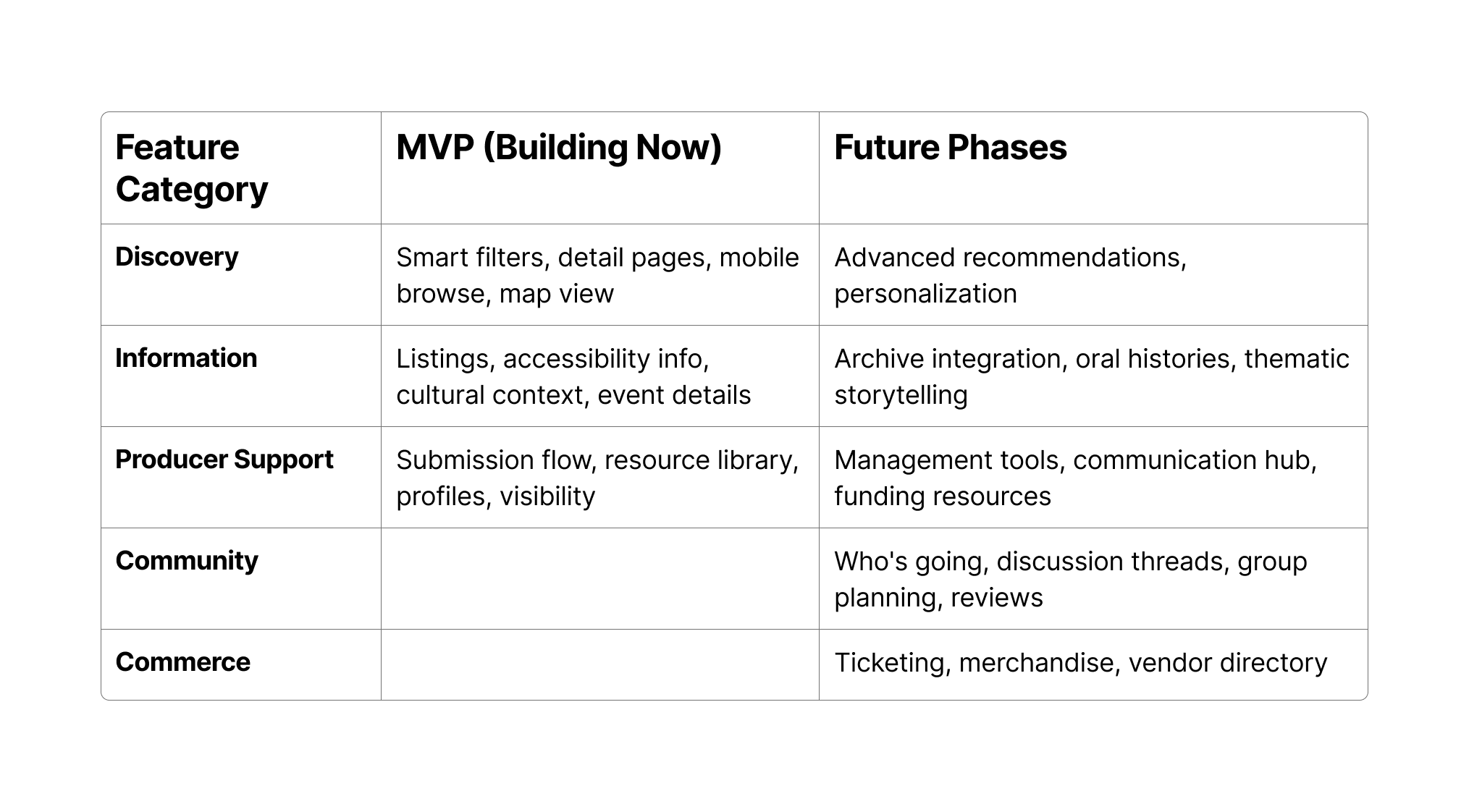
Future Opportunities (Phase 2)
Though we included a lot of features for now, we still thought about some interesting features that could be developed in phase 2, when the whole website gets more mature.
Reflections & Learnings
What went well:
- All of our ideas are research-driven, making sure it really benefits the target audience
- Using RICE prioritization to help us focus on MVP vs. “nice-to-haves” features
- Feature innovation, such as Schedule Builder, a thoughtful filter system, producer form, and clear homepage design
- Created a design system to keep everything consistent
- Strong collaboration with DiasporaDNA kept the cultural mission central
Challenges and how we overcame them:
- Challenge: Balancing needs of two very different user groups (goers vs. producers)
- Solution: Separate but connected experiences—don’t force producers into attendee flows
- Challenge: Designing without finalized content (festival data)
- Solution: Created flexible component system that adapts to varying content lengths
Key Takeaways
The best design solutions emerge at the intersection of user needs and business constraints. Schedule Builder works because it delivers value to users (personalization without accounts) while solving a business problem (lead generation for producers). Finding those win-win features is the mark of strategic design.