What is Pikmin Bloom?
Pikmin Bloom is a free augmented reality (AR) mobile app developed by Niantic and Nintendo. By implementing gamification strategies, it encourages players to walk more, explore their surroundings, and foster healthy habits.
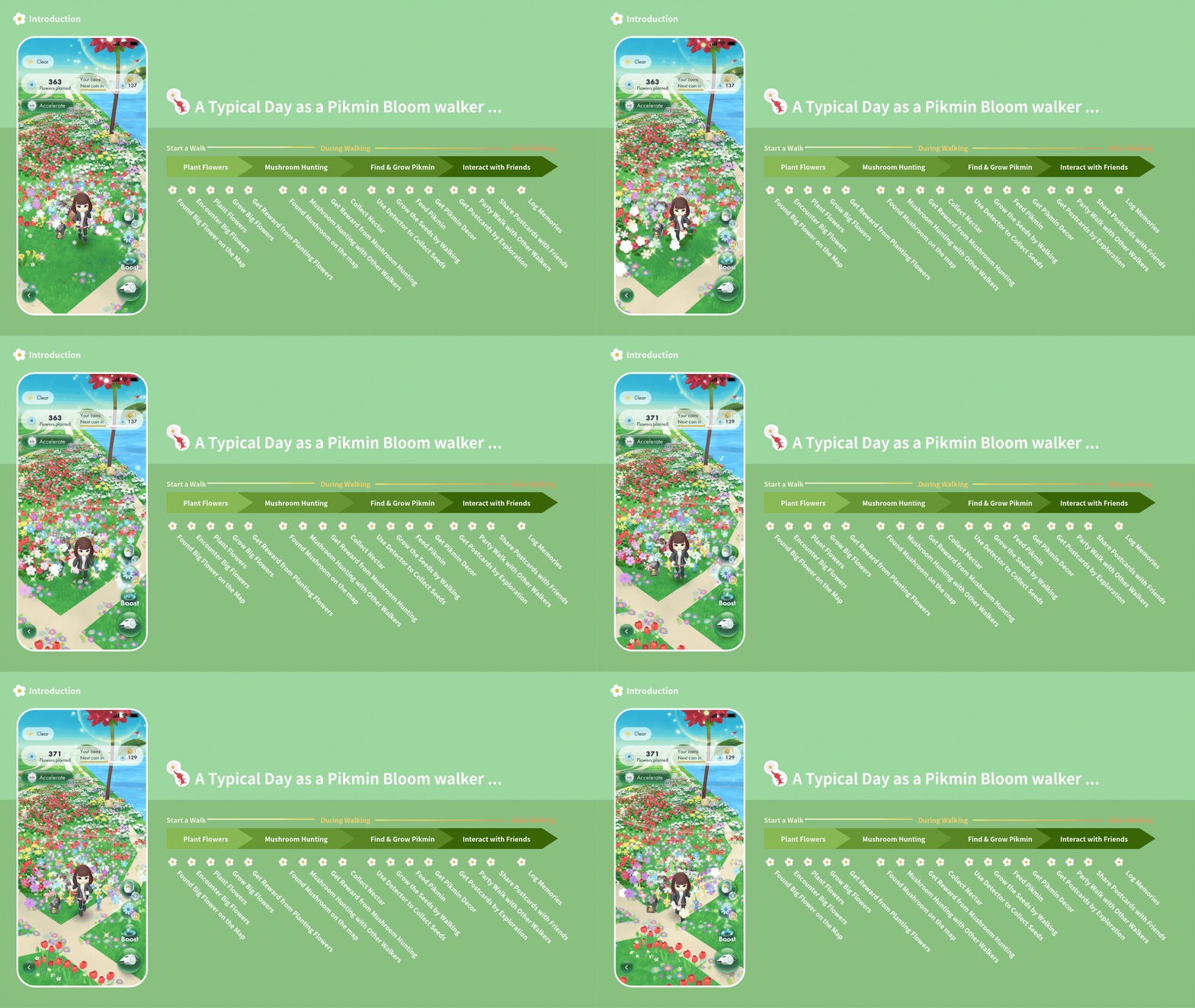
A typical journey for a “Walker” starts with flower planting and expeditions (collecting seeds, fruit, and battling mushrooms), followed by postcard exchanges and diary logging.
Why the Critique?
Although Pikmin Bloom demonstrates the power of gamification and the value of pleasurable experiences in digital information, which cover visceral and behavioral concepts in Norman’s theory, raising walkers’ physical activity by 23-35%, it still suffers from several usability friction points that disrupt the Seven Stages of Action.

Challenge 1: Navigation – The Struggle for Discoverability
Discoverability in Pikmin Bloom is a hurdle for new users. The primary menu is hidden behind a hamburger interaction or a “swipe up” gesture, but these affordances lack clear signifiers. The interface provides no visual cues to indicate that swiping or clicking will reveal the game’s core features. While the pedometer works without this interaction, this poor discoverability creates a Gulf of Execution, preventing users from understanding the full scope of the gaming experience.
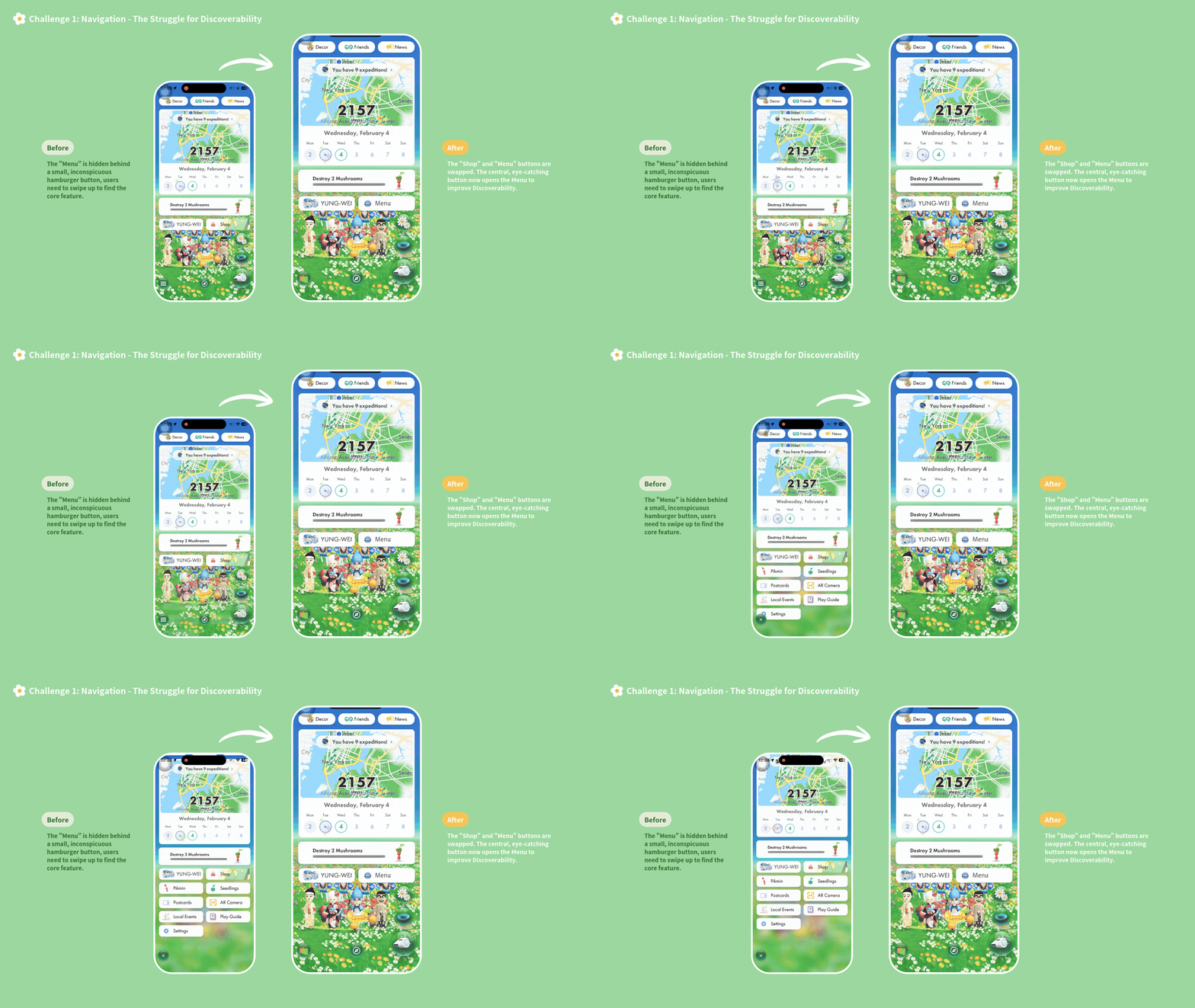
Recommendation 1: Swap the placement of the “Shop” and the “Menu.”
The suggestion here is to exchange the place of “Shop” and the “Menu,” so the core actions gain a more eye-catching signifier and a more prominent position in the visual hierarchy. This change can create a more natural mapping between the home screen and key gameplay actions, helping users quickly form an accurate mental model and later leverage their unique Pikmin journey.
Challenge 2: Managing My Pikmin: Over-Heavily Relying on Knowledge in the Head
As a player’s journey deepens, they accumulate hundreds of Pikmin. Managing this quantity creates a heavy cognitive load because the main list relies entirely on Knowledge in the Head. Pikmin have various statuses: expedition, standby, or battling. Pikmin may be on their way to picking up their decorations in their original found place (sometimes this takes half a year), or they may be sent out for an expedition to pick up seeds or fruits, or they may be busy hunting mushrooms. However, the list view lacks signifiers to indicate these states. Users must click into individual profiles to find constraints, interrupting their workflow. This reliance on Long Term Memory (LTM) is unreliable and frustrating.
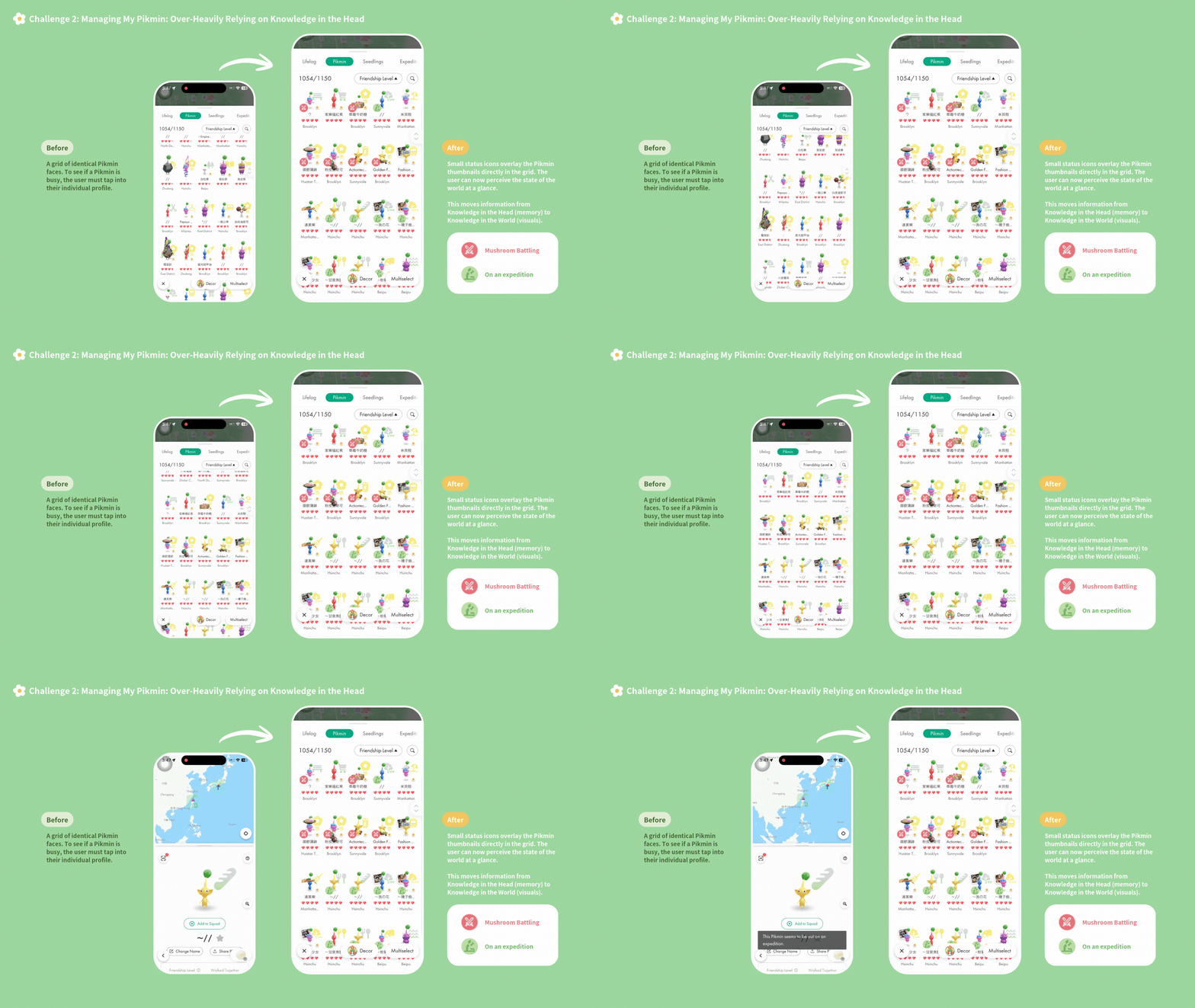
Recommendation 2: Transfer this information to Knowledge in the World.
By adding status icons (visual signifiers) to the main list. This would improve the System Image, allowing users to scan their collection and immediately perceive the state of the world without needing to recall individual Pikmin activities.
Challenge 3: The Postcard War: Slips, Mistakes, and Constraints
“Give my Pikmin back!” is a common cry among friends. Users often accidentally send the wrong Pikmin to carry a postcard, especially when they send a high-level or current-event Pikmin that they should save for special monthly missions, rather than on a week-long delivery trip, due to Slips caused by muscle memory. Because the “Next” button is in the same location as previous screens, users tap rapidly without thinking. This is an action-based slip.
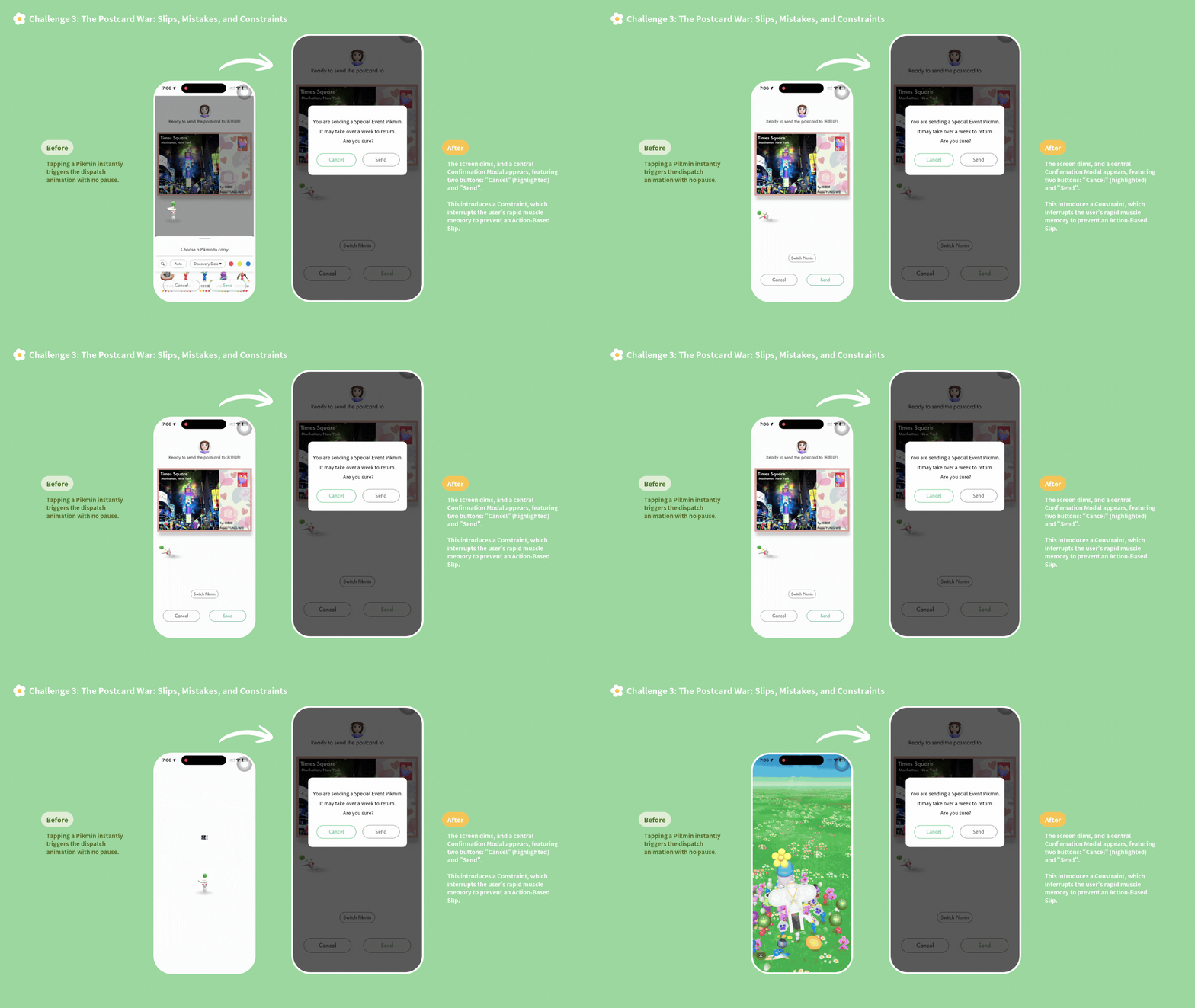
Recommendation 3: Introduce a Constraint (specifically, a forcing function) to interrupt this rapid flow.
“You are sending a Special Event Pikmin. It may take over a week to return. Are you sure?” A confirmation modal that requires a distinct click, different from the general next-step action button, would prevent the slip by forcing the user to pay conscious attention before the action is executed. This explicit check externalizes critical knowledge in the world, reminding users that once their Pikmin leaves, there is no way to call it back or switch the carrier.
“Oh, I got the same postcard from this player the third time!” It’s another usual conversation that can rot the roots of walkers’ friendship, since Pikmin Bloom doesn’t record which postcards have already sent to which friend. The system lacks the necessary history to aid decision-making, causing another easily made “mistake.”
Such a “memory-lapse” could be prevented by adding a small footnote, like “You already sent a similar postcard to this person before,” before the user picks a similar location postcard for their friends. This small piece of feedback helps close the gulf of evaluation by reminding users what they have done before, reducing reliance on memory, providing the necessary feedback to correct the user’s plan before they commit to it, and preventing repeated mistakes.