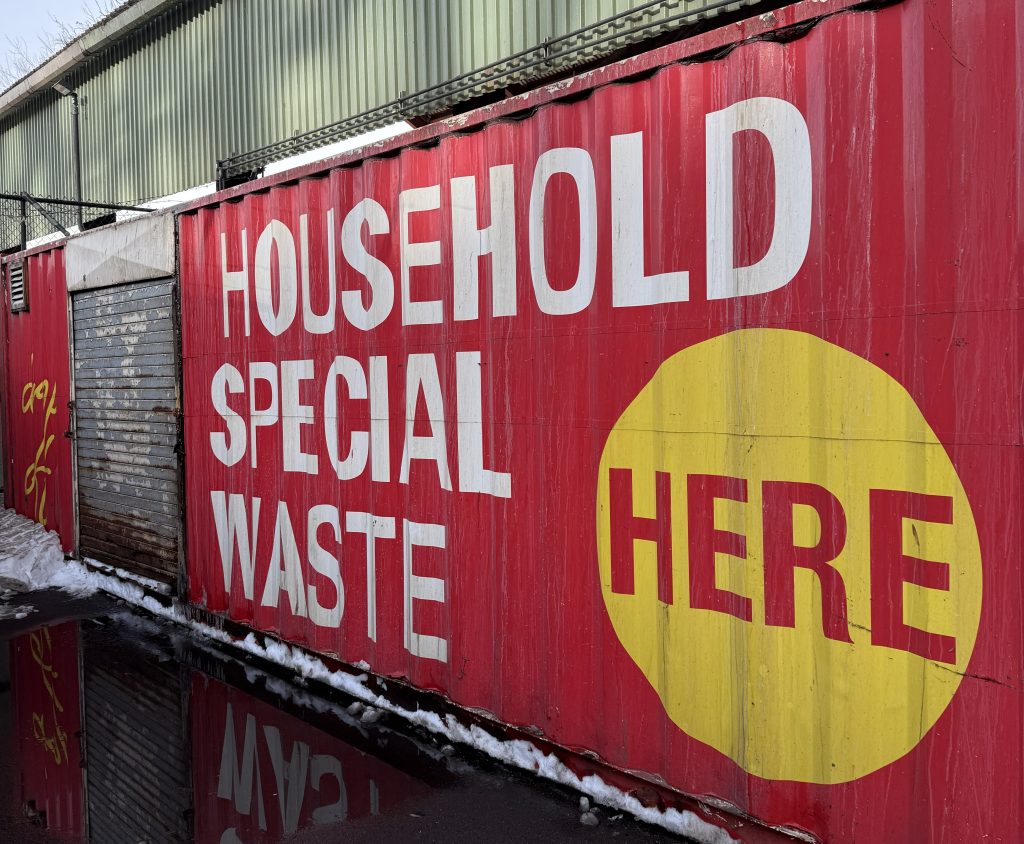
Project Overview
Team: Claire Paisley, Hridya Nadappattel, Marc Lobo, Sylvia Xu
Timeline: 2 months
Client: New York City Department of Sanitation (DSNY)
Objective: Understanding NYC’s Special Waste Disposal experience
Everyone has e-waste. No one really knows where it goes. What should be a simple task of getting rid of an old charger, a dead laptop, a bundle of cables, or even a broken lightbulb quickly turns into guesswork.
New York City has an established service for special waste disposal handled by the New York City Department of Sanitation (DSNY). Yet for residents, it doesn’t feel like a system you can use. Rather, it feels like one you have to figure out.
This led us to ask:
How do NYC residents actually navigate e-waste disposal? Where does the system break down?
Putting ourselves in an NYC resident’s shoes
Starting Point: Digital Confusion
We began where most people would, by searching for it online. What should have been a quick search turned into a loop. There were different websites listing different rules, some locations accepting certain items but not others, and no clear way to verify what was actually accurate
We tried to make sense of it by compiling everything into one place so that we would have something to follow. Instead, the contradictions became more obvious.
And at that point, we still didn’t know one basic thing:
If we showed up somewhere with our e-waste, would they actually take it?
Turning Point: Calling a Human
With no clear answer online, we finally called the DSNY hotline.
This was the first moment things worked. A real person guided us to a drop-off site, described memorably as:
“under the Manhattan Bridge”
Clear… but also oddly vague.
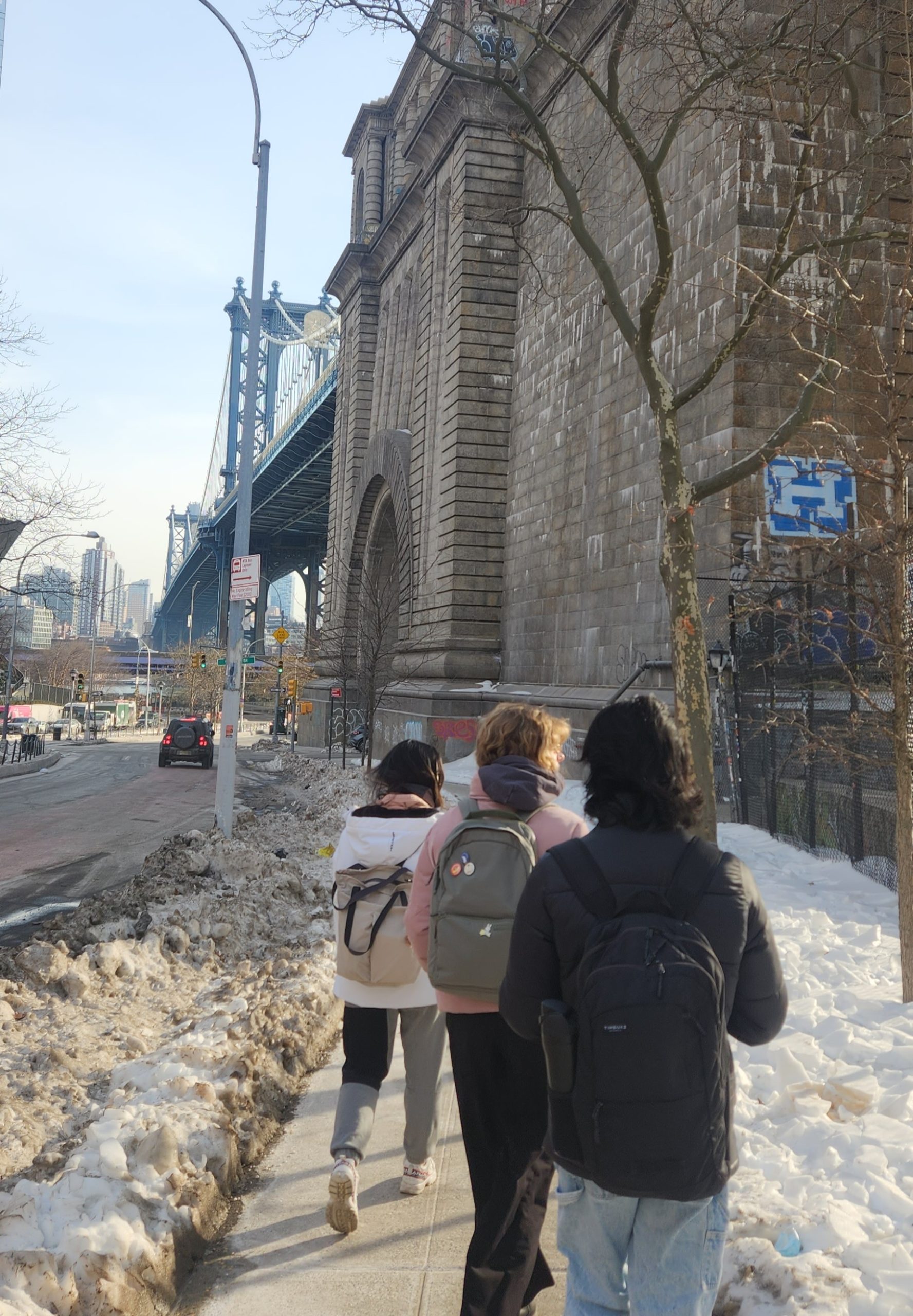
Recycling e-waste under the bridge
There was no exact address or an obvious entrance. The bridge stretched across multiple blocks, and every point beneath it felt equally possible. At this point, “under the bridge” turned out to be more poetic than practical
Eventually, we found it.
At the site, we met a DSNY worker who manually sorted and disposed of our e-waste. We also tried to take some e-waste that the hotline worker told us wasn’t processed at this site. But the DSNY worker took them regardless.
This made it clear that there is no structured intake system or visible workflow. Confused, we spoke with the worker to uncover what happens behind the scenes:
- How materials are sorted and processed
- What happens to incorrect waste
- How the site operates across different days
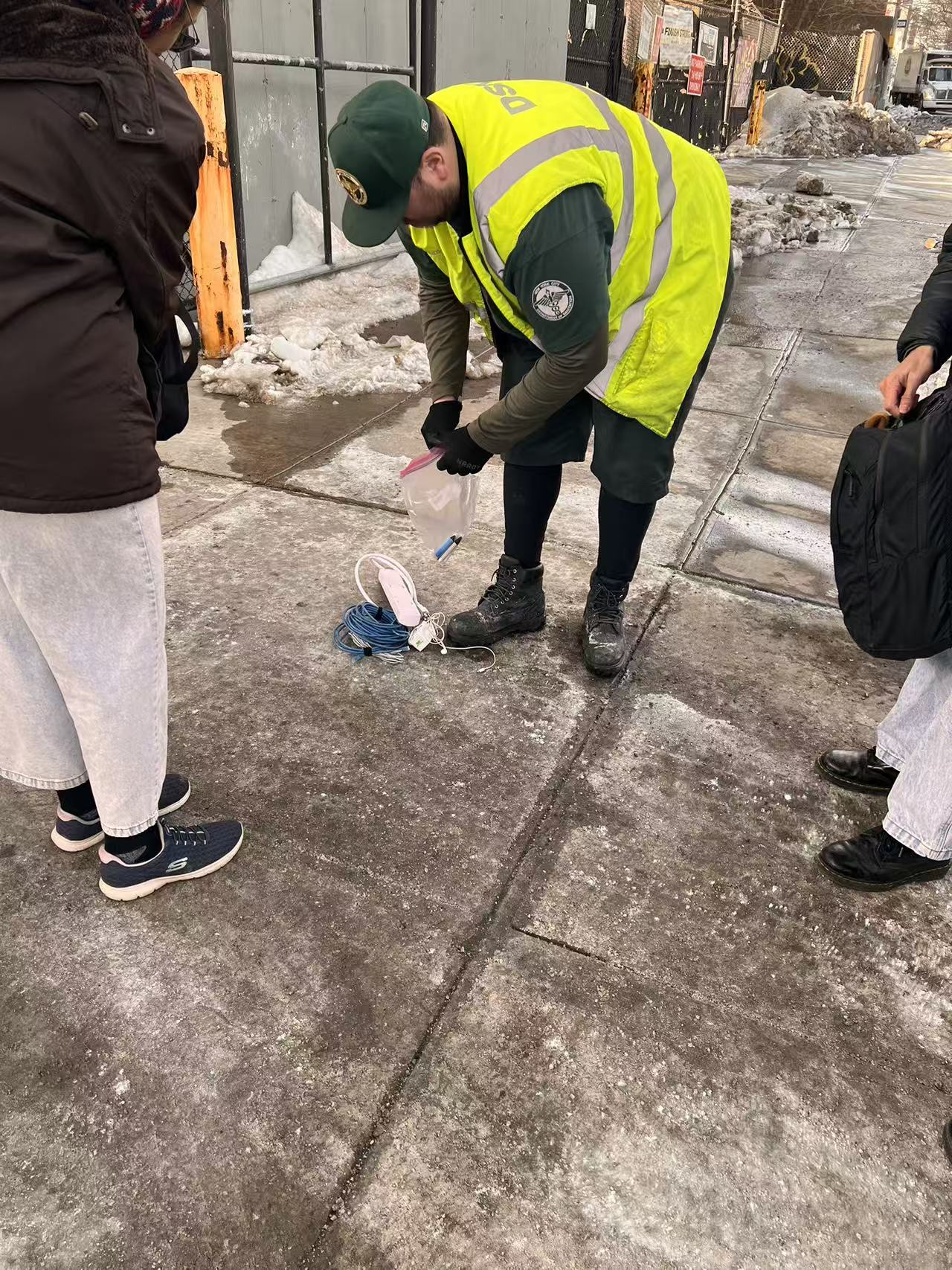
This helped us see the invisible infrastructure supporting the service, and it slowly became clear to us that the system works, but only because people make it work.
Understanding DSNY’s E-Waste System
Making Sense of the Chaos
We started mapping what we experienced during the safari. It felt like it should connect into a simple loop, but it didn’t hold. The more we tried to connect the pieces, the more gaps appeared.
There were also more actors than we expected, like hotline operators, site workers, supervisors, third-party vendors, policy makers… the mayor? Tax payers?? And then different kinds of residents: those who might not be able to access the system easily, or those who might use it in ways it wasn’t designed for.
Even after visiting the site, the system remained hard to pin down.
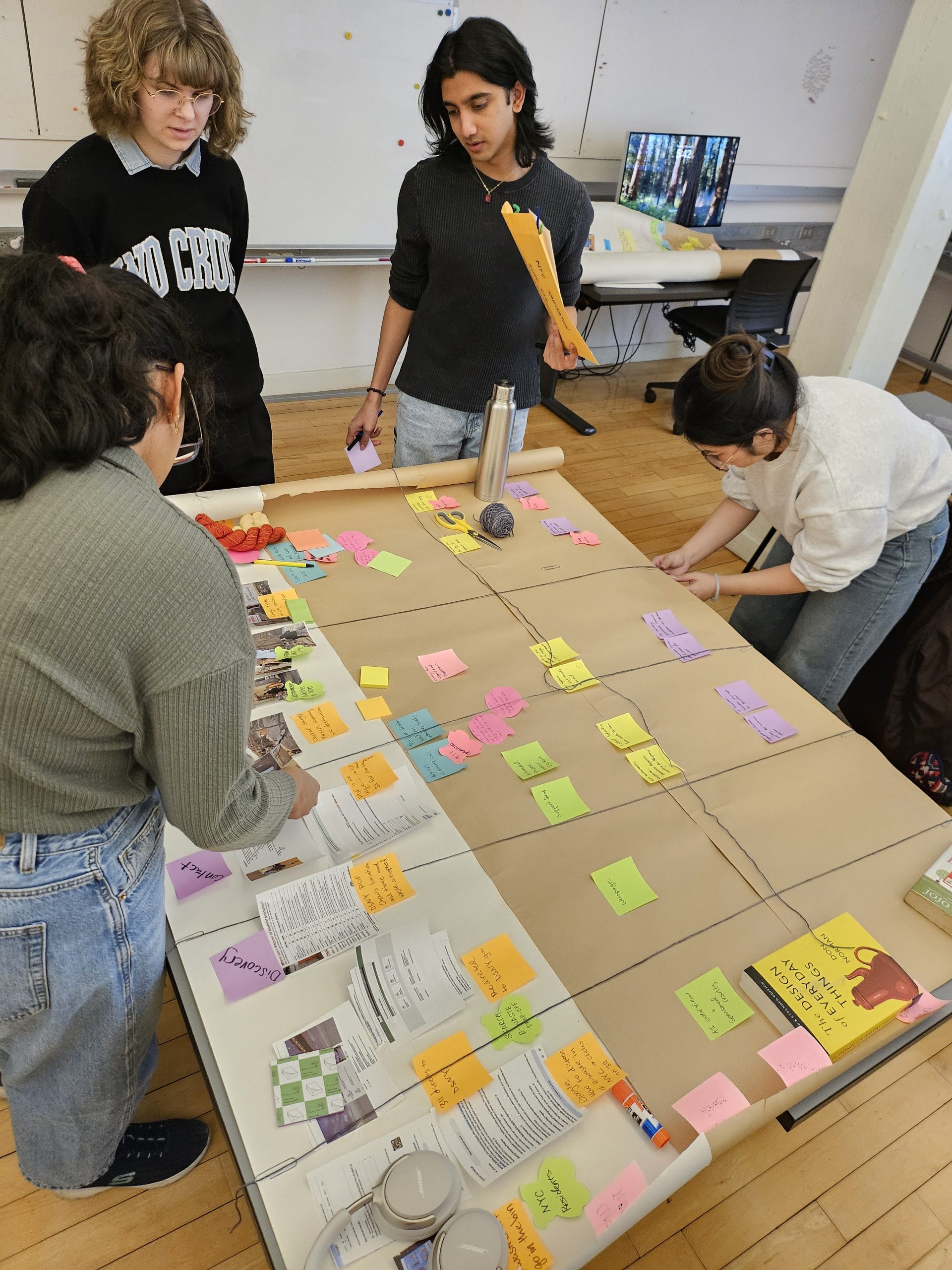
What Counts as the System?
The system clearly extended far beyond what we could reliably understand. So we narrowed our scope.
We focused on how the service operates from the perspective of the department responsible for this stage of e-waste disposal, ending at the point where the waste is handed off to third-party vendors.
Within this, we chose to look at specific user conditions:
- residents living close to the drop-off site
- new users navigating the service for the first time
- existing users who have learned how to use the system
- mobility-impaired users, especially as access conditions change over time
This gave us a way to examine the system in depth, without losing clarity.
Mapping What Happens to E-Waste in NYC
With a clearer sense of what counted as the system, we tried to map it.
We built a service blueprint, laying out the resident journey alongside what happens behind the scenes.
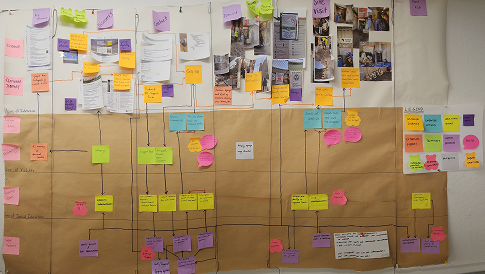
The blueprint maps the journey across six phases, showing how users move through the service and how DSNY supports them at each stage:
- Pre-discovery: Users begin by searching online, encountering fragmented and often inconsistent information
- Discovery: Users identify the need for proper e-waste disposal and come across DSNY as a potential service
- Contact: Users reach out through digital channels(emails and forms) or 311 to gather information and confirm what to do
- Transit: Users attempt to locate and travel to the drop-off site, with limited guidance from the system
- Site-visit: Users interact with DSNY staff, who manually sort and process the e-waste
- Post-visit: Waste is handed off to third-party vendors, with further processing handled beyond the user’s view
Mapping this made one thing clear: while the service appears structured across phases, the experience is not consistent. Breakdowns occur between touchpoints, especially before users reach the site.
To guide us with the interactions, we made an ecosystem loop to see how the whole service supports NYC residents dispose their e-waste.
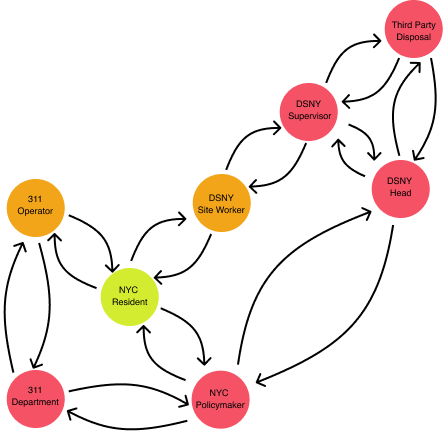
Making the blueprint helped us evaluate how the service was doing.
So… Is It Easy to Recycle E-Waste in NYC?
Using the Good Services Scale, we evaluated how the service performs across different touchpoints.
Where DSNY succeeds
At the drop-off site, e-waste is accepted, sorted, and handled efficiently. The presence of knowledgeable workers allows the system to adapt in real time, even when users bring incorrect or unexpected items.
There is also a sense of flexibility built into the system. Instead of rigidly enforcing rules, workers often make judgment calls to ensure waste is properly handled.
Where it fails
The most important insight we got from evaluating the blueprint was that DSNY’s e-waste service fails before users even reach the site.
- Information inconsistency: Information online, through the hotline, and at the site does not always align, making it difficult for users to trust the service.
- Discoverability: Locations are hard to find, and if users cannot locate the site, the service effectively becomes inaccessible.
- Human intervention: Without workers interpreting rules and guiding users, the process would be difficult to navigate independently.
- Accessibility: The service assumes a level of mobility and persistence that not all users have, limiting who can realistically use it.
The system also changes depending on how users engage with it over time. What feels confusing at first can become manageable, while other challenges only grow.
How People Experience It Over Time
To understand how these breakdowns play out in real use, we looked at how different residents navigate the service over time.
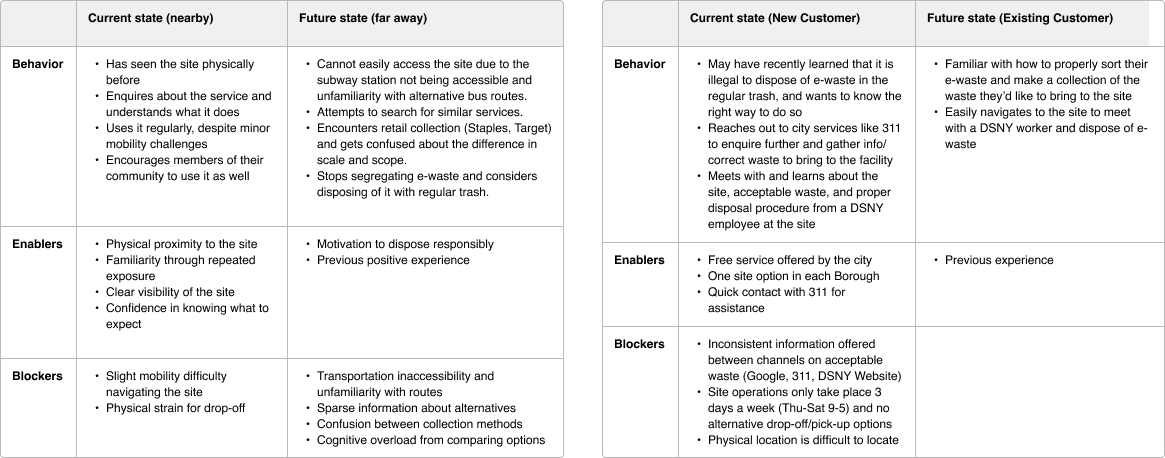
From these dynamic personas, we understand that:
- The system rewards familiarity.
- Accessibility challenges grow over time.
- Proximity determines usability
- Users adapt to the system instead of the system supporting them
If the system works differently depending on who you are and how you access it, then improving is about supporting these different journeys more consistently.
Making It Work Before You Get There
The gaps we identified are not isolated breakdowns but points where the system becomes unclear, inconsistent, or inaccessible. These interventions focus on strengthening those moments, making the service easier to find, understand, and navigate before a user ever arrives at the site.
- Fix the Information
A single, maintained source of truth would reduce confusion. The information reflected across the website, hotline, and on-site would be standardised.
To add on, a searchable “Can I recycle this?” guide can help users decide before making the trip. Standardising drop-off procedures across locations and improving signage. - Make the Service Visible
SAFE events and retail drop-offs can be positioned as accessible alternatives, while reinforcing that this is a free city service.
Additionally, residents can be allowed to claim tax credits for disposing of their special waste correctly. This would improve the visibility of the service through increased interest and add more value to the program. - Improve Accessibility
Expanding hours and locations is a long-term need, along with better physical infrastructure such as ramps and curb cuts. In the short term, clearer communication of available options can help reduce barriers. - Support Responsible Use
Posting a clear “What to do if we are closed” sign and adding outdoor sorting bins could help guide users in this situation.
Include these explanations on the site so that it shows up during a search on the internet. - Help People Find It
Integrating map links to the website and related downloadables will help users find the location. Improving physical signage at the site makes it easier to locate and reach.
Together, these interventions don’t change what the system is, but how it is experienced. By improving clarity, accessibility, visibility, and responsibility the service can move from something users have to figure out to something they can reliably use, regardless of who they are or how they access it.
Conclusion
What began as a simple question of “where does this go?” turned into an attempt to understand a system that isn’t immediately visible.
The infrastructure exists. The service works. But it relies on people to hold it together. What we uncovered wasn’t a broken system, but one that isn’t legible.
Designing for this space isn’t about creating something new. It’s about making what already exists easier to find, understand, and use.