
Introduction – Starting with Trash and a Question
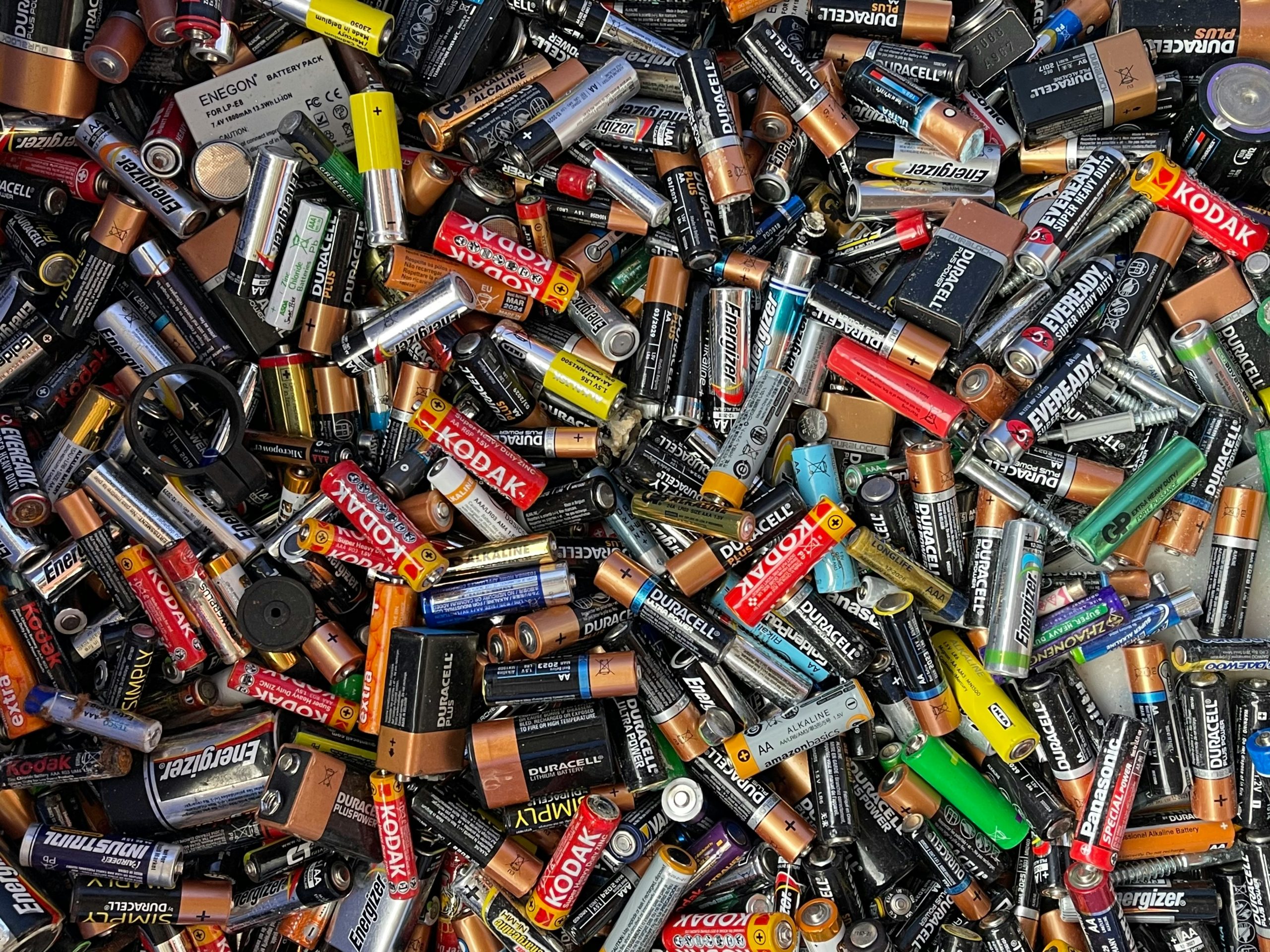
Our project began with a pile of electronic waste and a simple question, “What’s the right way to get rid of batteries?” Can you just throw them in the trash? If not, what are we supposed to do? The search for an answer took us on a journey where we navigated public services in New York City which eventually led us to our answer at an NYC Department of Sanitation (DSNY) special waste disposal site.
In this case study we’ll break down how NYC residents experience the service of electronic waste (E-waste) disposal supported by the DSNY. We’ll cover the need for the service, a real life exploration, methods and tools to help us understand the service, and finally some future directions for how the service can improve.
This project was worked on collaboratively over the course of 2 months in a team of 4 graduate students at the Pratt School of Information consisting of Marc Lobo, Claire Paisley, Hridya Naddapattel, and Sylvia Xu.
The Problem – E-Waste in a Busy City
As of 2022 the World Health Organization reports that E-Waste, which encompasses a range of electronic wastes like computers, batteries, and appliances, is the “fastest growing solid waste stream in the world” (World Health Organization 2024). The same study reports that improper disposal of E-Waste leads to adverse health outcomes and negative environmental impacts.
While this information may encourage owners of E-waste to be more responsible with their disposal, according to the same report “less than a quarter” of it ending up getting recycled or disposed of correctly. While New York State outlawed the disposal of E-Waste in the trash system in 2015, in 2022 there were “18 fires in DSNY collection trucks related to batteries” (NYC Waste Characterization Study 2023) which was the fault of improper e-waste disposal. This was troubling since the DSNY supports a city-wide service to dispose of e-waste through their special waste disposal service..
Evidently, there appears to be a gap between the need to properly dispose of E-Waste and the public’s adherence to doing so. One issue in regards to E-Waste disposal our team identified early on, as NYC residents ourselves, is that we what knew what we shouldn’t do, but didn’t know what we were supposed to. As residents and students who wanted to better understand how to do the right thing and utilize the DSNY service, we decided to try it out and document the process for ourselves
Trying it Ourselves – A Service Safari
Step 1 – Getting Started with Google
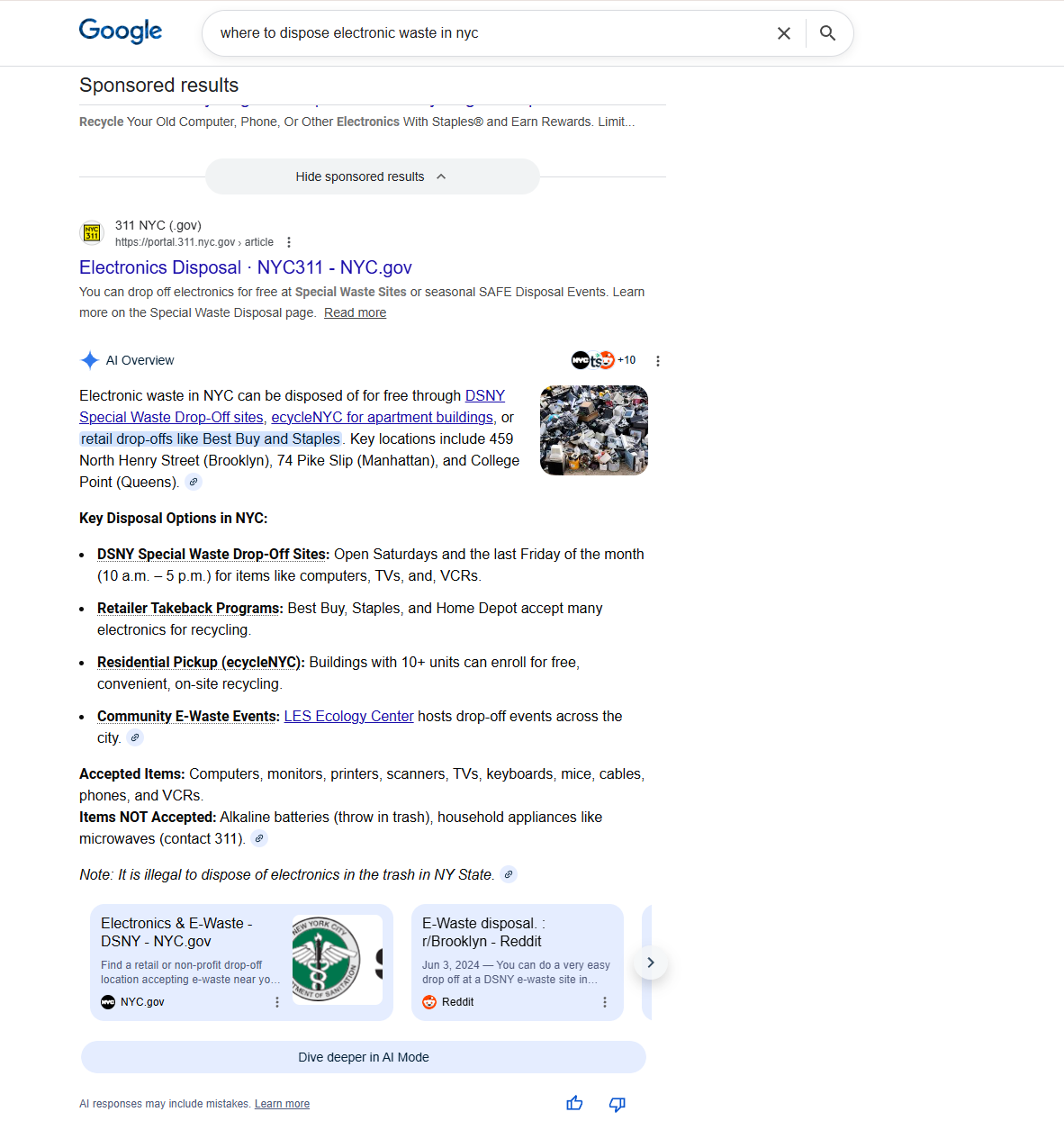
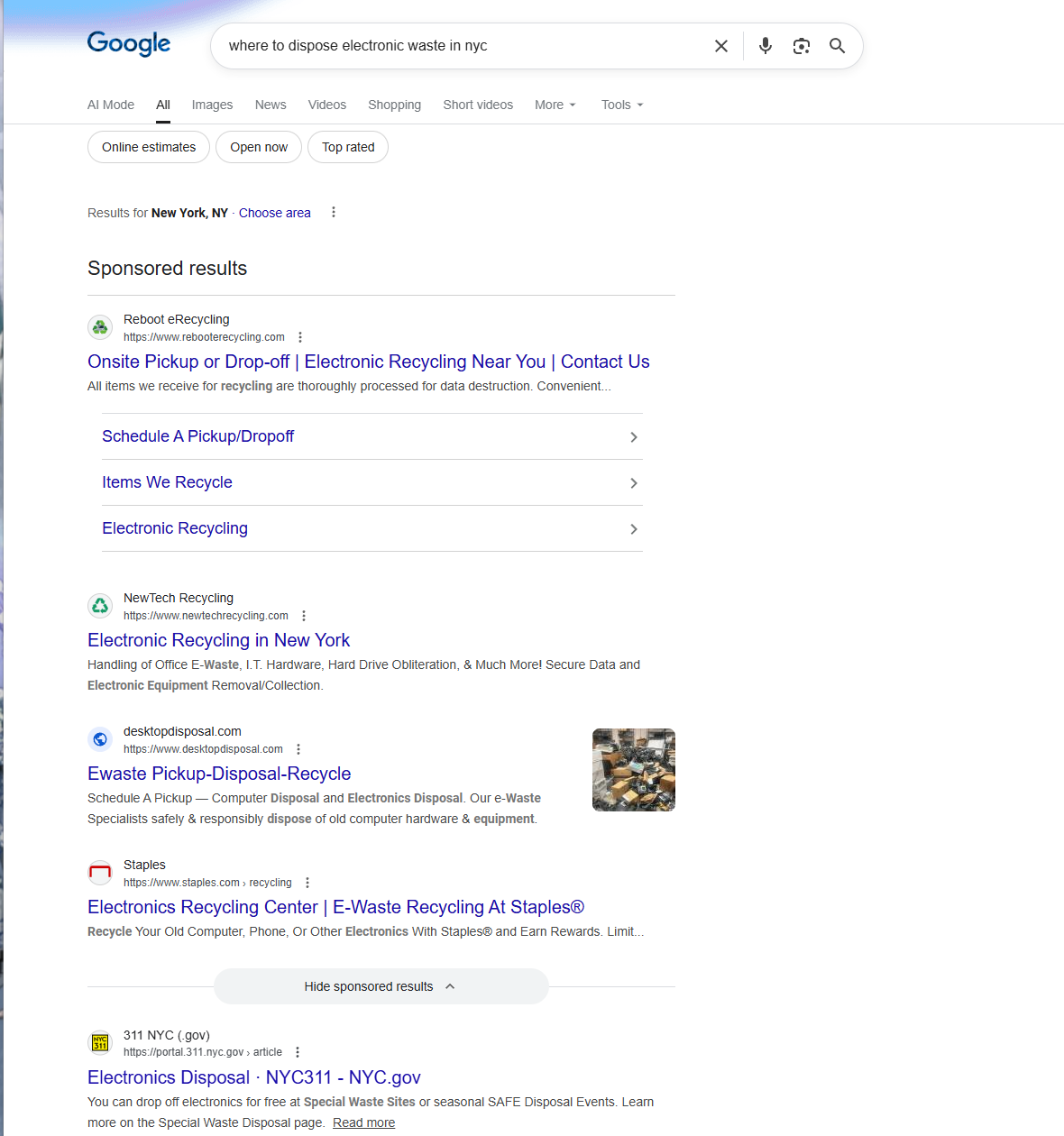
Our starting point for exploring the DSNY special waste disposal service started with our team gathering a collection of E-Waste. Our pile was modest and diverse: A collection of batteries, charging cables, lightbulbs, and e-cigarettes. Not knowing exactly what to do next we started with a search on the internet “where to dispose electronic waste in nyc.” Our results showed an AI overview with some mentioning of the DSNY, but still no clear direction. We then turned to the first relevant and trusted result, the 311 website.
Step 2 – A Better Search Engine
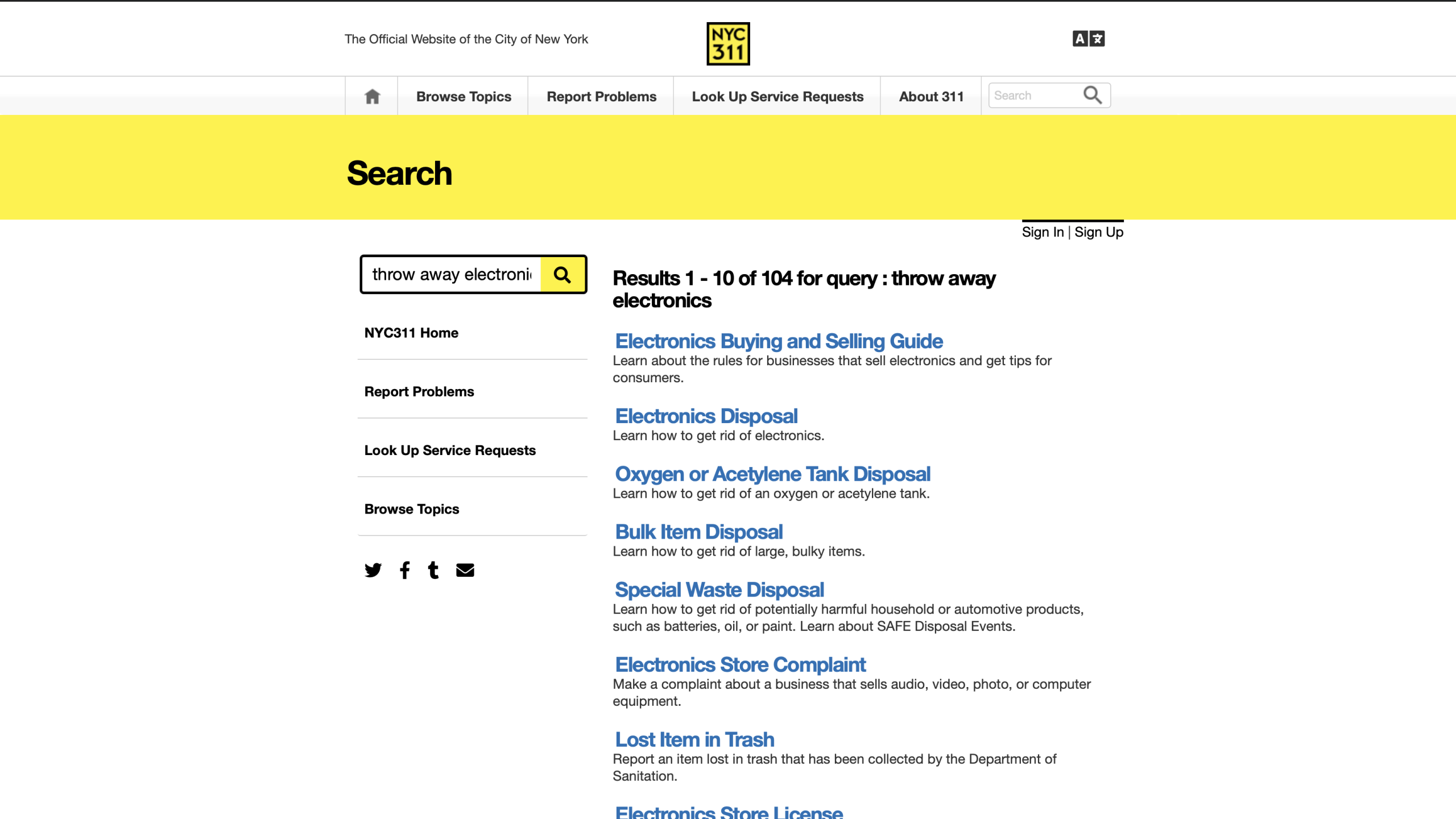
311 is an NYC based service that aims to assist NYC residents for general queries around city services. Within the website we utilized the search feature again with a similar search query “throw away electronic devices” which then yielded a relevant result that directed us to the DSNY site “Special Waste Disposal.” We were heading down the right track
Step 2a – Discovering DSNY
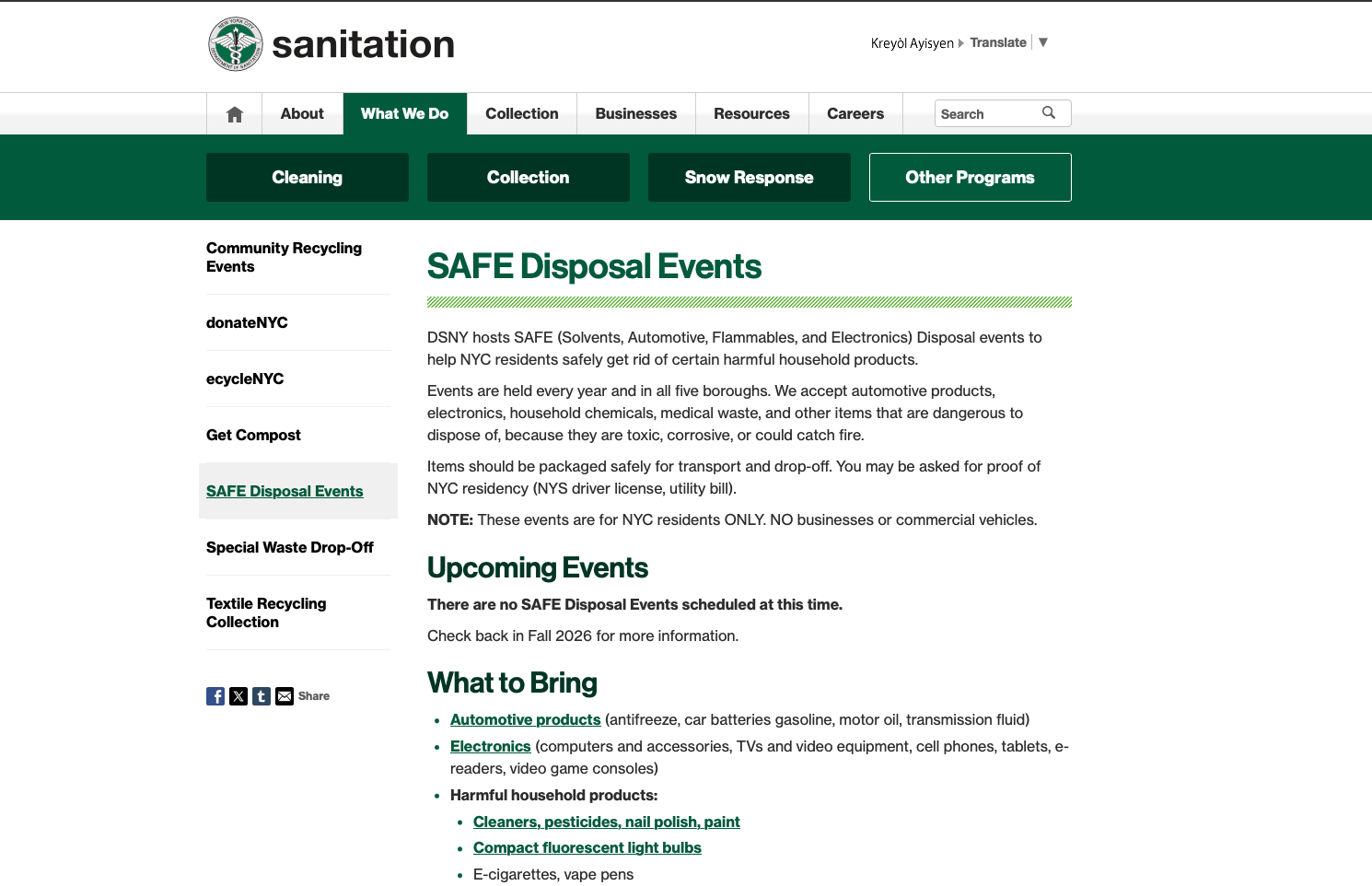
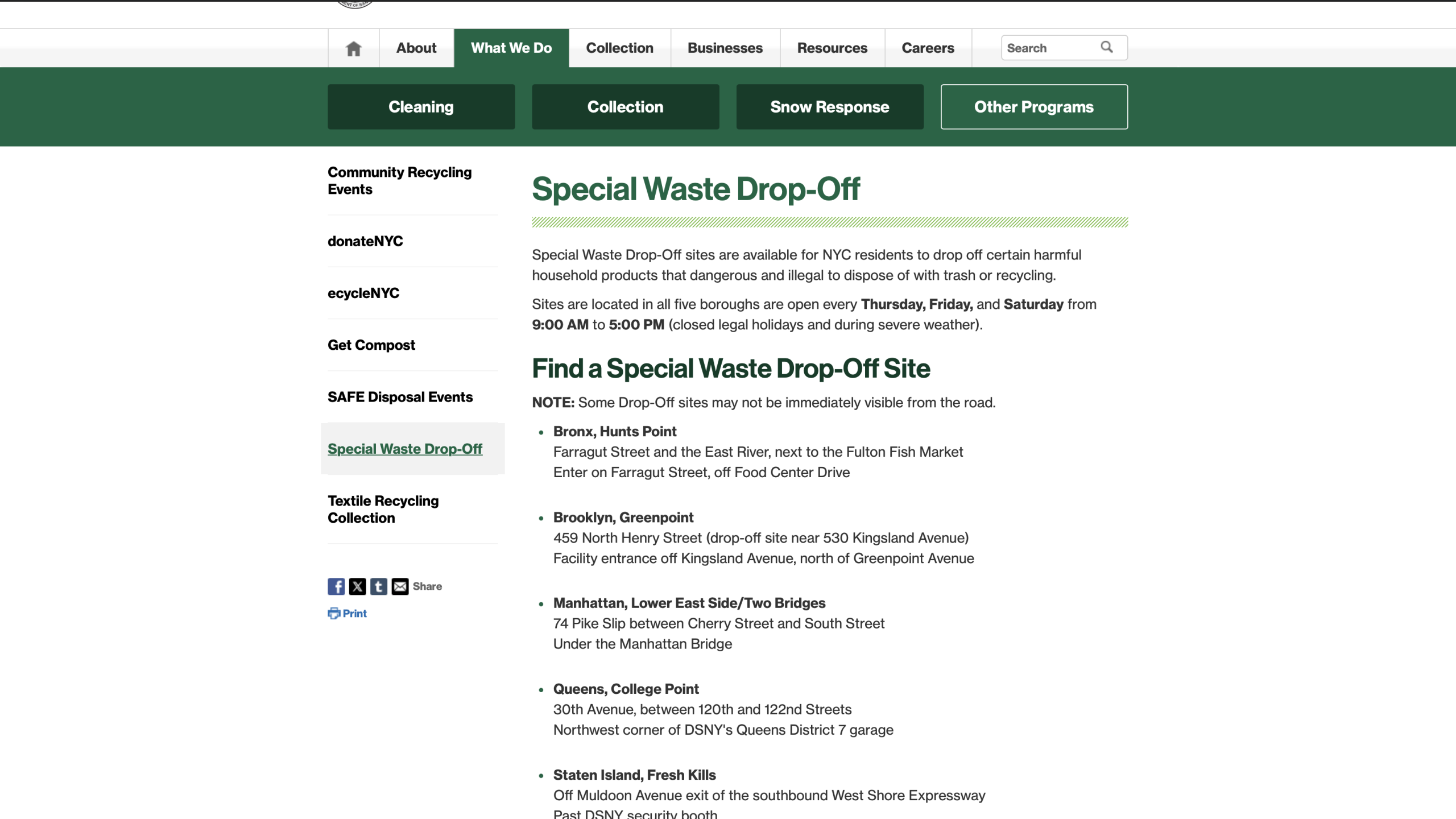
Within the DSNY site we learned there were two ways to utilize their service to dispose of E-Waste. You could attend a SAFE event, which were local events organized on a specific day for DSNY to collect your special waste, or make your way to a special waste drop off site. With no information about upcoming SAFE events nearby, it seemed we had no choice but to make our way to a disposal site. The website stated there was one in each borough and the closest one to us for Manhattan was located on the Lower East Side.
Step 3 – Confirming with a Call
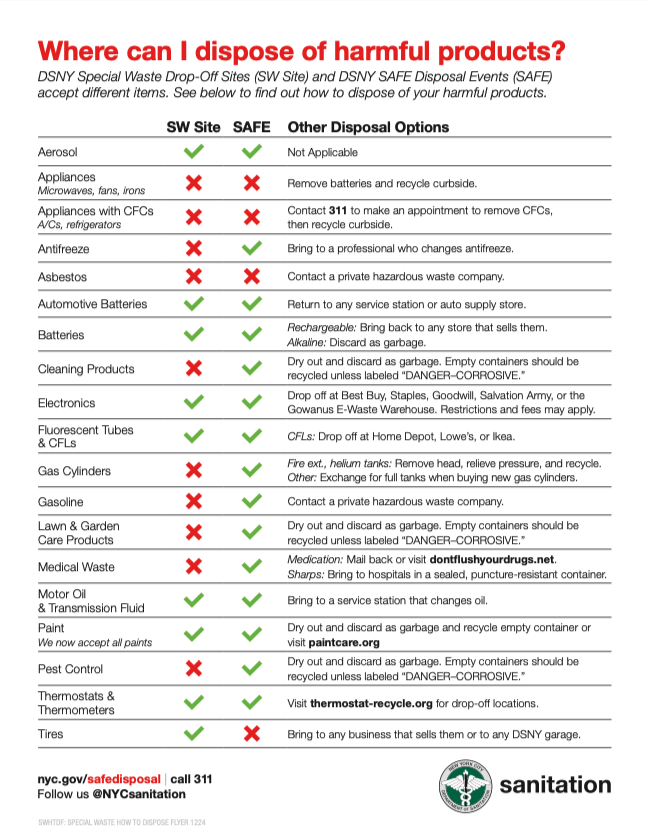
While heading directly over to the site seemed this was the right next step, we still wanted to confirm with a human we were on the right path. There is no official email or phone to reach out to the DSNY directly, however, we could make a call to 311. We decided to do so and 311 was brief and confirmed much of the same information we had already learned from the site. However, while information posted to the DSNY site said we could bring batteries, the 311 agent informed us batteries would likely not be accepted. Although this conflicted what we saw on the DSNY website we now at least had confirmation of the site location and so we headed off.
Step 4 – Navigating Over
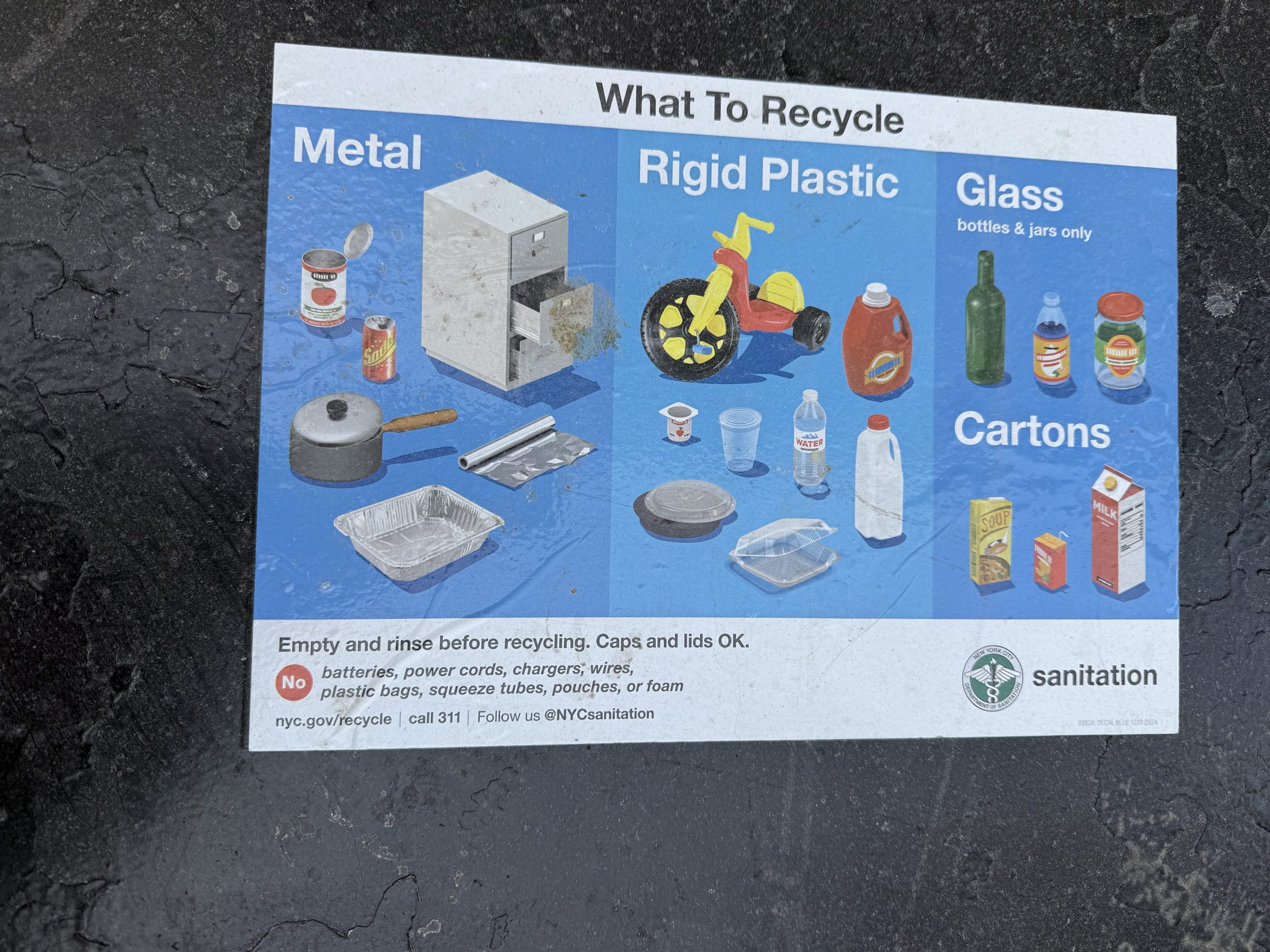
As we learned from the website and phone call since the site was only open Thursday, Friday, and Saturday we had to plan our trip for a Friday Afternoon. Curiously on the way there a residential trash can caught our attention. On top was a sticker explaining what could and could not be tossed in a recycling bin, including electronics in the NO section. In small text in the bottom was the direction to visit the DSNY site or call 311 to find out alternate disposal methods. To us, it was striking how even just a few blocks from the special waste disposal site we were more informed on what not to do, and not what was possible just a few blocks away.
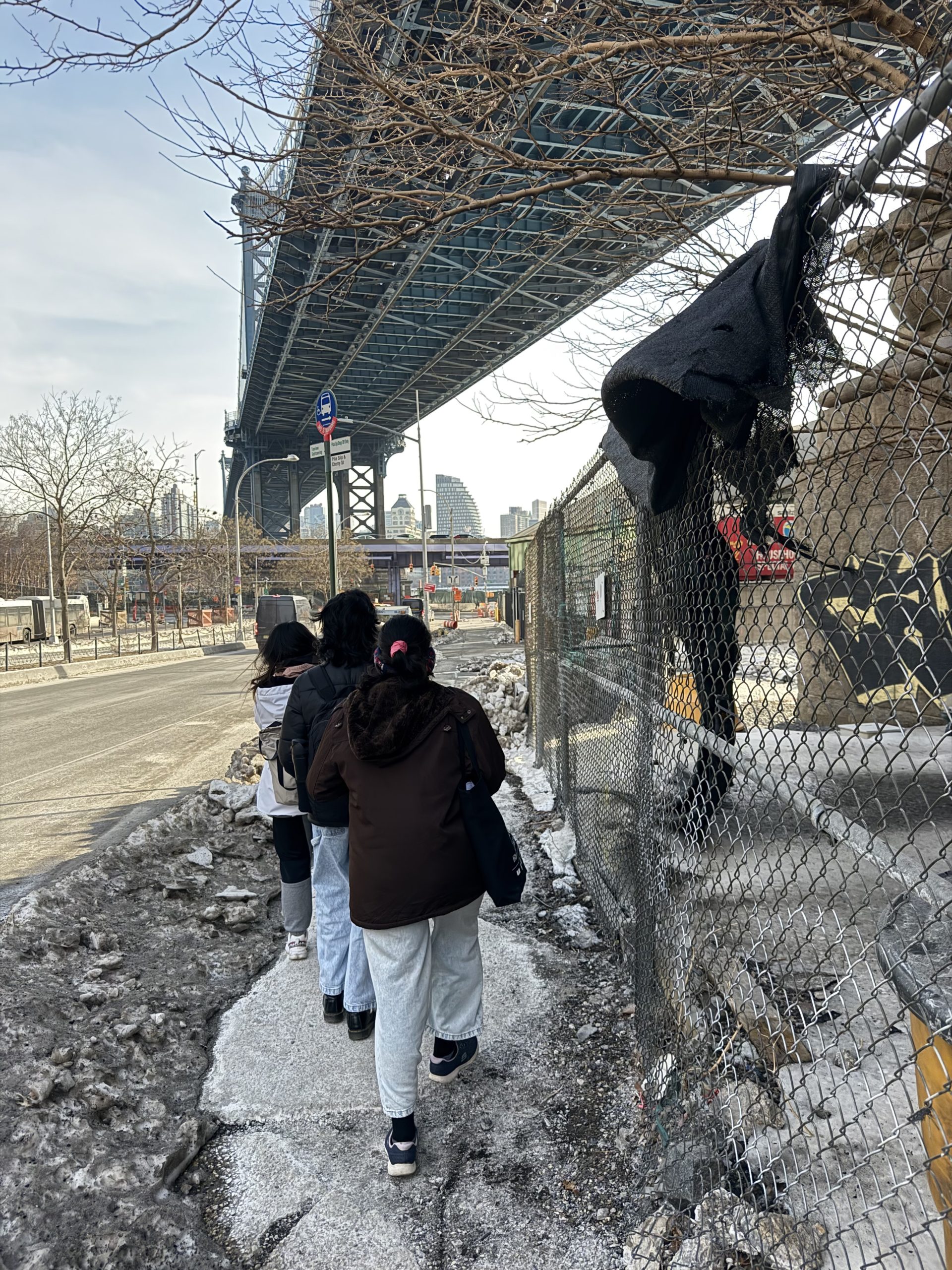
Step 5 – Disposal
We finally did spot the site, made clear by a large red shipping container which read “Household Special Waste” in large letters accompanied by various DSNY livery and placards. Upon arrival the site was closed, but a single DSNY employee was nearby and approached us as we looked into the site. We greeted him and explained we were here to drop off waste and handed over our bag of assorted waste. He explained that they usually accept all waste at the site, including batteries, despite the contradicting information we had previously heard. We then shadowed the employee as he navigated the site to dispose of each waste type at specific spots over the site.
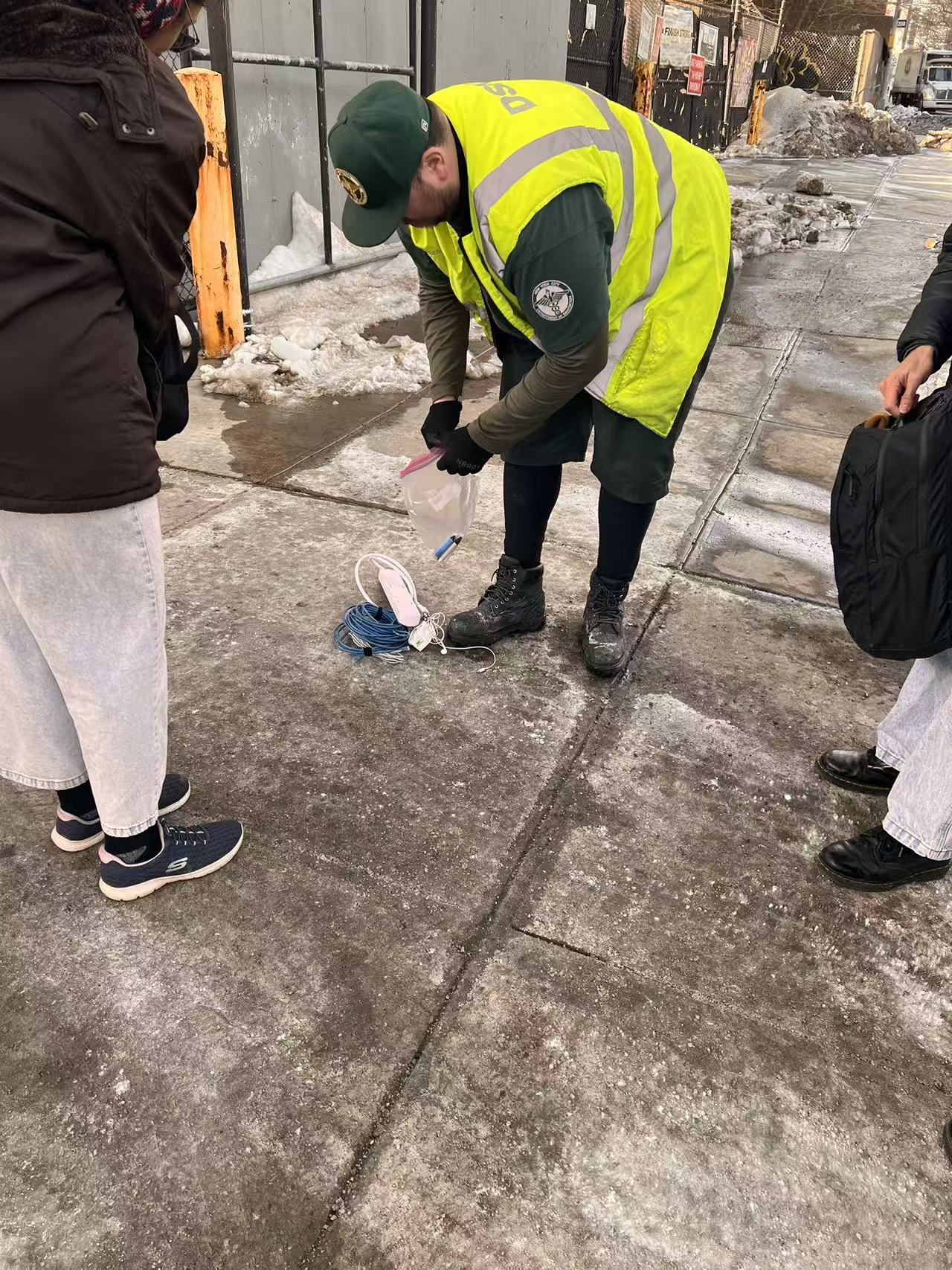
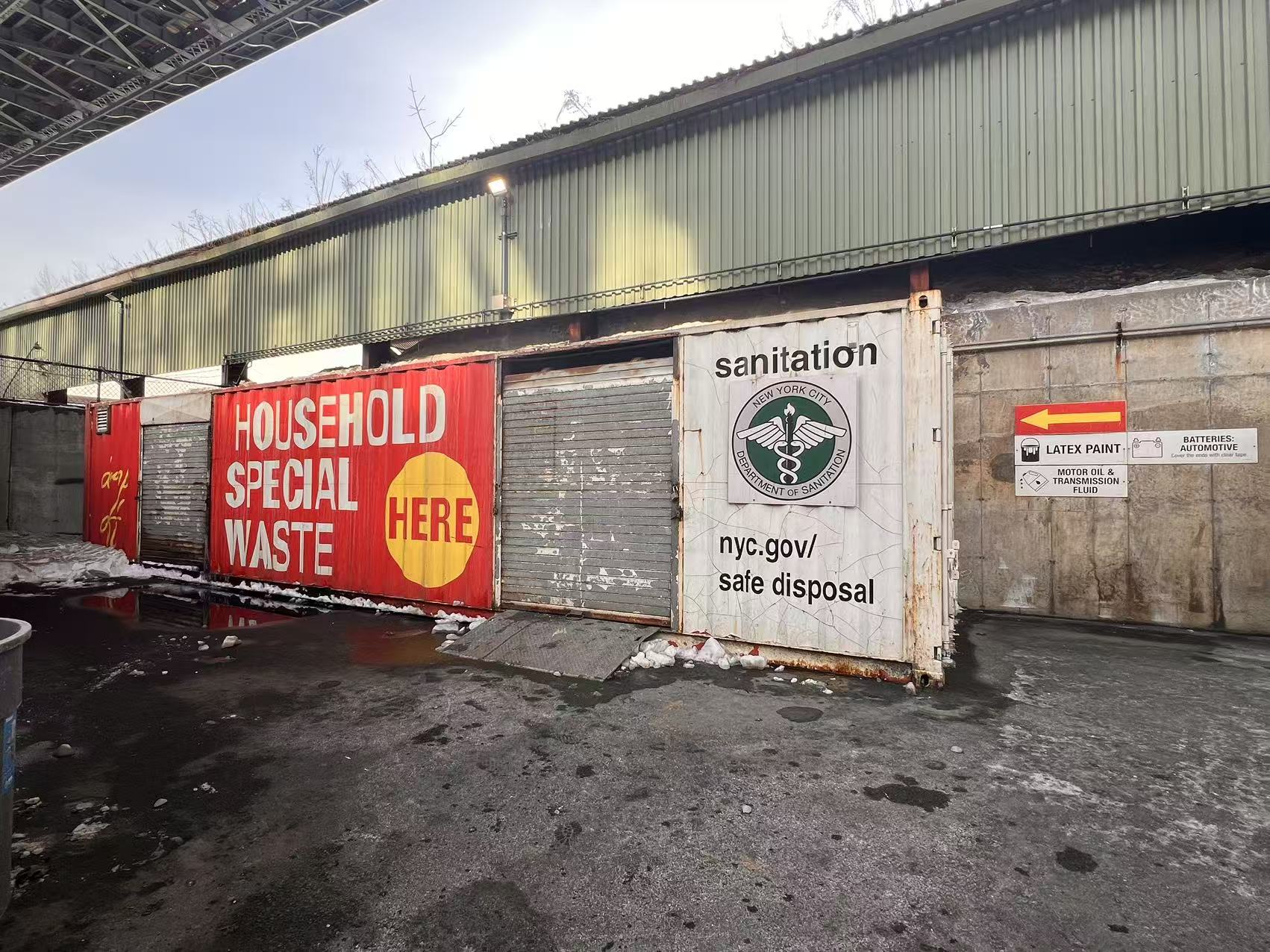
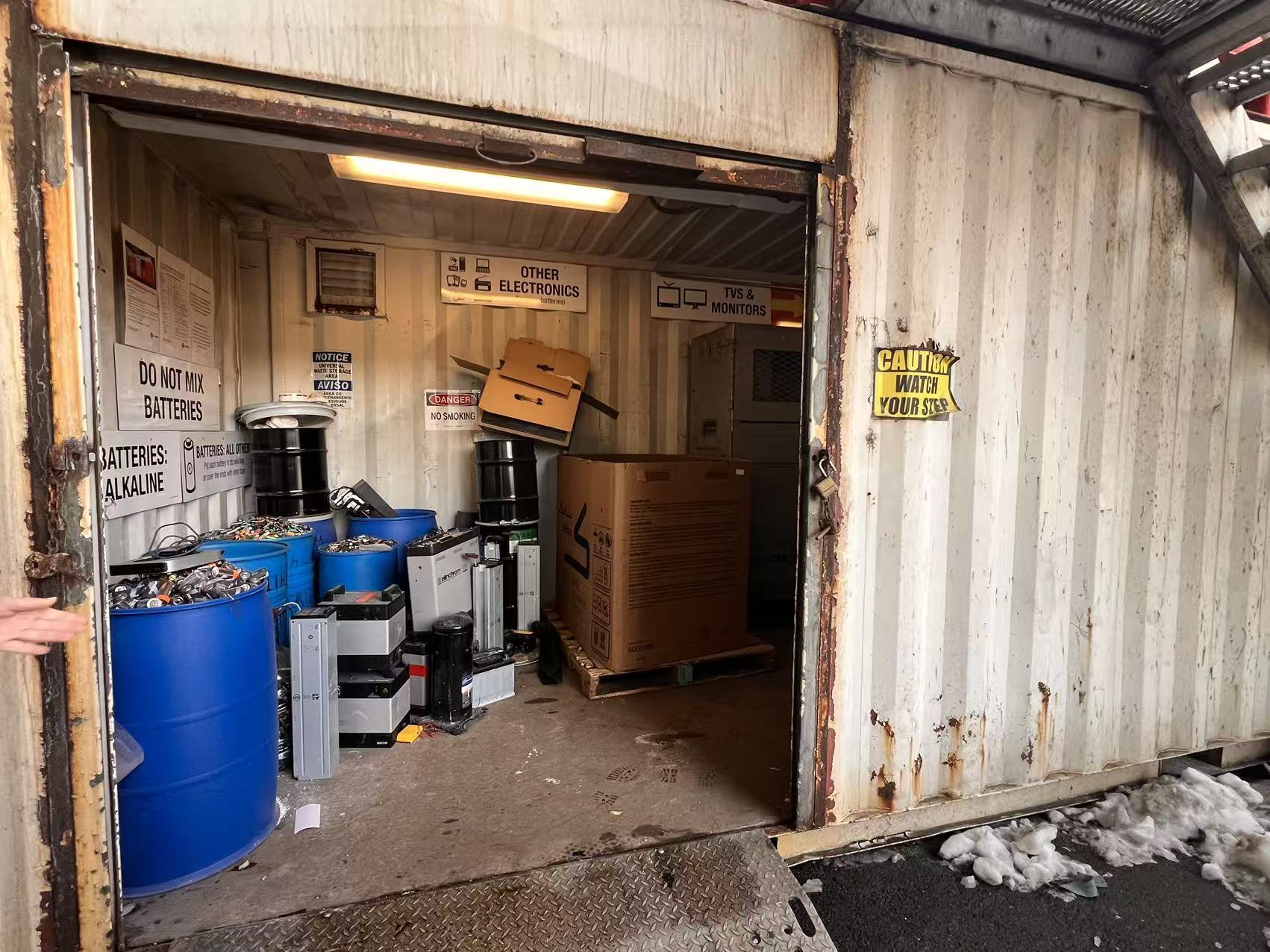
Step 6 – Debriefing
Once all the waste was disposed off he said we were welcome to leave, no receipt necessary. Finally, our E-Waste was disposed of. However, our work was just getting started.
Methods – Our Experience as Data
Mapping out our Service
The first thing we did was create a service blueprint, which acted a as a physical document for us to look back and understand our experience. To create this document we utilized physical sheets of paper, photos, string, and sticky notes to transform our document into to something that would help us chart out the experience we just went through. Creating the service blueprint allowed us transform our experience into something tangible where we could reflect on our experience and use it as a jumping point for additional research.
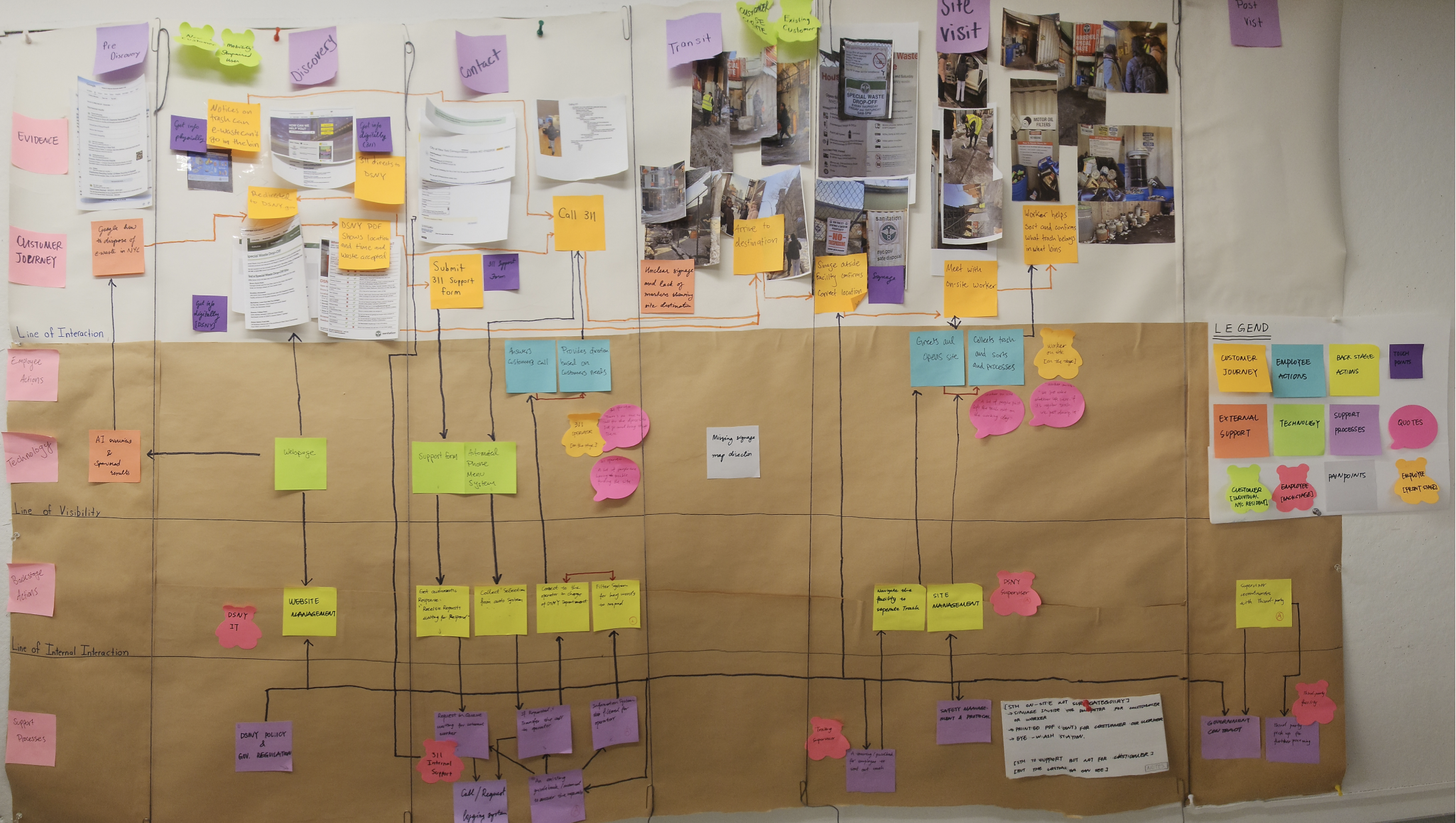
Within our blueprint each sticky note represented processes, people, and tools used to support our service. The vertical axis was divided up into six sections to represent different parts of our service journey: Pre-Discovery, Discovery, Contact, Transit, Site Visit, and Post-Visit. These divisions are reflective of the stages of the service safari just described. The horizontal axis was divided up into four additional sections to represent the deeper layers of a service as you go from top to bottom.
The first and second horizontal section was separated by the line of interaction, a line that represented our interaction with employees as part of our service like the 311 operator and DSNY employee. The actions these employees took as well as the technology they used to support this was placed in this line. Our experience as individuals was placed above the line of interaction
The third section was separated by the line of visibility, this line represents all that services users are able to see when utilizing the service, in this section the backstage actors of the service would be represented like DSNY supervisors and other support staff.
The fourth section was separated by the line of internal interaction which represented additional divisions between backstage staff and outside or additional services or processes, like in our case of a third party recycling partner that DSNY would have to contact to collect trash. Support processes would be represented here
Main Findings from our service blueprint showed us that the service seems to be highly unsupported during the transit phase where we had to navigate over to the physical site. Additionally, DSNY and 311 seem to share information regarding disposal policies in the backstage which comes from an overarching policy handed down from DSNY supervisors and NYC lawmakers.
Visualizing the Value
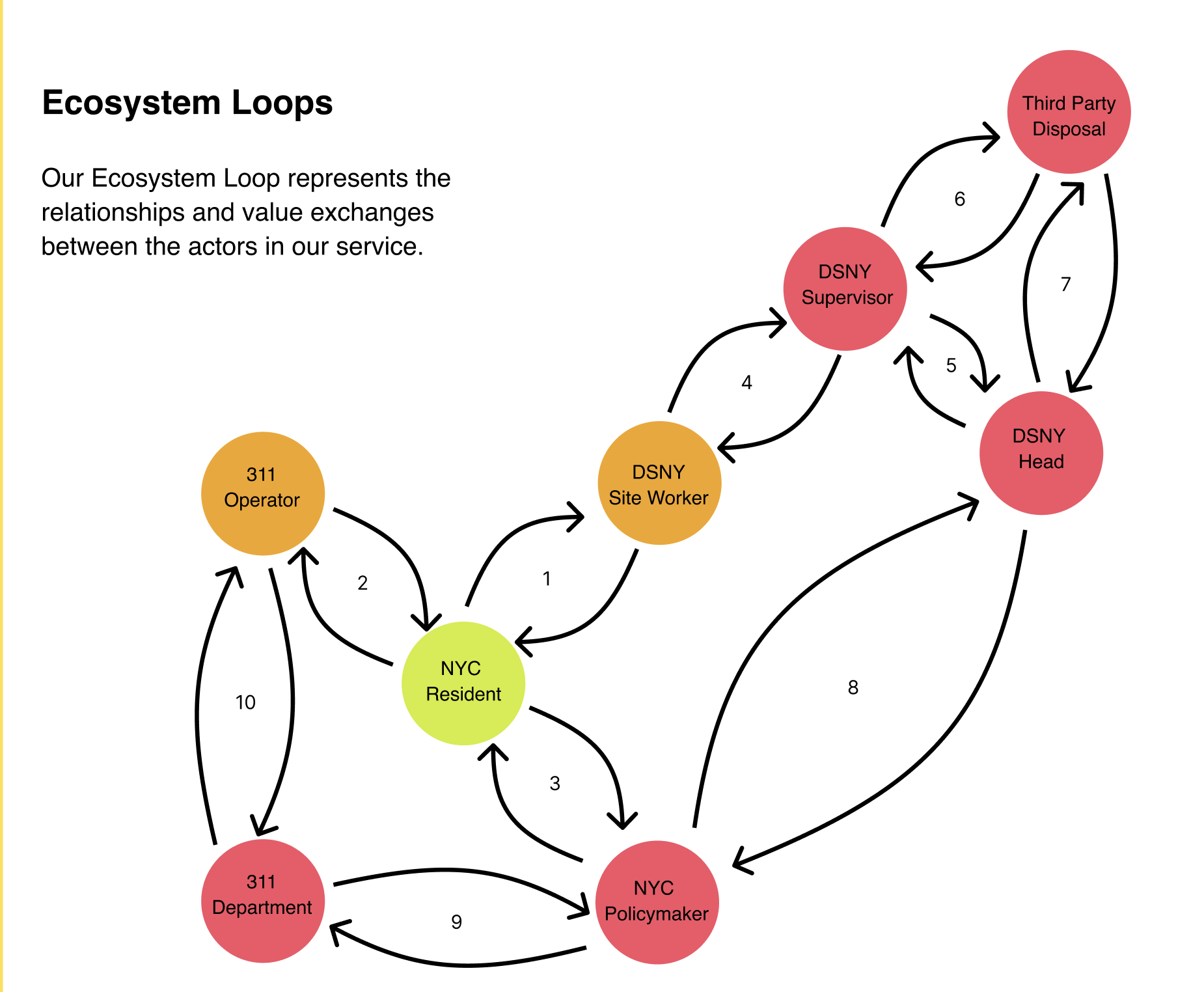
The service blueprint allowed us to visualize and pinpoint the experience of a service, next, we wanted to a way to visualize how value was exchanged, to do so we utilized another method called ecosystem loops. Ecosystem loops enables users to visualize how value is exchanged between actors within a service. In our service we got started by first identifying the actors types within the service, made possible by our service blueprint. In green, we started with the customer in the service, NYC residents, in orange we represented the two front stage staff being the 311 operator and DSNY site worker, and in red we represented the backstage staff that support the service.
Key Findings – While service users interact closely with 311 and DSNY staff to experience their service, they also indirectly exchange value with NYC policymakers through elections where they can advocate for and be legislated by policymakers who represent their interests. Within the service the policymakers are the ones that serve as a bridge between 311 and DSNY, allowing information sharing as a value to flow between the two departments.
Grading our Service
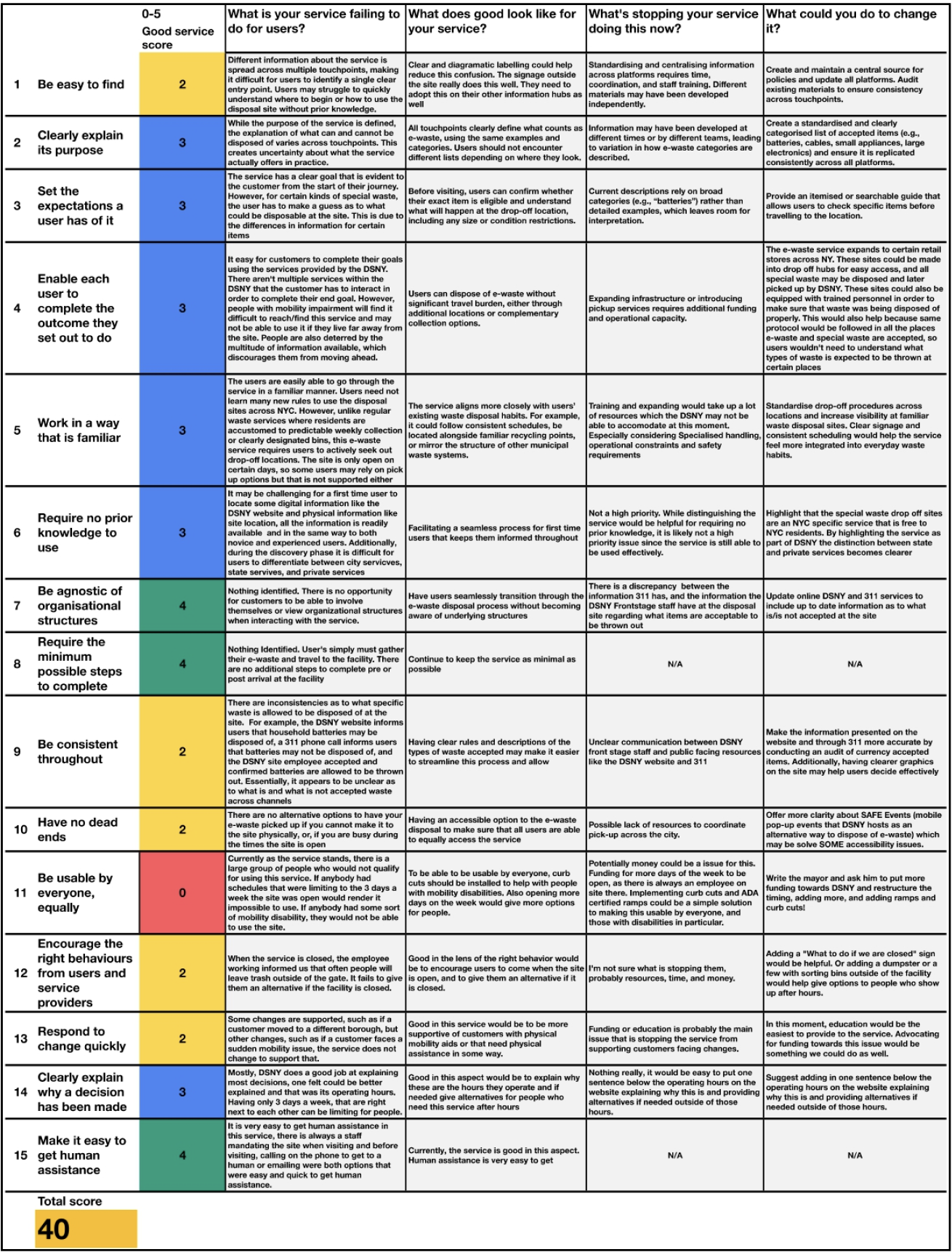
Utilizing the Goods and Services Scale, a tool created to evaluate services (Downe, n.d.) we were able to apply numerical data to help analyze our experience through a quantitative lens. The scale consists of 15-items and requires a grade on a scale of 0-5 with 0 being the lowest and 5 being the highest. To help facilitate effective completion there are 4 areas to reflect on while giving out a score. Overall our service received a score of 40 out of a possible 75 points indicating that our service was usable but had room for improvement. Based on the scale the most pressing items were the five items that received a score of 2 and the one item that received a score of 0.
Key Findings – Based on the scale the most pressing items were the five items that received a score of 2 and the one item that received a score of 0. The low scores on these items were reflective of the poor accessibility features of the service. To get to the site, a user must physically be able to travel there which excludes users who may have a physical disability which prevents them from being able to disposal site in their borough.
Informed Improvements
So What Now? After utilizing our methods to make sense of our experience, we crafted 4 key suggestions that can be implemented to better improve the special waste disposal service in NYC
Suggestion 1 – Maintain Consistency Between Policy and Information
One of the most notable issues we encountered throughout our journey was coming across conflicting information at different points in the service, one example was being told batteries may not be accepted by 311 but actually having them accepted by the disposal site. To address this, disposal guidelines and policies should be brought together into one centralized source that is consistently reflected across the website, printed materials, and phone support like 311. A searchable or itemized guide would also go a long way which would allow residents to confirm whether a specific item is accepted before making the trip to a drop-off site. Bringing more consistency to drop-off procedures across locations, paired with clearer signage, would make the service more usable
Suggestion 2 – Increase the Visibility and Value of the Service
Part of what made our experience challenging was simply not having clarity over the options were available to us. One area where this was clear was the information around SAFE events. DSNY or the city could do more to promote SAFE events as a community-based alternative to fixed drop-off sites could make the service more reachable for a wider range of residents, and also hold these events more frequently and in different locations. It would also help to make clearer that the special waste drop-off service is free and backed by DSNY, something that was not immediately obvious to us during our experience. On a policy level, legislators could look at introducing tax credits for residents who dispose of their special waste correctly, which would both raise awareness and add a tangible incentive to doing the right thing.
Suggestion 3 – Accessibility Improvements
As our experience and the Good Services Scale both highlighted, the service currently places the burden of getting there entirely on the resident. Increased funding for DSNY could support longer hours, additional drop-off locations across each borough, and infrastructure improvements like ramps and curb cuts that make sites more physically accessible. While those kinds of changes require longer timelines and investment, education and outreach efforts around existing disposal options could be rolled out more quickly and still make a meaningful difference for residents who are unsure where to start.
Suggestion 4 – Introducing Wayfinding Supports
Finding the drop-off site we visited was a major challenge to our experience. To resolve this one suggestion is to provide direct links to Apple Maps and Google Maps from the DSNY website, so residents can navigate straight to the site without having to search for it separately. While, we did utilize digital maps on a mobile device, due to the location’s obscure location it was difficult to confirm if we were on the right. track. Additionally, more physical signage around site entrances and nearby transit hubs like subway stations and bus stops would help residents actually find their way once they are in the area. Including these sings and directions on existing physical elements around the city like those resident recycling bins we identified earlier could be a good start.
Conclusion
The DSNY Special Waste Disposal service is a valuable offering to the residents of New York City. It keeps harmful E-Waste out of the system and prevents it from causing harm to the larger service of waste disposal and to the planet. With a few key improvements this service has the potential to go from good to excellent, ensuring all New Yorkers have the ability to learn about, engage with, and utilize the service.
Citations
Downe, L (n.d). The Good Services Scale. Good Services. Retrived from https://good.services/the-good-services-sca
NYC Waste Characterization Study. (2023). https://www.nyc.gov/assets/dsny/downloads/resources/reports/waste-characterization-studies/2023/wcs-2023.pdf
World Health Organization. (2024, October). Electronic waste (e-waste). World Health Organization. https://www.who.int/news-room/fact-sheets/detail/electronic-waste-(e-waste)