Introduction
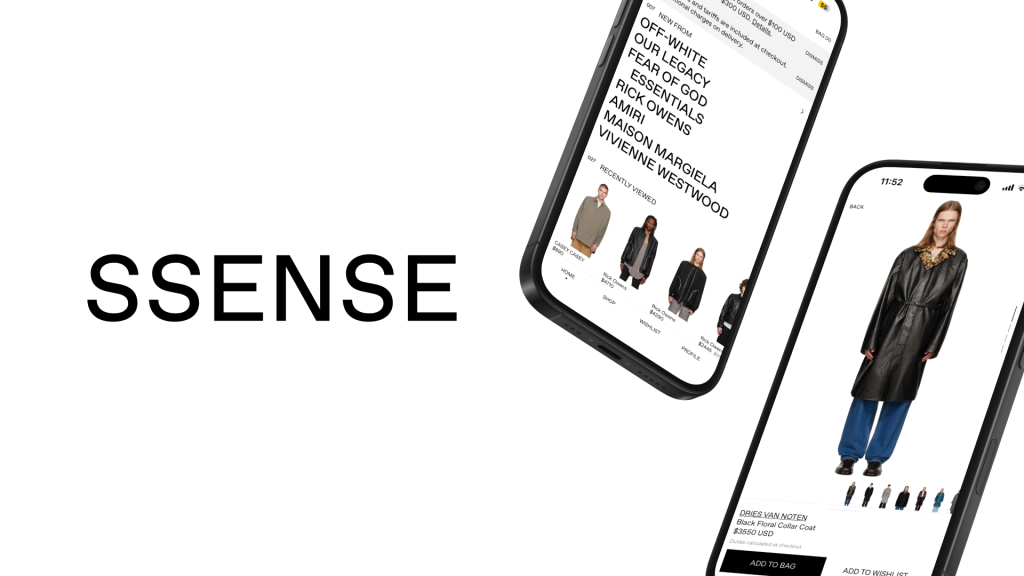
SSENSE is an online retailer and e-commerce platform specializing in luxury fashion, high-end streetwear, and avant-garde designer brands. The mobile app allows users to browse products and brands using various filter/sorting functions, save products, view product information, and purchase products directly through the app.
Product descriptions (Knowledge in the World/Gulf of Evaluation)
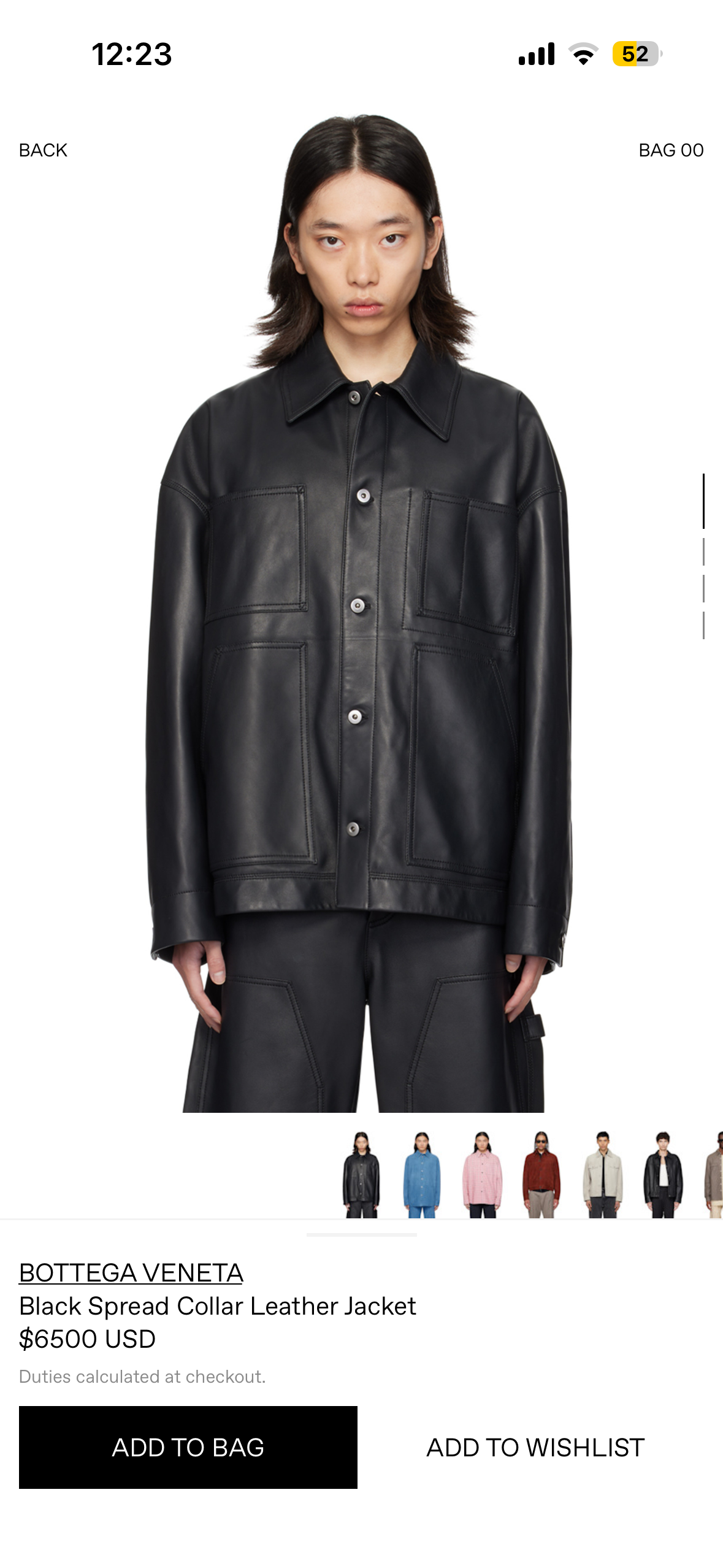
SSENSE’s individual product pages convey a massive amount of information to shoppers such as product-specific measurements, garment material, model size and measurements, and more; this particularly useful when shopping across designers with varying sizing standards and when evaluating whether or not if a product’s specifications meets the user’s expectations.
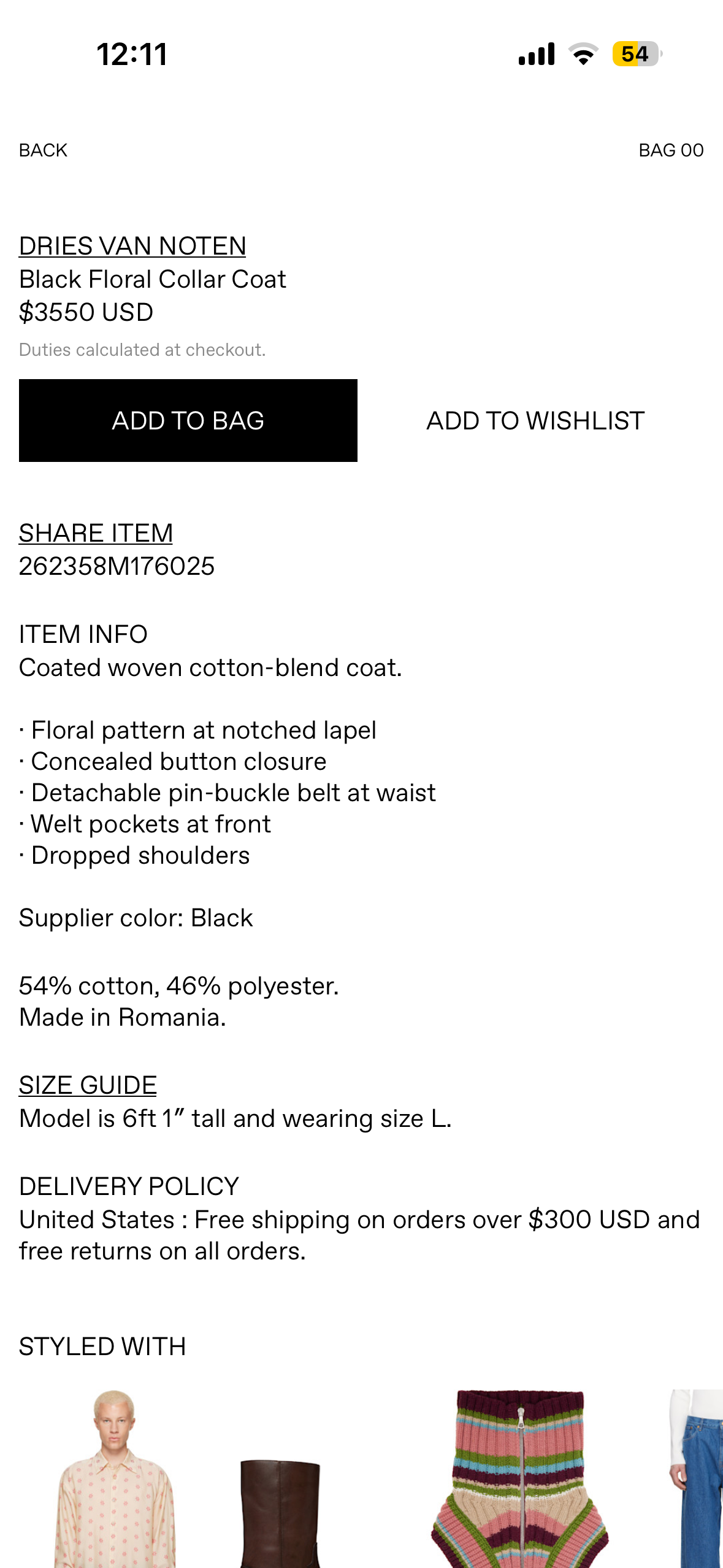
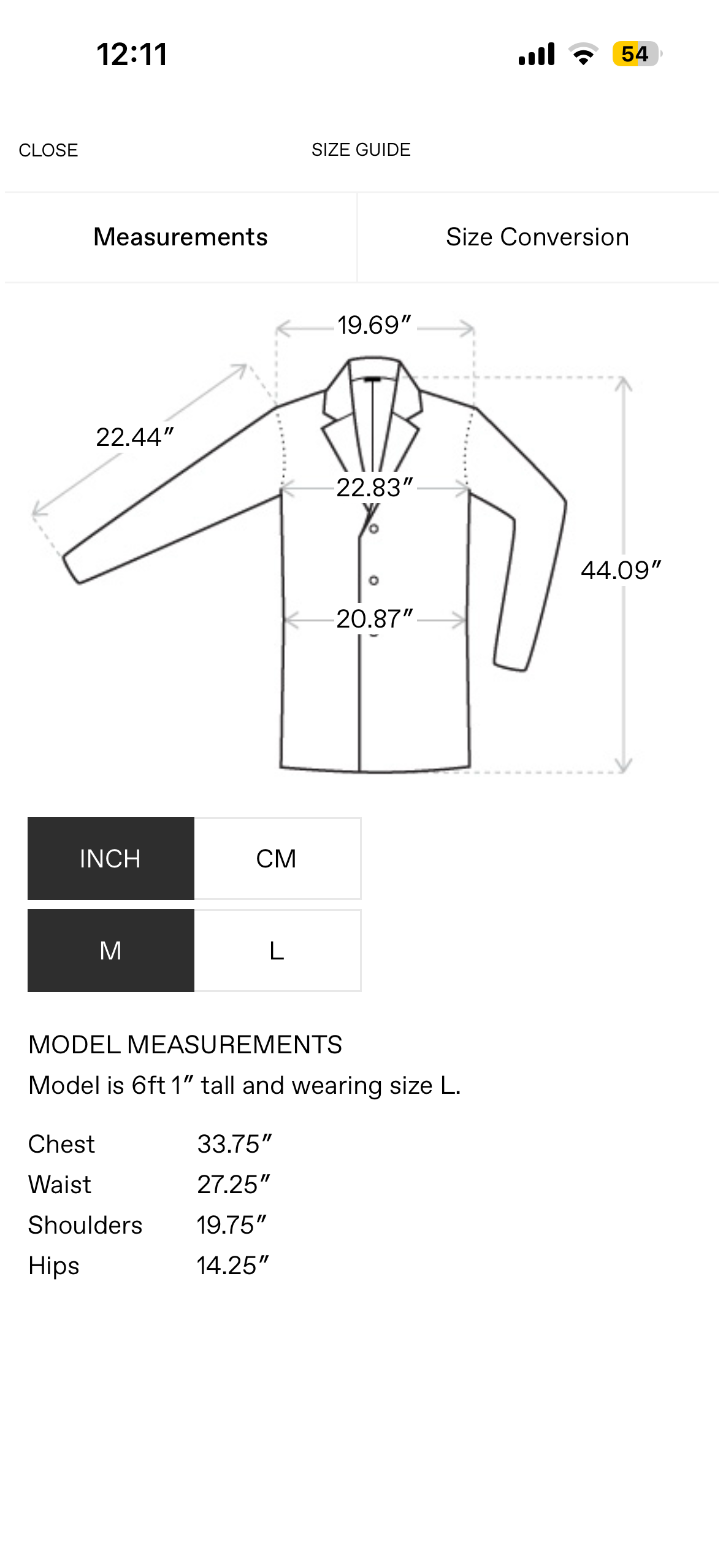
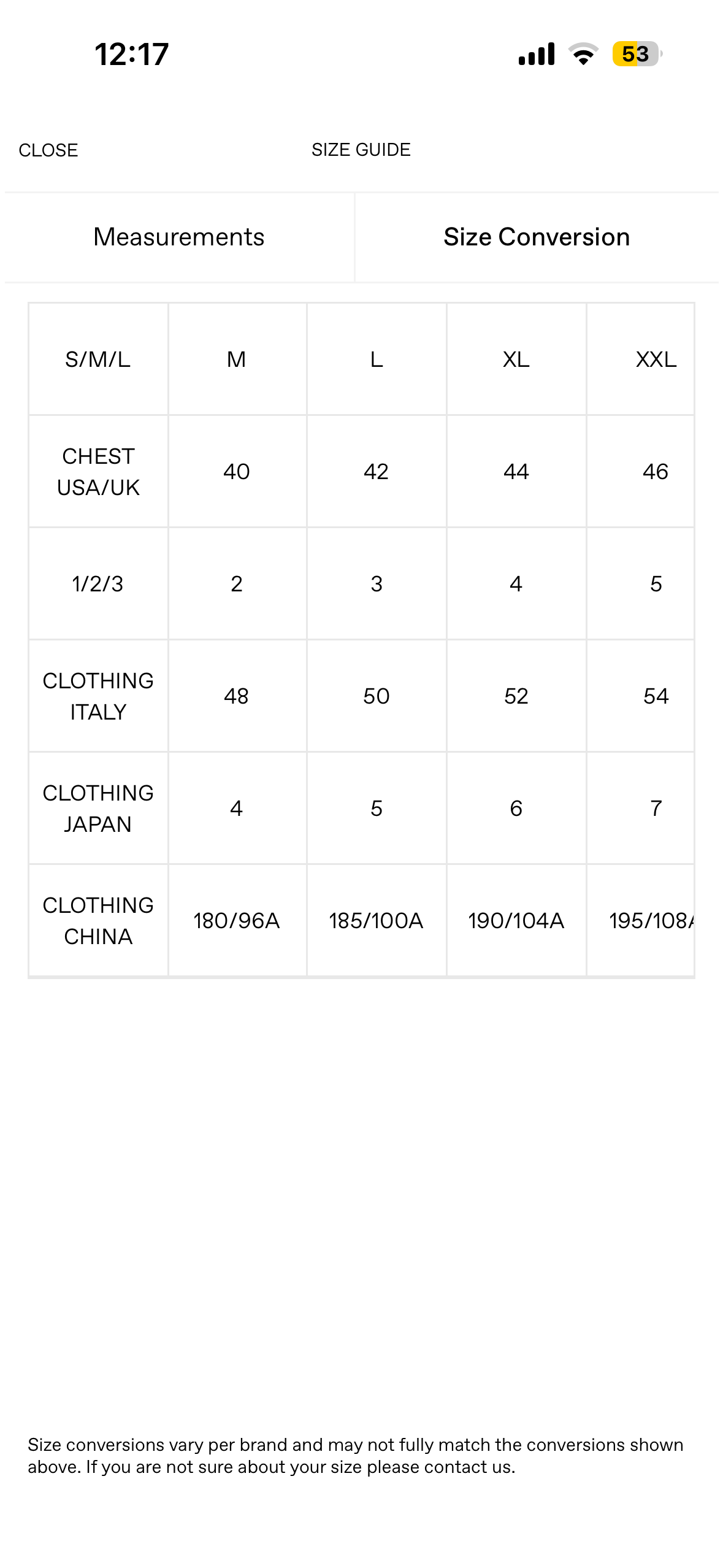
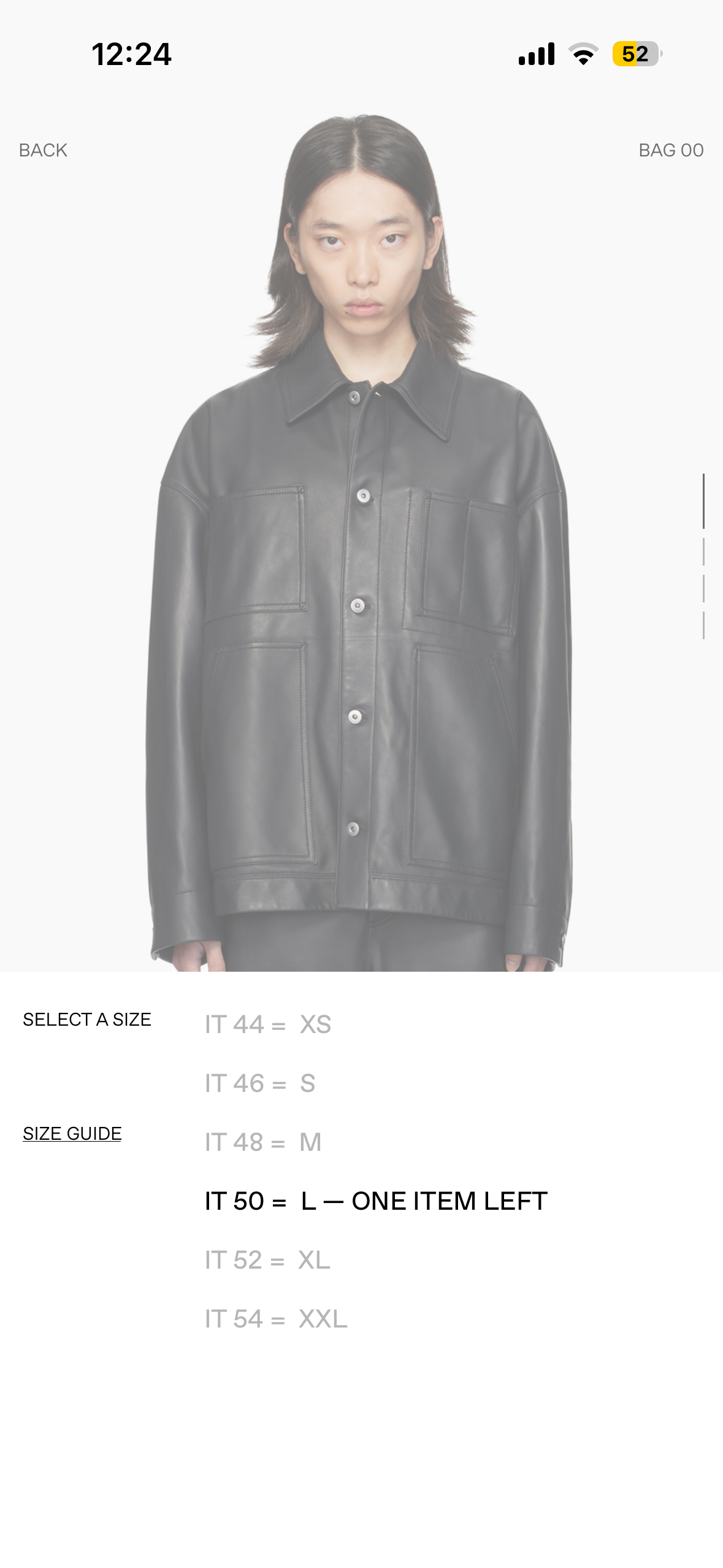
SSENSE utilizes the concept of knowledge in the world effectively as the user is not required to memorize information such as sizing information or conversion of measurements between products from different countries since it is available in the digital environment in the conversion chart. Additionally, this reduces the gulf of evaluation as the user can better understand the sizing and evaluate if the product meets expectations prior to purchase.
Product discovery (Signifiers/Discoverability/Conceptual Model)
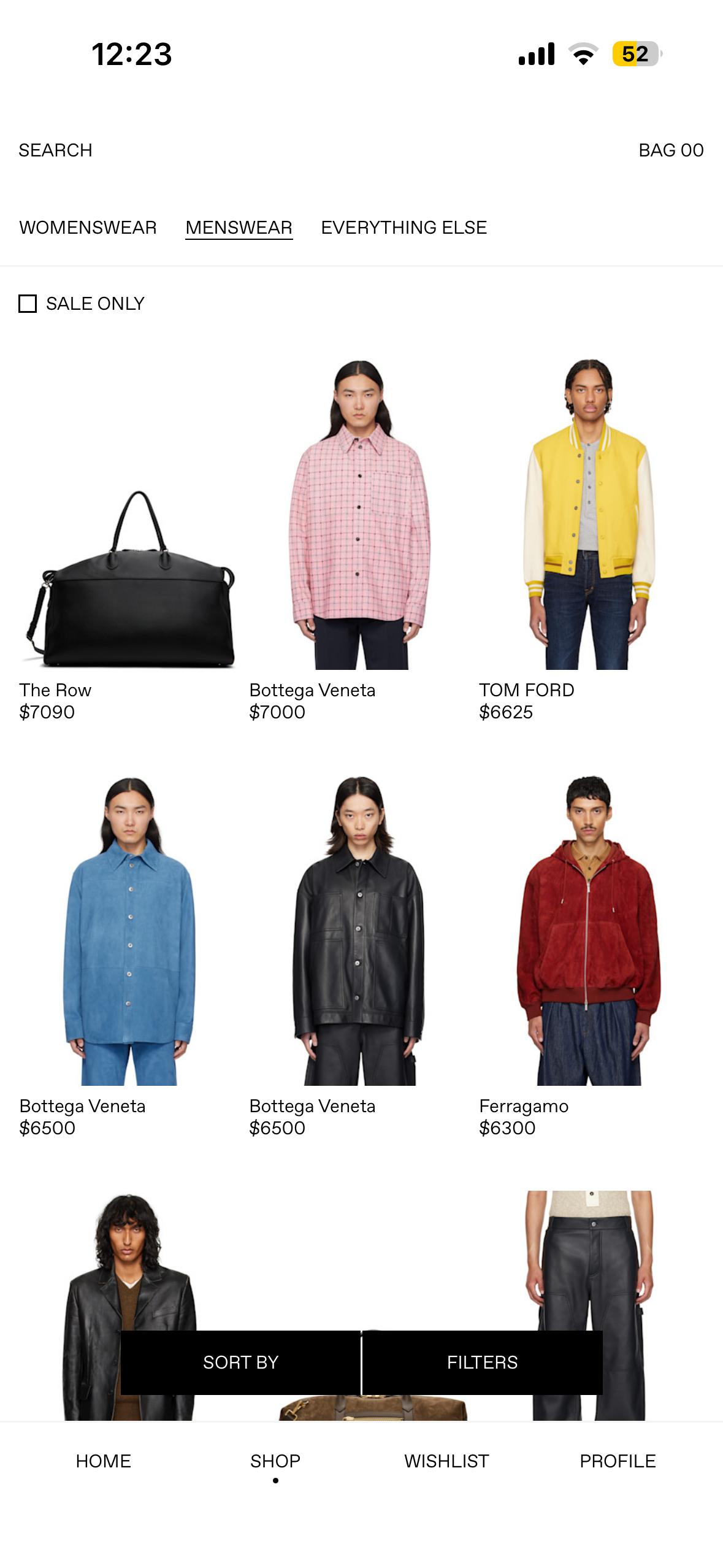
The product imagery of the app demonstrates a strong visual hierarchy through monochromatic, basic, and visually unobtrusive sans serif text and large images which are essential for shopping on digital devices. As the products are positioned conspicuously, it is readily apparent that they can be interacted upon to view additional actions and information without manual instruction; demonstrating effective signifiers and discoverability. Additionally, the general shopping flow follows the conventional e-commerce conceptual model where the user selects a product, chooses a size, and adds it to their shopping cart, allowing users to utilize existing knowledge from other shopping experiences.
Product page filters (Constraints)
An integral part of any online fashion shopping experience, filters act as constraints that reduce the overall number of choices from a large selection. SSENSE allows users to filter based on designer, category, price range, and color.
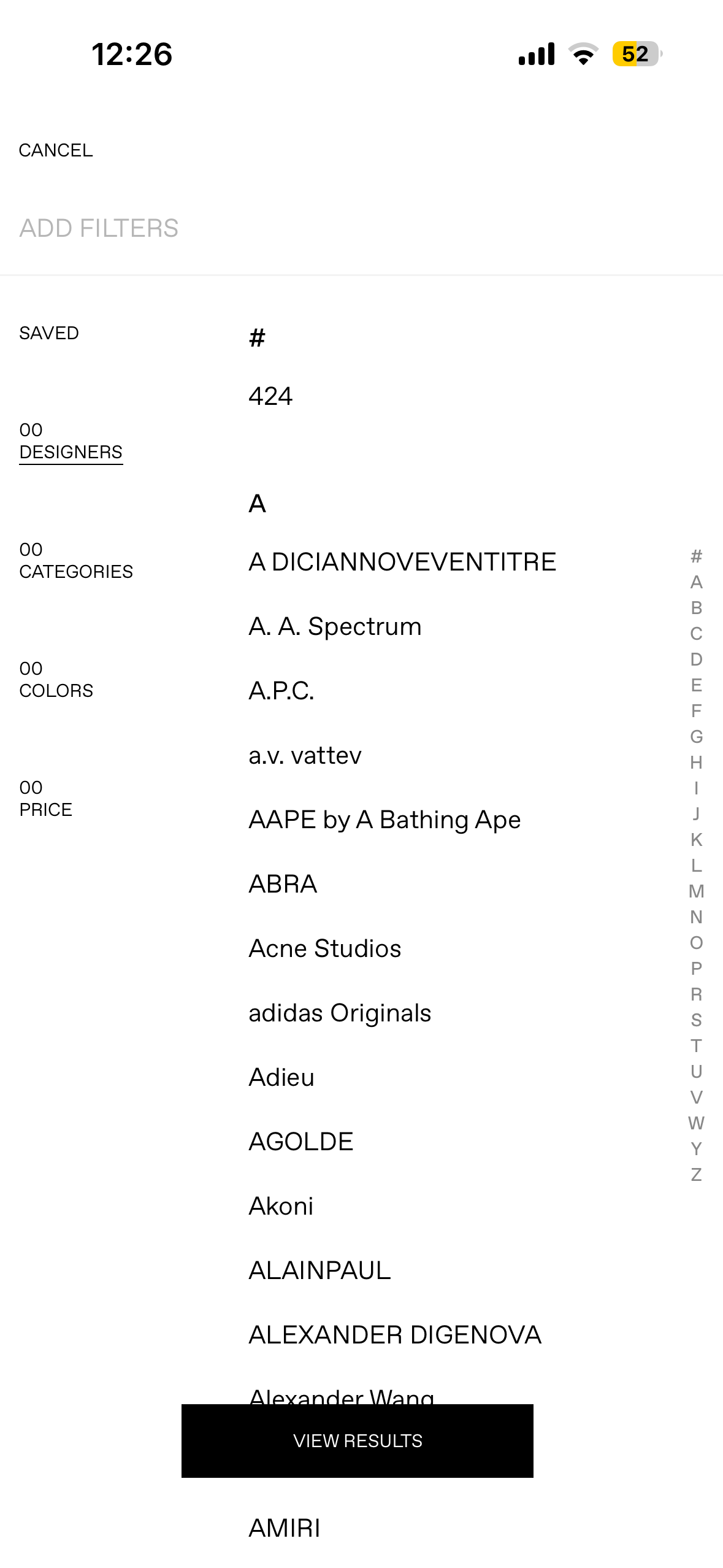
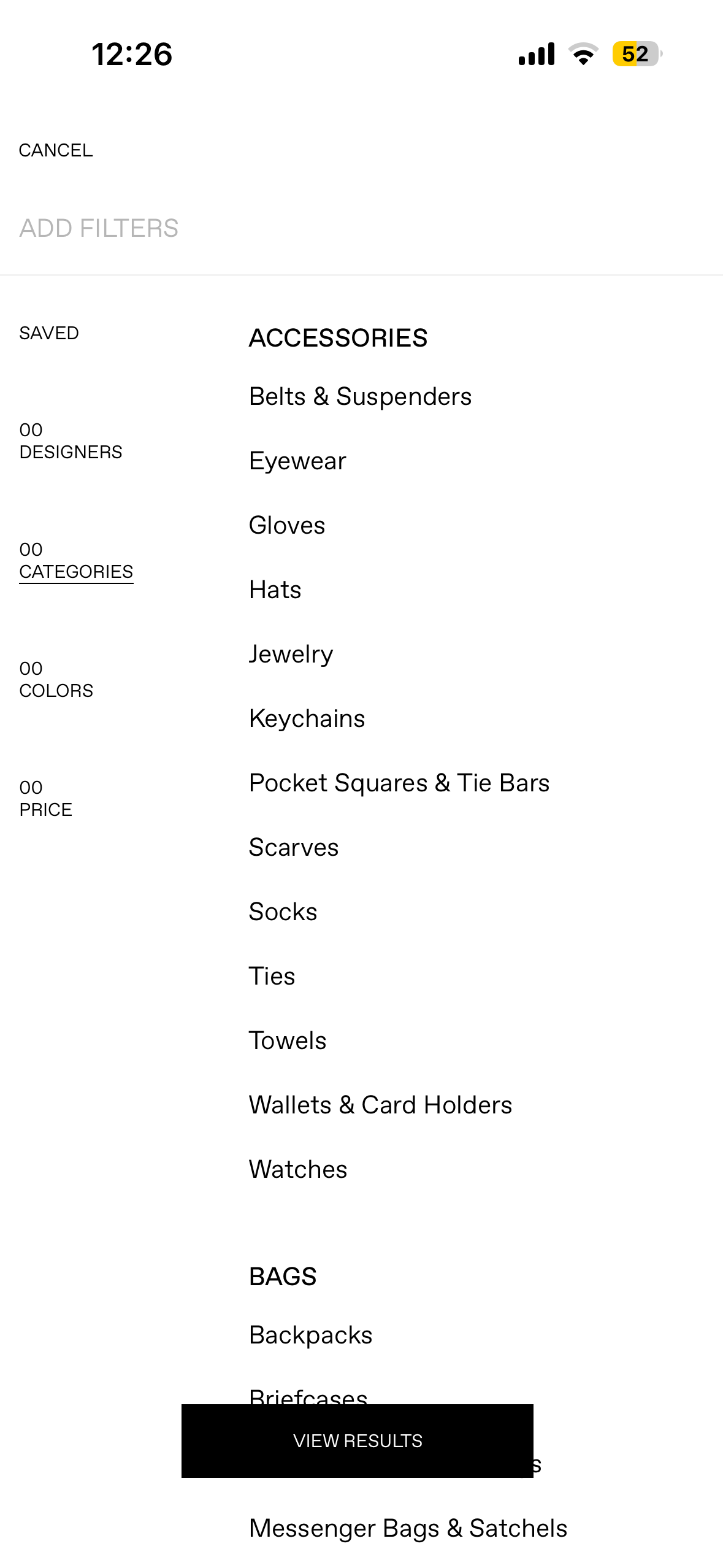
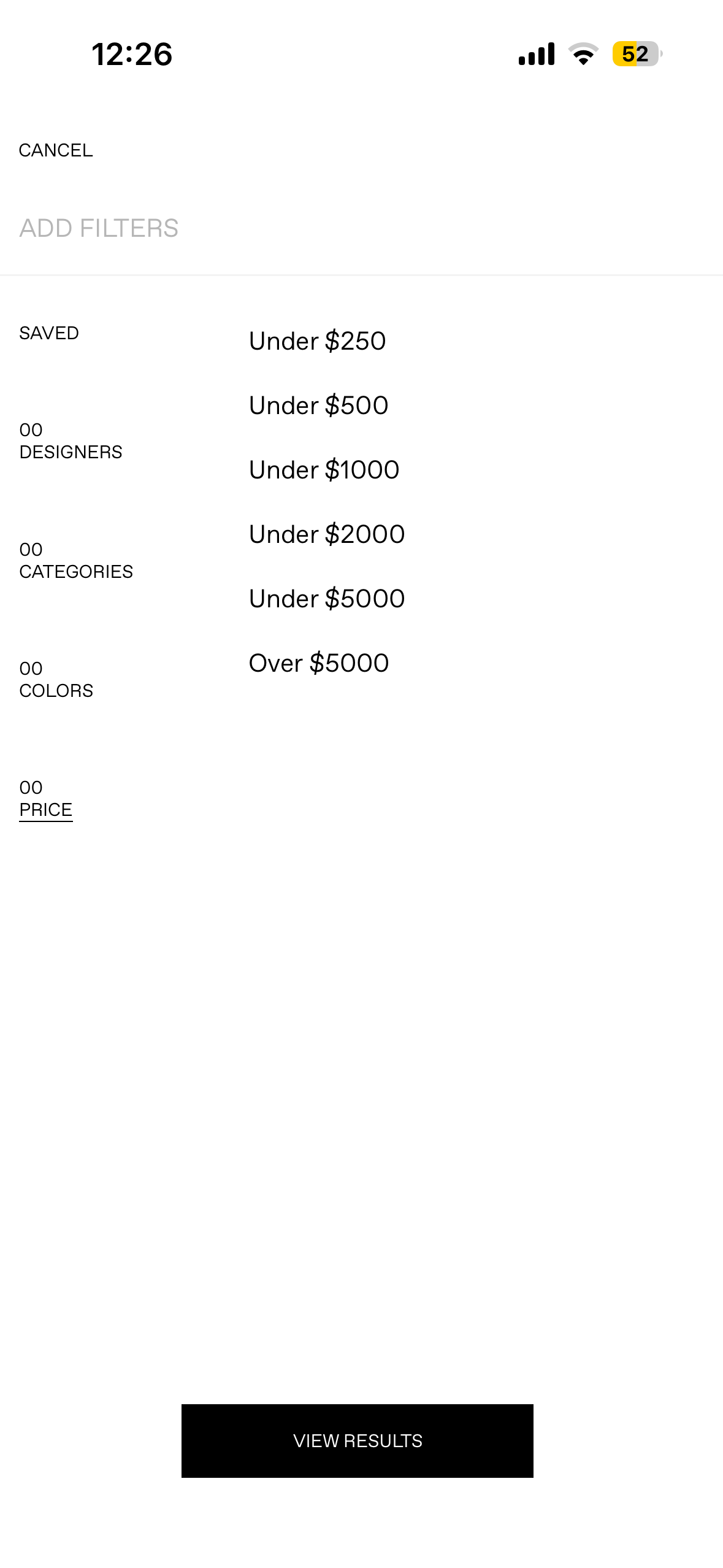
However, SSENSE carries an exorbitant amount of styles that vary greatly in proportions, materials, and other considerations. As the existing filters do little to narrow down the wide variety of products offered, category-specific filters could be implemented. For example, material filters could be implemented, additional pants filters could include rise, fit, and inseam, while jacket filters could sort based on sleeve length, pit-to-pit, shoulder, and overall length measurements. Additionally, adding a minimum and maximum price range value bar to the price filter section would allow the user to have even greater control over the filter functions.
Adding items to bag (Signifiers/Conceptual Model/Feedback/Gulf of Evaluation)
The “Add to Bag” button is a signifier that builds upon the user’s existing conceptual model of navigating shopping websites. Upon adding an item to your bag, the only feedback available is a temporary status notification that informs the user that the product in the selected size was added to their bag, but quickly disappears after a few seconds and leaves the user unsure of the status of their desired action. In its place, clicking “Add to Bag” could have an additional state that reflects this through a different colored button that says ”Added to Bag”. This reduces the gulf of evaluation by making the new button state unmistakable for the user.
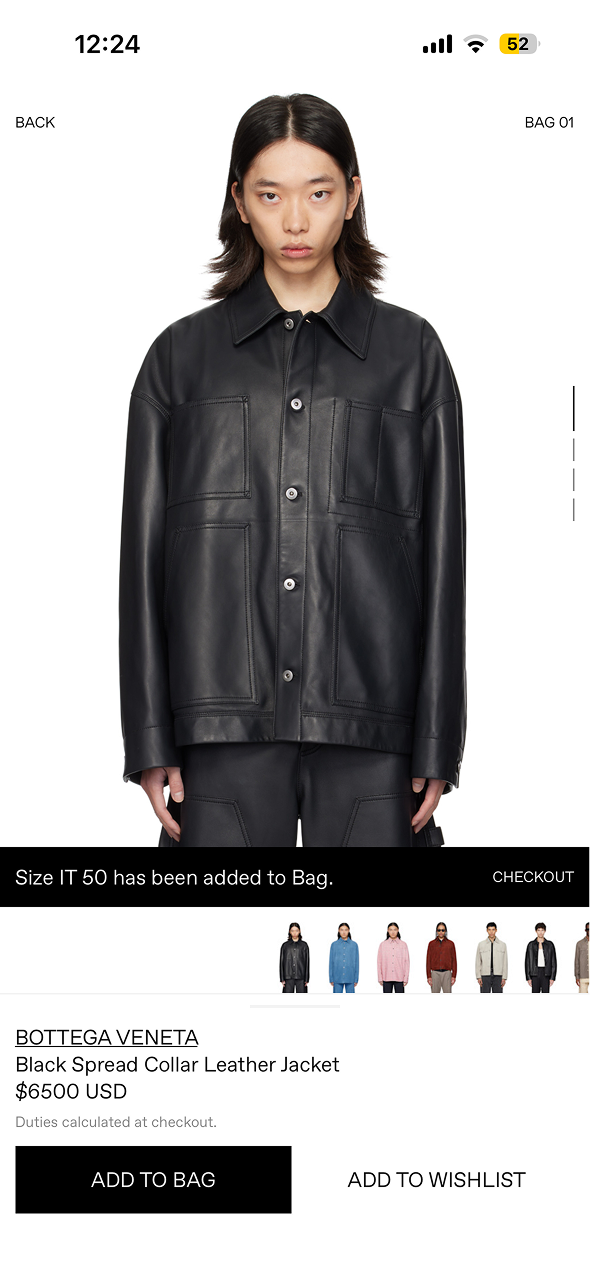
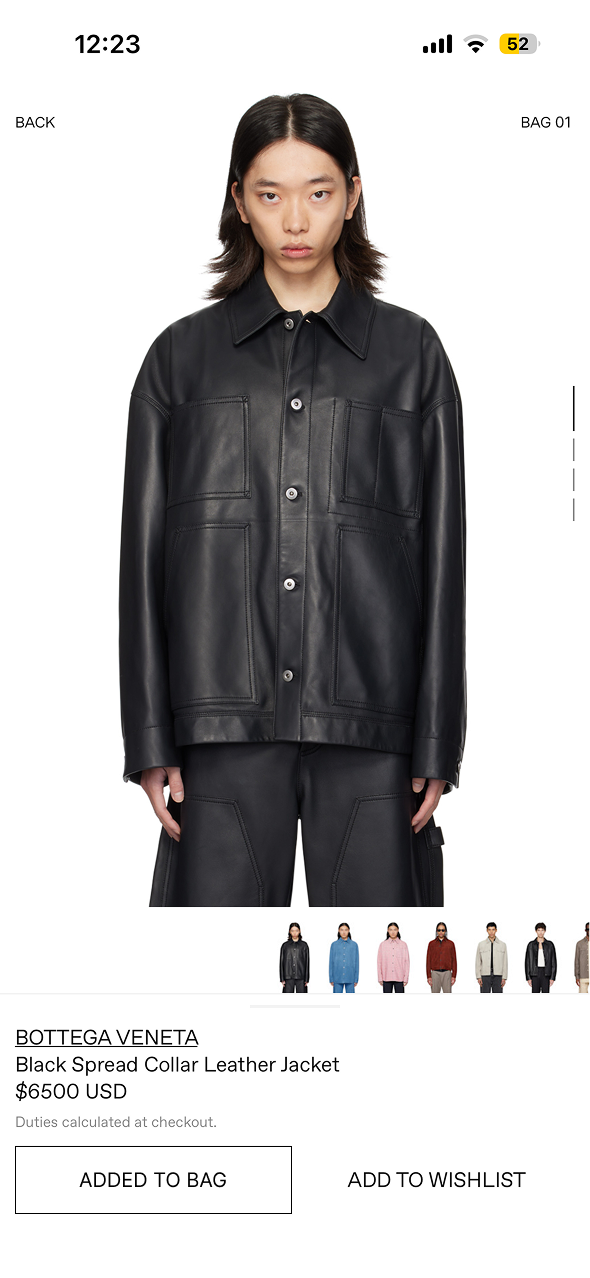
Left: Current UI design (adding product to bag notification) Right: Proposed recommendation (new “Added to Bag” status)
Conclusion
SSENSE’s mobile app uses a minimalist design to capture the attention of the user by placing a spotlight on the product being displayed. While some design aspects excel in allowing the user to obtain the necessary information prior to purchasing a product and leading them through the browsing process, the filtering system and post-purchase feedback have room for improvement. Utilizing stronger constraints to filter through the vast shopping catalog with clearer signifiers and implementing immediate feedback when adding an item to your cart makes the experience more intuitive without affecting SSENSE’s visual identity.