Group: Shane Lai, Arsh Kaushik, Tommy Tian
Course: INFO636 – Conversational UX Design
Author: Tommy Tian
Responsibility: Define the purpose of the agent, name the agent, write the content
Time Lapse: April 2026 – May 2026
Overview of BuildMyGym
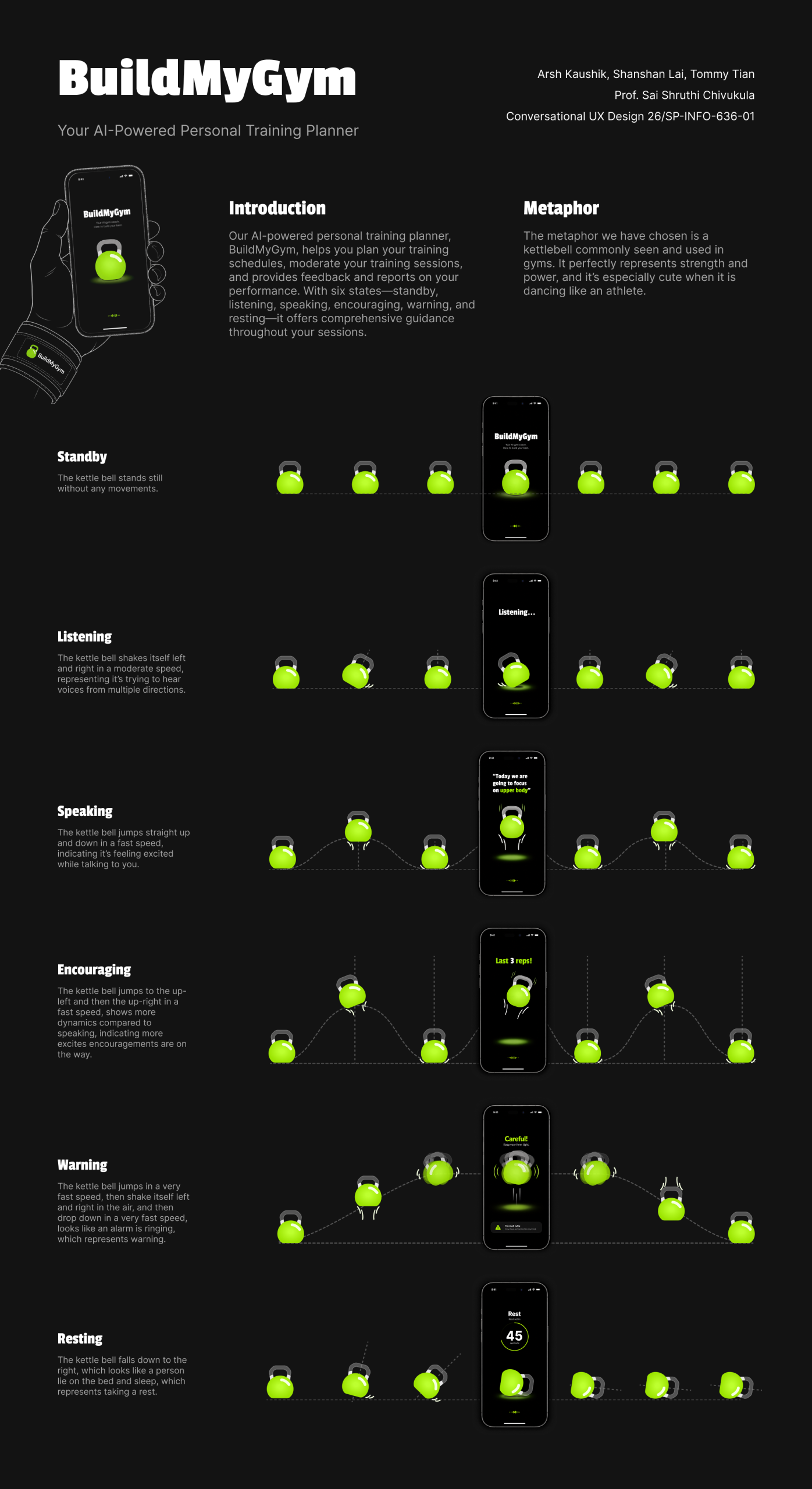
“BuildMyGym” is an AI-powered personal training planner agent which helps you plan your training schedules, moderate your training sessions, and provides feedback and reports on your performance. With six states—standby, listening, speaking, encouraging, warning, and resting—it offers comprehensive guidance throughout your sessions. During the INFO636 – Conversational UX Design course, me, Shane Lai and Arsh Kaushik were partnered into a group for this project starting from April 2026.
We went through the process of defining the purpose and name of the agent, choose a proper metaphor for the agent, define and design the states, and combine all those elements into a poster to demonstrate the foundation of “BuildMyGym”, which is part of the final presentation of INFO636 – Conversational UX Design.
Why we decided to build an an AI-powered personal trainer?
While me and Shane Lai were discussing what type of agent we should design, both of us came up with the idea of designing an AI-powered personal trainer. Firstly, both of us loves exercising and training and use training software such as Apple Fitness+ and Strava a lot; secondly, both of us thought the current training software are not customized enough: everyone has different body conditions, so everyone who wants to stay healthy in their own ways deserves a personalized training schedule; sometimes people are not 100% sure about whether they perform properly during their training sessions whereas most training software does not have reminding functions such as warning or encouraging at all, so we decided to design an AI-powered personal trainer which will provide personalized training sessions for users.
Choose the metaphor & design the states
We chose three metaphors: heart, kettle bell, and weight plates. Metaphors are important for designing an agent as they need to show how the agent is talking or responding to questions or commands as well as representing the theme of the agent well. Kettle bells and weight plates are very common in gyms for weight lifting, whereas heart represents doing sports. Originally, we have seven states: standby, listening, guiding, encouraging, resting, reporting, and warning. We saved all three metaphors for further feedbacks to determine which exact metaphor fits the best.
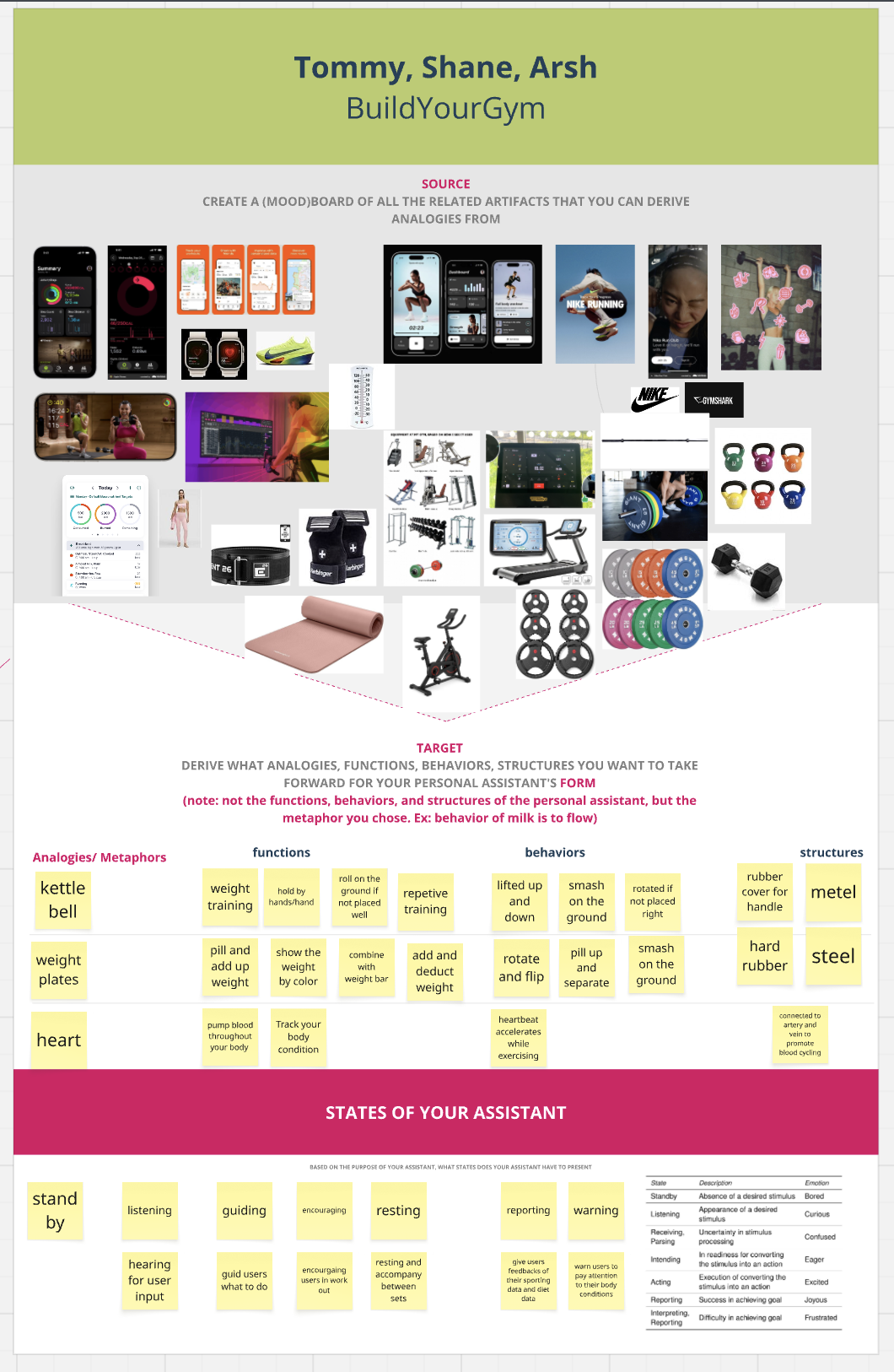
Figure 2: Idea gathering of BuildMyGym’s metaphors and states
We presented the sketches of our seven states of each metaphor, 21 in total, in front of class during gallery walk:
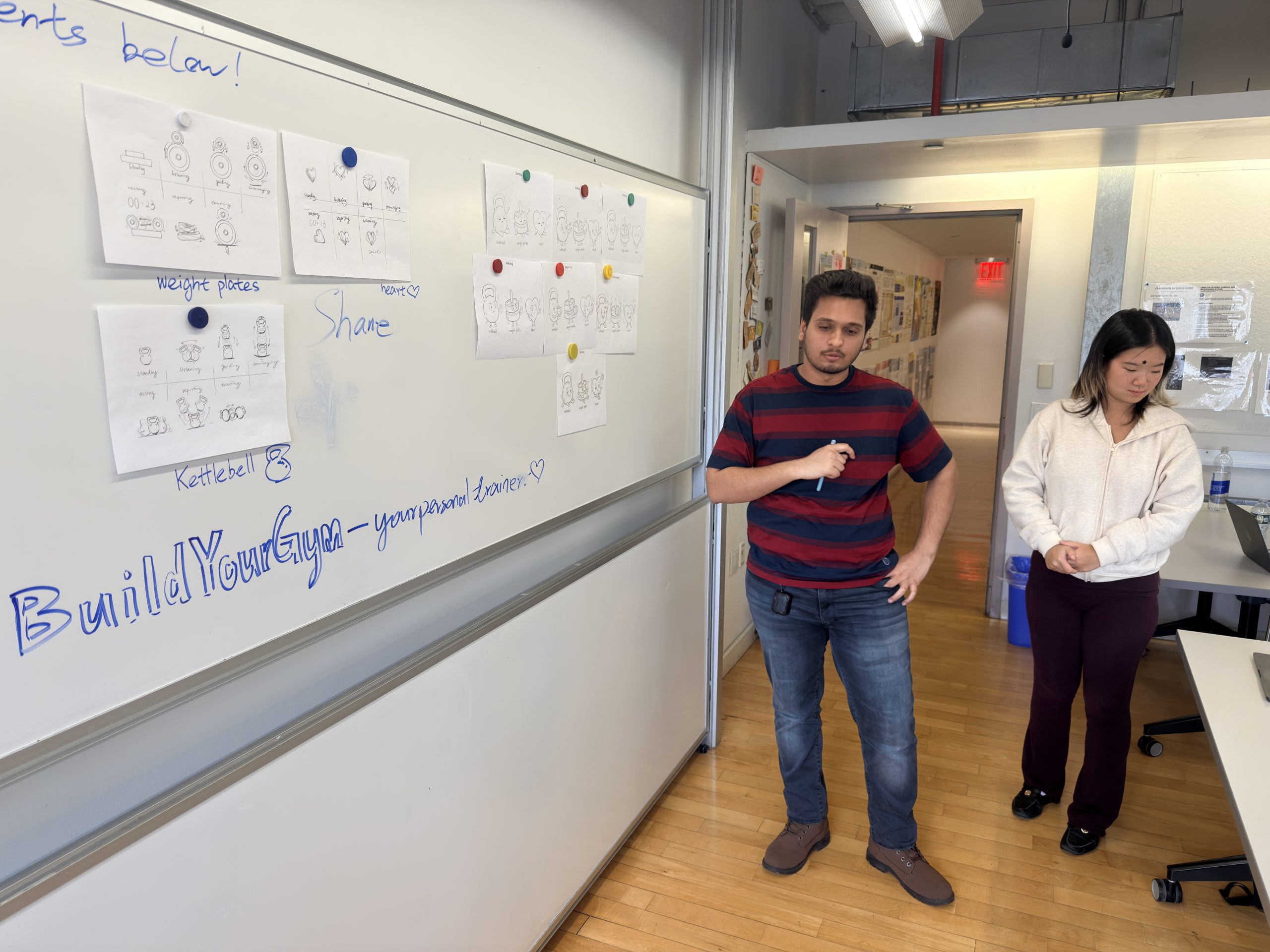
Figure 3: Arsh and Shane presenting our sketches
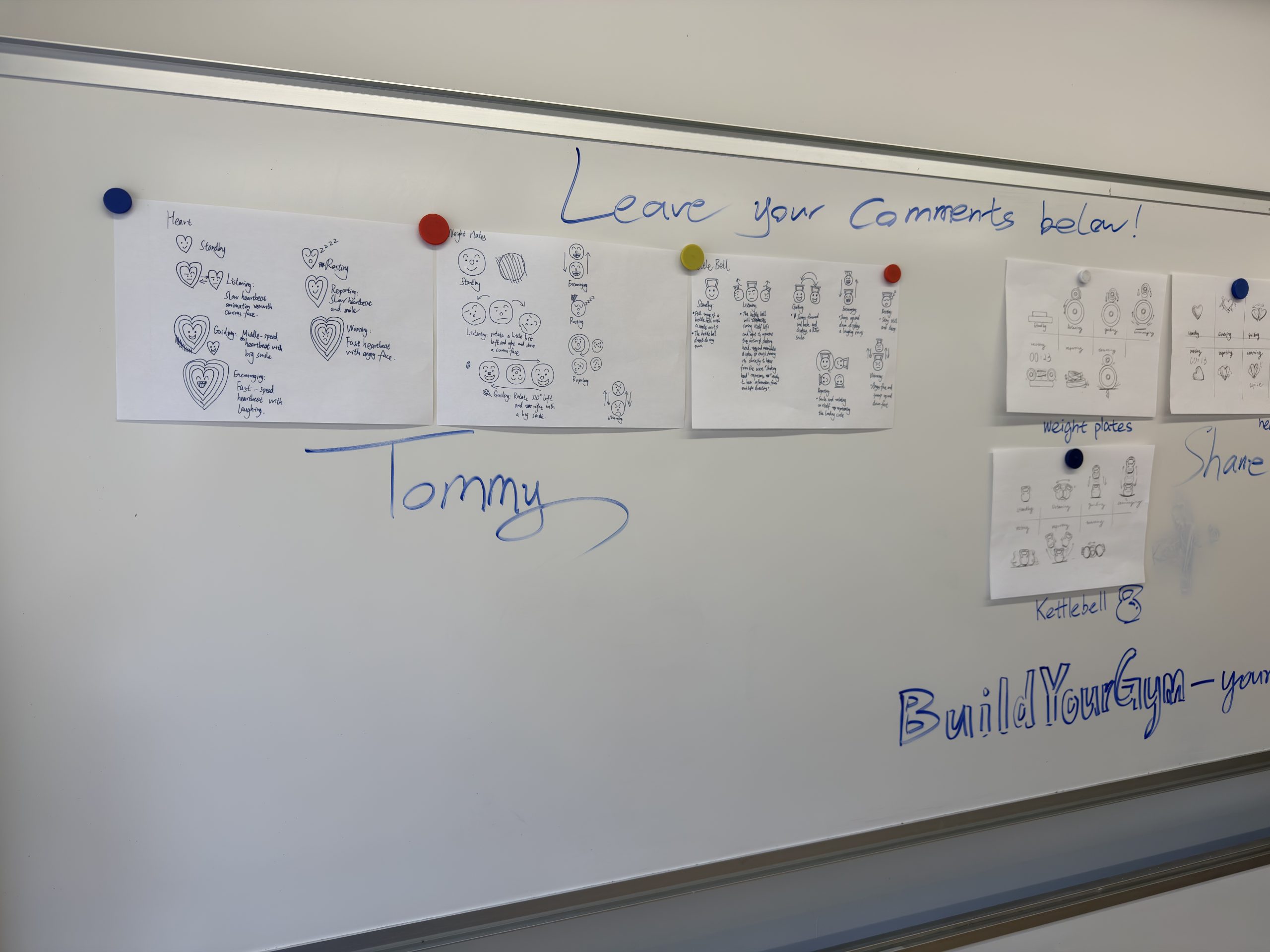
Figure 4: My sketches on the whiteboard
Below are my sketches:
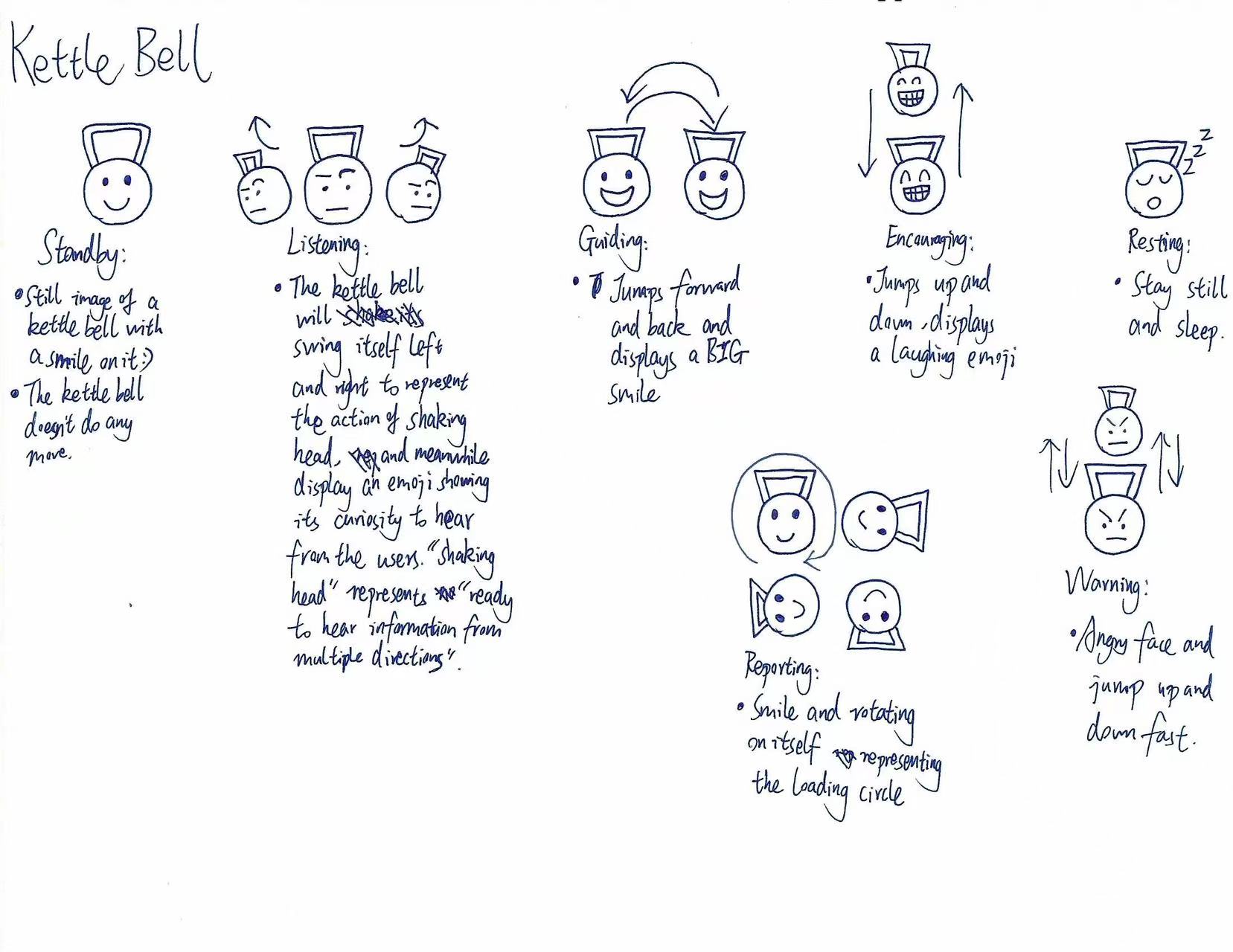
Figure 5: My kettle bell sketches
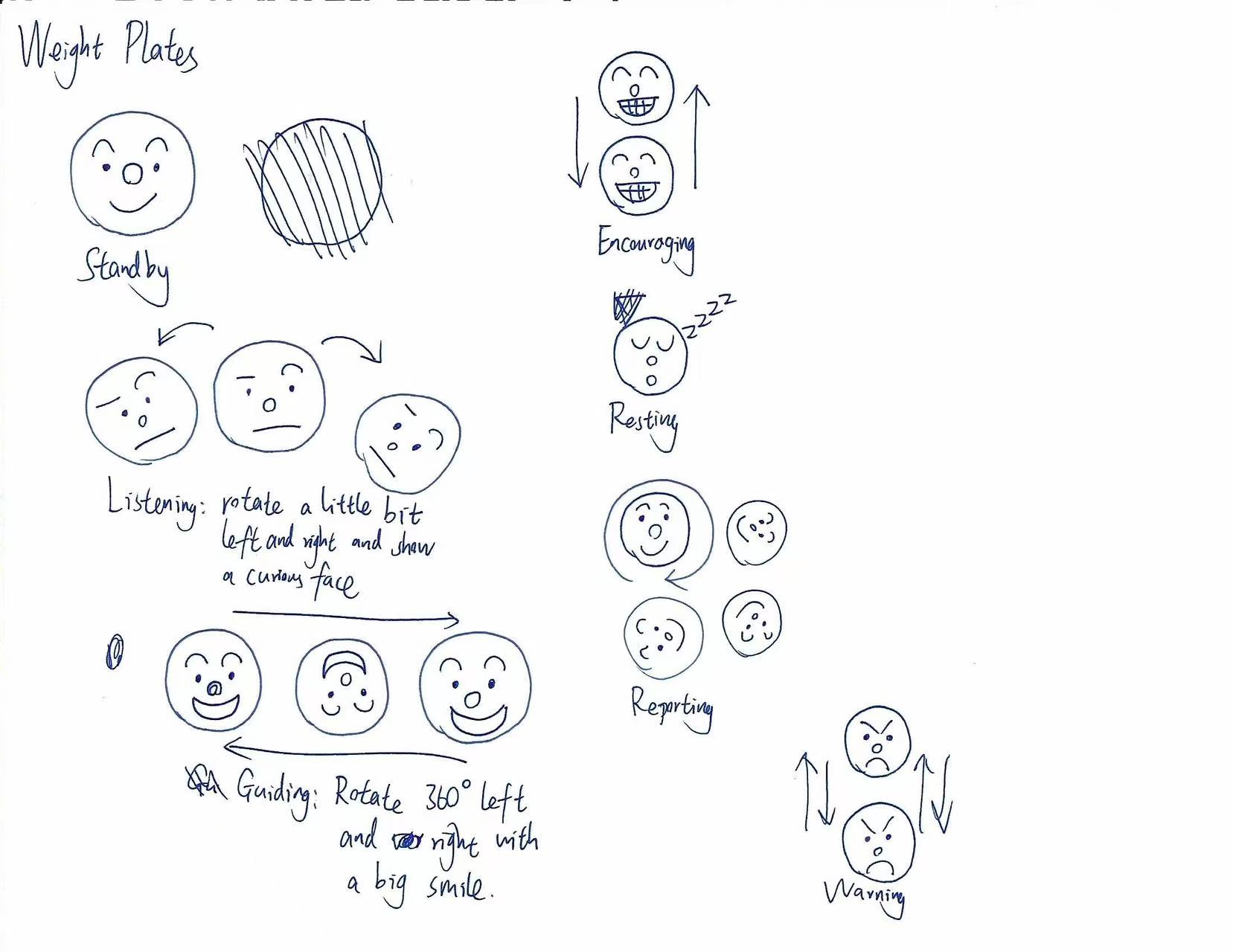
Figure 6: My weight plate sketches
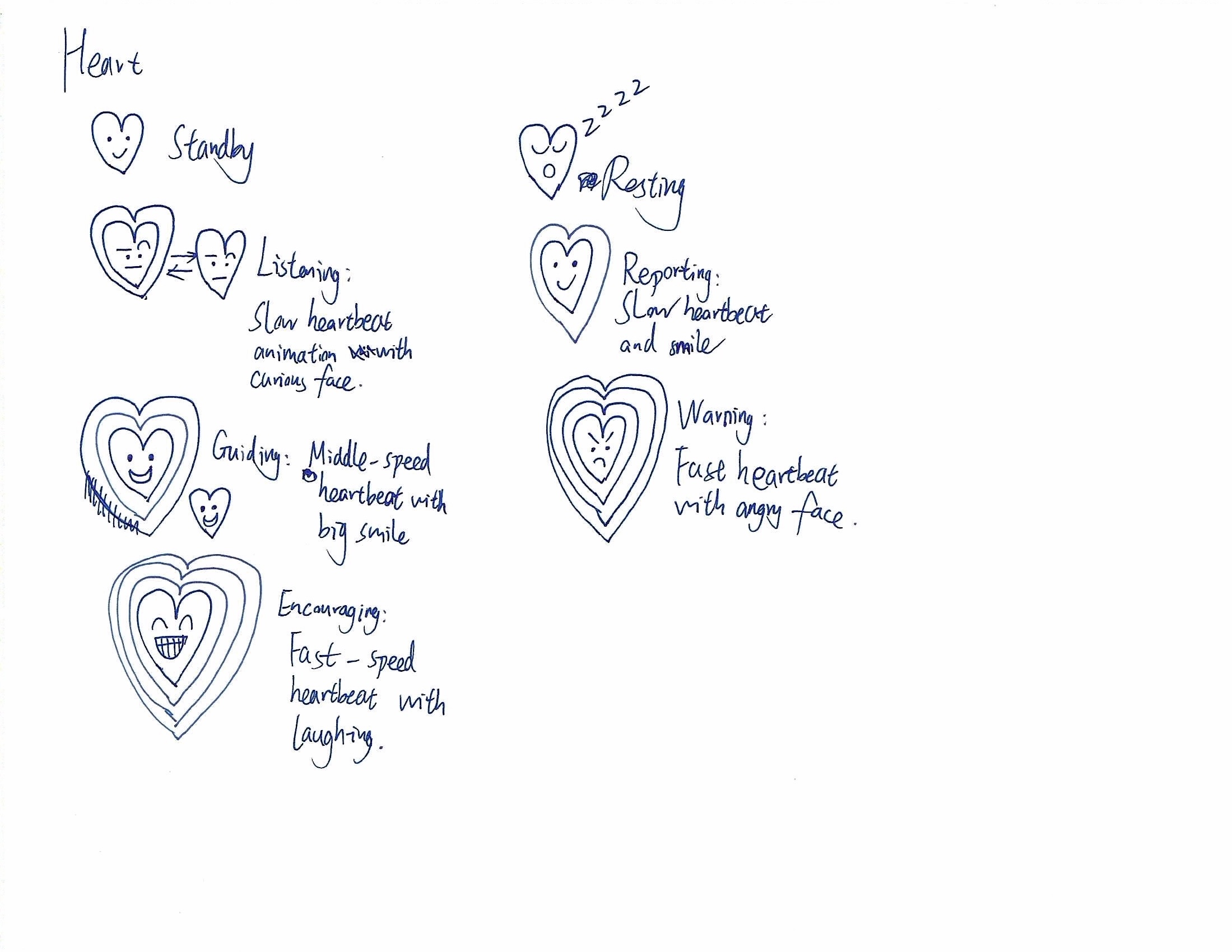
Figure 7: My heart sketches
We received the following feedbacks: we are not allowed to use faces, and the “guiding” and “reporting” states sounds quite similar; last but not least, we are only allowed to keep one metaphor.
Based on the discussion with the team, we decided to choose kettle bell. Heart might make people feel like this is a health agent instead of a sporting agent, whereas weight plates’s shape is barely a circle, and when we draw the movement animations, it might be hard to tell how it moves or rotates. We also realized that we do not require a face to show the states of our agent, instead, we just need to draw the different movements of our metaphor during each state, which was a great chance to exercise our ability to sketch out the animation.
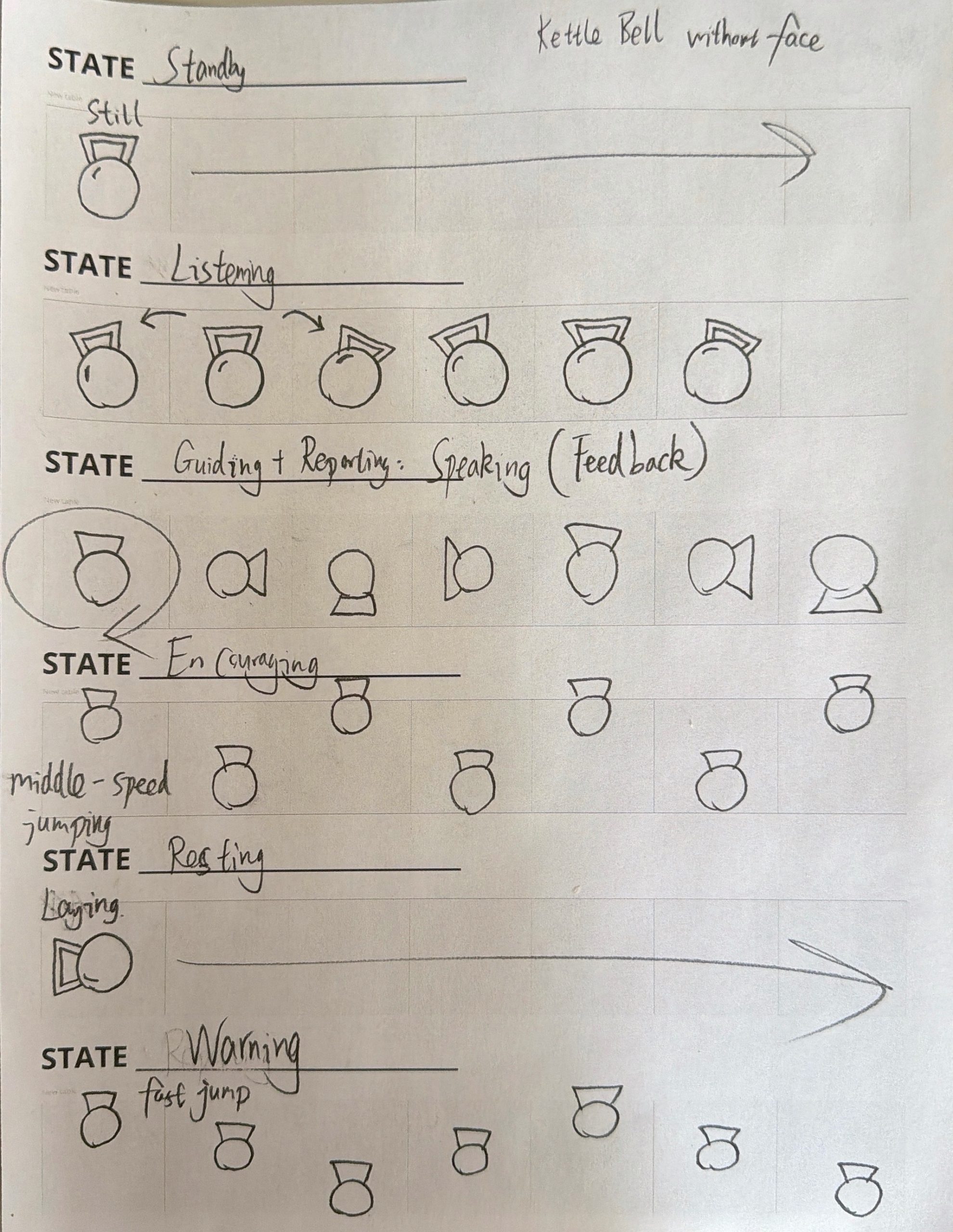
Figure 8: My drawing of the six states after the gallery walk
Our group combined the “guiding” and “reporting” states together into “speaking” and kept all other five states, and each of us were asked to draw a draft of the animations of the six states.
Arsh was responsible for combining our ideas of animations into a version that all of us can accept:
Standby: The kettle bell stands still without any movements.
Listening: The kettle bell shakes itself left and right in a moderate speed, representing it’s trying to hear voices from multiple directions.
Speaking: The kettle bell jumps straight up and down in a fast speed, indicating it’s feeling excited while talking to you.
Encouraging: The kettle bell jumps to the up-left and then the up-right in a fast speed, shows more dynamics compared to speaking, indicating more excites encouragements are on the way.
Warning: The kettle bell jumps in a very fast speed, then shake itself left and right in the air, and then drop down in a very fast speed, looks like an alarm is ringing, which represents warning.
Resting: The kettle bell falls down to the right, which looks like a person lie on the bed and sleep, which represents taking a rest.
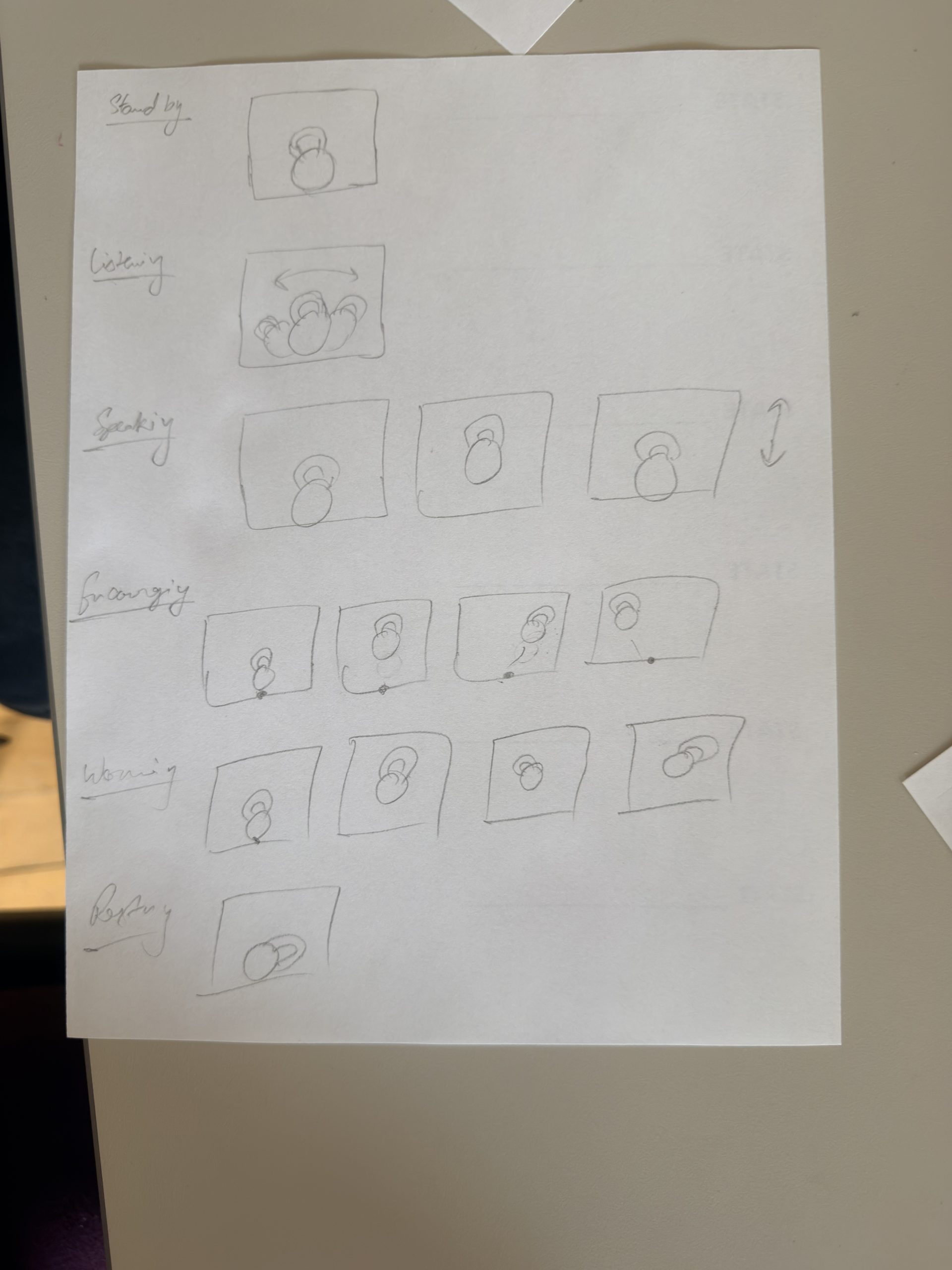
Figure 9: Our sketch of the 6 states after discussion
Design the poster
Our group now have decided the states and the metaphor, it is now for us to design the posters.
We looked at the examples provided during class. We should have the name of our agent, the name of group members, the name of professor and class, introduction of our agent, and description of each state.
We decided to choose the “Goolio” poster as example, we agreed to use black as background color since a lot of famous training software such as “Technogym” used black as background to create a feeling of black-themed gyms.
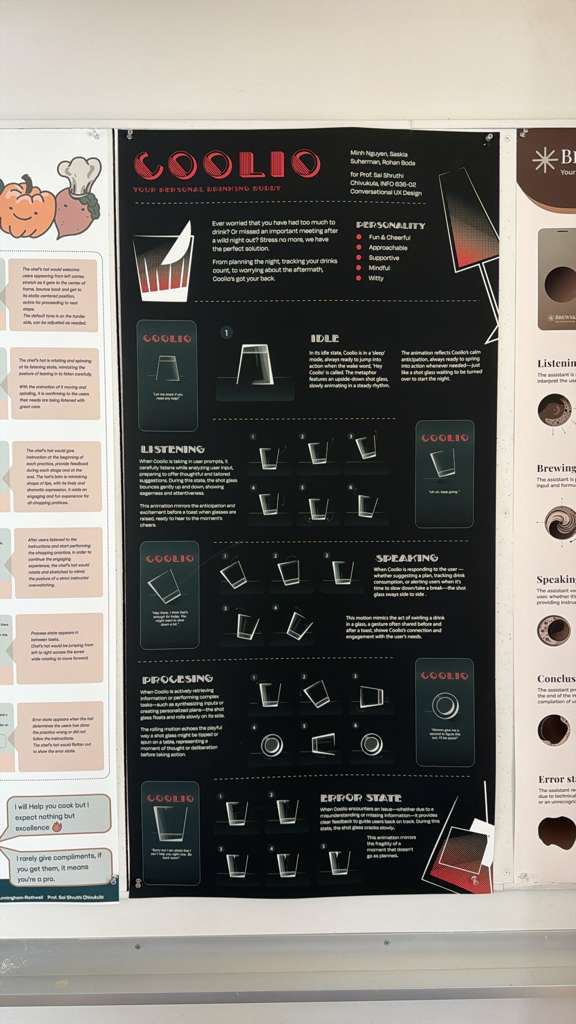
Figure 10: The “Goolio” poster we looked at
We used green as the color of the kettle bell since green looks refreshing and can standout on a black background, and below is the sketch of the 6 states with the kettle bell on Figma:
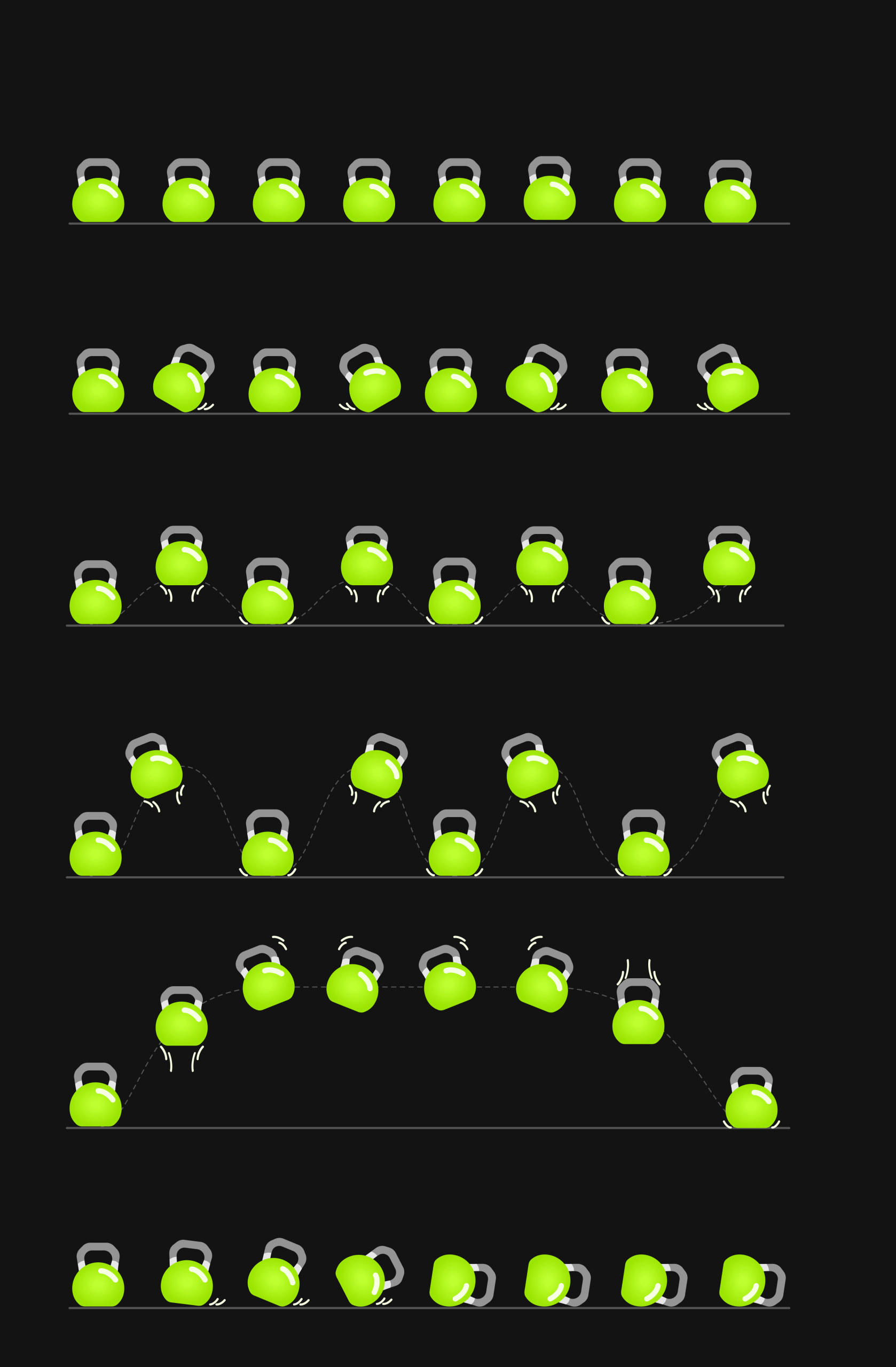
Figure 11: Figma sketch of the 6 states
We then designed the first draft of the poster. I was responsible for the text and Shane was responsible for the mockups and animations. The first draft already had introduction of the agents, description of the metaphor, iPhone and iWatch mockups, and description of each state.
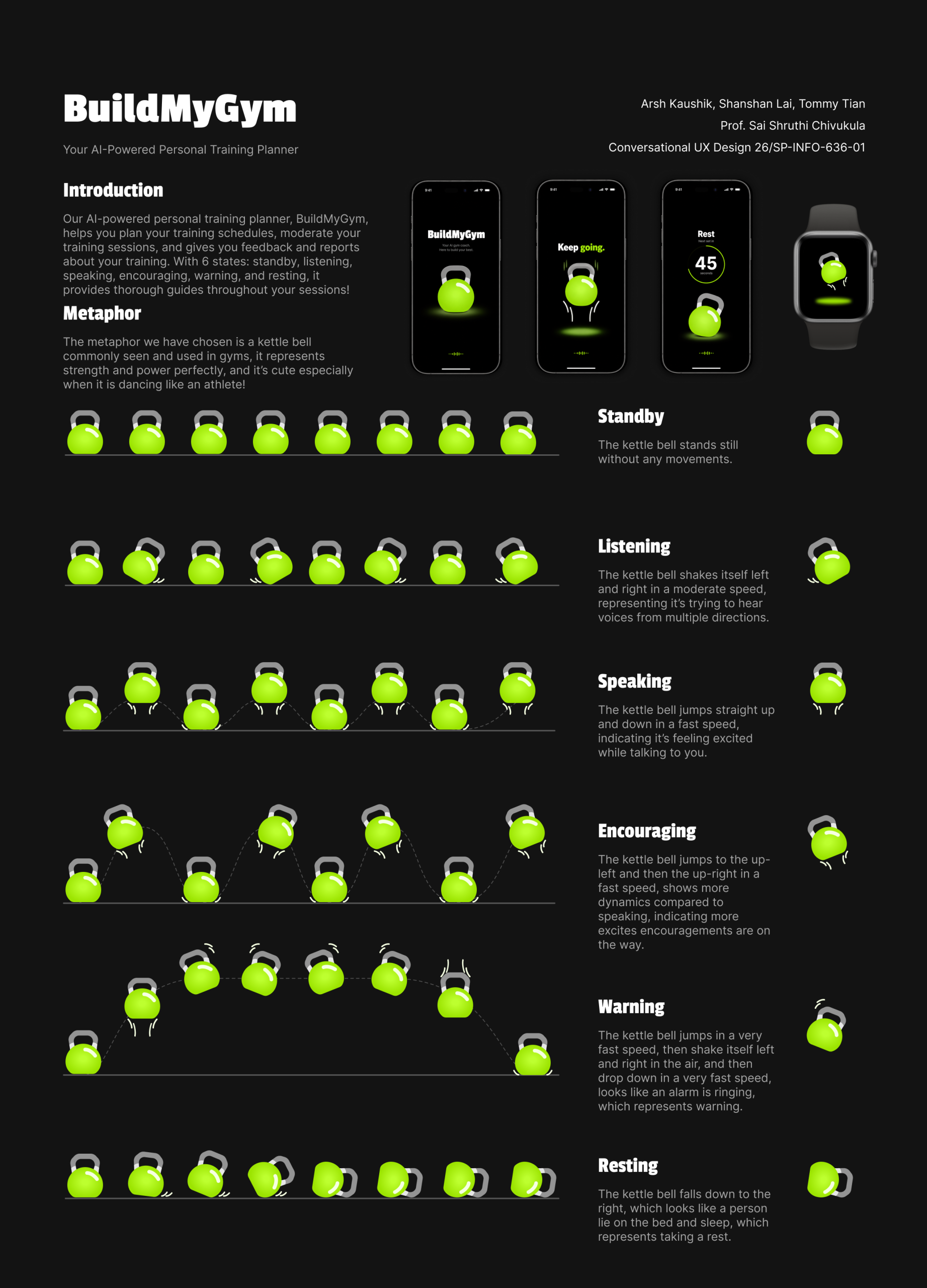
Figure 12: First draft of the poster
We the received the following feedback: turn the dimension into 24*44 inches, and name each state in the introduction; we can also consider put the mockups together with the animations, and meanwhile, we can only keep 2 columns for the states session: one column for description and one column for the animation.
We designed the final version of the poster based on those feedbacks. We kept the introduction, the description of metaphor, and the mockups; however, we inserted the mockup screens inside the animation, with each screen displaying the name of each state.
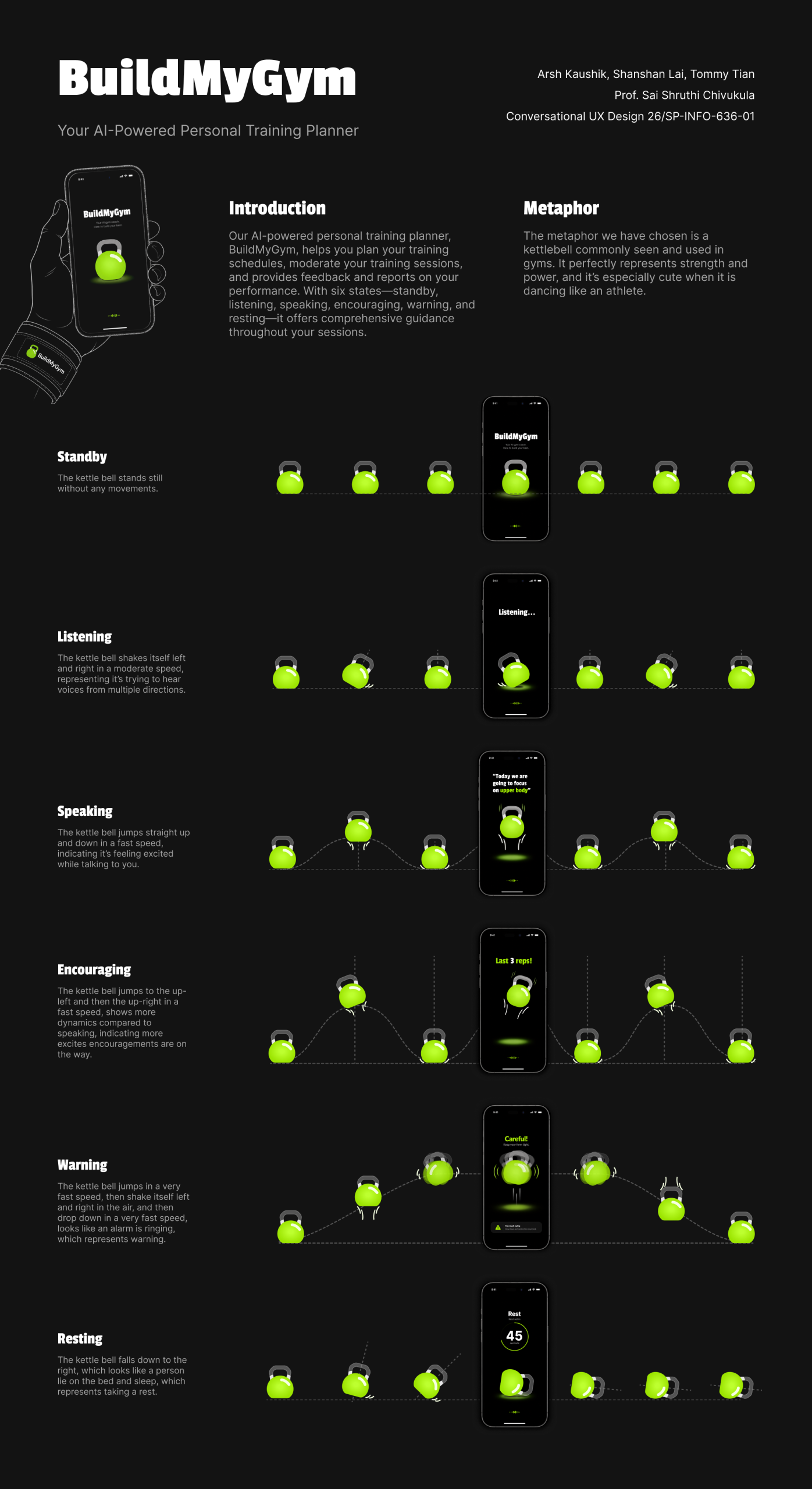
Figure 13: The final poster
Final Presentation and Reflections
We presented the final poster during final presentation:
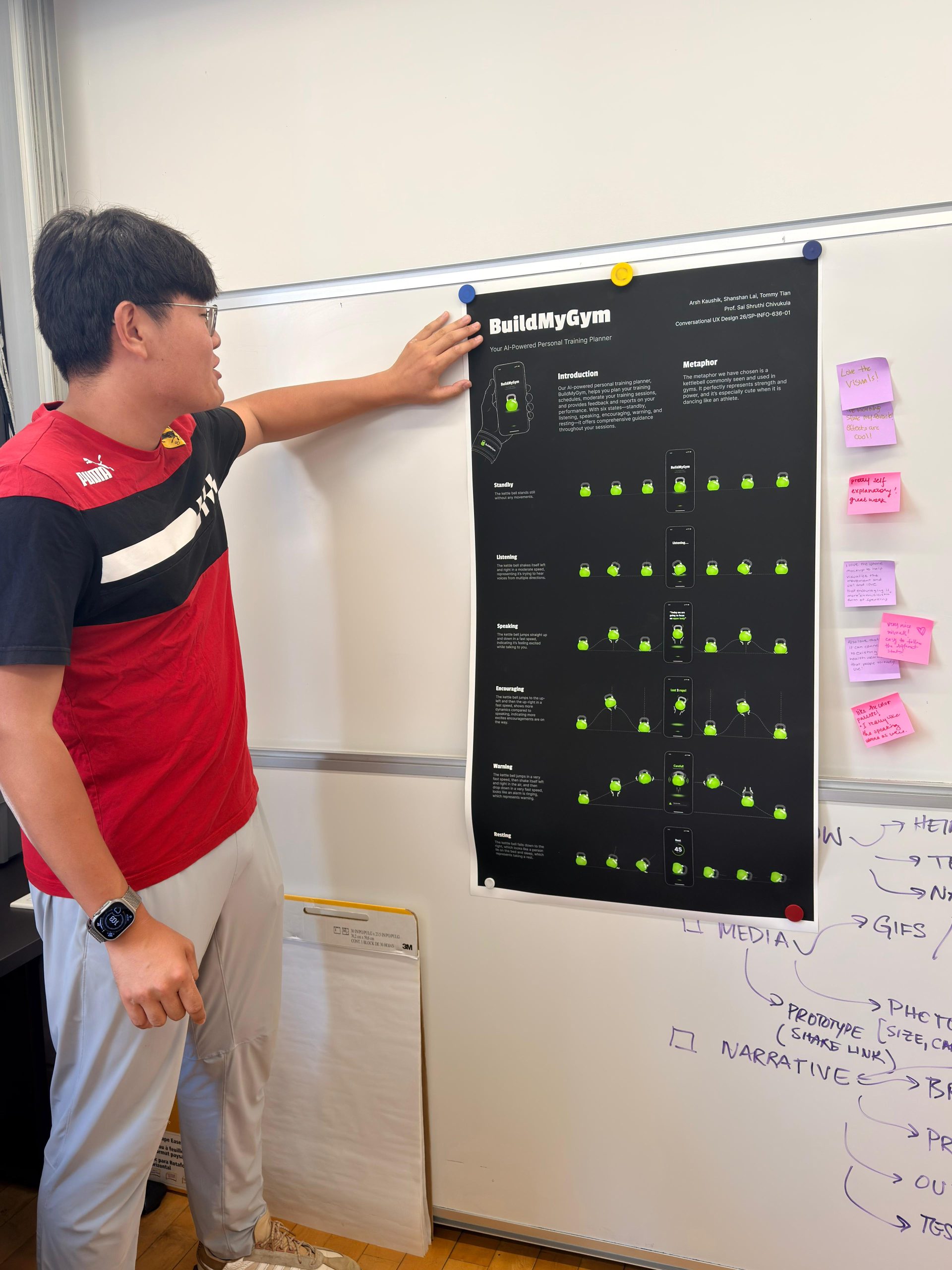
Figure 14: Me presenting the poster
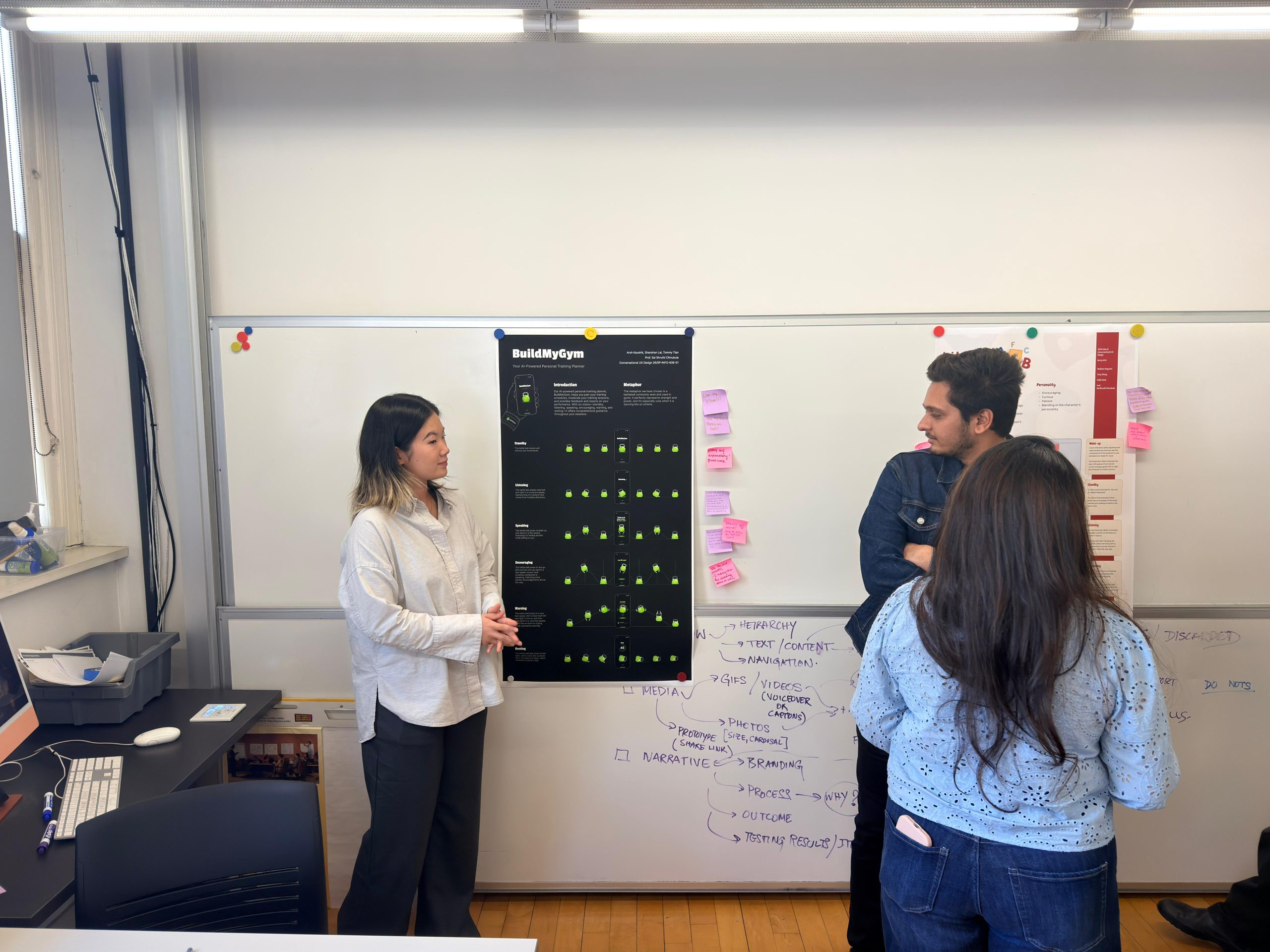
Figure 15: Shane and Arsh presenting the poster
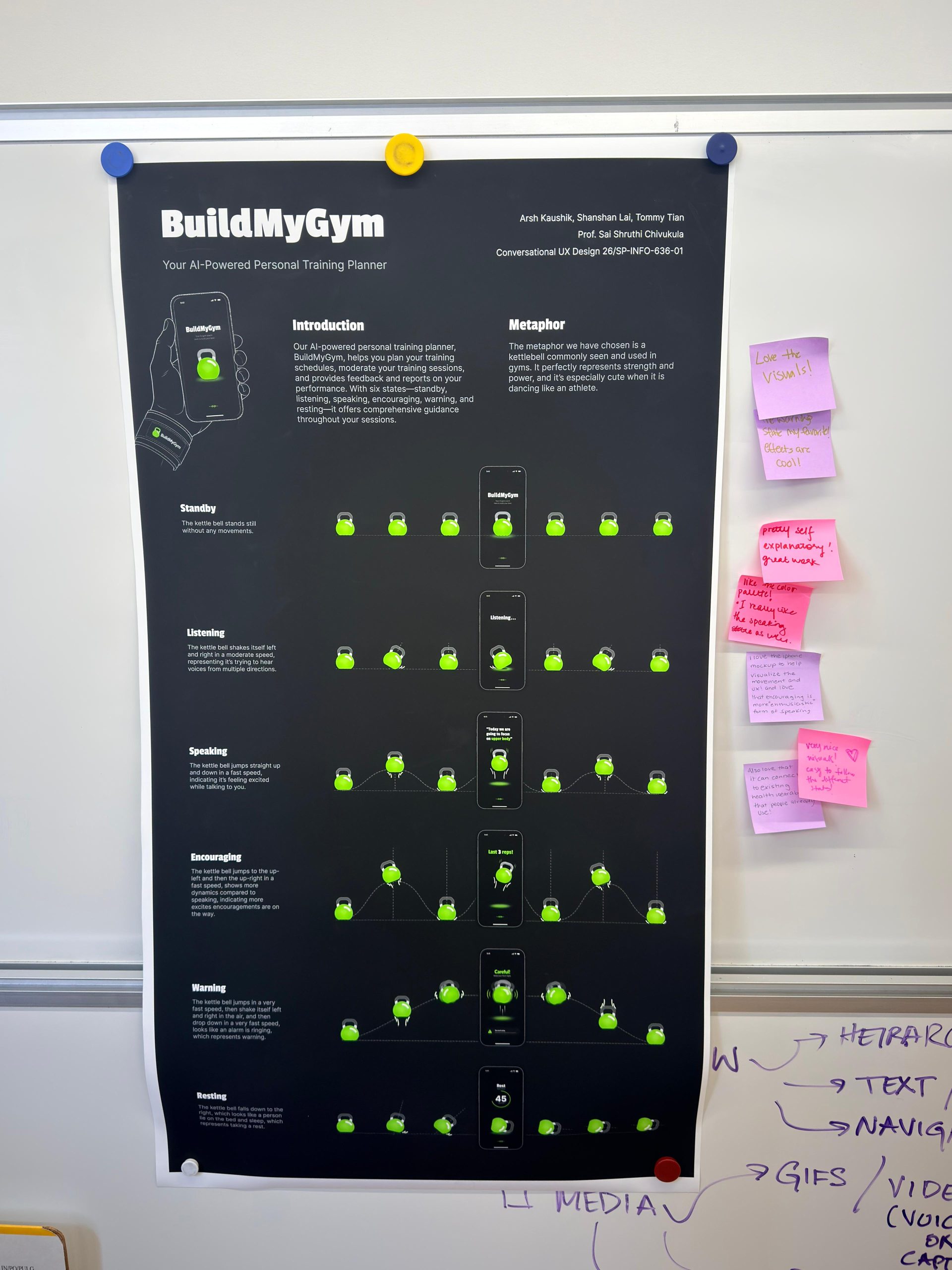
Figure 16: The poster and the feedbacks we received on the sides
During the presentation, one visiting artist asked how would our agent monitor the exact movement of the users. I answered the question step by step: firstly, we will have the agent available on smart watches like Garmin sport watches and iWatch, which already have sensors monitoring user’s body conditions like heartbeat or movement speed to determine which states the agent would speak, for example, when the censors detect the users are moving too fast, it will warn the user to slow down. However, the question also reminded us that if we want to continue this idea in the future, maybe we can consider introducing this idea into more conditions, for example, I also explained we can consider connecting the agent to more devices, like for professional cycling athletes, they tend to install censors on their wheels to calculate rotation and power, and if we can connect those censors to the agent, we may more precisely monitor the exact movements of cycling, or other more complicated sports.
We are all satisfied with the final design of the agent, the kettle bell looks dynamic and sticks to the theme of gym training, whereas all six states clearly demonstrate possible steps during personalized training. For some self-reflection, I am happy that multiple parts of my ideas, such as the theme of our agent and the design & content of the poster received agreements from my teammates, which greatly encouraged me to continue to explore and give feedbacks at the fields I am professional at, such as finding out what problems can be solved.