Team:
Anli Huang
Hyun Lee
Sharron Lou
Yuxuan Xia
Roles:
UX Research
UX Design
UI Design
Design Strategy
Information Architecture
Tools
Figma
Figjam
Claude Code + Design
Project Overview
The National Gallery of Art (NGA) is home to more than 150,000 artworks, archival records, and library materials. While the collection is expansive, navigating it digitally can often feel fragmented and overwhelming, especially for younger audiences and casual visitors unfamiliar with museum-specific language.
Under the guidance of Professor Hasan Hachem, our team explored how AI-driven discovery could transform the way users interact with the NGA’s digital collection. Rather than designing a traditional search tool, we focused on creating a more emotionally engaging discovery experience that helps users move fluidly between artworks and contextual information.
Our Process
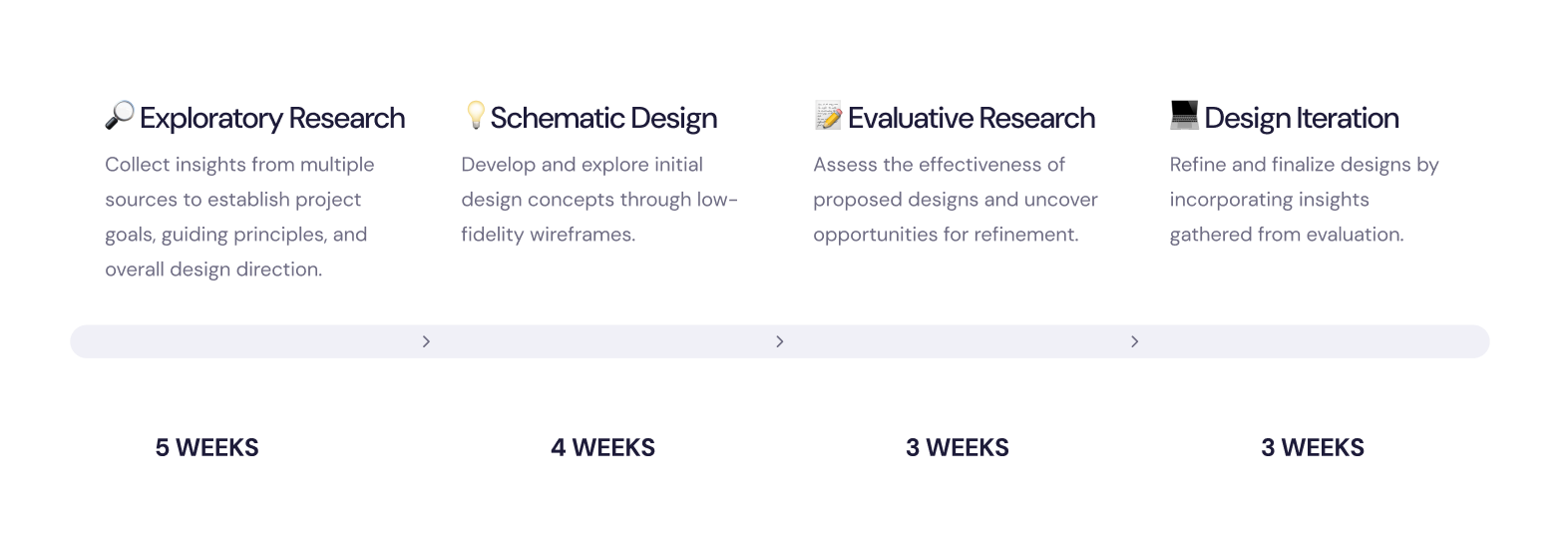
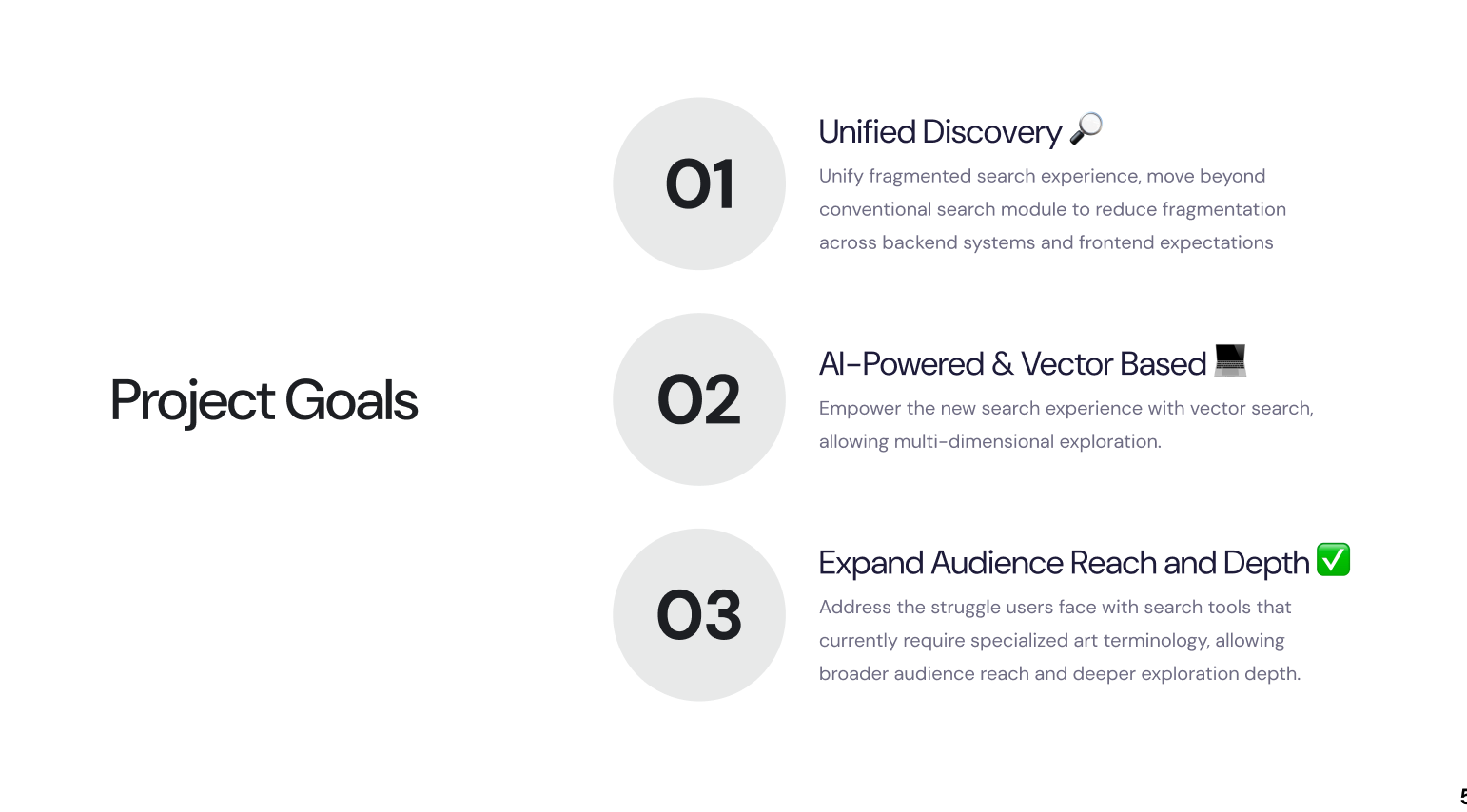
Defining Our Project Scope
We established a set of guiding principles based on the priorities discussed during our first client meeting. These principles helped shape our design decisions and kept our work aligned throughout the process.
Exploratory research
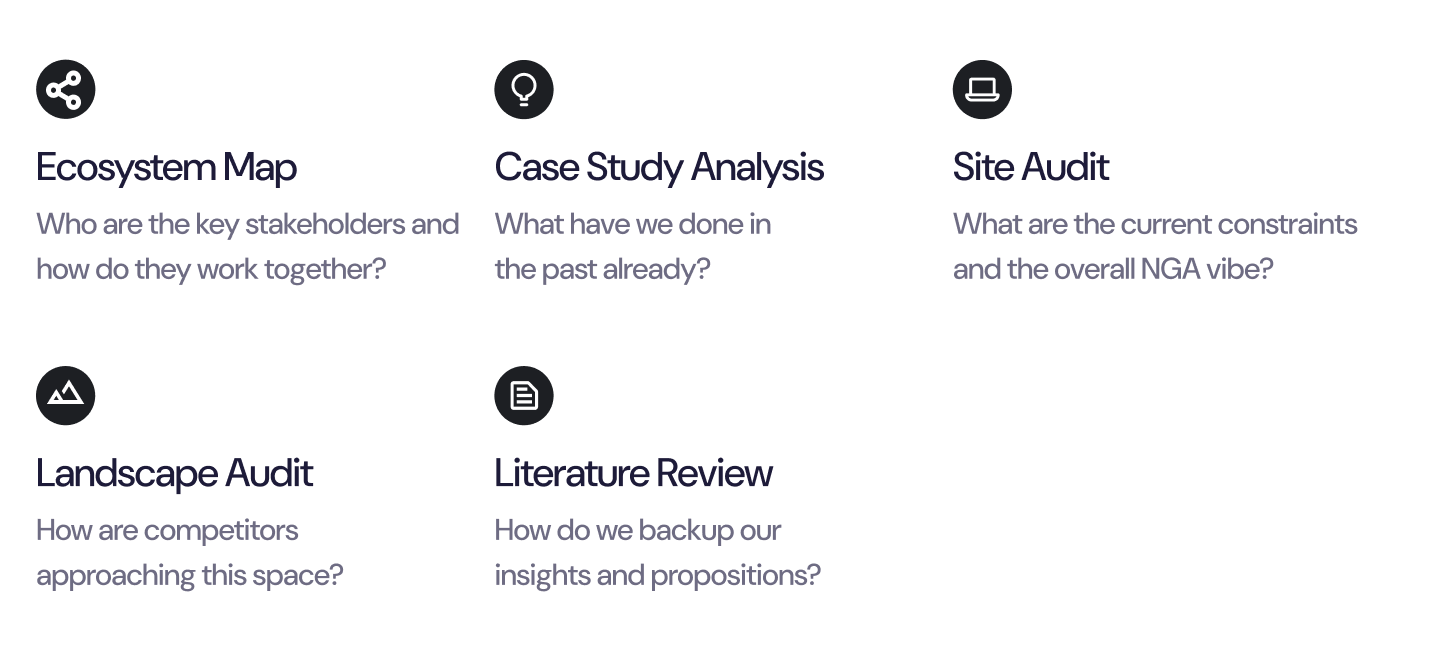
Our team used a mix of research methods to better understand the problem space and identify key opportunities in the search experience. The insights gathered through this process helped guide our design decisions and ensured our solutions stayed grounded in real user needs.
Research Methods:
Ecosystem Map
We created an ecosystem map to better understand the relationships between audiences, museum systems, archives, and digital touchpoints.
Through this exercise, we focused on six major audience motivation profiles:
- Sightseer
- Cultivator
- Representation Seeker
- FunSeeker
- Inquirer
- Recharger
Each audience approached discovery differently, revealing that a one-size-fits-all search experience would not adequately support user needs.
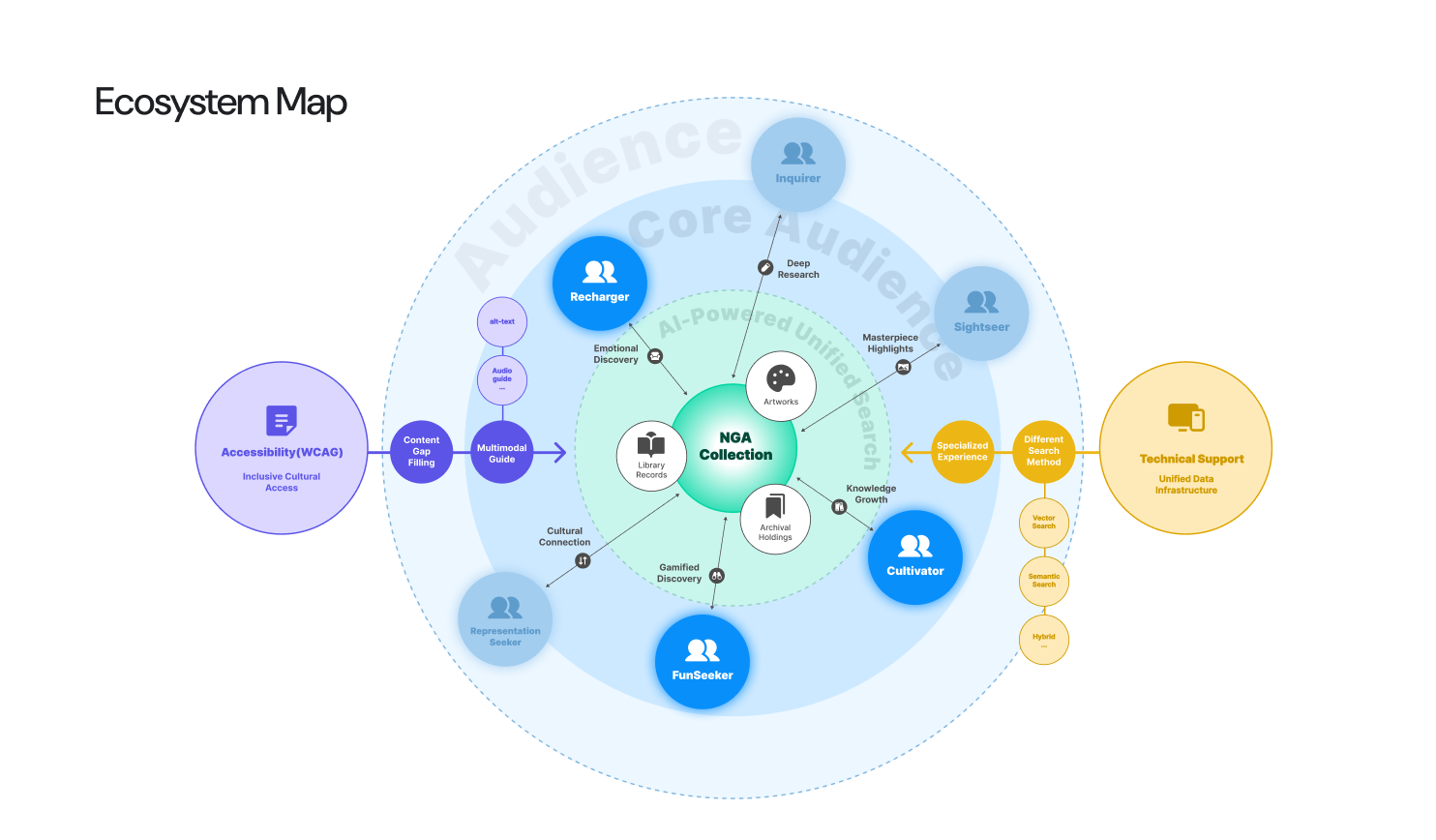
Audience Insight: The Recharger
One audience profile that strongly influenced our direction was the Recharger.
This user approaches art as a form of inspiration, emotional reflection, and creativity rather than purely educational research. Unlike traditional museum audiences, this group often searches intuitively and emotionally rather than through structured metadata. This audience profile became a key driver behind our AI-powered discovery direction.
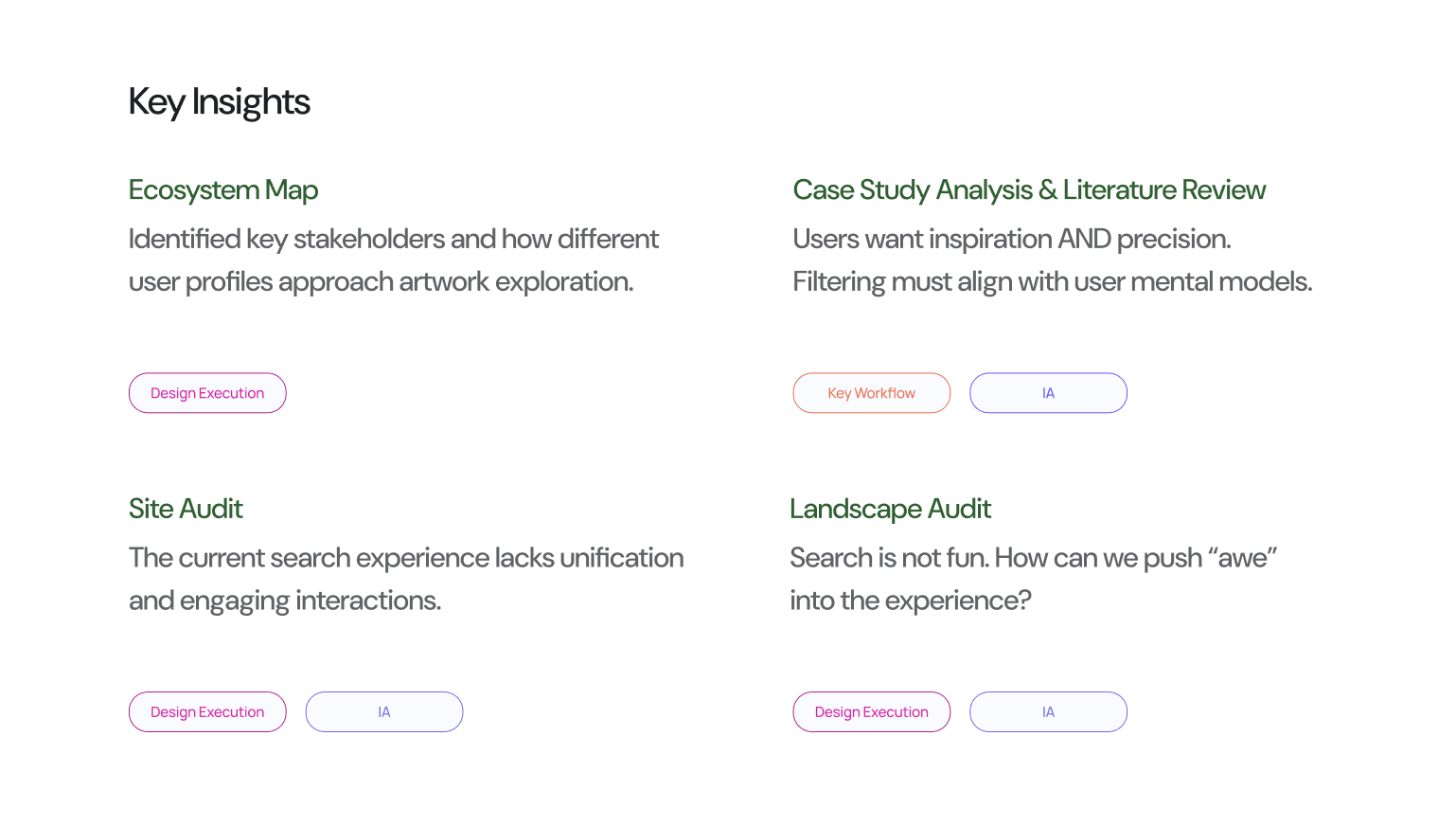
Key Insights
The diagram below highlights the key themes that emerged from our exploratory research process.
Core Design Problem
After synthesizing our research, we identified a core design challenge:
How might we create a unified exploratory tool that supports different user needs while moving beyond the limitations of a conventional search experience?
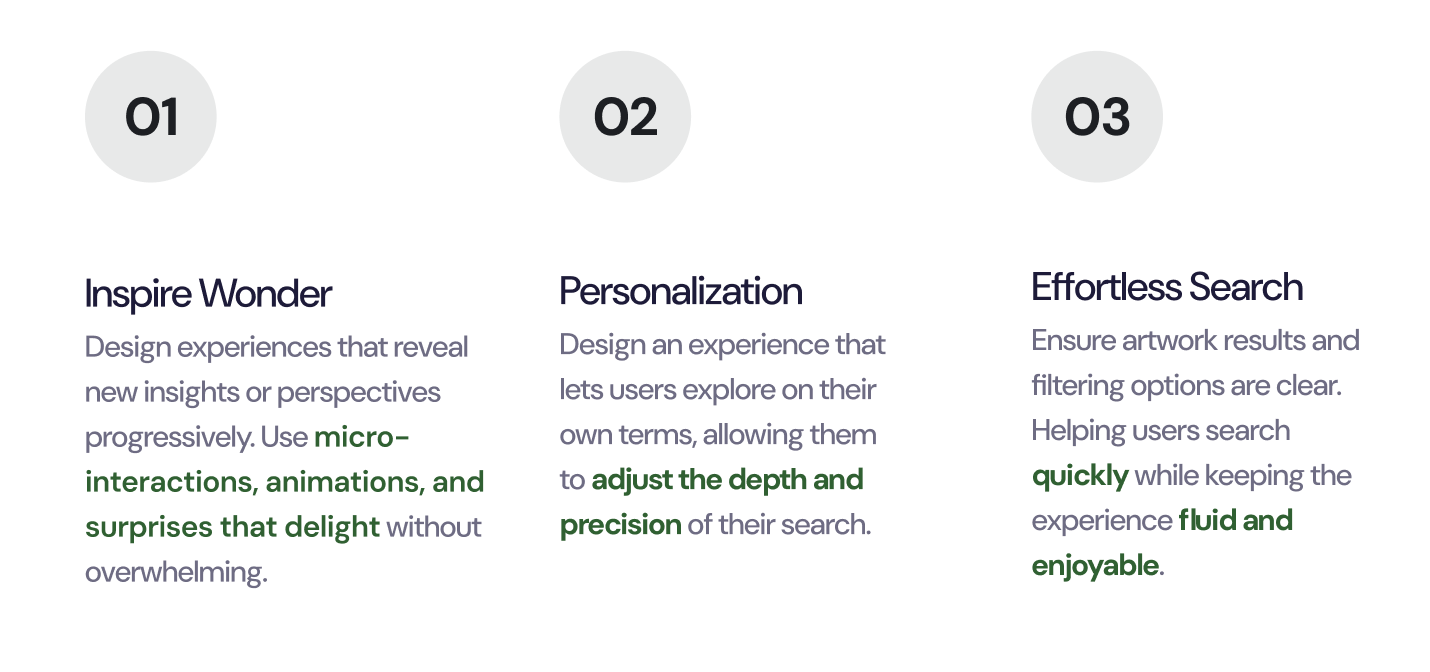
Design Principles
We created a set of guiding principles synthesized from our exploratory research that helped shape and inform our design direction throughout the project.
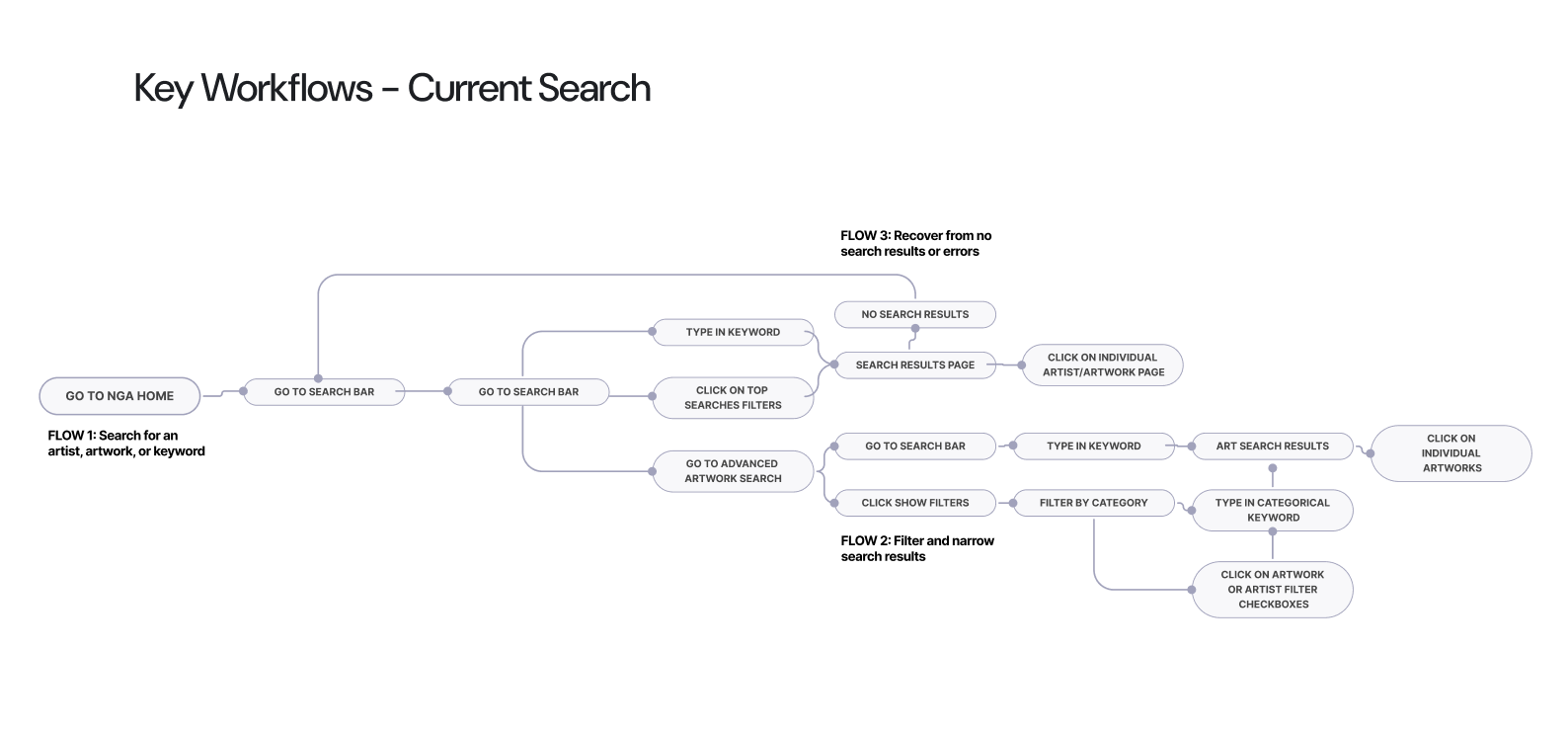
Then, we created a workflow comparison to evaluate the NGA’s existing search experience against our proposed exploratory search flow.
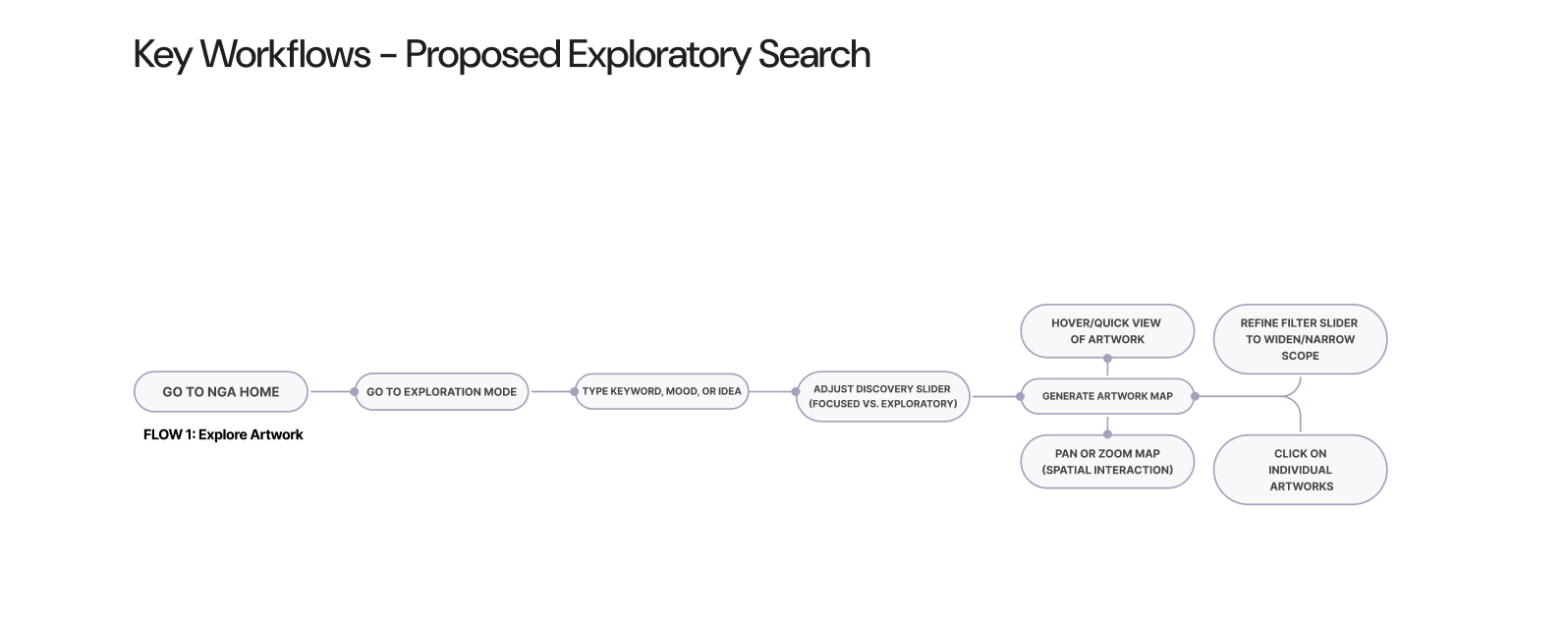
Solution: Designing Adjustable Discovery
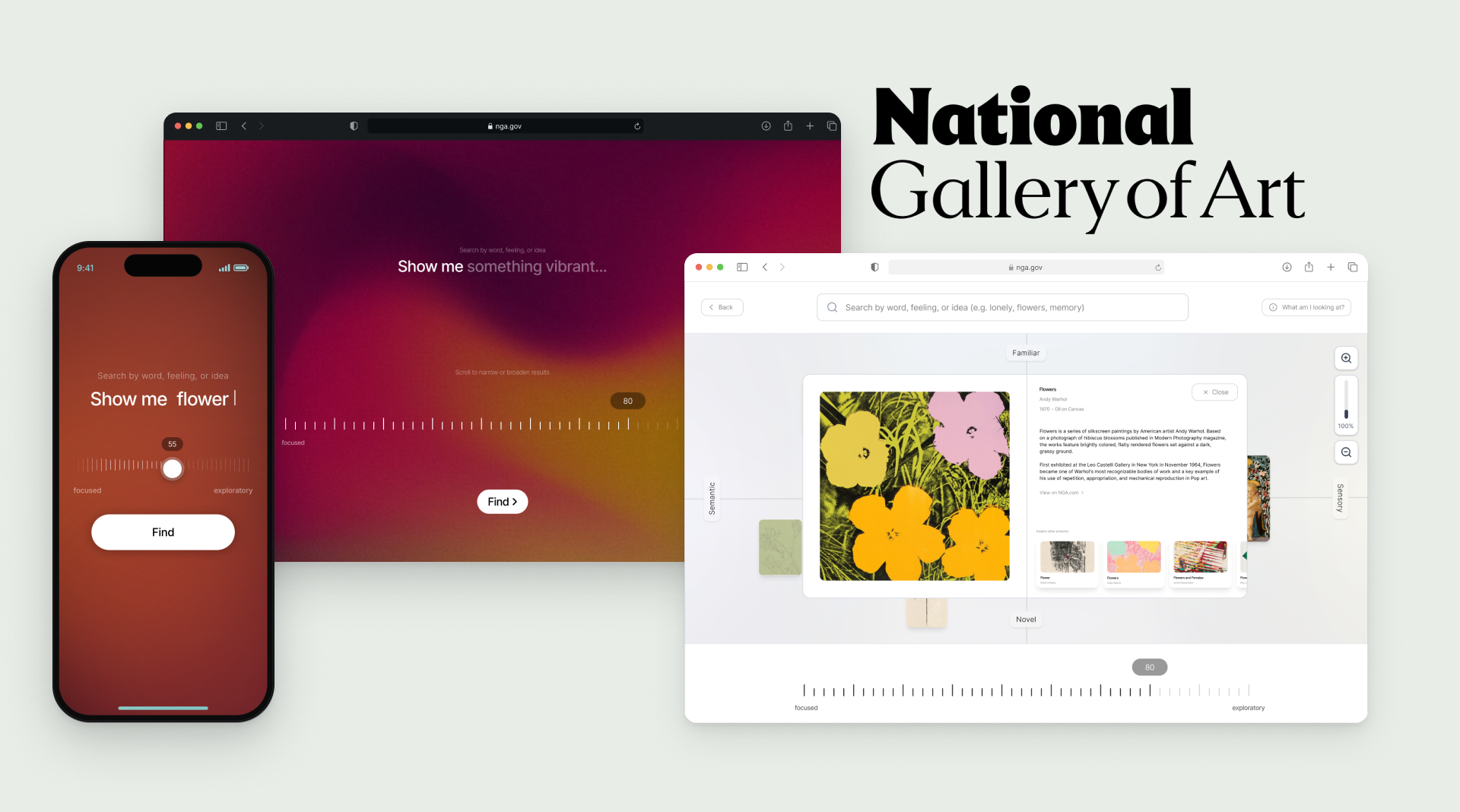
We proposed an exploratory discovery tool that allows users to dynamically adjust the “temperature” of their search results based on the type of experience they want. The system introduces a flexible interaction model where users can control how focused or exploratory the AI-generated results become.
This concept was inspired by the AI parameter “temperature,” which controls the randomness and variability of generated outputs in large language models.
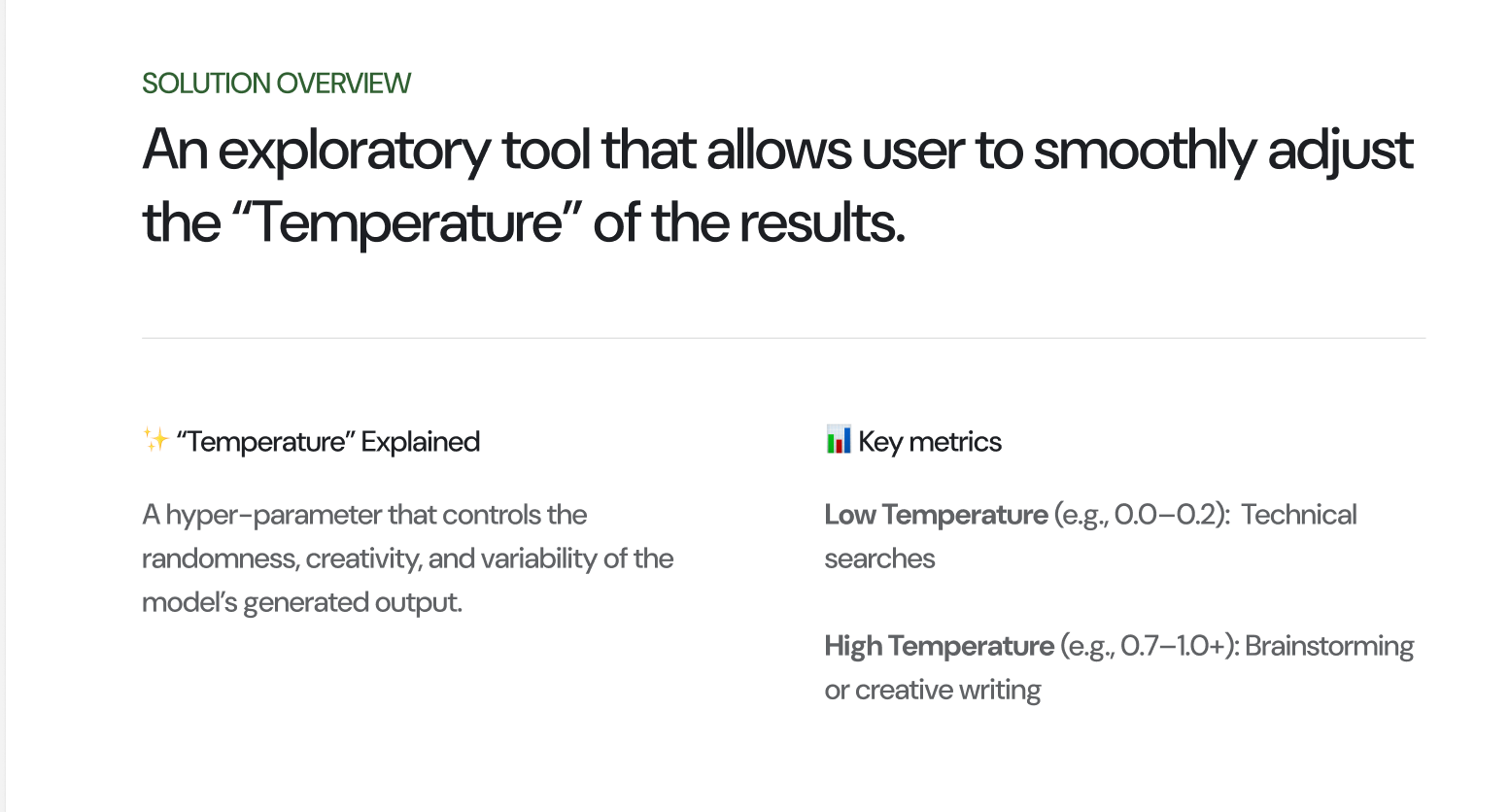
At lower temperatures, results become more structured, direct, and technically relevant, supporting users searching with a clear intent or research goal. At higher temperatures, the system surfaces broader associations, thematic connections, and more unexpected pathways through the collection.

Solution: AI-Powered Discovery
Rather than requiring users to know exact titles, artists, or periods, the experience would allow people to search naturally using emotions, themes, visual references, or conversational prompts.
This approach reframed discovery as exploration rather than retrieval.

Solution: Mapping artworks into quadrants
We created a set of discovery quadrants that mapped varying search behaviors and intentions across the experience. These quadrants helped us think through how users might move between more focused, research-driven exploration and more open-ended discovery depending on their goals.
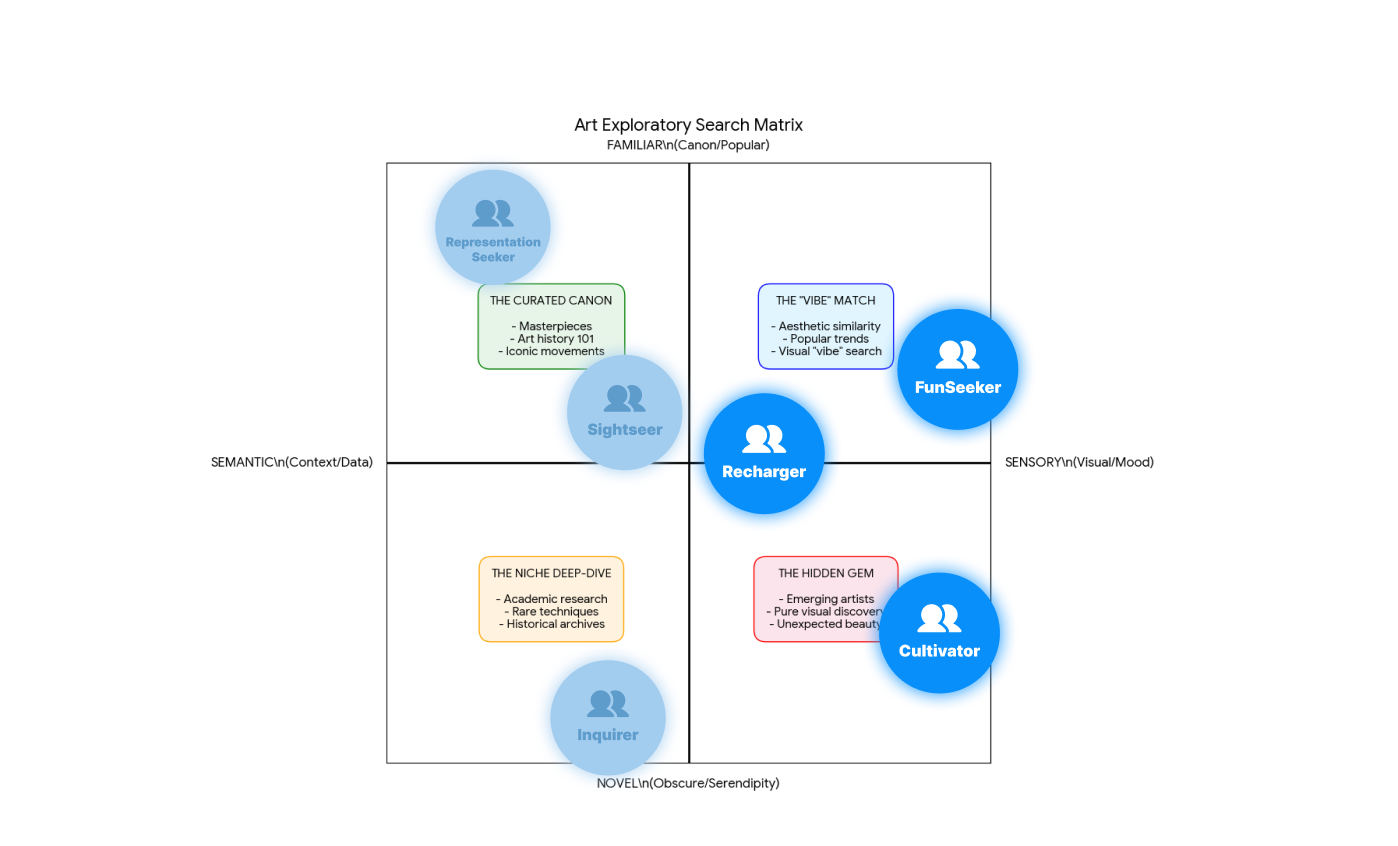
Initial discovery quadrants explored during early concept development.
We also mapped our audience types into these quadrants to identify where each user would naturally fit within the experience. This framework helped us think beyond a single search flow and instead design a system that could support multiple styles of discovery. It also helped guide how the temperature interaction would influence the type of results surfaced throughout the platform.
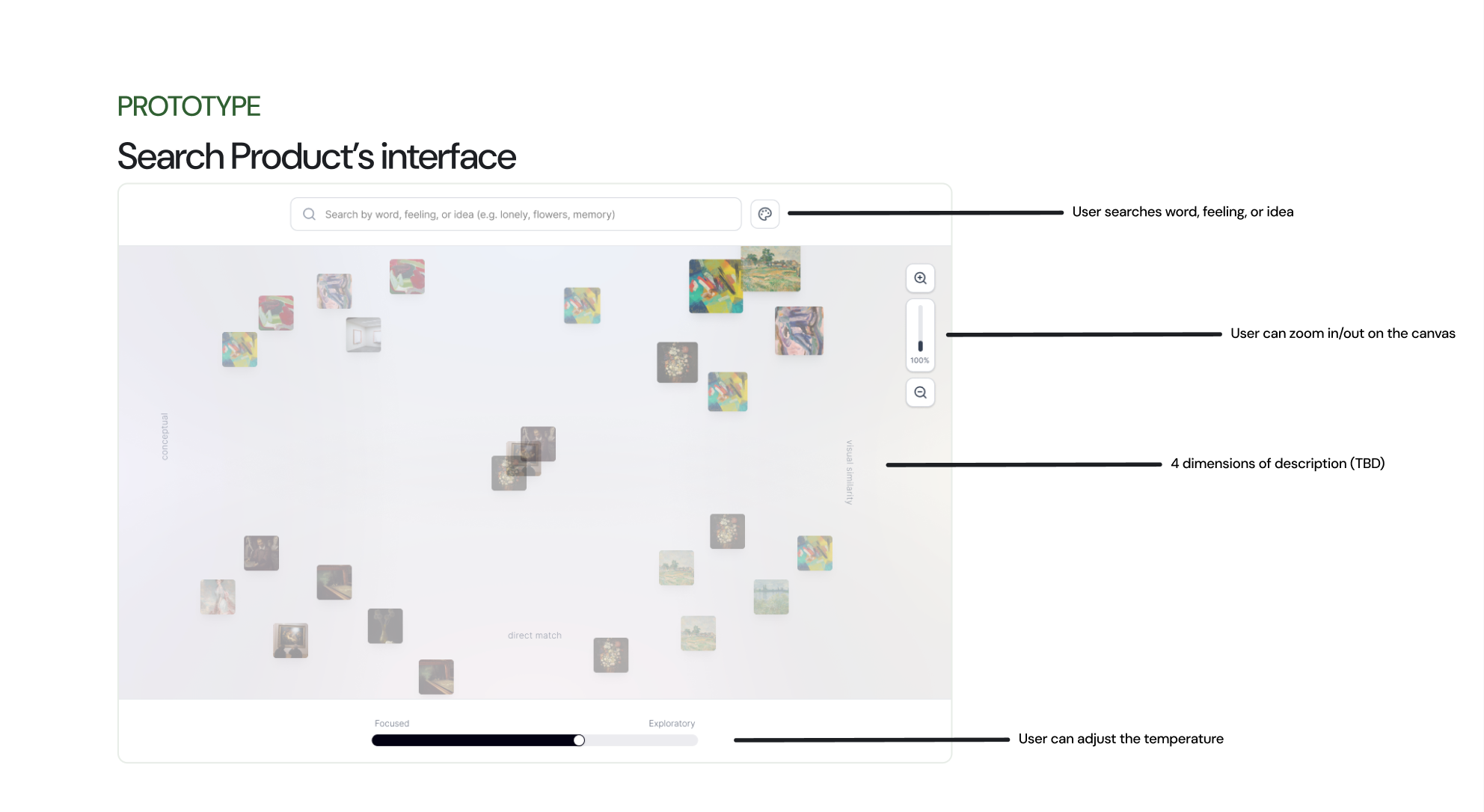
Discovery quadrants implemented within our prototype.
Iteration & Refinement
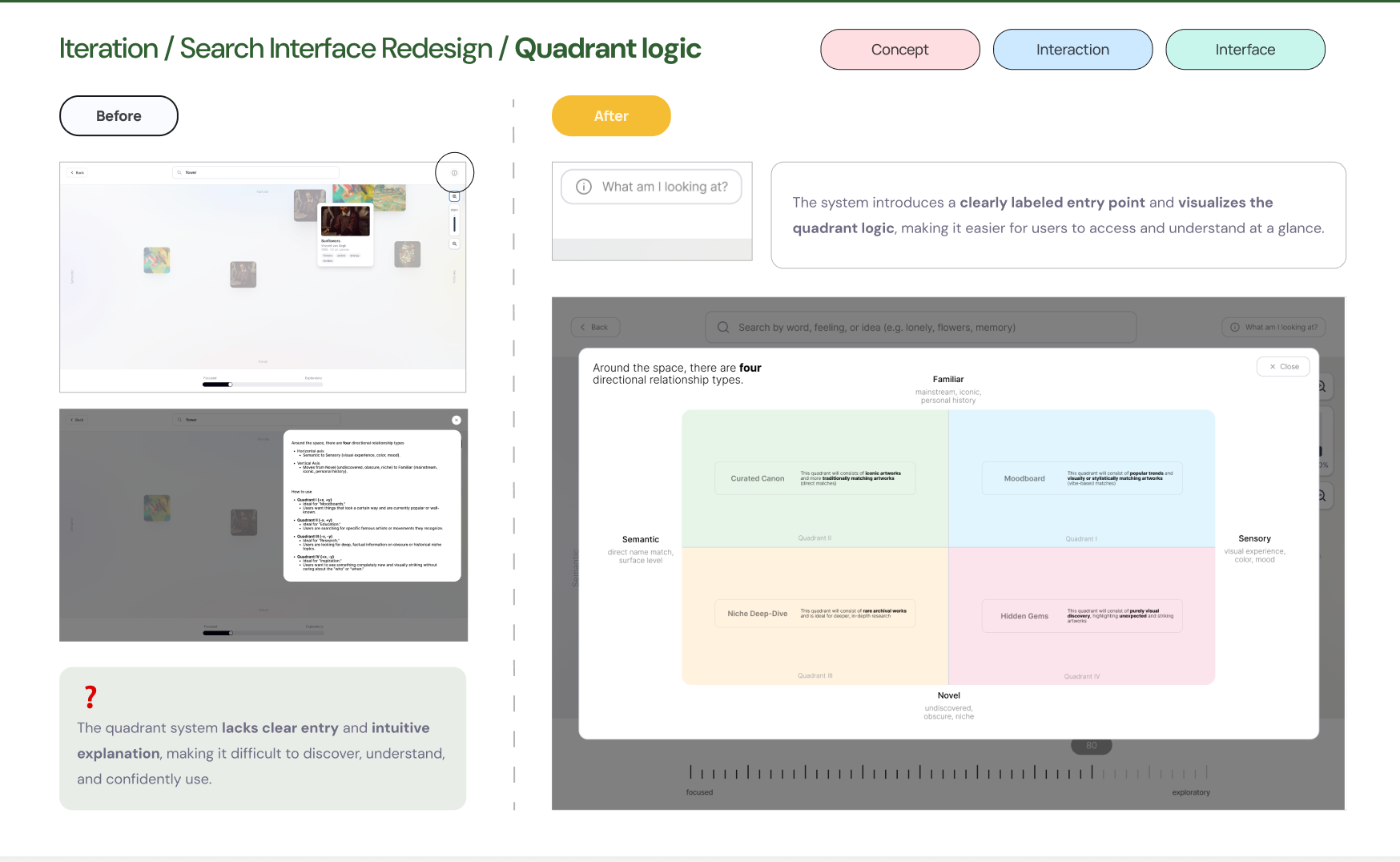
Throughout the prototyping process, we continuously refined the interaction logic to improve clarity and usability.
Key iterations included:
- Simplifying search controls and temperature slider
- Clarifying quadrant relationships
- Strengthening hover and click behaviors
- Improving spatial orientation within the interface
Final Design Walkthrough
- Entering the Search Experience
Users begin by searching through natural language prompts such as words, feelings, ideas, or memories rather than structured museum terminology.
- Spatial Exploration
Rather than presenting results in a traditional list view, artworks exist within a spatial canvas that encourages non-linear exploration. A visible axis system was introduced during iteration to strengthen spatial orientation, alongside zoom controls that allow users to navigate more fluidly throughout the discovery map.
- Hover & Click Interactions
Hover interactions were added to provide quick contextual previews of individual artworks.
Selecting an artwork opens a more detailed artwork card overlay with:
- Artwork details
- Related recommendations
- A link to NGA’s website for advanced artwork details
- Context explaining why the artwork was positioned within that area of the discovery space
Our workflow with AI
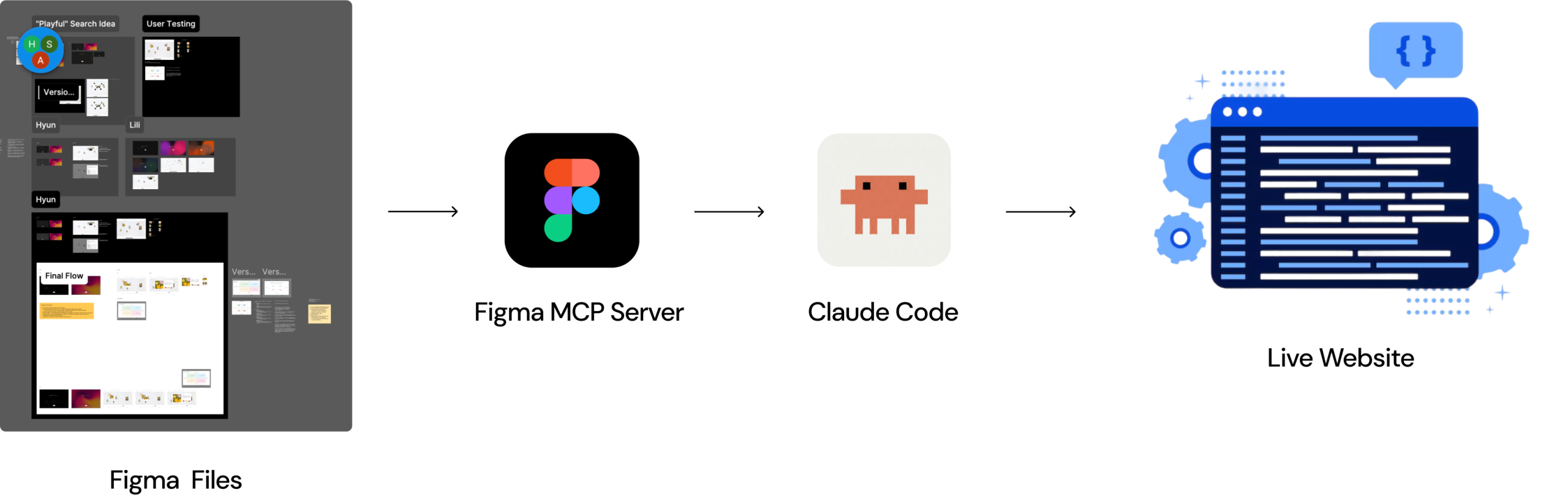
We integrated AI directly into our prototype development. Using the Figma MCP Server, we connected our design files straight to Claude Code, which translated our visual work into a functional working prototype.
Creating a Design System
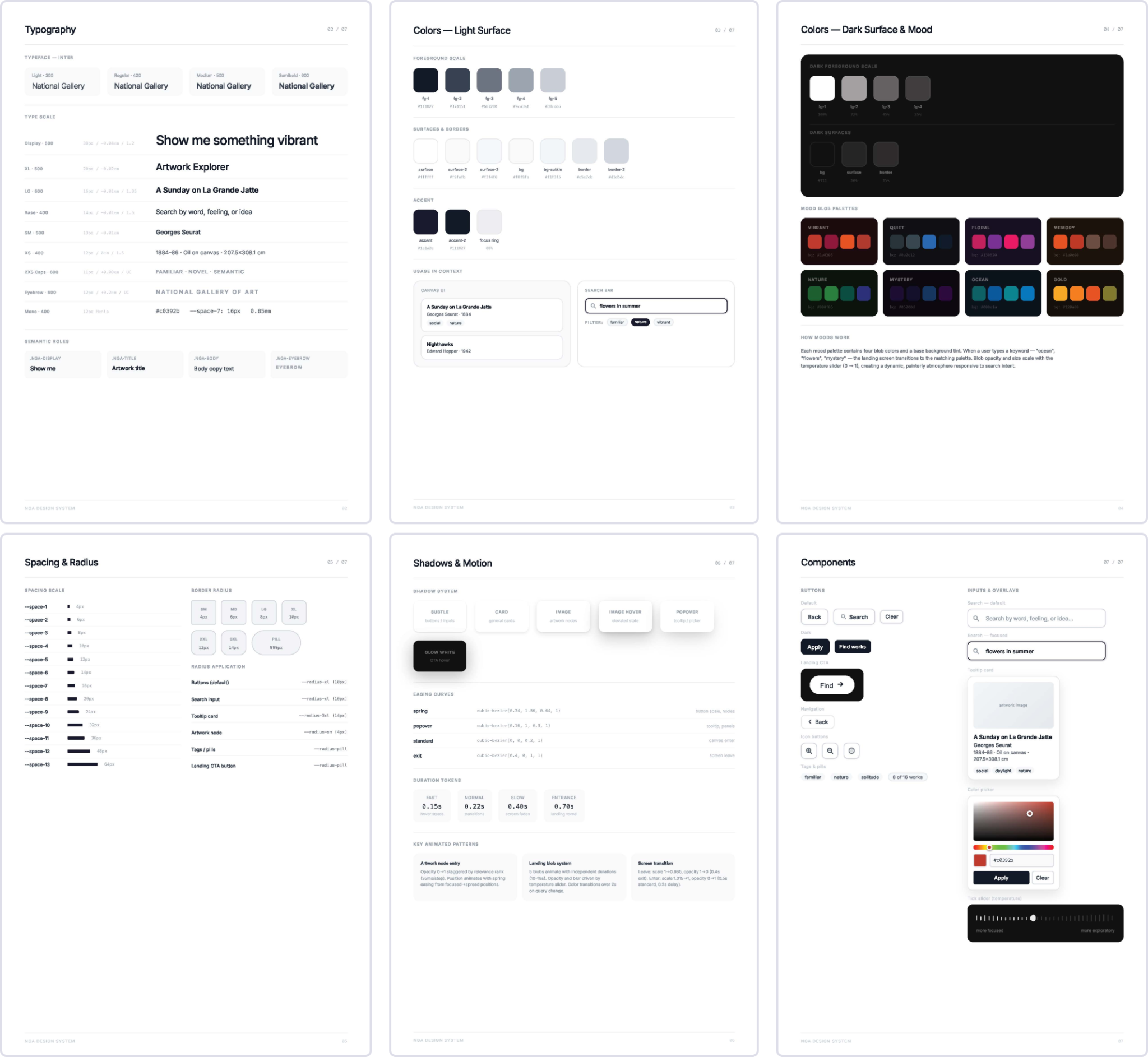
We developed a foundational design system inspired by the NGA’s existing visual identity and digital ecosystem. We emphasized accessibility and flexible visual patterns to support both research-driven and exploratory interactions throughout the platform.
Reflection
This project challenged us to rethink what discovery could look like within the context of the National Gallery of Art’s digital collection.
Through concepts like spatial navigation, discovery quadrants, and temperature-based controls, we explored how emerging technologies could make the NGA’s archives feel more engaging for a wider range of audiences.
The project reinforced that emerging technologies like AI are most impactful when they support human curiosity, exploration, and storytelling.