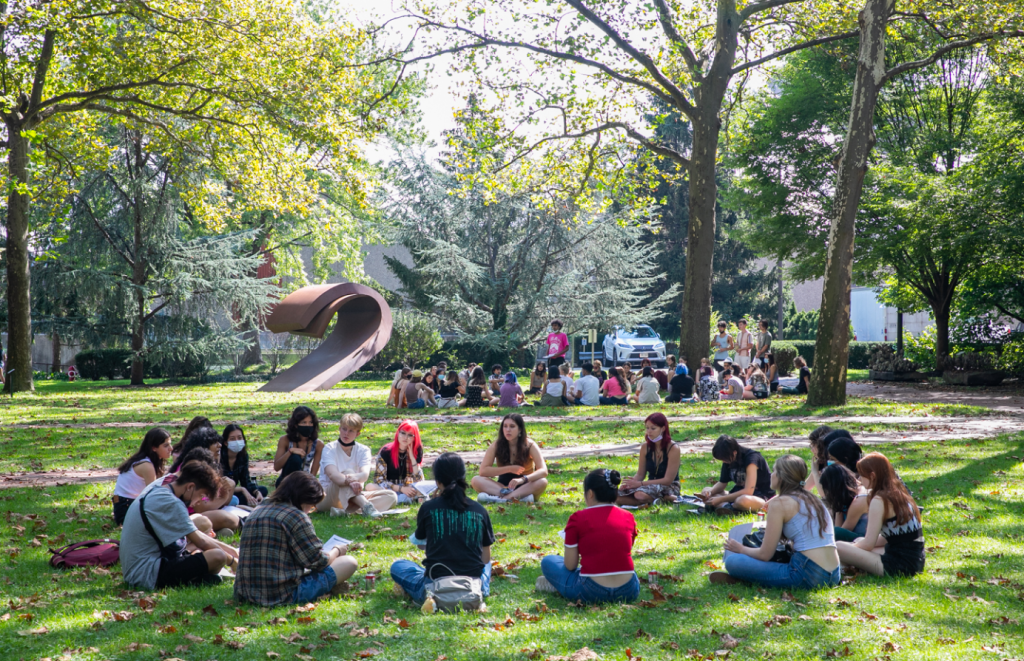
Reimagining the student club lifecycle through service design research and co-design at Pratt Institute
Student organizations are often seen as independent communities run by students. But during our service design research with Pratt Institute’s Office of Student Involvement (OSI), we discovered that much of the club ecosystem quietly depended on invisible labor, informal knowledge sharing, and one central coordinator bridging fragmented systems behind the scenes.
Our team set out to understand how clubs survive, grow, and transition leadership over time, and how service design might help make that ecosystem more resilient.
Timeline: 10 weeks
Team: 3 UX Service Designers & Researchers
My role: UX Service Designer & Researcher
Deliverables/Skills: Service Blueprint, Co-Design Workshop, Ecosystem Loop, Design Futuring, User Interviews
The Problem
Student organizations at Pratt relied heavily on fragmented systems, informal knowledge sharing, and invisible manual coordination to sustain club operations and leadership transitions.
The Solution
We developed service design interventions focused on onboarding, peer support, and workflow coordination to improve the student club experience while reducing administrative burden on OSI staff.
Student Leadership is Temporary, but the System isn’t

Behind every club is a complex ecosystem of apps, platforms, and workarounds
Student organizations at Pratt exist in a constant cycle of transition. Every year, club leaders graduate, institutional knowledge disappears, and new students inherit systems they often do not fully understand yet.
As part of our research, we conducted interviews with three club leaders across graduate and undergraduate organizations to better understand how students navigated onboarding, event planning, and leadership transition in practice. Across these conversations, we noticed students relied heavily on informal workarounds to operate their clubs. While Engage served as the official institutional platform for approvals and record-keeping, many leaders instead depended on Instagram, Google Drive, WhatsApp, email, and peer group chats to sustain their organizations day to day.
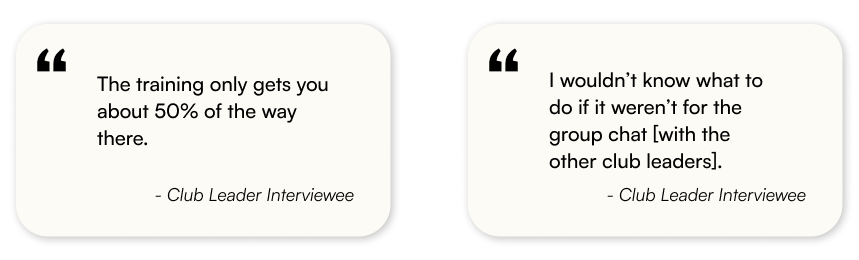
As we synthesized findings across interviews, we realized the issue was not a lack of motivation from student leaders, but navigating a fragmented operational system heavily reliant on peer knowledge and manual coordination. This led us to investigate the administrative side of the ecosystem and better understand how the Office of Student Involvement supported club operations behind the scenes.
Mapping the Hidden Infrastructure Behind Clubs
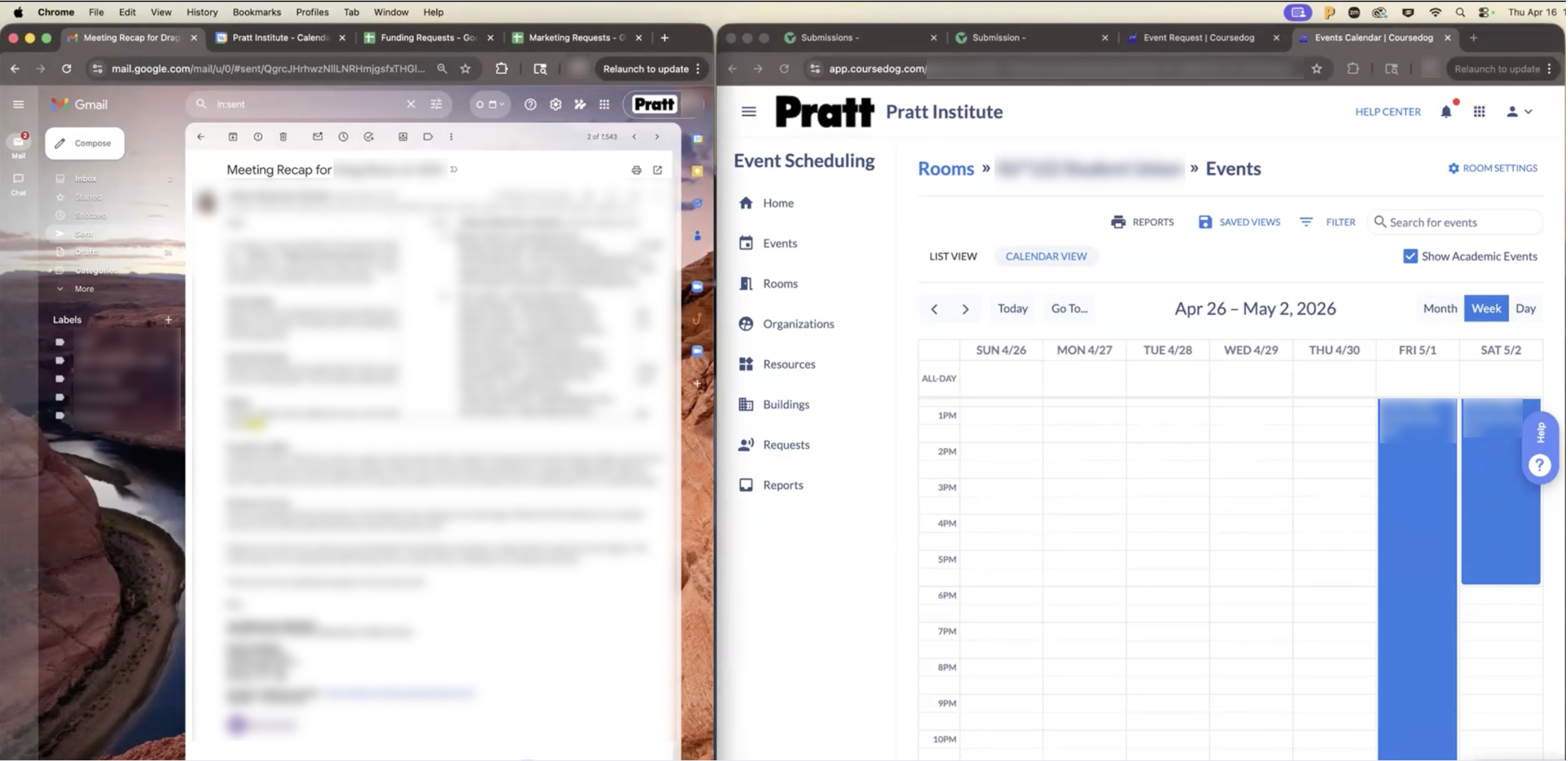
Behind student organization support is a highly manual, multi-platform administrative workflow
As we expanded our research into the administrative side of the ecosystem, we began mapping how information actually moved through the Office of Student Involvement.
What initially appeared to be a decentralized network of student organizations quickly revealed itself to be heavily dependent on manual coordination.
Nearly every request:
- room reservations
- marketing approvals
- printing requests
- budget approvals
- food coordination
flowed through one central coordinator before being routed to other offices and systems.
Across the club lifecycle, many processes converge through a central administrative hub, making invisible coordination essential to keeping the system running.
The Assistant Director of Student Involvement, Jay, operated as the connective tissue between:
- Engage
- CourseDog
- spreadsheets
- SGA
- campus facilities
- printing services
- club leaders
This work often remained invisible to students, despite being essential to keeping club operations moving.
As we mapped the ecosystem further, we realized the system was functioning not because it was fully streamlined, but because people had developed personal workflows and institutional knowledge to bridge gaps between disconnected tools and processes.
This raised an important question for us:
What would happen if the person coordinating these processes suddenly disappeared?
Learning From the People Holding Clubs Together
After our initial interviews and ecosystem mapping, our team wanted to move beyond identifying operational pain points and better understand how club leaders experienced sustaining organizations over time.
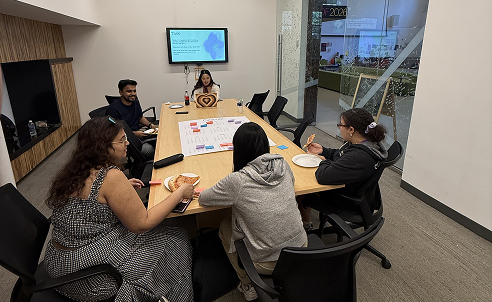
Running the second co-design workshop
To do this, we designed and facilitated two co-design workshops with eight club leaders from six student organizations across Pratt. Rather than treating participants as users to evaluate, we approached them as experts of their own experience and designed activities centered around reflection, storytelling, and peer knowledge sharing.
Building on themes from our earlier interviews, we structured the workshops around two key questions:
- Where do club leaders struggle most throughout the year?
- What knowledge gets passed between generations of student leaders?
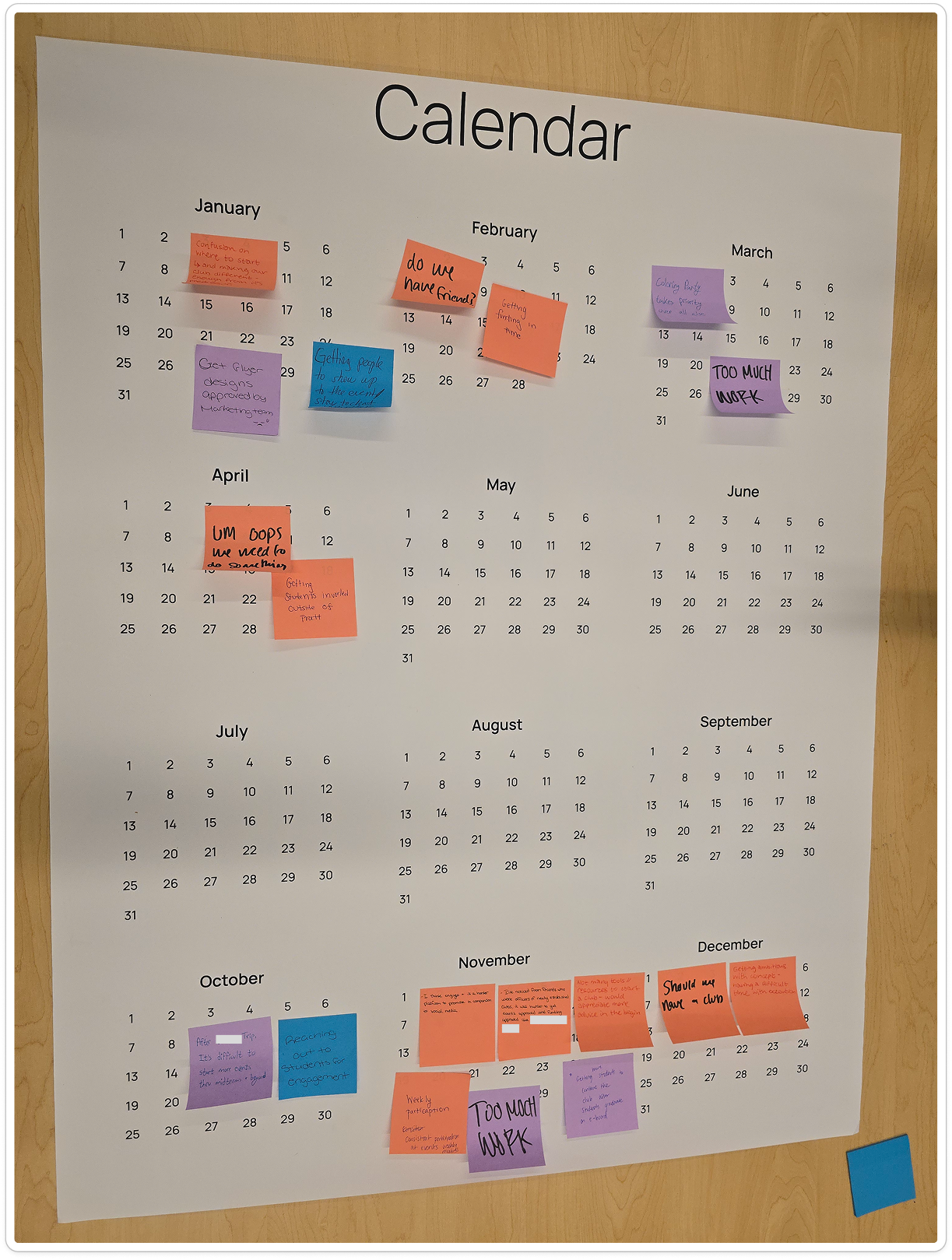
Our calendar activity surfaced when leadership challenges tended to emerge, revealing mid-semester as a recurring pressure point.
To explore the first question, we designed a yearly reflection activity where participants mapped stressful moments, confusing procedures, operational breakdowns, and leadership challenges onto a shared academic calendar. This helped us identify not only what challenges occurred, but when they tended to emerge. We found that many struggles clustered in the middle of each semester, when club responsibilities intensified and students balanced leadership roles alongside coursework.
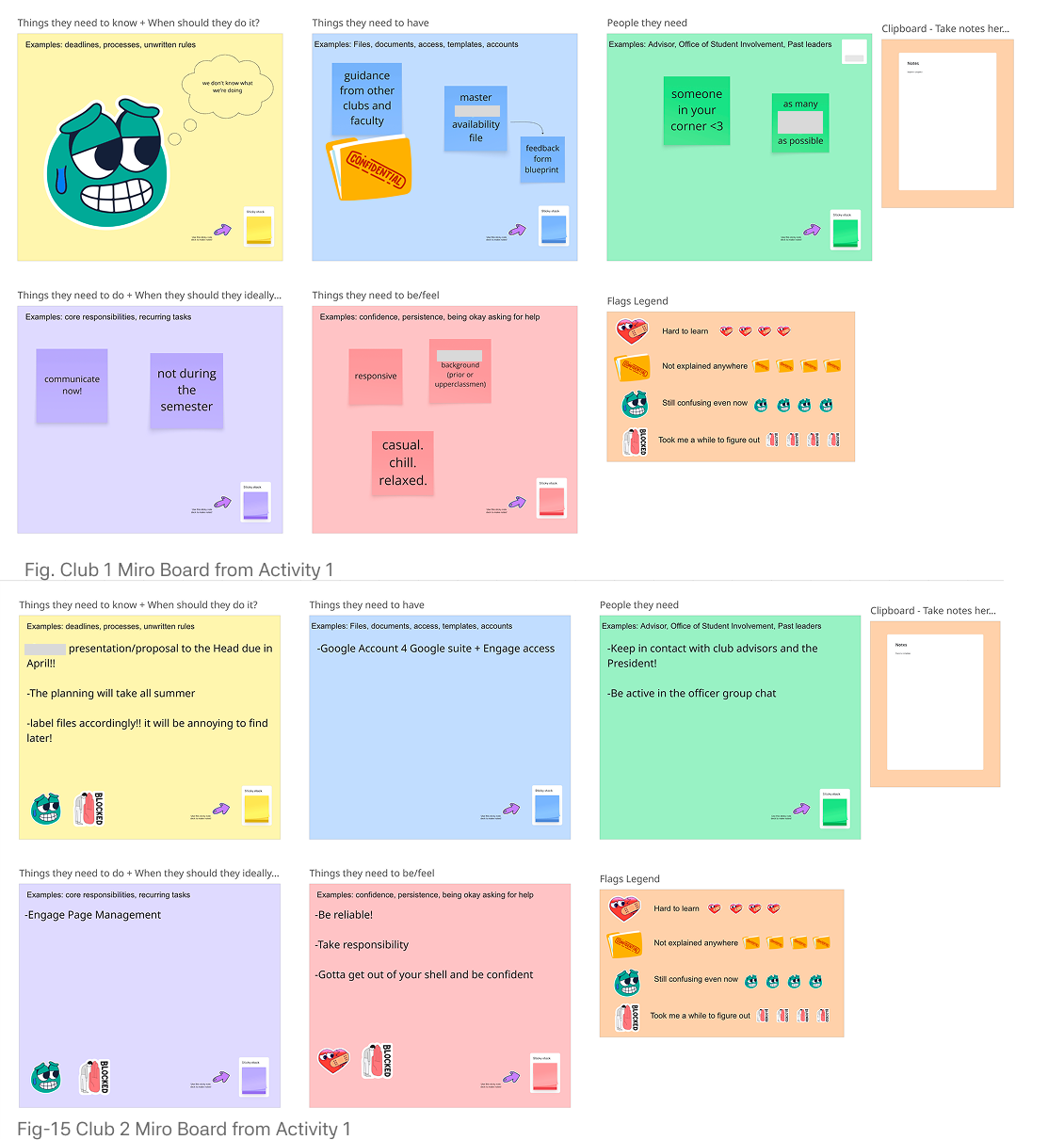
Leadership handoff depends on far more than formal documentation, including relationships, emotional labor, and unwritten workarounds.
To explore leadership transition, we created a “Build Your Successor” activity that asked leaders to reflect on the knowledge, relationships, emotional skills, and undocumented workarounds future leaders would need to inherit. Participants then exchanged boards and role-played navigating club operations using another leader’s knowledge system.
In facilitating the workshops and synthesizing findings across activities, we repeatedly observed participants relying on peer discussion and shared experiences to make sense of club operations. This reinforced one of our emerging insights: much of the knowledge required to sustain a club lived within informal support networks rather than formal documentation alone.
What We Learned About Student Leadership Through Co-Designing
- Leadership Transition is Often Improvised
Many organizations lacked structured succession systems, forcing leaders to invent onboarding processes as they transitioned out of their roles.
- Administrative Systems Support Operations, Not Community
While Engage effectively handled approvals and procedural tasks, students relied on external tools and social platforms to actually sustain engagement and communication.
- Challenges Peak Mid-Semester
Many club leaders faced their greatest challenges during the middle of each semester, when club responsibilities intensified alongside academic workloads.
- Emotional Readiness Matters
Club leaders repeatedly emphasized confidence, reliability, adaptability, and emotional resilience as essential leadership qualities rarely addressed in formal onboarding materials.
- Invisible Labor Sustains the Ecosystem
Much of the operational success of student organizations depended on manual coordination, personal knowledge systems, and informal support structures operating behind the scenes.
From Reactive Support to Sustainable Systems
After synthesizing our findings, we developed several interventions aimed at supporting both student leaders and the Office of Student Involvement.
Rather than focusing solely on procedural efficiency, our interventions considered how institutional systems could better support people through more accessible and human-centered design. These opportunities were intentionally organized from lower-lift improvements to more ambitious systemic interventions.
Humanizing the RSO Handbook
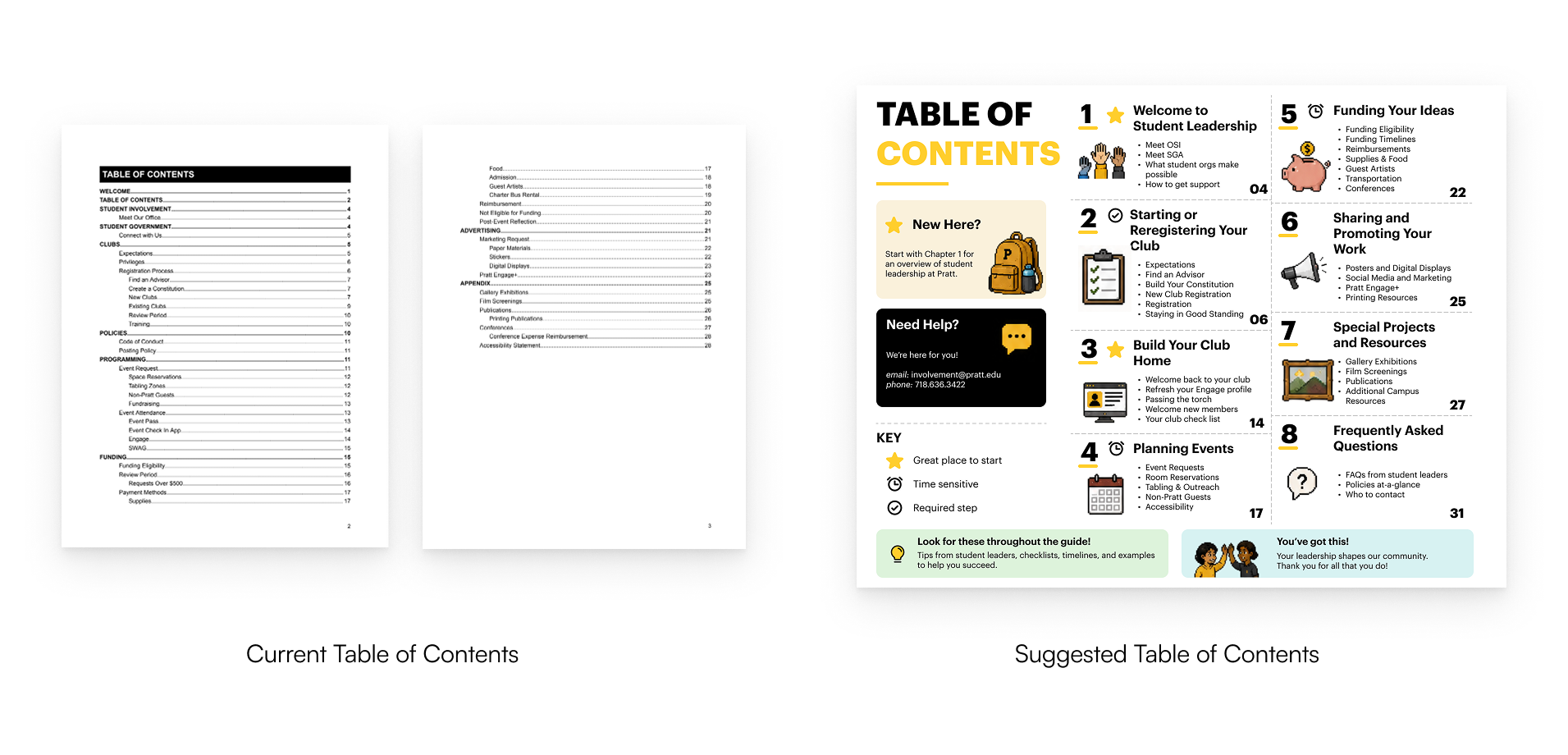
A comparison of the current RSO Handbook’s Table of Contents and our mock up of the Suggested Table of Contents
While the RSO handbook contained critical operational information, many students described it as difficult to navigate in practice.
We proposed redesigning the handbook into a more approachable and actionable guide through:
- conversational language
- visual breakdowns
- checklists
- process flows
- scenario-based examples
Inspired by Pratt’s Office of International Affairs Arrival Guide, this intervention aimed to make institutional knowledge more digestible and self-guided. To explore this opportunity, we created a mockup of the front cover, table of contents, and Chapter 3 of the reimagined RSO handbook, informed by Jay’s insights on the questions she most frequently receives, as well as themes surfaced during our co-design workshops.
Creating Human Support Systems
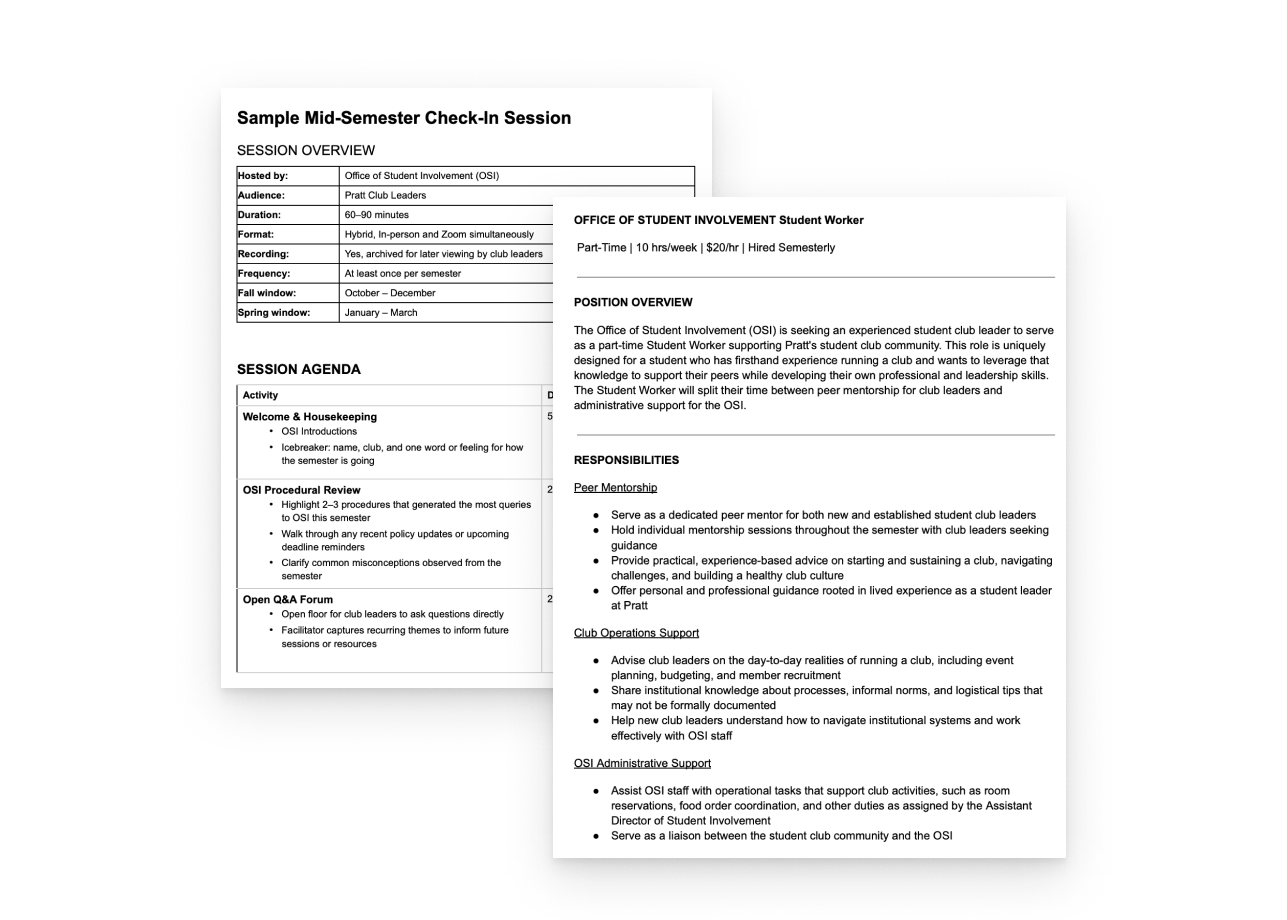
Sample mock ups of a mid-semester check-in session and OSI Student Worker Job Posting
Our research revealed that students learned most effectively through direct interaction with other people.
To support this, we proposed:
- mid-semester check-ins
- peer discussion spaces
- live Q&A sessions
- a student worker role dedicated to club support and mentorship
These interventions aimed to provide more accessible systems and human support at the moments when club leaders experienced the greatest stress during the semester.
Strengthening Student Org Support Infrastructure
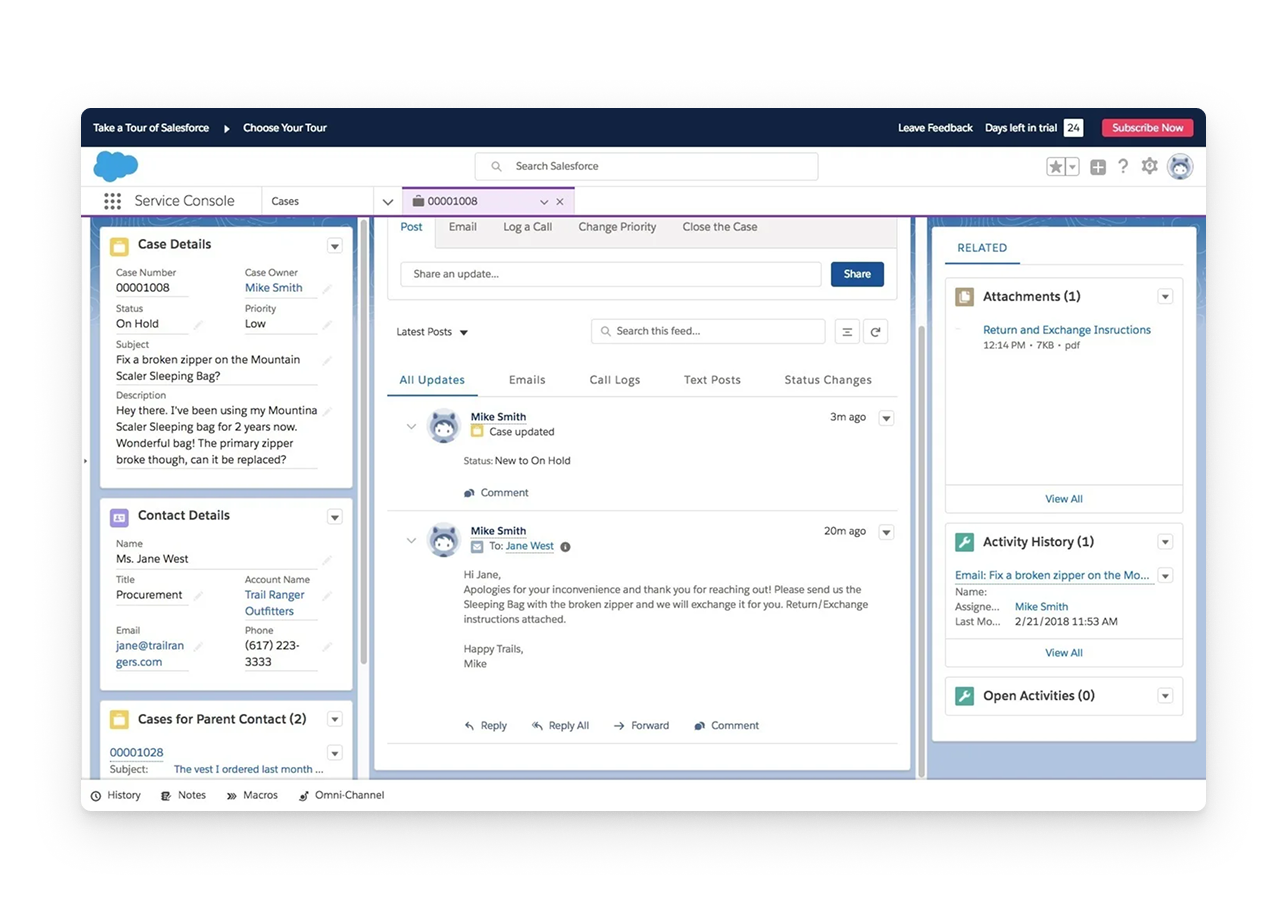
Visualizing a centralized administrative support hub for student organization workflows
As we mapped administrative workflows, we identified significant operational dependency on manual communication and tracking systems.
We proposed implementing Salesforce as a case management platform to:
- centralize communication
- improve workflow visibility
- reduce manual oversight
- support institutional knowledge transfer
- allow multiple staff members to manage requests collaboratively
Rather than replacing human support, this intervention aimed to strengthen operational resilience across the ecosystem. Since Salesforce is already used by campus staff, this intervention builds on existing institutional infrastructure rather than introducing an entirely new system.
Speculative Design: What Could Student Organizations Look Like in the Future?
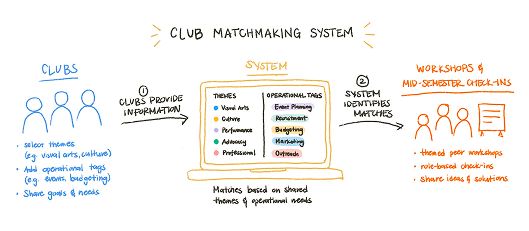
A speculative system concept that reimagines clubs as interconnected support networks rather than isolated organizations
While synthesizing findings from interviews and co-design workshops, I became particularly interested in how often clubs relied on informal peer relationships and chance encounters to share knowledge, resources, and support. This led us to explore the idea of a speculative “Club Matchmaking System” that proactively connects organizations based on:
- shared goals
- overlapping audiences
- mentorship opportunities
- operational strengths
- collaborative event potential
Rather than functioning purely as administrative entities, this future system imagines clubs as interconnected networks capable of supporting one another through shared knowledge and resources.
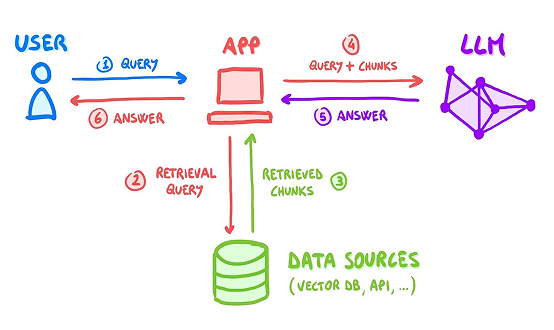
Concept exploring institutional AI support for student leaders navigating complex workflows
We also explored how conversational AI systems grounded in Pratt-specific institutional knowledge might support student leaders through scenario-based guidance and contextual answers. In addition, we considered how allowing OSI to independently approve certain budgets could reduce delays and make the funding process easier for student organizations to navigate.
These speculative directions were less about predicting the future and more about exploring how changing organizational systems, technologies, and student behaviors might reshape the way student communities operate over time.
Presenting a More Connected Future for Clubs
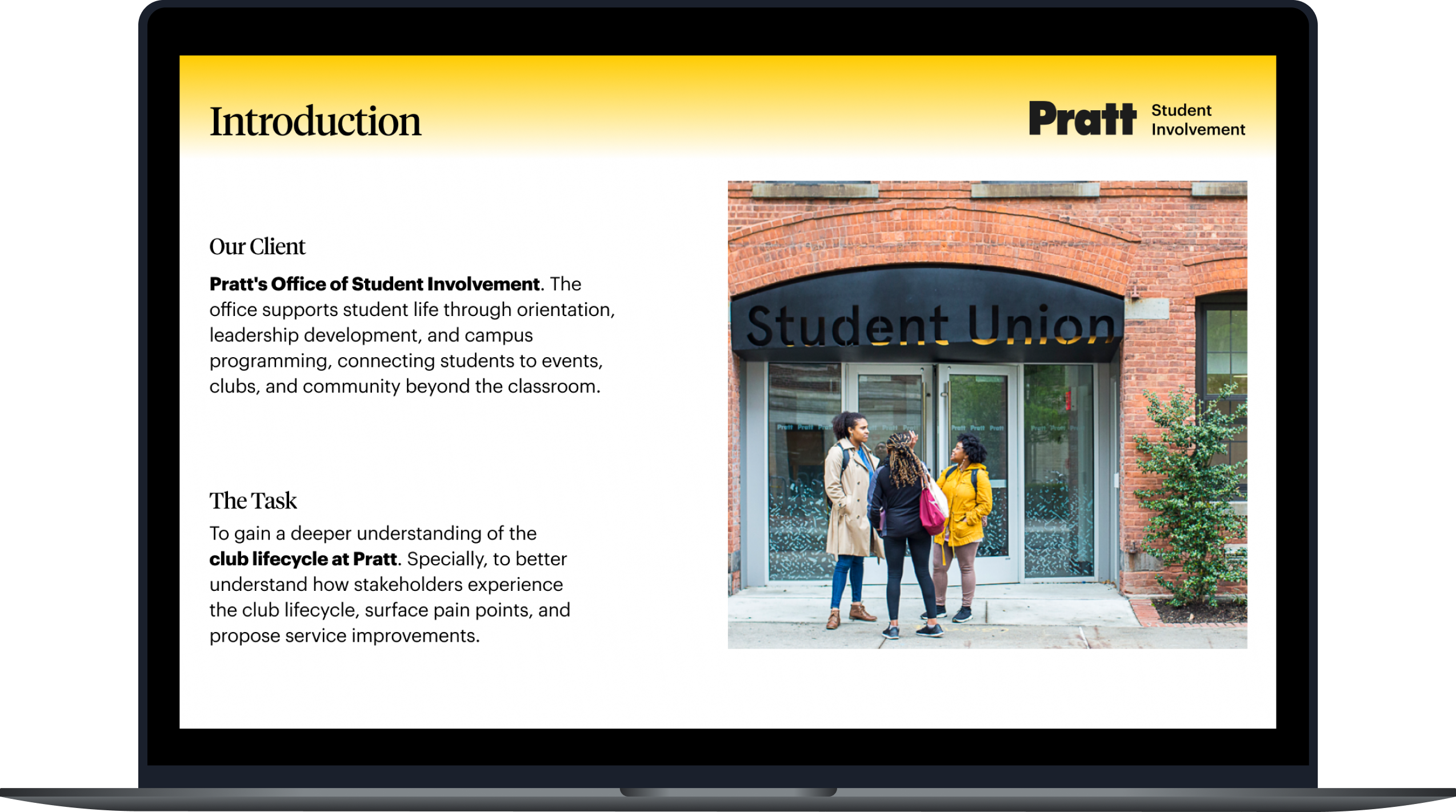
Following our research and synthesis process, our team presented these interventions and future considerations to stakeholders from Pratt’s Office of Student Involvement.
Reflection
This project fundamentally changed how I think about institutions, leadership, and design itself.
I entered the project viewing student organizations primarily as social communities. Through our research, I began to see them instead as complex ecosystems held together by invisible labor, informal mentorship, and ongoing acts of coordination and care.
This experience pushed me beyond thinking about design purely through interfaces and into a more systems-oriented mindset, allowing me to imagine a wider range of interventions. Through interviews, service blueprinting, ecosystem mapping, and co-design workshops, I developed a deeper appreciation for how service design reveals the hidden structures, dependencies, and relationships that shape everyday institutional experiences.
Most importantly, I learned that many organizational challenges are not simply procedural. They are human challenges rooted in communication, trust, continuity, and care.