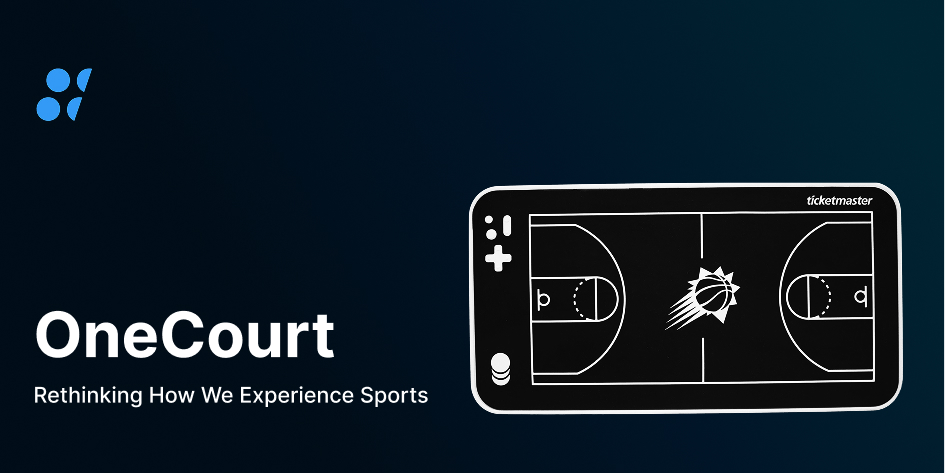
OneCourt is a touch-sensitive display device that enables blind or low-vision sports fans to experience live sports through touch (OneCourt, n.d.). The prototype uses the live data from the game to produce a physical representation of the field so users can feel the movement and positioning of players and the ball at their fingertips.
Rethinking the Live Sports Experience.
For many fans, the excitement of watching a live game is seeing each play happen visually. What if you could actually feel the sports in motion through your sense of touch?
Sports are more than entertainment. They are shared experiences that bring people together every season. OneCourt offers an alternative by translating aspects of that visual experience into tactile information.
What does OneCourt actually do?
OneCourt combines a physical playing surface with real-time sports data. The surface represents the playing field, and haptic feedback gives the sensation of players and the ball moving. Together, these features extend information that is normally communicated visually into something users can explore with touch:
- Physical field of play
- Real-Time Touch Feedback
Feature 1: Bringing Touch to Life in Live Sport.
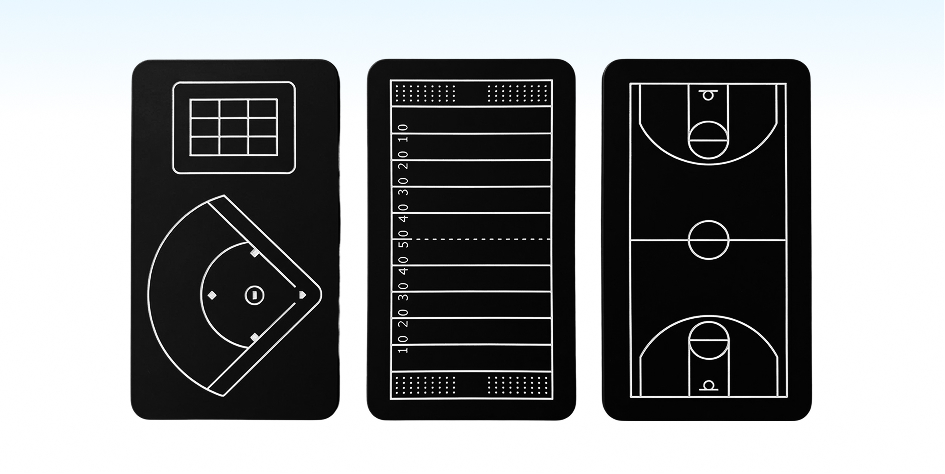
OneCourt translates live game data into a physical representation of the playing field. Users feel information on the tactile surface, rather than looking at the court to see where players and the ball are. The surface lends itself to multiple sports, from basketball to baseball, soccer, American football and more, so the experience can be customised for different types of fans.
This ties in with the social model of disability, which, according to DDSG.org (n.d.), focuses on barriers created by the surrounding environment rather than seeing the person as the problem. Traditional sports experiences are typically based on visual information, which can be a barrier for people who are blind or have low vision to follow what’s happening.
OneCourt removes the barrier instead of asking users to adapt to a visually focused system. It changes the way information is presented, rather than the person’s vision being the issue.
Feature 2: Real-Time Haptic Feedback
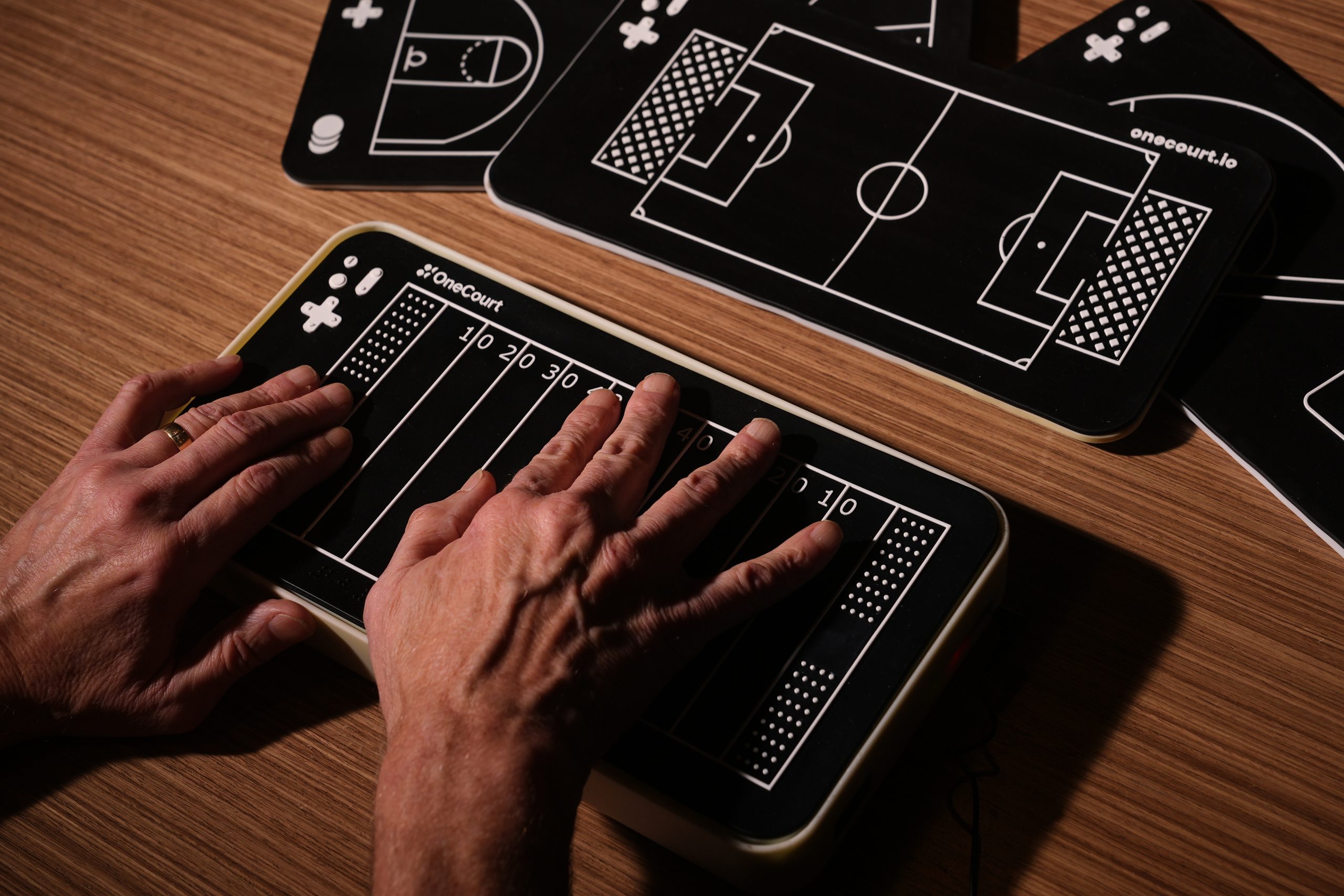
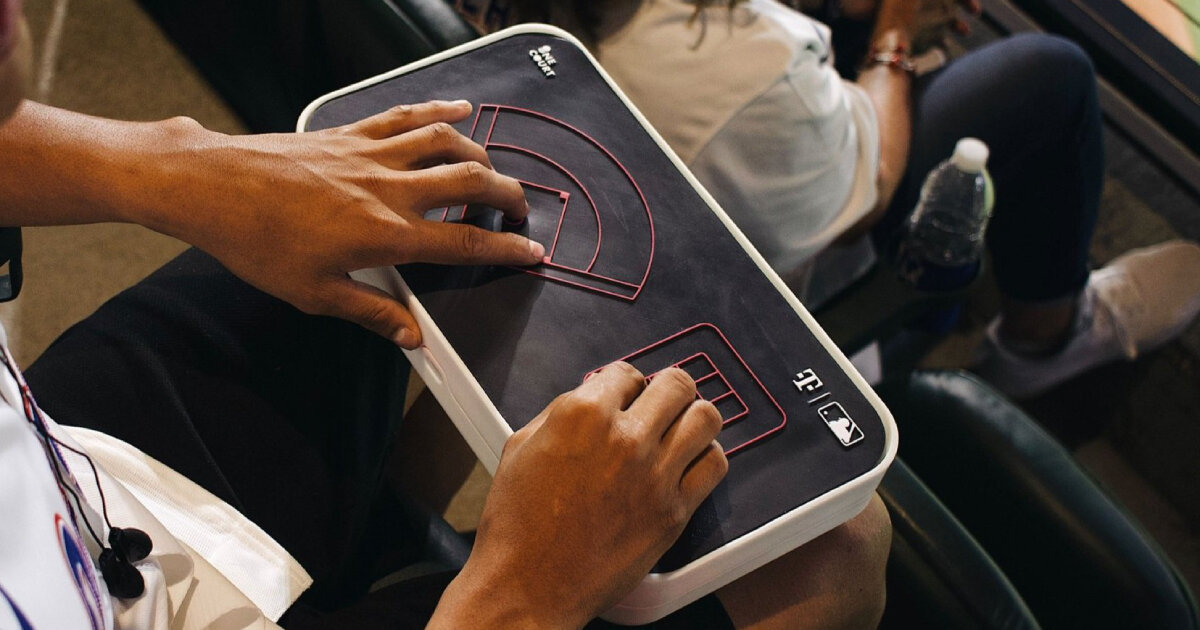
Another important characteristic of OneCourt is the use of haptic feedback to transmit via vibrations the changes in the movement of players and the ball (Srodemeyer, 2025). These signals allow users to follow the action as it happens.
This feature is related to the empowering model of disability, which emphasizes more independence and control (World, 2010). Instead of having someone else describe the actions to them, the users can play the game and interpret its movement themselves. OneCourt thus is not only providing another way to receive information. Instead, it gives players more control over how they want to experience the game.
So, is it actually accessible in practice?
OneCourt’s accessibility is not only dependent on the device used. The appeal is that it provides something closer to the experience of watching a live game versus just scores or statistics.
But accessibility can also be a function of where and how the product is offered. OneCourt is built on live sports data, connectivity, and partnerships with sports organisations, which begs the question:
How can it be made available at different venues and to different audiences?
Regardless, accessible experience should not only be viewed as the lens of the interface but also as how real it is for people to access it and make use of it (Joyce, 2026).
Conclusion:
OneCourt shows that accessibility is more than availability of information. It changes the nature of a live game experience, upending the notion that sports fans are primarily visual. OneCourt also highlights two sides of accessible design: removing barriers in the environment and giving users greater control over how they experience the game, through the lens of the Social and Empowering models.
References:
- Joyce, E. (2026, September 7). OneCourt launching at-home product, targeting December rollout. Sports Business Journal. https://www.sportsbusinessjournal.com/Articles/2026/04/27/onecourt-launching-at-home-product-targeting-december-rollout/
- OneCourt. (n.d.). OneCourt. Retrieved September 6, 2026, from https://www.onecourt.io
- Social Model of Disability—Taxi Driver Training Pack—Democracy Disability and Society Group. (n.d.). Retrieved September 6, 2026, from http://www.ddsg.org.uk/taxi/social-model.html
- Srodemeyer. (2025, January 14). OneCourt: Revolutionizing accessibility in live sports. Microsoft Accessibility Blog. https://blogs.microsoft.com/accessibility/onecourt-revolutionizing-accessibility-in-live-sports/
- World, D. (2010, September 10). Models of Disability: Types, Frameworks and Meanings. https://www.disabled-world.com/definitions/disability-models.php