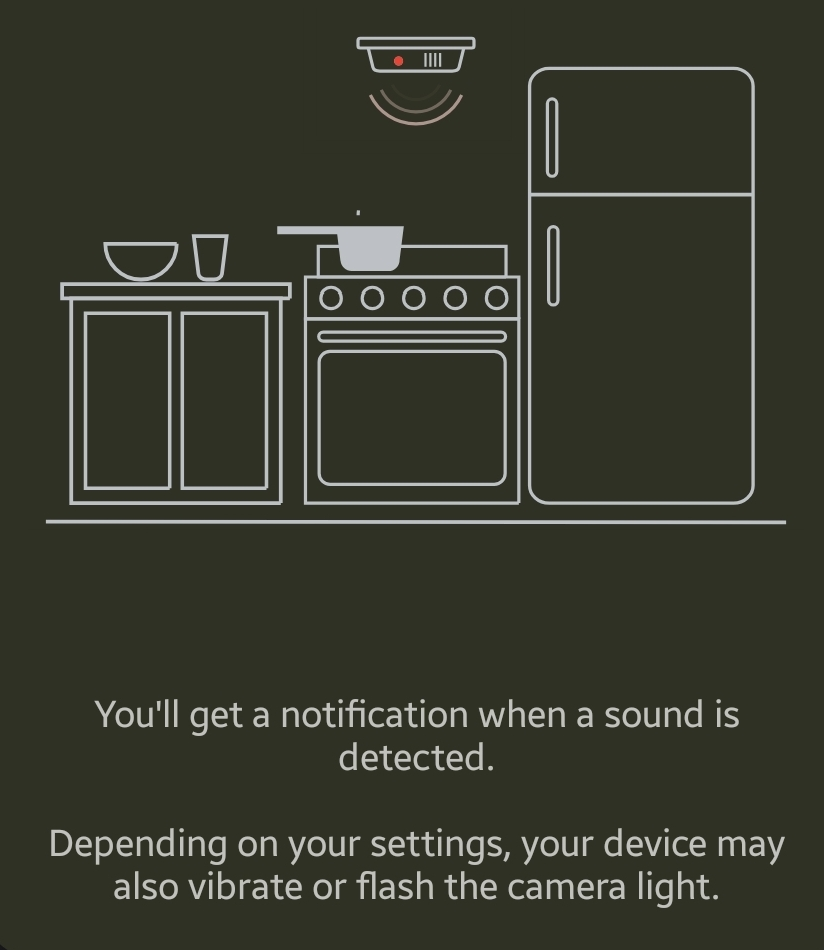
Sound Notifications is an accessibility feature for Android phones designed to improve environmental sound awareness for individuals who are Deaf or Hard of Hearing, in order to make important household sounds more accessible. Through the phone’s notifications, camera flash, or vibration motor, users are alerted whenever a particular type of sound is detected by the microphone.
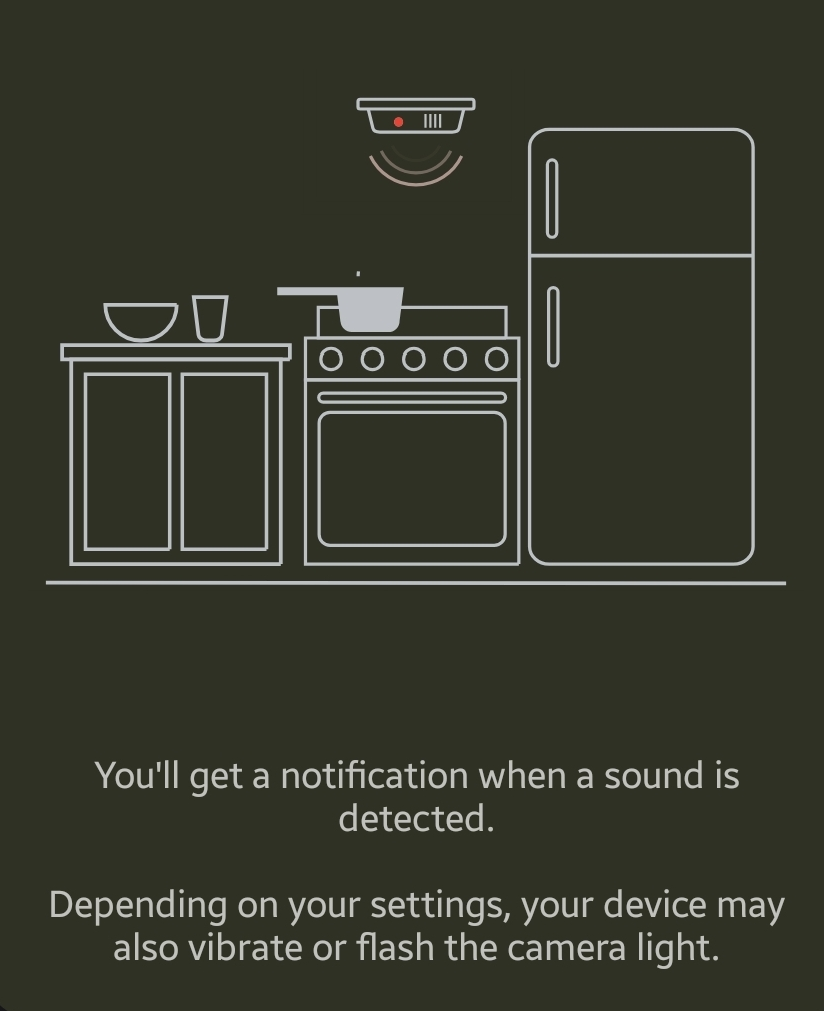
Users of the Sound Notifications feature have highly granular controls over what it listens for, how it alerts them, and whether or not they’d like the feature to transcribe words spoken aloud after sounds are detected.
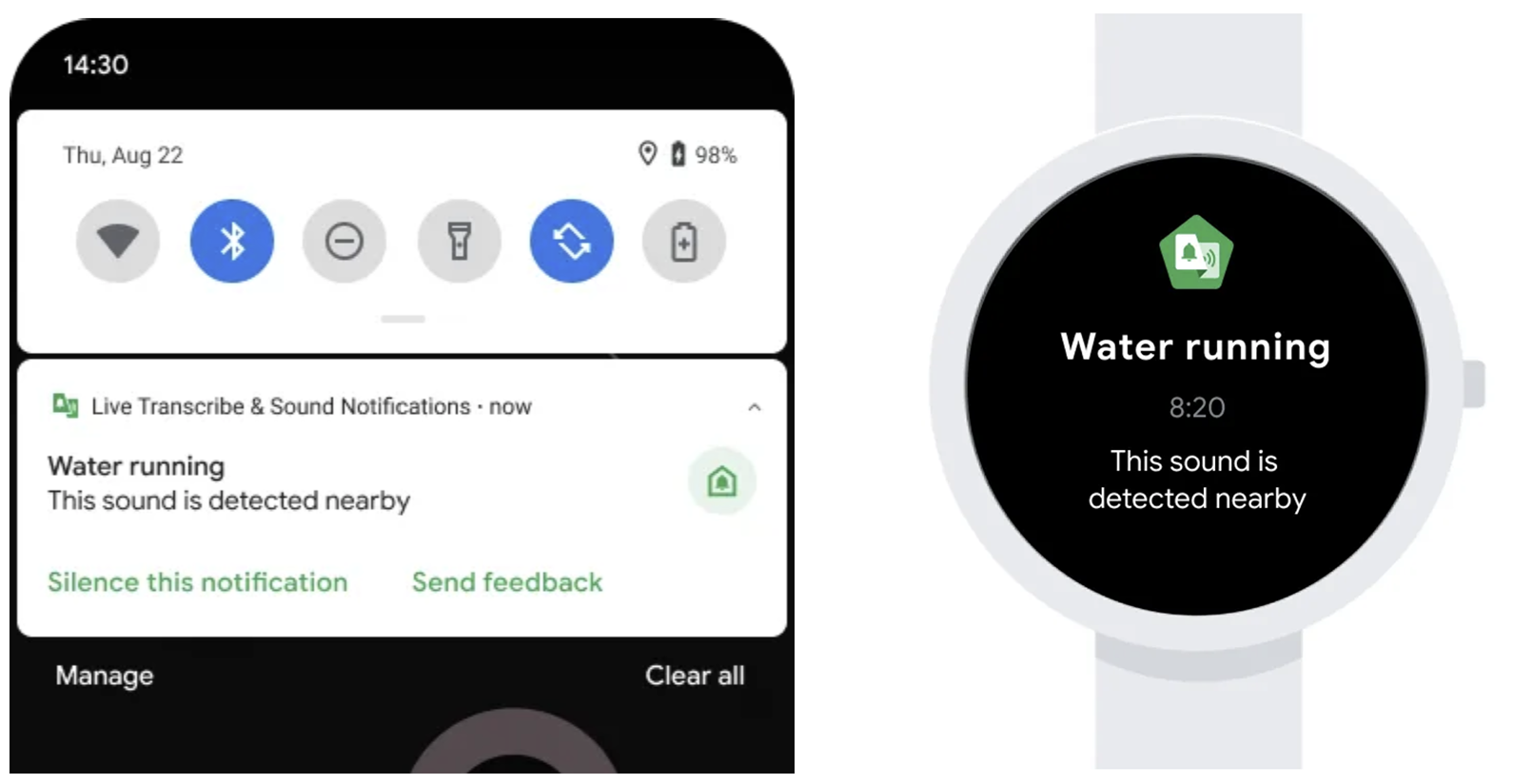
The list of sounds that can be detected include:
- Smoke and fire alarms
- Sirens (like police cars)
- Baby sounds (like crying)
- Dog barking
- Knocking
- Doorbell ringing
- Appliance beeping
- Landline phone ringing
- Water running
Additional custom sounds can be recorded to listen for, such as appliances that don’t beep, but rather play a melody upon completing their tasks. This alone indicates that the designers of this function consider the social model of disability; which states that society creates disabling conditions rather than the individual’s unique medical situation. Rather than conforming to a particular type of sound (e.g. doorbell chimes vs. door buzzers), the user is given the agency to decide what to listen for and prioritize.
Recording and audio processing happens locally on the user’s device, meaning that the data is never uploaded, to allay privacy concerns. This requires a one-time download of training data for your device to compare against while it records continuously.
Household assistive technologies for individuals who are Deaf or Hard of Hearing have existed for decades. These include alert systems that flash or strobe lights, shake beds, or play low tones the user can hear or feel. Sound Notifications make use of a phone’s or smartwatch’s integrated hardware to replicate these alerts. By bringing this type of alerting technology to a device most people already have, it’s made accessible to a much greater number of potential users, at no cost to them.
Additionally, for users who don’t have a permanent hearing disability, the functionality is still very usable, as it can help maintain awareness during moments of situational hearing loss, such as when wearing headphones or earplugs, or when you’re asleep.
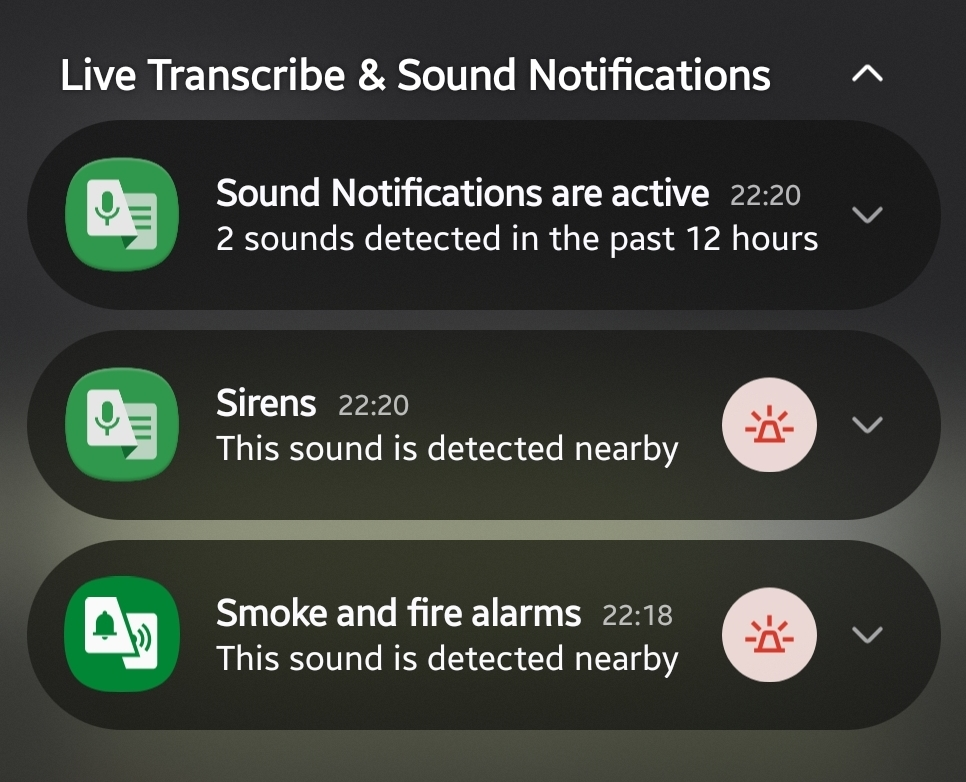
Sounds detected are displayed on a timeline, in addition to the toast or modal notification that pops up in realtime.
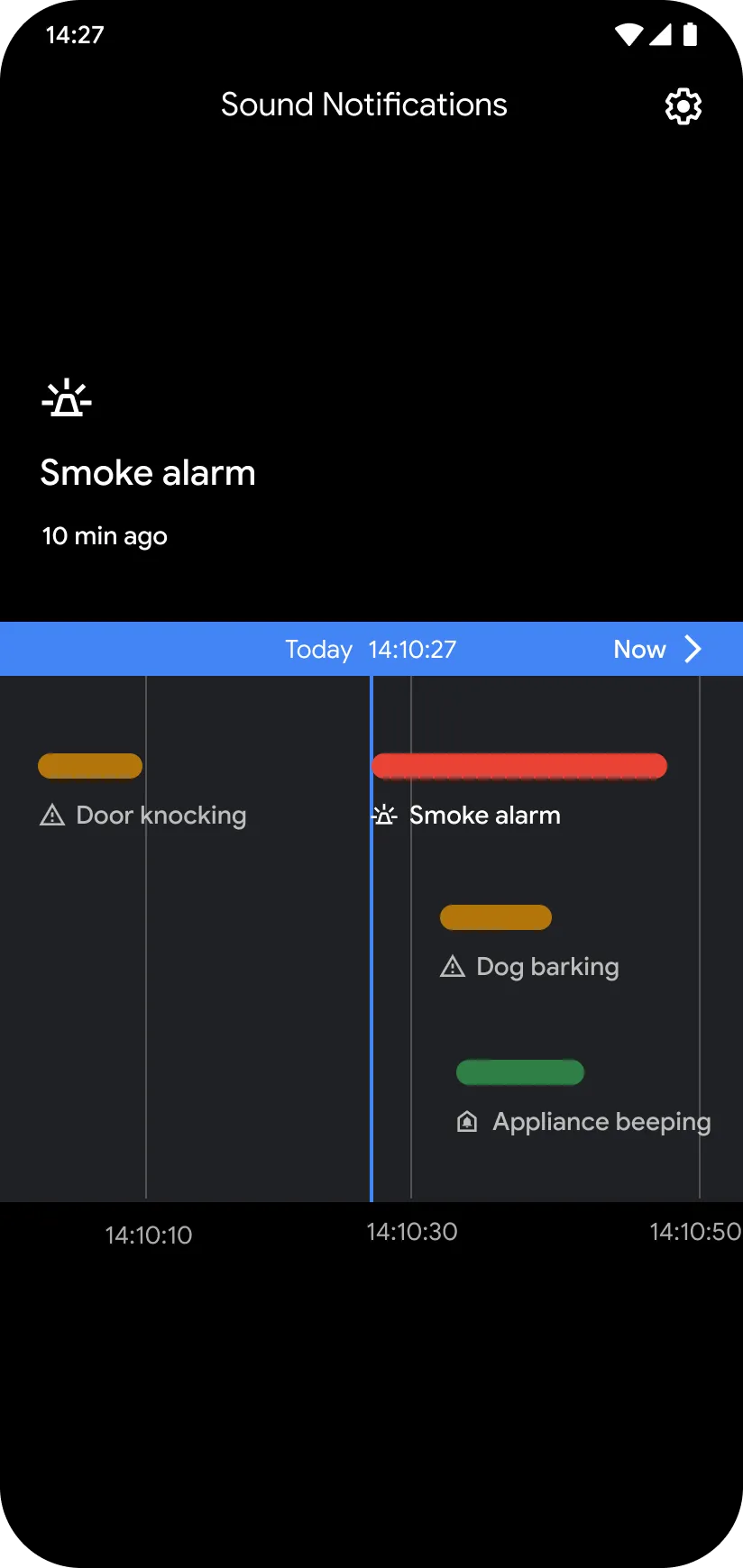
I consider Sound Notifications to be highly accessible because it’s a free feature built-into phones, and it expands access to assistive technologies that the Deaf and Hard of Hearing communities have integrated into their homes for decades. On top of that, for individuals without hearing impairment, it’s highly usable during situational hearing loss, such as wearing headphones, or during sleep.
Accessing this Feature:
Phones running Android 12 or later (since October 2020) should have it built in (Settings > Accessibility > Sound Notifications). Phones running Android 11 or earlier can download this app to access the functionality (and others) from Research at Google: https://play.google.com/store/apps/details?id=com.google.audio.hearing.visualization.accessibility.scribe
The iOS equivalent is called Sound Recognition (Settings > Accessibility > Sound & Name Recognition), available on devices running iOS 14 and later.