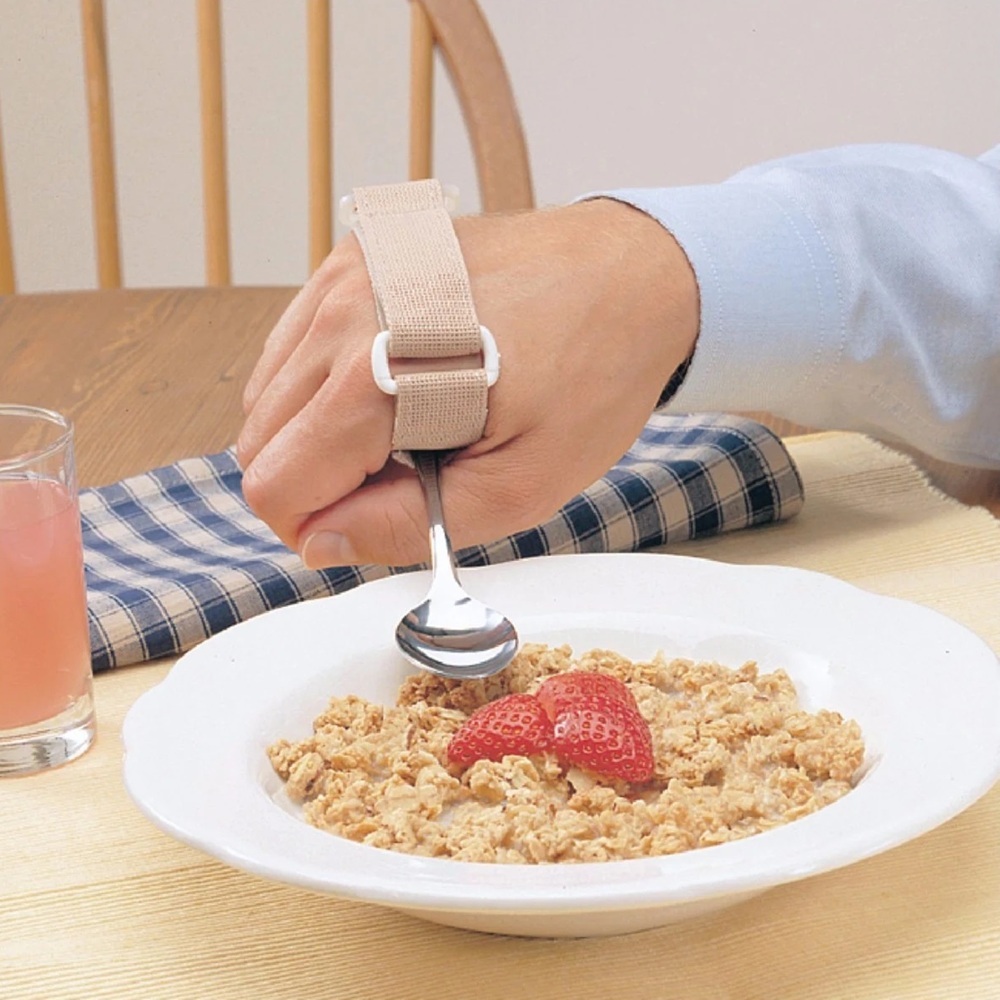
A universal cuff utensil holder is an assistive device designed to help people who have difficulty holding and controlling utensils. Instead of helping users hold utensils more firmly with their hands, its operation logic is to secure the utensil directly to the user’s hand. This simple and basic design allows people with limited hand strength or motor control to complete the everyday task of eating more easily and independently.
Feature 1: Cuff + Utensil Holder
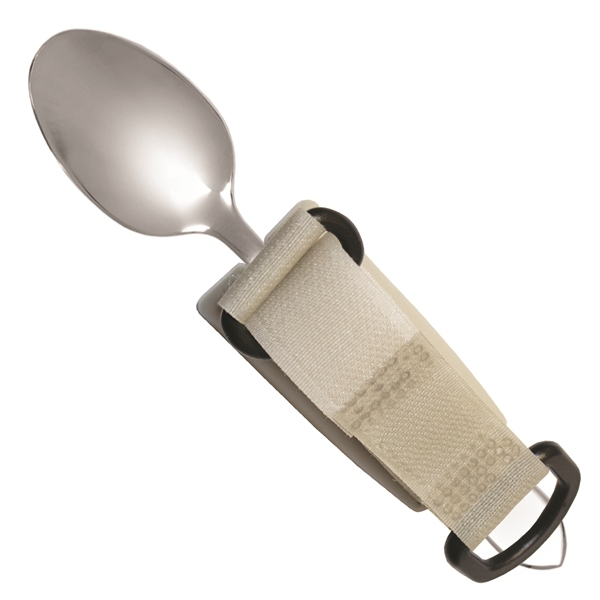
The core feature of this product is the combination of a hand cuff and a utensil holder. The cuff secures the user’s hand in place, while the utensil holder keeps the utensil positioned appropriately. This design reduces the need for continuous gripping strength. After using the product, users do not need to perform the traditional motion of holding a utensil throughout the meal. Instead, the device becomes the tool that holds the utensil in place. This means that users do not need to spend as much effort while eating and can focus more on moving their arm without adjusting the utensil. The design allows people to interact with utensils in a more comfortable way and still keep all of the original functions of the utensils themselves.
Feature 2: Adjustable Cuff
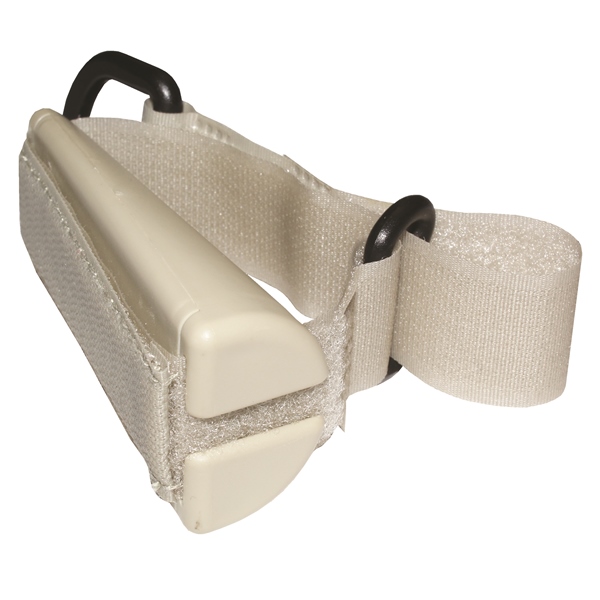
Another important feature is that the cuff is adjustable. It can be adapted to the user’s hand shape, allowing the device to remain secure while accommodating different hand sizes and different levels of control. The device stays in place as the hand moves without causing discomfort or making users feel that they have lost control over the utensil. Users can adjust the tightness themselves to achieve the fit that feels most comfortable for them. Compared with a fixed-size holder, this design is more flexible and considers a wider range of users instead of providing only one standardized way of use. It allows users to modify the way they use the product according to their own needs. However, because the users may already have difficulties with strength or motor control, adjusting the tightness of the cuff may create a certain barrier with the issue of users may not be able to control the tightness and adjusting the cuff to the appropriate position.
Accessibility Models
From the perspective of the medical model, the product helps users deal with physical limitations, such as insufficient hand strength or limited motor control. From the functional solutions model, it does not attempt to change the user’s physical abilities, it changes the way the task is performed. The social model is about how conventional utensils are designed with the assumption that everyone can hold and control them with hands, while the universal cuff utensil holder considers people with related disabilities. Rather than simply helping users adapt to existing objects, this product changes the way users interact with utensils, as a result, they can independently perform their everyday activity of eating.
Conclusion
The universal cuff utensil holder shows that achieving accessibility does not necessarily require advanced technology. Even a very simple design can help people in their everyday lives. By securing the utensil to the user’s hand while allowing the user to adjust the tightness themselves, the device reduces the physical demands on the hands during eating and allows users to be more independent with less reliance on others.