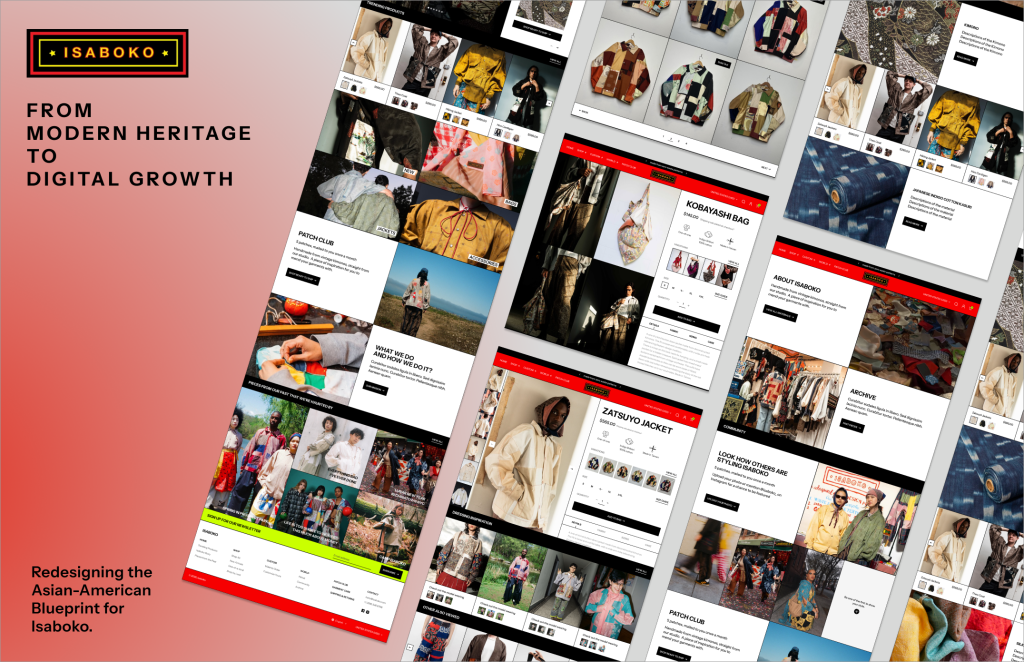
Team: Amy (Yung-Wei Chen), Tracy Khiew, Apoorva Kavitkar, Kshitija Chandra
Duration: 14 weeks (February – May 2026)
Client: isaboko.com, Izzy Li Kostrzewa (founder/designer)
Advisor: Prof. Rachel Ginsberg
Methods: Heuristic Evaluation, Competitive Analysis, User Interviews, Affinity Mapping
Tools: Figma, FigJam, Shopify
Overview
The Digital Atelier: Bridging Brand Soul with High-Performance Commerce
Isaboko is a zero-waste fashion label that lives at the intersection of heritage and innovation. While the brand’s one-of-a-kind garments have built a cult following in person, its online experience faced a unique challenge: how to scale a business built on “one-of-a-kind” pieces.
This case study documents our team’s journey in redesigning the Isaboko digital experience. By shifting the site from a passive portfolio to an active, high-performance “Collector’s Atelier,” we bridged the gap between artistic storytelling and e-commerce clarity. From strategic research into user trust to the creation of a hybrid navigation system, we built a digital infrastructure ready to support Isaboko’s global growth.
Background & Who is Isaboko
The Crafted in Brooklyn: Solarpunk Soul of a Maker-Led Brand
Isaboko is more than a fashion label, it is a “clothes-making project” rooted in the solarpunk ethos of degrowth and circularity. By transforming vintage Japanese kimonos into gender-free, zero-waste garments, founder Izzy Li Kostrzewa (they/them) created a brand that resonated deeply with a community of “conscious collectors.” For years, Isaboko thrived in physical spaces, pop-up markets in New York, Chicago, and LA became the heartbeat of the brand, accounting for 80% of customer acquisition.

Current Challenges
How Navigation Friction Created the E-Commerce Trust Gap
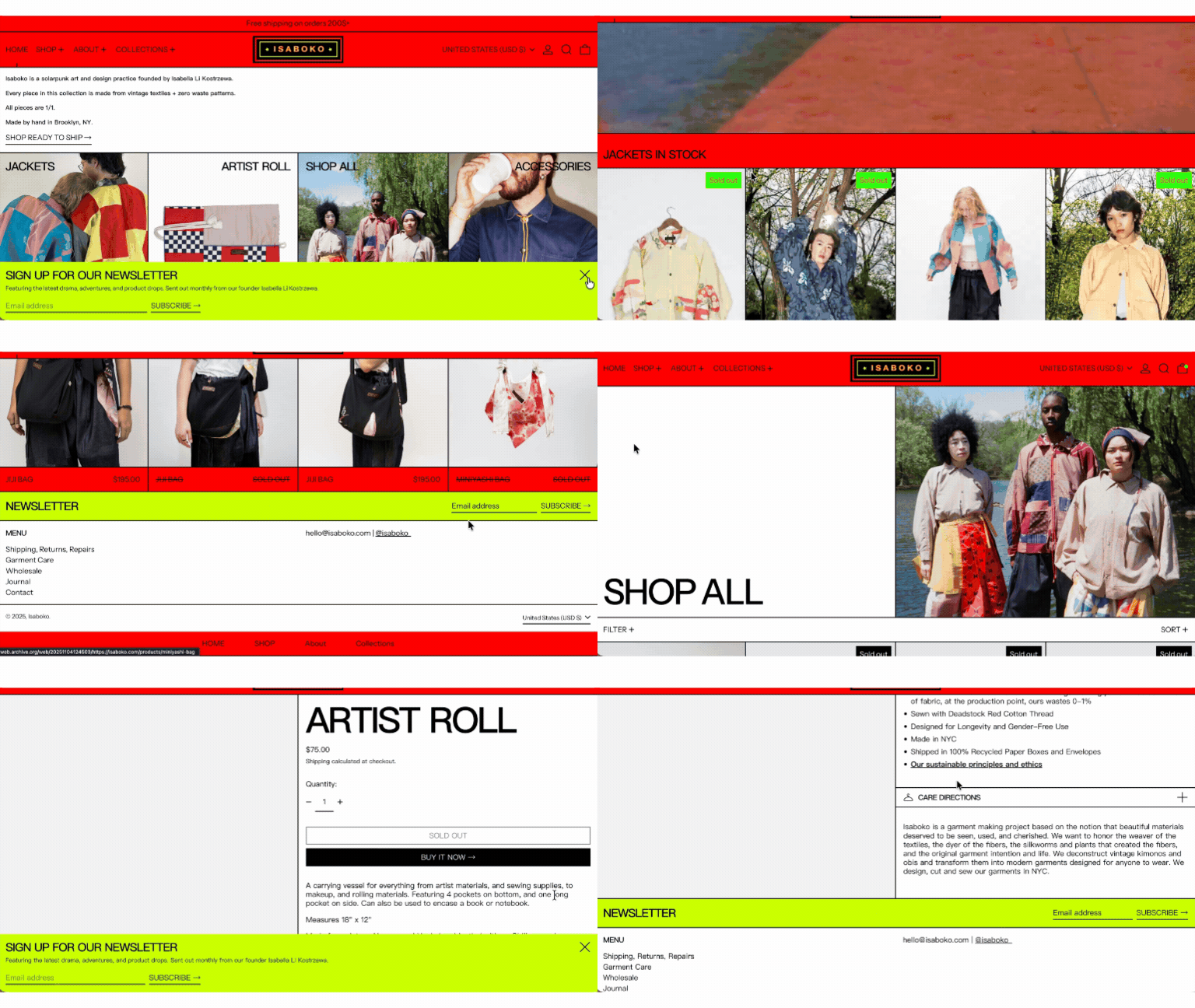
Despite a loyal following and high social media engagement, the brand’s digital presence reached a respite. Internal data revealed a stark reality: less than 5% of total sales occurred online, and the website saw a conversion rate of just 0.86%. While the site functioned beautifully as an artistic portfolio, it lacked the “digital trust infrastructure” required for high-stakes e-commerce. Customers found the one-of-a-kind inventory difficult to navigate, and the intentional, oversized silhouettes were often misinterpreted as a “poor fit” rather than a design choice.
Why Design Matters
UX as the Bridge for Artistic Portfolio, E-Commerce, and Global Sales
The urgency for a redesign was driven by a major operational pivot. As Isaboko began expanding production to a factory in Taiwan, the brand moved from a “one-of-one” studio model to a “small-batch” scalable model. This transition meant a several needs:
- Increased Inventory: A larger volume of products that needed clear categorization.
- Global Reach: The need for a site that could sell the brand story without Izzy being physically present.
- Higher Stakes: The digital experience now had to justify luxury price points through professional clarity and seamless functionality.
For our team, the goal was clear. We weren’t just redesigning a website, we were building the operational engine for Isaboko’s next chapter.
Core Question
Given these high stakes, our mission was to find the perfect equilibrium between artistic expression and digital usability. To move Isaboko beyond the studio and onto the global stage, we asked ourselves:
“ How might we balance ISABOKO’s brand uniqueness with a shopping experience that feels clear, predictable, and easy to navigate? ”
Primary Goals
The Design Imperative: Trust, Storytelling, and Customer Logic
Our objective was to move Isaboko beyond the “market ceiling” by creating a digital experience that mirrors the trust and storytelling of a physical pop-up. To support the brand’s expansion into small-batch production, we established three primary goals to guide our design decisions:
- Build a Digital Trust Infrastructure: We aimed to remove usability friction and build online confidence for users who don’t know the founder personally. This meant solving for sizing clarity, providing transparent product information, and designing a smoother checkout process so that every user feels secure making an “investment” purchase.
- Design for Customer Behavior: We needed to make the site feel like Isaboko. We set out to replace generic Shopify patterns with flows that reflect how Isaboko’s audience actually shops, as “collectors”. This involved structuring the site to surface the one-of-a-kind nature of each piece and introducing “demand capture” features (like waitlists) for sold-out, archival items.
- Scale the Soul Across Every Touchpoint: As production grows, the brand story can no longer be hidden on a single “About” page. We made it a priority to distribute Isaboko’s zero-waste mission and Asian-American heritage across the entire site, weaving narrative directly into product pages and navigation so the website acts as an automated storyteller.
Dive into Research
Uncovering the Root Cause of the 0.86% Conversion Rate
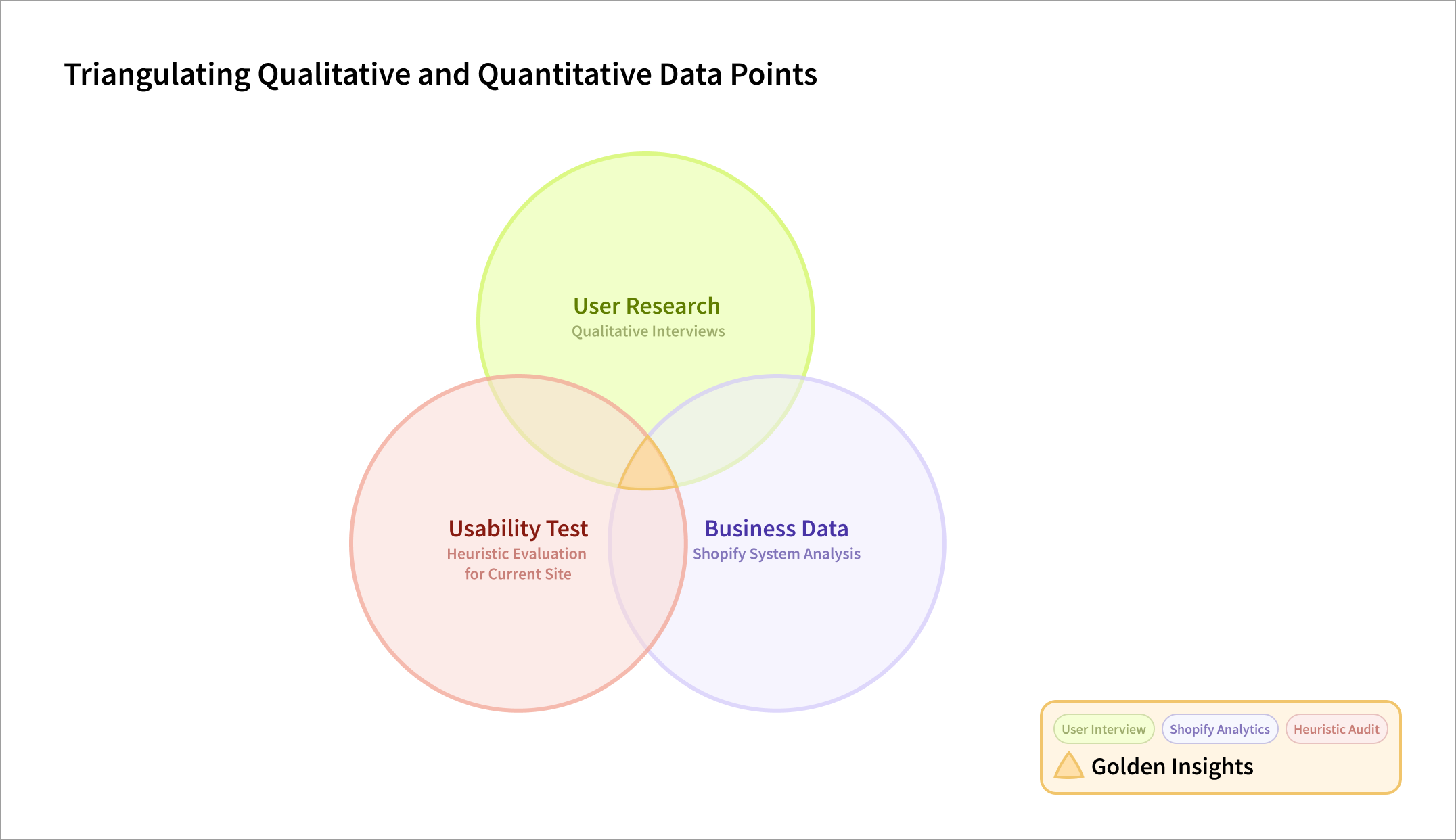
To understand why a brand with such high emotional loyalty had an online conversion rate of just 0.86%, we had to look beyond surface-level aesthetics. We triangulated Shopify analytics, a heuristic site audit, and qualitative interviews with Isaboko’s core audience to uncover where the digital journey was breaking down.
The Surprise of the Isaboko Audience
The Fashion Collectors Who Root for Isaboko
Before we could solve the digital friction, we had to understand the unique psychology of the Isaboko audience. Unlike fast-fashion consumers driven by trends, Isaboko’s users are “Conscious Collectors.” Our research identified two distinct archetypes that define the brand’s community:
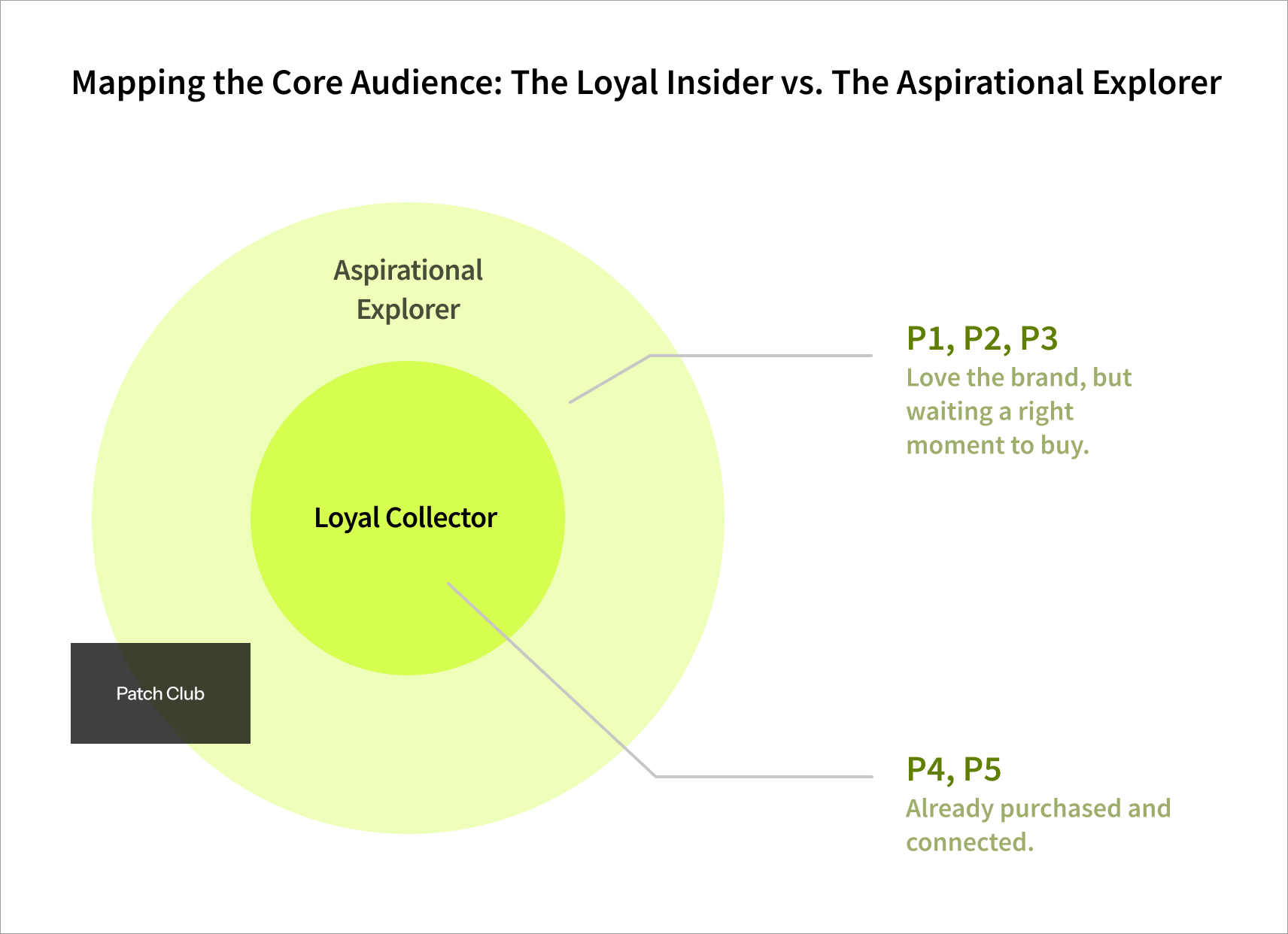
- The Loyal Collector (Existing Community)
- The Persona: Often friends of the brand or long-time followers who discovered Izzy at pop-ups like Renegade Craft Fair.
- The Motivation: They don’t just buy clothes. They invest in a relationship. They value the “party” atmosphere of physical markets and the personal assurance provided by the maker.
- The Mindset: They view pieces as artifacts. As one interviewee, P3, noted: “I don’t just shop for a shirt, I look for the fabric, the history, or a specific vintage kimono pattern.”
- The Aspirational Explorer (Potential Growth)
- The Persona: Younger, digitally savvy users, who have followed the brand on Instagram for years, waiting for the right moment to “invest.”
- The Motivation: They are deeply aligned with the brand’s zero-waste and Asian-American identity but face a high “barrier to entry” due to luxury pricing and sizing anxiety.
- The Mindset: For them, an $500 jacket is a point of pride and a long-term goal. They “peruse” the site for hours, building mental inventories of pieces they hope to own one day.
While the Loyal Collector and Aspirational Explorer have different budgets, they both seek the same thing: a tangible connection to Isaboko’s craft. We identified the Patch Club, a low-cost monthly subscription, as the brand’s most powerful “gateway” product.
For the Aspirational Explorer, the Patch Club should be the perfect first step into the Isaboko ecosystem. However, our audit and interviews revealed a missed opportunity. Because the value and “how-it-works” of the subscription aren’t transparently communicated, potential customers remain hesitant. If the digital experience can’t build enough trust to sell a $15 subscription, it certainly cannot support a $500 jacket.
This “Gateway Gap” served as a micro-example of a much larger systemic problem. To understand why even the simplest entry points were failing, we zoomed out to look at the business as a whole.
Synthesis & What We found
Translating User Realities into Design Mandates
What we found for Isaboko’s audiences wasn’t a lack of desire, it was a lack of digital infrastructure. The website was asking customers to make high-ticket “investment” purchases without providing the trust, clarity, or organization they naturally received in person at a pop-up.
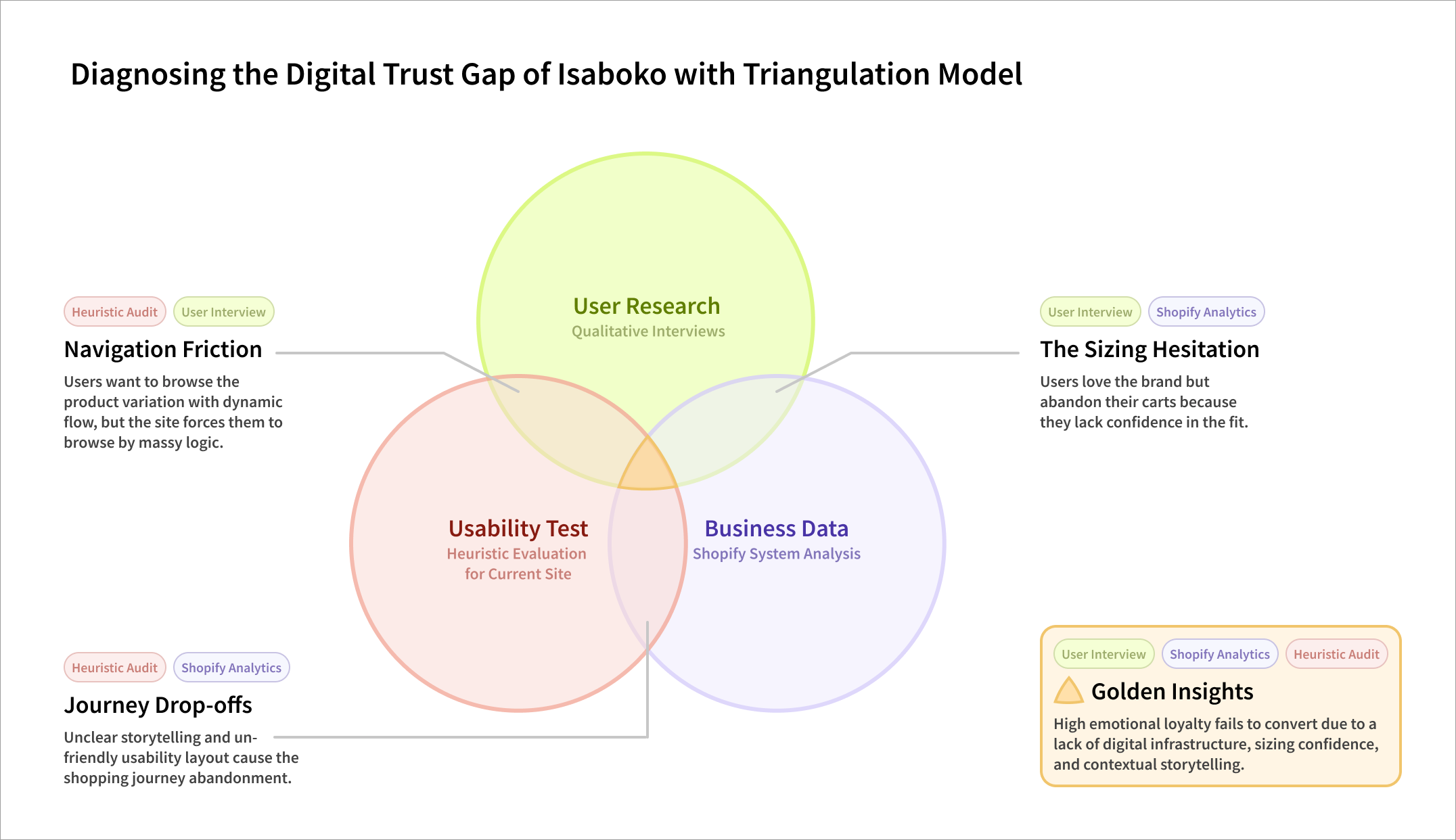
We synthesized our research into three core friction points, directly linking the user’s reality to our actionable design clues:
- The Friction of “One-of-a-Kind” (Discovery & Navigation)
- The Business Data: Shopify analytics revealed the steepest drop-off occurred right between the homepage and the product pages.
- The Site Audit: The current architecture forced a standard e-commerce grid onto non-standard inventory. Because every item is unique, users were overwhelmed by a sea of disconnected garments and variations.
- The User Insight: “I don’t just shop for a shirt, I look for the fabric, the history, or a specific vintage kimono pattern.” – P3
Isaboko customers shop like collectors, but the site treated them like generic consumers. - The Actionable Clue for Design: Build a Hybrid Information Architecture. We need to allow users to navigate not just by category (tops/bottoms) but by collector behavior (material, textile history, and archive).
- The Sizing Confidence Barrier (Usability & Trust)
- The Business Data: High cart abandonment rates indicated users were hesitating at the point of purchase.
- The Site Audit: Isaboko utilizes zero-waste, gender-free, and intentionally oversized silhouettes. Without the founder there to explain how the garment is supposed to drape, standard size charts created severe usability friction.
- The User Insight: “I love the pieces, but at this price point, I am terrified it’s going to swallow my frame. I need to know exactly how it fits before I invest.” – P1
- The Actionable Clue for Design: Normalize the Fit. We must introduce robust sizing clarity on the Product Individual Details Page (PIDP), including visual fit guides, model dimensions, and draped-vs-flat imagery, to remove the risk of “poor fit” misunderstandings.
- The Storytelling Dead-End (Brand & Connection)
- The Business Data: 80% of customer acquisition happens in person, driven by conversations with the founder, Izzy.
- The Site Audit: The brand’s rich solarpunk and zero-waste narrative was trapped on a single, static “About” page. The actual shopping pages felt stripped of the brand’s soul.
- The User Insight: “Buying Isaboko is a point of pride. I am investing in the maker’s mission and the reclaimed materials just as much as the clothing itself.” – P2
- The Actionable Clue for Design: Distribute the Story. The brand narrative cannot be a footnote. We need to weave the story of the reclaimed textiles and Asian-American heritage directly into the product pages and other flows, turning the website into an automated storyteller.
Competitor Analysis
Industry Benchmarking: Learning from other Craft-Forward Masters
To bridge the “Trust Gap” identified in our research, we moved beyond the limits of a standard e-commerce template. Our strategy was to redesign Isaboko.com as a Collector’s Atelier, a space that prioritizes discovery, education, and the unique “maker-to-user” relationship.
To define what a “High-Performance Atelier” looks like in the digital space, we benchmarked Isaboko against eight industry leaders in the high-end, one-of-a-kind craft space. This competitive analysis allowed us to distill Fashion UX Industry Principles into a strategic blueprint for growth.
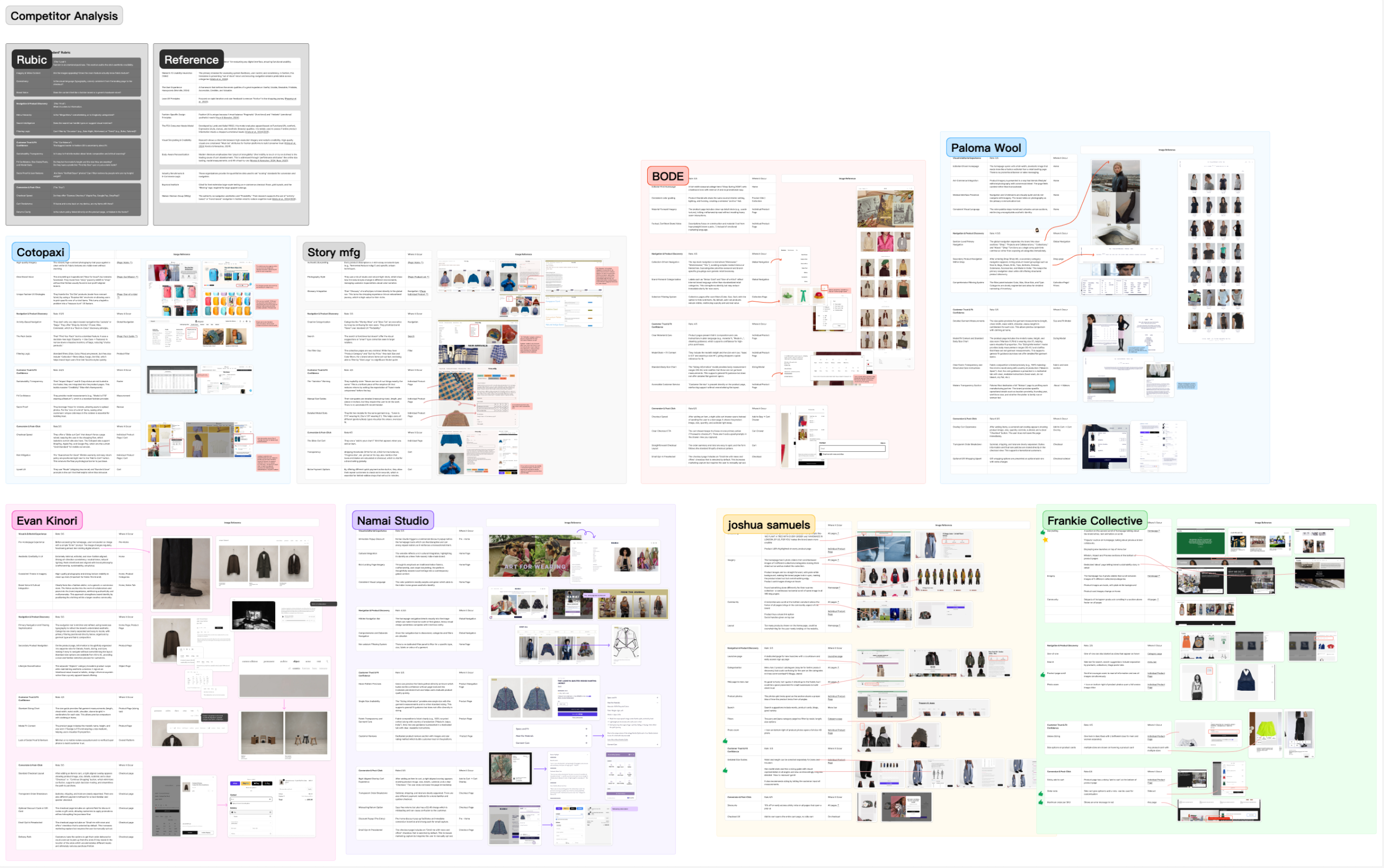
We analyzed how successful craft-forward brands maintain their soul without sacrificing usability. We found that the most effective experiences rely on four “Standards of Trust”:
- Tabbed Progressive Disclosure: Using tabs to organize dense information (Materials, Care, Size, Customer Review) without overwhelming the user.
- Variation Transparency: Explicitly communicating that for one-of-a-kind items, the pattern or textile may vary slightly from the photo, and provide other variation option for same products simultaneously, turning “uncertainty” into “exclusivity.”
- The Fit Confidence Model: Eliminating the sizing barrier through a combination of model statistics, flat garment measurements, or visual drape guides.
- Distributed Narrative: Moving brand values (sustainability and heritage) off the “About” page and placing them directly at the point of purchase or replication in different screens.
Strategies
The Strategic Framework: Four Pillars of the Redesign
Based on these industry standards and our user insights, we established the following design mandates to transform the Isaboko experience:
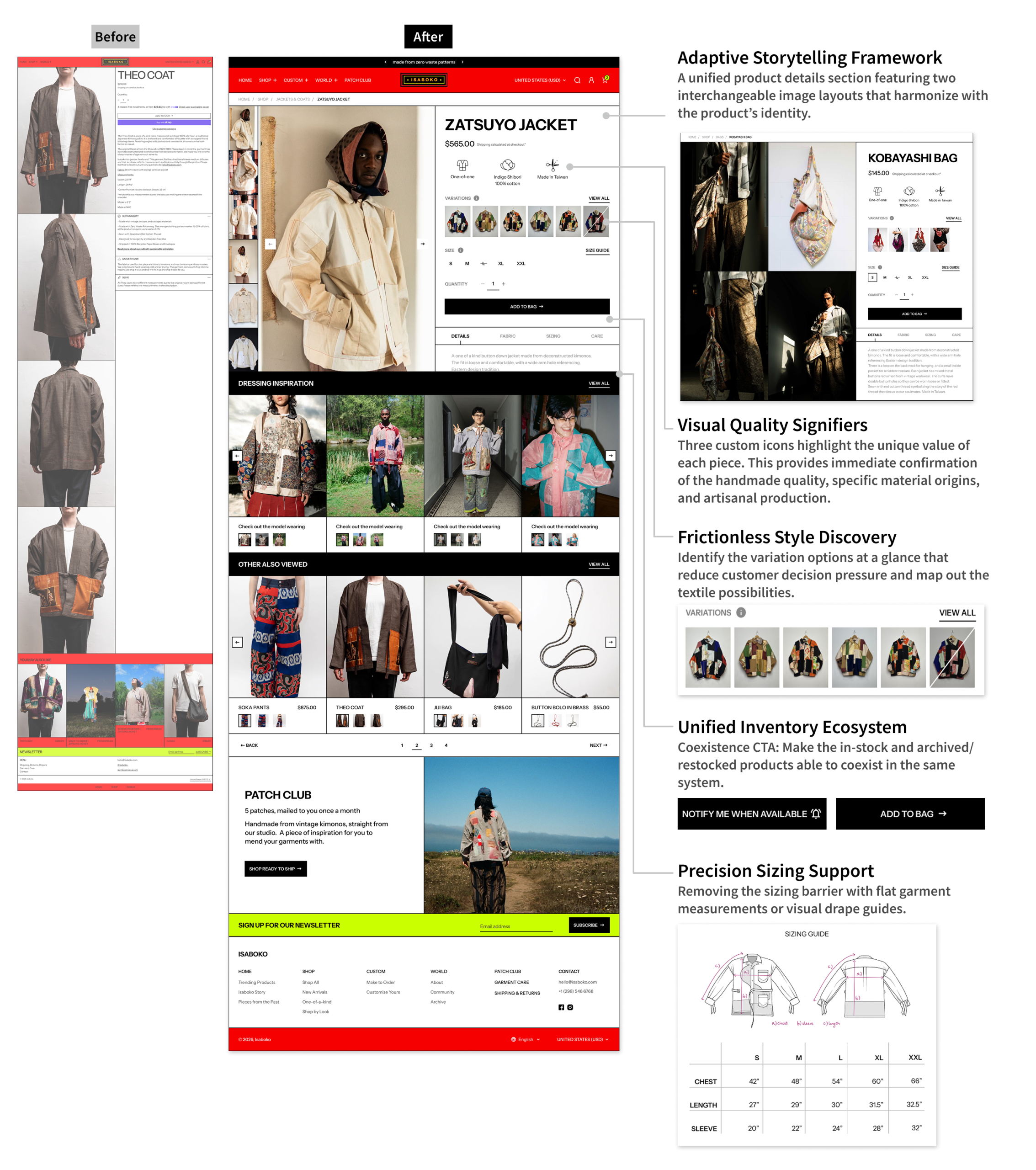
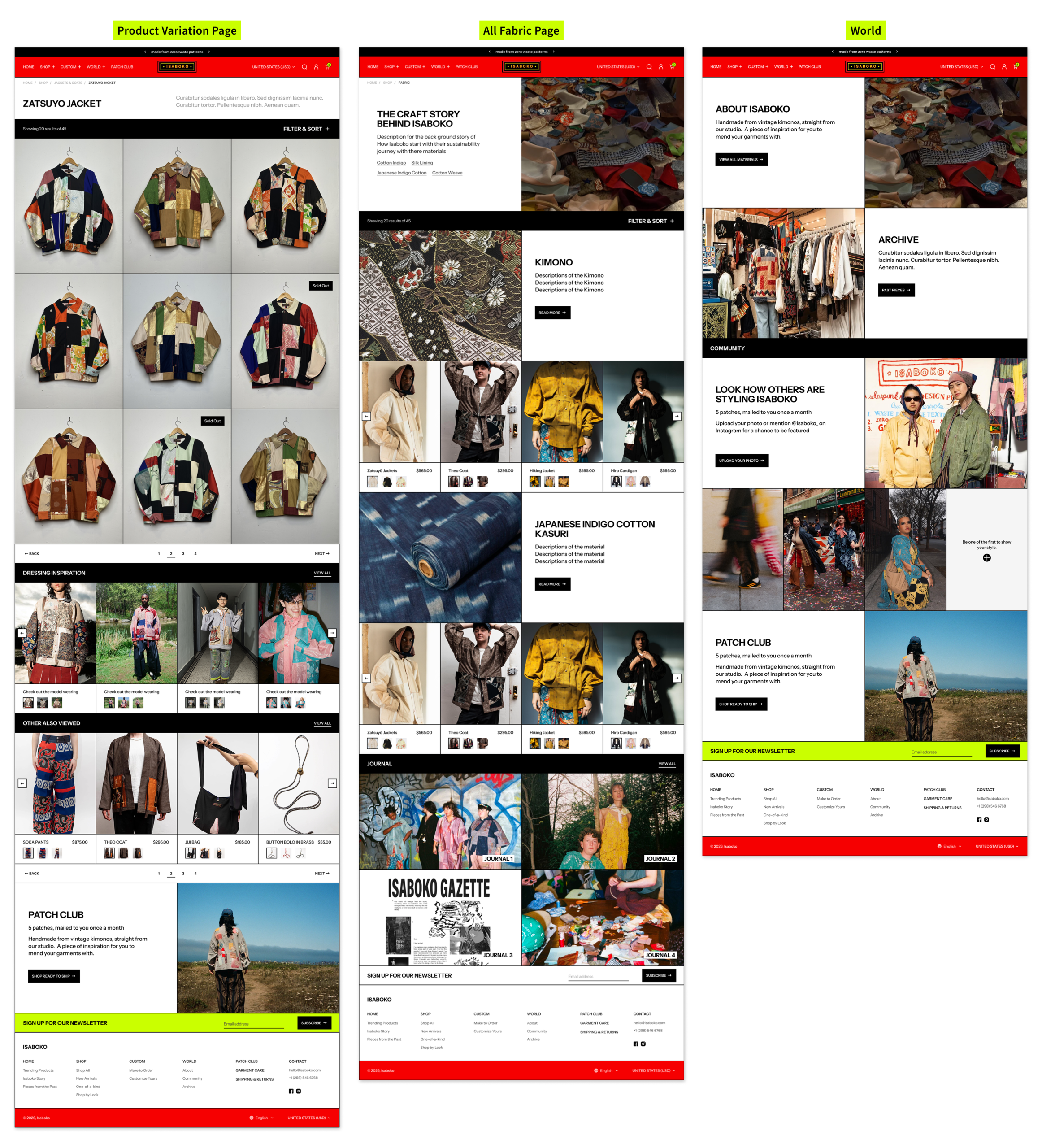
- The PIDP as a Conversion Engine: We redesigned the Product Individual Detail Page (PIDP) to do the heavy lifting that Izzy does in person. By placing sizing information in the fold and utilizing tabbed layouts for textile stories, we ensure that “Aspirational Explorers” have all the data they need to feel confident in a high-ticket investment.
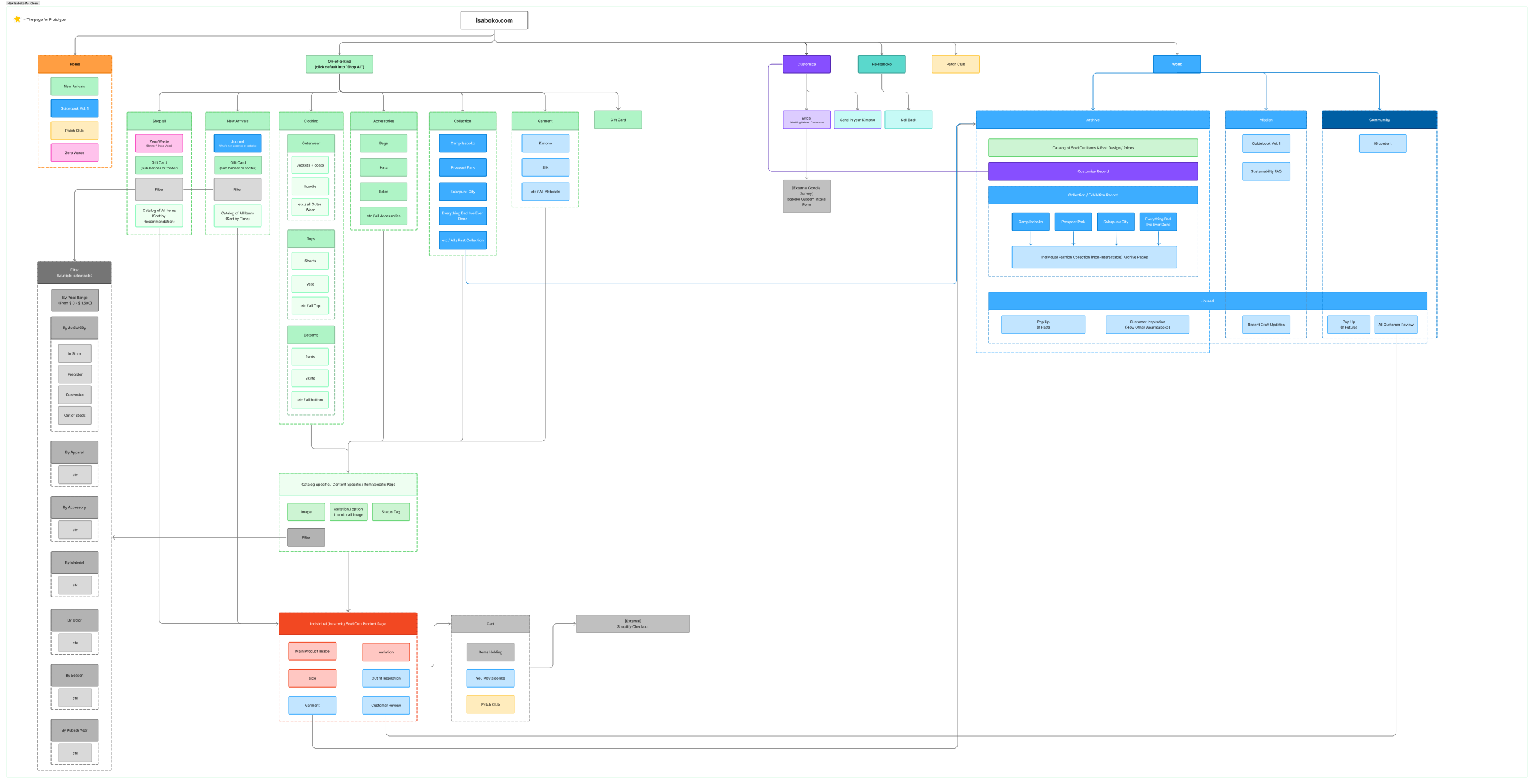
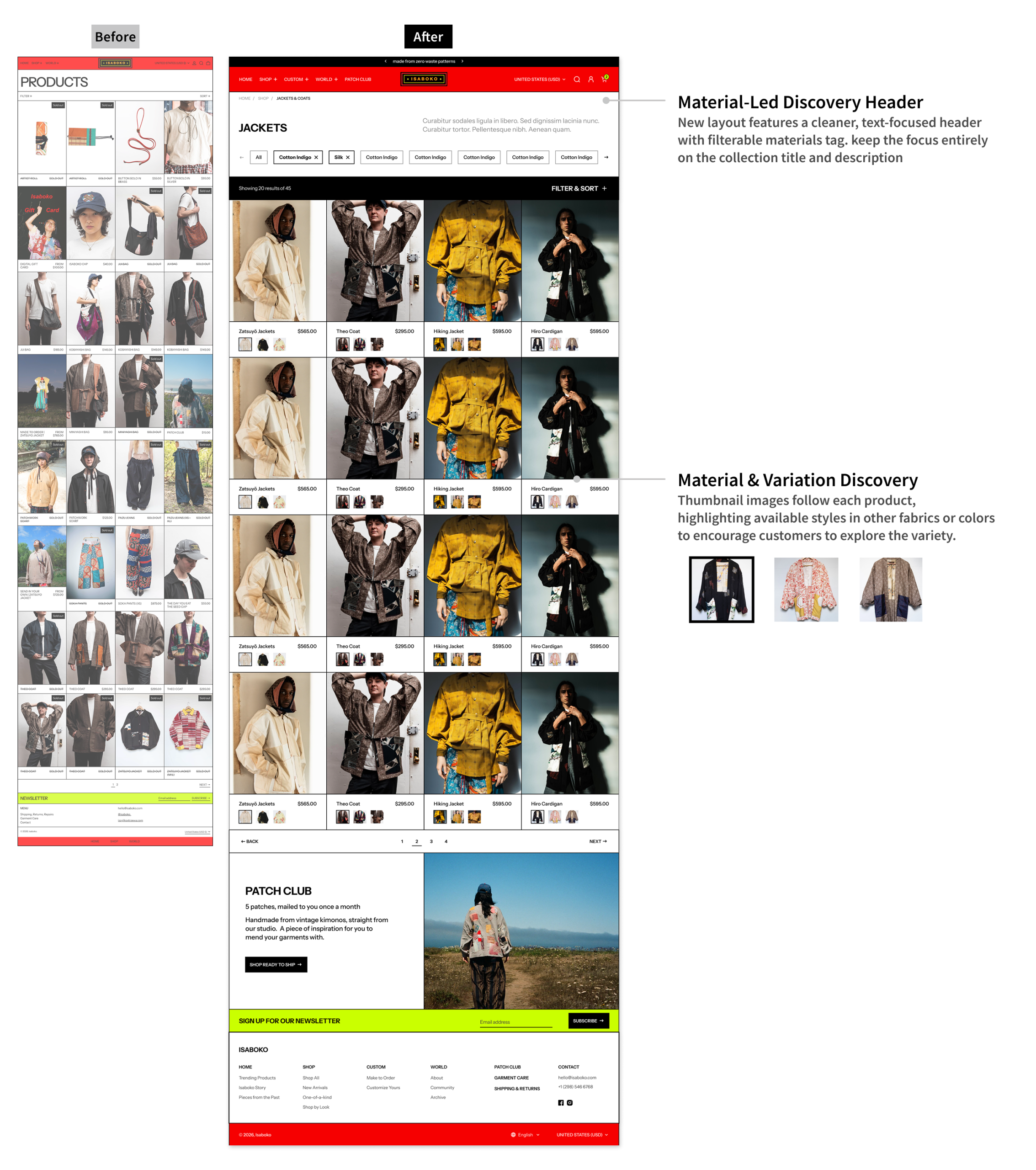
- Navigation for Discovery-Led Behavior: We moved away from generic categories. The new Information Architecture (IA) allows users to shop like collectors, browsing not just by garment type, but by Material, Textile, and Archive, facilitating a journey of discovery rather than just a transaction.
- Surfacing Every Pathway to Ownership: High-end craft often faces “out-of-stock” friction. We implemented strategies to capture demand even when items are gone, including “Notify Me” triggers, visible custom order pathways, and a lightweight inquiry flow for archival pieces.
- Elevating the Entry Point (The Patch Club): To convert the “Aspirational Explorer,” we moved the Patch Club from a homepage footnote to a navigation-level priority. By transparently explaining the value of the subscription, we created a low-friction “gateway” into the Isaboko ecosystem.
Design Artifact
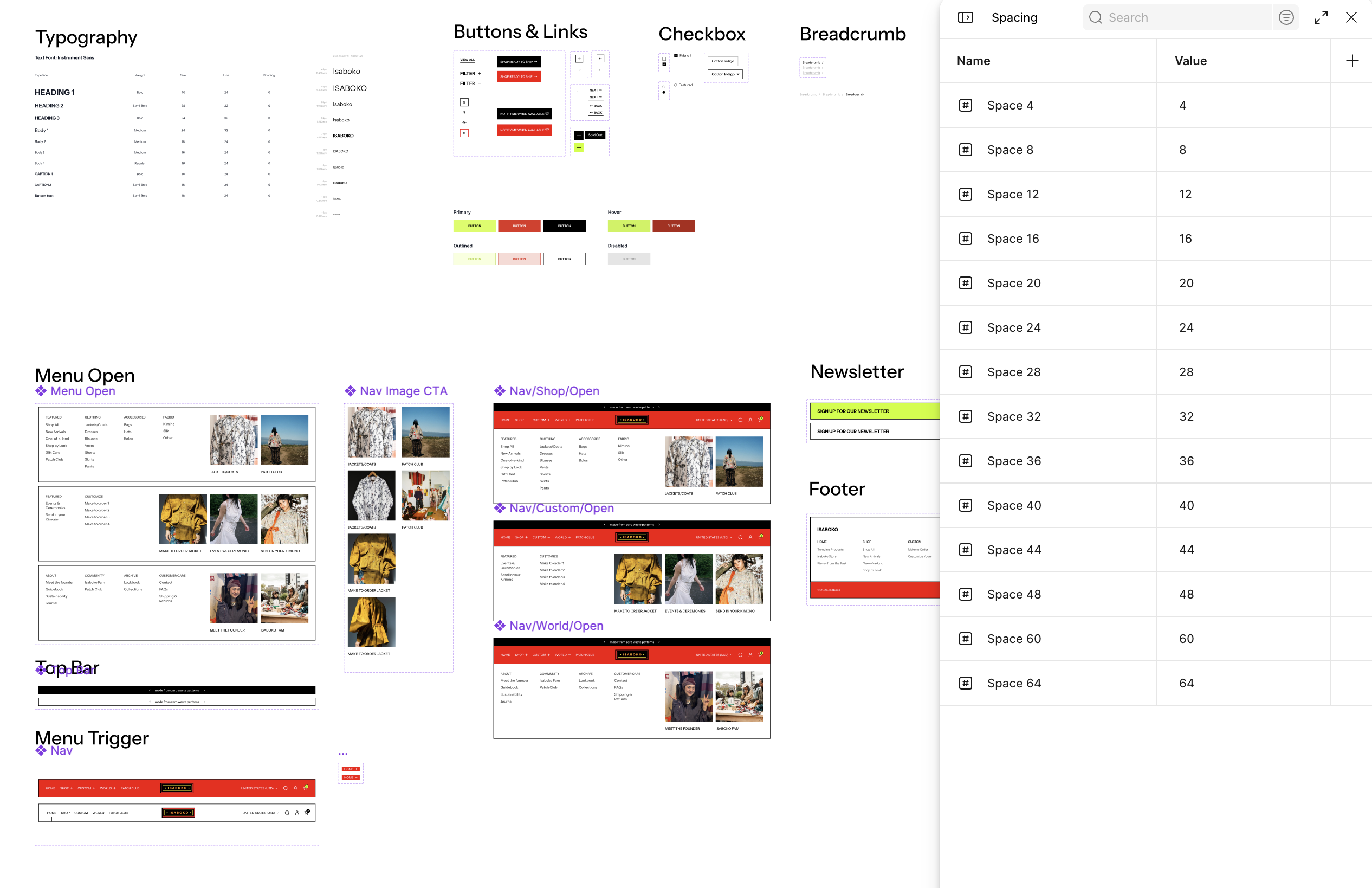
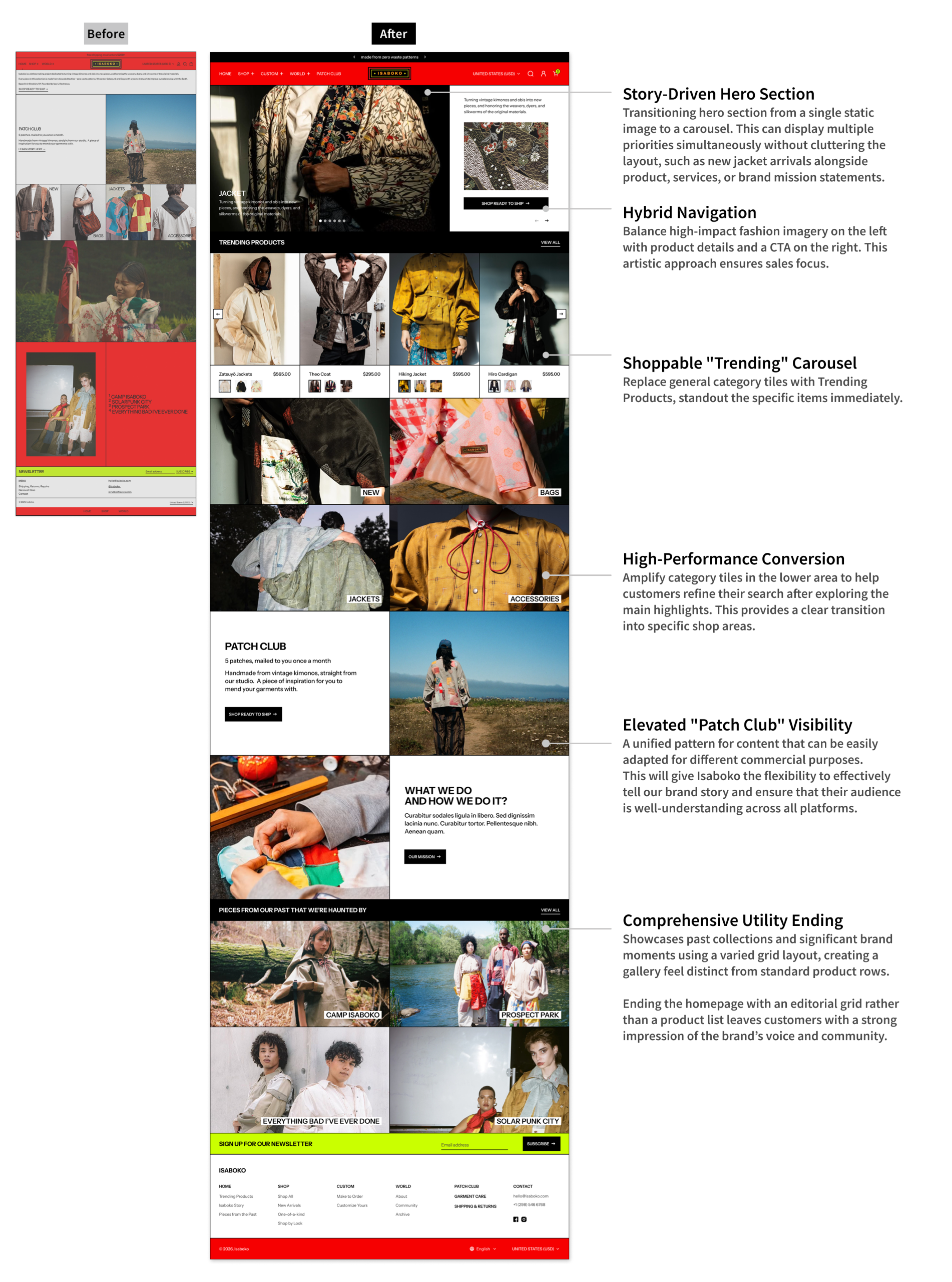
Translating Strategy into Screens by Building a High-Converting Atelier
With our strategic blueprint established, we set out to bring the “Collector’s Atelier” to life. The following design artifacts represent the culmination of our research, user insights, and industry benchmarking. Our primary goal was to translate the warmth, trust, and education of an in-person pop-up into a scalable, high-converting digital experience.
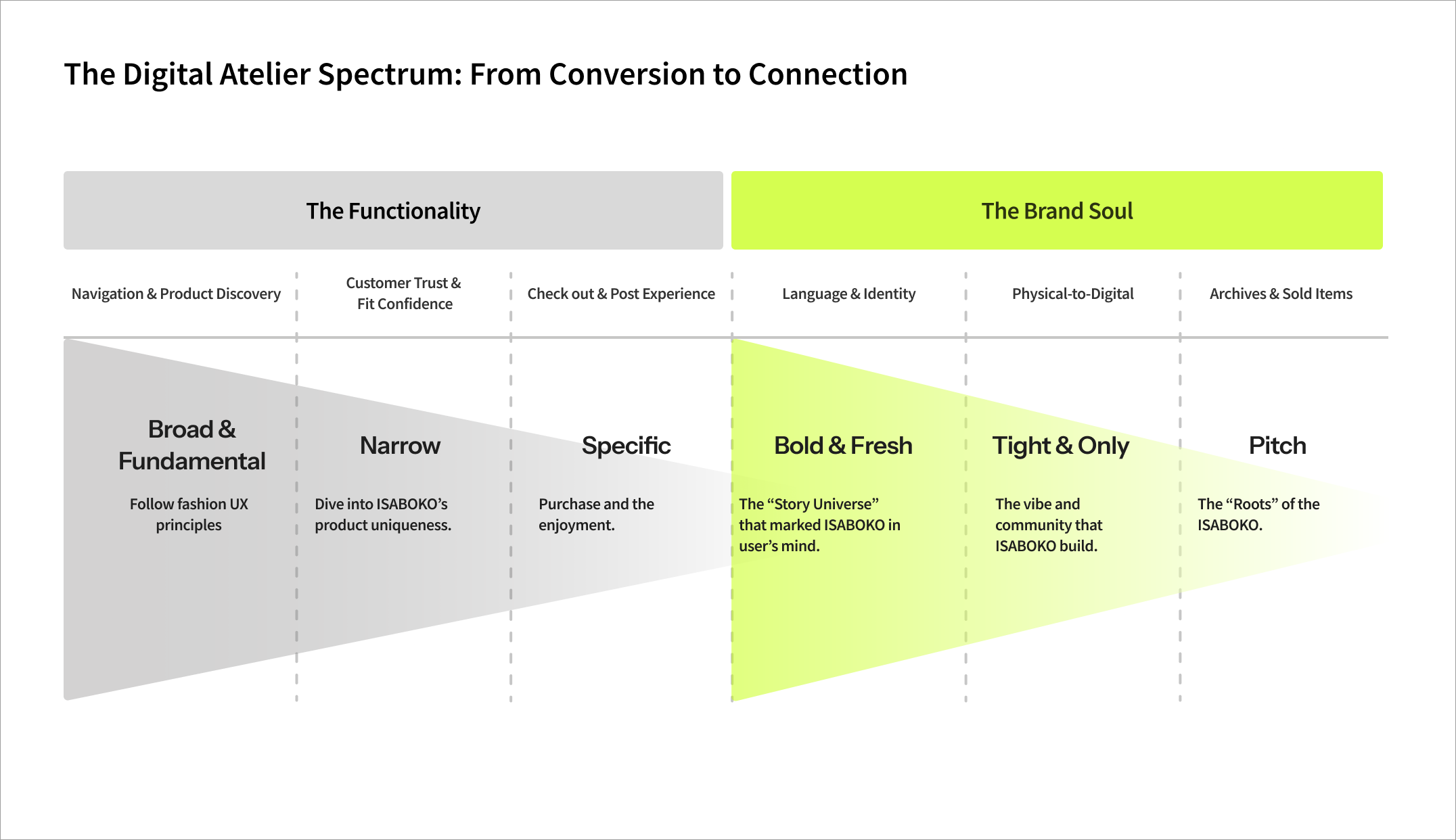
and the immersive storytelling of Isaboko’s physical pop-ups.
Below is the evolution of Isaboko.com. Through a new foundational design system, targeted before-and-after comparisons, and an interactive prototype, you will see exactly how we dismantled the “Trust Gap.” By redesigning the Information Architecture for discovery and rebuilding the Product Individual Detail Page (DIPD) as a conversion engine, we created a digital space where Aspirational Explorers finally feel confident enough to become Conscious Collectors.
Limitation
Limitations & Future: Designing for the Direct-to-Maker VIP
While our research successfully captured the friction points of the Loyal Insider and the Aspirational Explorer, our timeline and scope presented a significant limitation: we were unable to formally research and interview Isaboko’s highest-tier customer.
We identified a distinct group of “Off-Grid VIPs”, customers who share the core values of the brand and consistently purchase high-priced, custom pieces. However, they bypass the digital platform entirely. Instead of browsing the website, they rely on a direct, 1:1 relationship with the founder, frequently texting Izzy’s private number to commission custom garments.
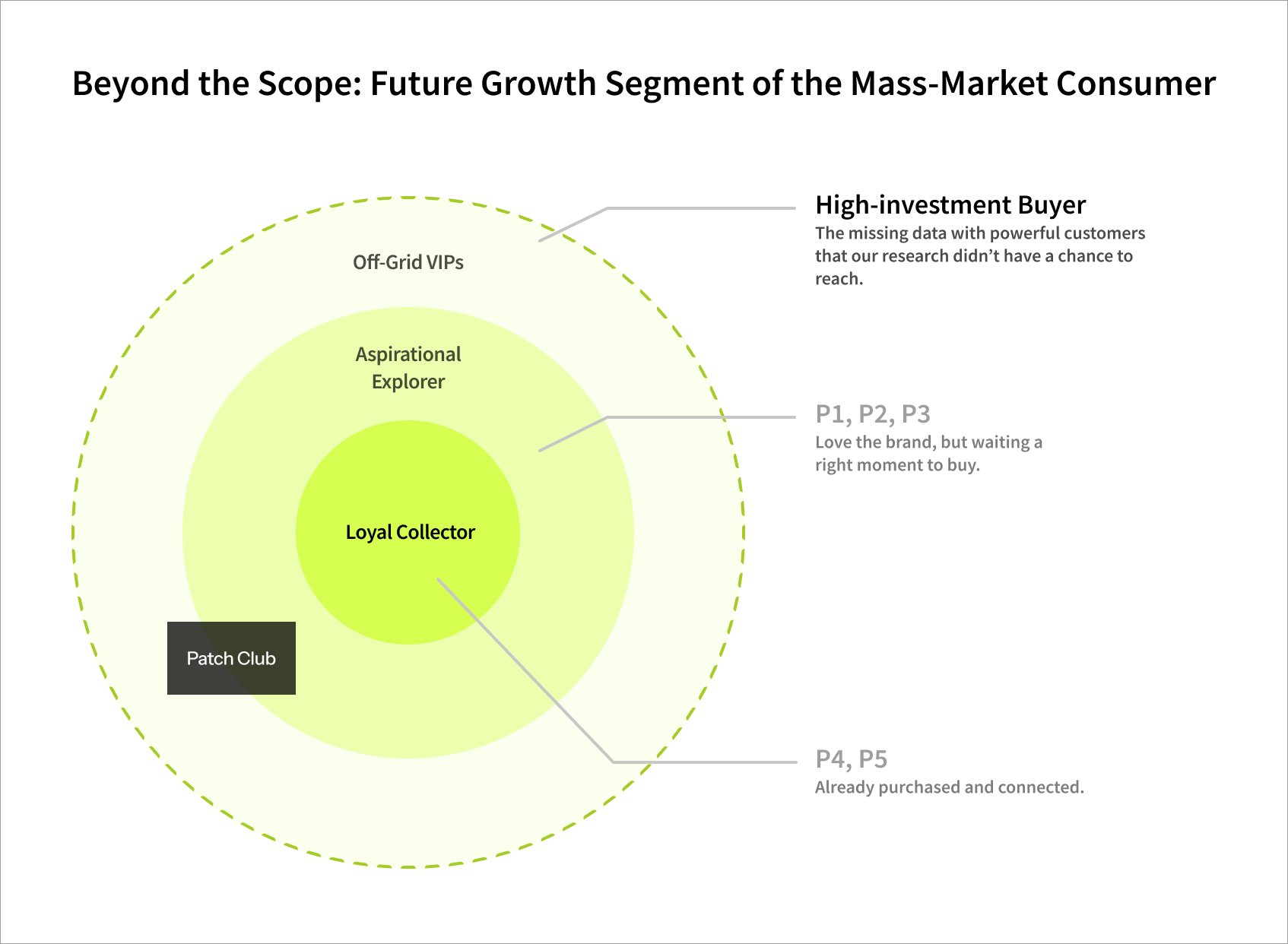
Because this group skips the e-commerce experience completely, their buying behavior isn’t reflected in the 0.86% conversion rate, and our current site redesign does not directly impact their journey. We missed the opportunity to understand what digital features could entice them to transition from text messages to the website.
As Isaboko expands its production to Taiwan and scales its operations, relying on the founder’s personal phone number for high-ticket sales will become a major operational bottleneck. A future iteration of this project must explore how to digitize the “concierge” experience. By designing an exclusive, lightweight custom-order flow or a VIP portal, Isaboko can bring these high-value collectors onto the digital platform without losing the intimate, maker-to-user connection they value so deeply.
Conclusion
Impact & Reflection: Preparing Isaboko for Scale
The goal of this redesign was never just to make Isaboko.com look better, it was to build a digital infrastructure capable of supporting the brand’s transition from a solo maker space to a scalable, small-batch production studio.
The Client Response
When we presented the final design system and prototype to the founder, Izzy, the response was highly positive. They were deeply impressed by how the new UI captured the vibrant, solarpunk “soul” of Isaboko while introducing the rigorous e-commerce logic needed to convert hesitant shoppers. The team successfully translated the warmth of an in-person pop-up into a scalable digital platform.
“I was blown away at how the team was able to translate my creative identity into a tangible design that stayed true to my values while also communicating the brand vision more effectively than ever. Their attention to detail, commitment to my goals and work to understand and solve my unique problems were remarkable.” – Izzy Li Kostrzewa (they/them), Founder of Isaboko
Lessons Learned from How to Balancing Marketing Needs and Design Ambition
This project was a masterclass in compromise and prioritization. The biggest challenge we faced was balancing the “Iron Triangle” of product design: quality, scope, and time, while navigating the realities of marketing an independent luxury brand. We had to make tough calls on what features to build now versus later. For instance, we learned that while highly experimental navigation might look cool for an unique brand, it actively harms the marketing reality of needing a functional conversion funnel. True UX success in this project meant learning how to standardize the user’s journey without standardizing the brand’s identity.
Next Steps for Real-World Implementation
Our design artifacts were created not just as a conceptual exercise, but as a literal blueprint for Isaboko’s future. Izzy is currently using our research, strategy, and prototypes as foundational materials in active collaborations with external Marketing Consultants and Engineering teams. As Isaboko finalizes its production expansion to Taiwan, these designs will guide the engineering hand-off, ensuring that as the brand’s inventory grows, its digital atelier is ready to welcome a new wave of Conscious Collectors.

Isaboko Team with Prof. Ginsberg.